

Suspenders that slip off mid-task are more than annoying. On a job site, stopping to reseat a strap every time you bend, twist, or reach overhead breaks your rhythm and can be a real safety distraction when your hands should be on a tool or a ladder rail. Slipping during labor is usually not bad luck. It comes down to a handful of fixable causes: strap width and back style, rear junction position, how the load is balanced between belt and suspenders, and wear on the straps themselves. This guide goes beyond general fit and adjustment, covered in our suspenders adjustment guide, to focus specifically on what changes once suspenders meet the physical demands of a real workday.
A Familiar Problem on the Job
Ask around on any job site forum and the same complaint comes up again and again: suspenders that felt secure in the morning end up needing a reseat every time someone reaches overhead to hang drywall or grabs a tool from a high shelf.
Tradespeople who eventually solve the problem usually point to the same handful of fixes: a wider strap, a properly positioned rear junction, or a belt and suspender combination that shares the load instead of asking the suspenders to do all the work. None of these fixes are complicated, but they are easy to miss if you assume the suspenders themselves are simply low quality.
Why Work Suspenders Slip During Physical Labor
Suspenders that stay put during a normal day of standing and walking can behave completely differently once you add the kind of movement that comes with physical work.

Reaching overhead pulls the shoulder up and rotates it, which can walk a loose strap toward the edge of the shoulder. Bending forward repeatedly, especially with a loaded tool belt pulling down at the front, drags the rear junction lower with every repetition. Twisting at the waist while carrying material shifts the whole strap path sideways. None of this shows up in a quick fitting-room check, which is why suspenders that felt fine on the first try often start sliding once they meet a real workday.
Check Your Strap Width and Back Style First
Narrow straps sit closer to the edge of the shoulder and have less surface area to resist sideways movement. For constant motion, wider straps in the 1.5 to 2 inch range distribute the load across more of the shoulder and are simply harder to shift out of place than a narrow 3/4 inch strap built for dress wear.
X-Back vs Y-Back for Constant Movement
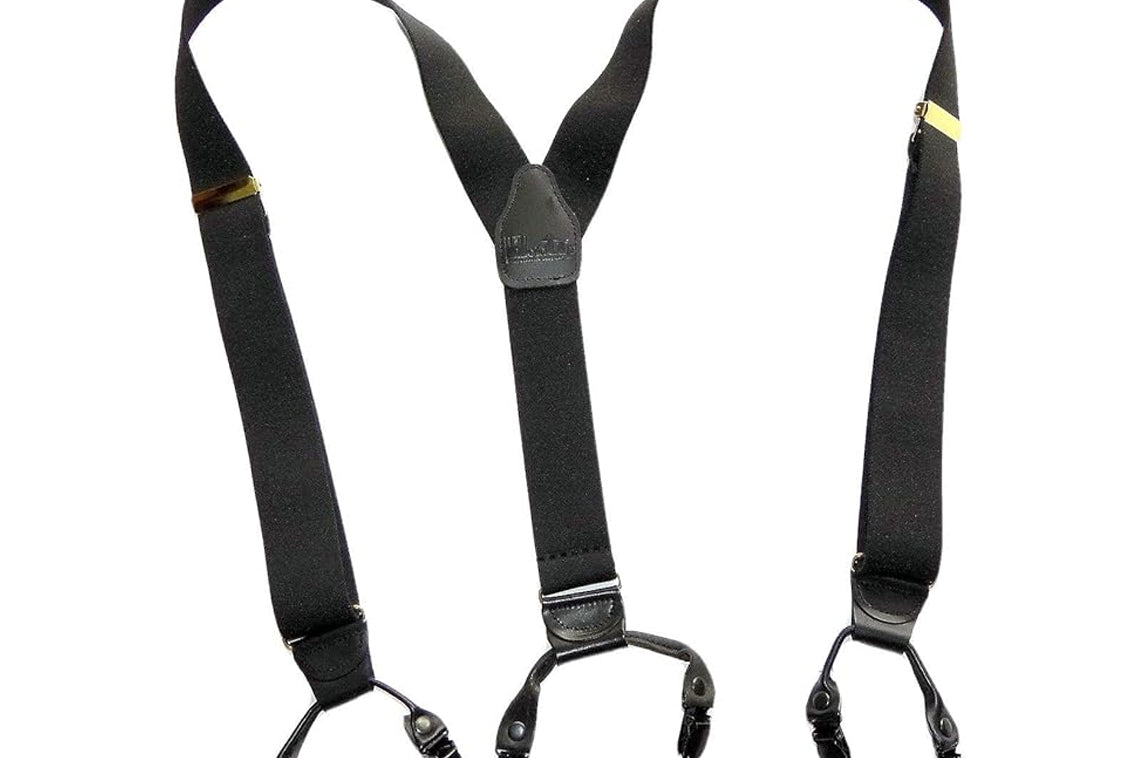
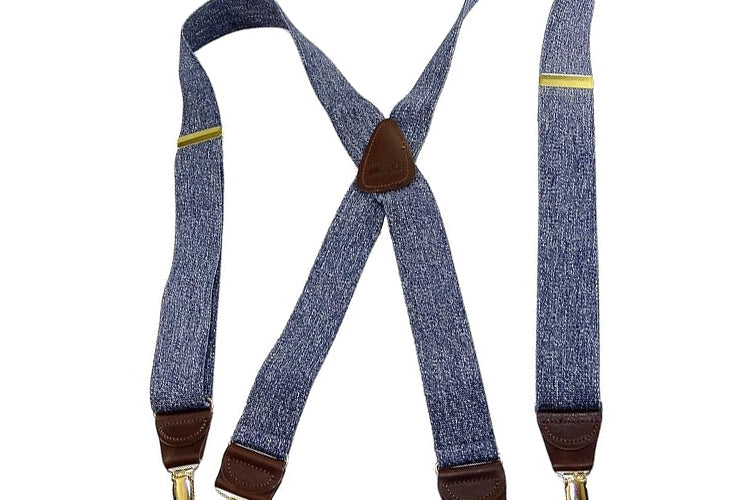
Back style matters as much as width. X-back suspenders cross behind the shoulder blades, which anchors both straps to each other at that crossing point. When one strap gets pulled during a reach or a bend, the crossed design resists it pulling free on its own. Y-back suspenders merge into a single strap lower on the back, which gives less resistance to that kind of sideways pull. For work that involves constant bending, reaching, and carrying a loaded tool belt, X-back is generally the more secure choice, such as a wide heavy-duty X-back pair built for demanding wor

Get the Rear Junction Position Right
On X-back suspenders, the point where the straps cross is called the rear junction, and its height changes everything about how well the suspenders stay on your shoulders. A junction that sits too low, down near the middle of the back, gives the straps more room to travel before they hit their crossing point, which means more slack for them to slide with. Raising the junction closer to the top of the shoulder blades shortens that travel distance and holds the straps in place through more aggressive movement. If your suspenders have an adjustable junction, this is often the single highest-impact fix for slipping. If the junction is fixed, moving the button or clip attachment points slightly further apart at the back has a similar effect.
Tool Belts Add a Layer of Their Own
If you are wearing suspenders to support a loaded tool belt rather than just a pair of pants, the slipping problem often has an extra cause on top of everything above: the belt itself shifting as you move, which drags the suspenders with it. Our guide on why a tool belt benefits from suspenders covers the basics of that setup, and our piece on avoiding common tool belt suspender mistakes covers general fit and compatibility issues. The sections below focus specifically on the slipping problem once that setup is already dialed in.
Balance the Load Between Belt and Suspenders
A heavy, fully loaded tool belt is not weight suspenders are meant to carry entirely on their own. Tradespeople who have worked with tool belt suspenders for years generally land on a setup where the belt itself stays snug enough to carry a share of the load, while the suspenders take the rest off the hips and lower back.

When suspenders are asked to support the full weight of a loaded belt by themselves, the extra strain tends to show up as slipping, since the straps are under more constant pull than they were designed for. Loosen the belt slightly and let the suspenders help, rather than removing the belt's job entirely.
Sweat, Heat, and Slick Fabric
Moisture changes how a strap behaves against a shirt or bare shoulder. A dry cotton strap grips a cotton shirt reasonably well. The same strap against a sweat-soaked shirt on a hot day loses much of that friction and slides far more easily. This is a common complaint in hot-weather trades, and it is not a defect in the suspenders themselves, it is a fabric-on-fabric friction problem. Wearing a shirt with a bit more texture under the straps, or choosing a suspender material with a slightly grippier finish, can reduce this effect. Some tradespeople also find that a thin undershirt performs better here than a loose, slick work shirt.
Choosing Clips and Materials That Grip Better for Work
Not all attachment hardware holds equally well under movement. For a deeper look at how different clip materials perform, see our comparison of metal vs plastic suspender clips. A few features to look for if slipping has been a recurring problem:
-
Wide-jaw clips: a wider clip surface grips more of the waistband and resists twisting loose compared to a narrow pinch clip.
-
Non-stretch or low-stretch webbing: highly elastic straps can feel comfortable but tend to bounce and shift more during repetitive motion than a low-stretch weave. Our comparison of non-stretch vs elastic suspenders for physical labor covers this tradeoff in more detail.
-
Reinforced stitching at stress points: where the strap meets the clip or button tab is the first place wear shows up, and reinforced stitching there holds its shape longer under daily use.
When to Replace Worn-Out Suspenders

Sometimes the fix is not adjustment, it is replacement. Elastic that has lost its spring will not return to tension after being stretched, and suspenders in that condition will feel loose and slide no matter how they are positioned. Clips that no longer close with a firm grip, or that need excessive force to open, are worn past the point where they will hold reliably. Button loops that have stretched out beyond the size of the button will not stay fastened. Correct adjustment can solve a fit problem, but it cannot restore hardware or elastic that has simply worn out.
A Simple Way to Test Your Setup Before a Full Workday
Before committing to a new pair of work suspenders, put them through a short test that mimics the actual job rather than just standing in front of a mirror. Load the tool belt the way you normally would, then bend down as if picking something up off the floor, reach straight overhead as if hanging material, and twist at the waist as if handing something to someone beside you. If a strap creeps toward the edge of your shoulder during any of these motions, that is the same movement that will cause it to slip fully off a few hours into a real shift. Catching this in a two-minute test is far better than discovering it on a ladder.
Mistakes to Avoid
-
Buying based on looks rather than back style. A Y-back pair might match your other gear, but if the job involves constant bending and reaching, X-back will hold up better.
-
Ignoring the belt-suspender balance. Suspenders carrying 100% of a loaded tool belt's weight are working harder than they were designed for, which shows up as both slipping and shoulder fatigue.
-
Assuming a fitting-room fit will hold up on the job. Test the fit while bending, reaching, and moving the way you actually work, not just standing still.
-
Waiting too long to replace worn elastic or clips. Once elastic loses its recoil or clips lose their grip, adjustment alone will not fix the slipping.
FAQs
Why do my suspenders only slip when I'm working, not standing around?
Because the forces at play are different. Standing still puts almost no lateral stress on the straps. Bending, reaching overhead, and twisting all pull the straps in directions they don't experience during normal daily wear, which is when slipping shows up.
Will tighter suspenders stop the slipping?
Not necessarily, and overtightening can create new problems like shoulder digging and restricted movement. Slipping is more often a back-style, junction-position, or hardware issue than a simple tension problem. Address those first before just cranking the straps tighter.
Do suspenders with a front yoke help with overhead reaching?
Yes, for many people. A yoke or connector between the two front straps keeps them from spreading apart and sliding off the shoulder edges when you reach upward, which is one of the more common moments for slipping to occur.
Should I wear suspenders over or under a work shirt?
Over a shirt is standard for tool belt suspenders, since it allows the shoulder straps to sit against fabric rather than skin, which is generally more comfortable and grips slightly better than bare skin, especially once sweat is involved.
Are elastic or non-stretch straps better for stopping slippage?
Non-stretch or low-stretch webbing generally holds its position better during repetitive movement, since highly elastic material can bounce and shift with each motion. Elastic straps can still work well for lighter tasks, but non-stretch tends to hold up better under constant physical activity.
Can suspenders slip because the tool belt itself is too loose?
Yes. If the belt shifts freely around your waist as you move, the suspenders attached to it will move with it, which can look and feel like the suspenders themselves are slipping. Tightening the belt slightly, even while still letting the suspenders carry most of the weight, often resolves this.