
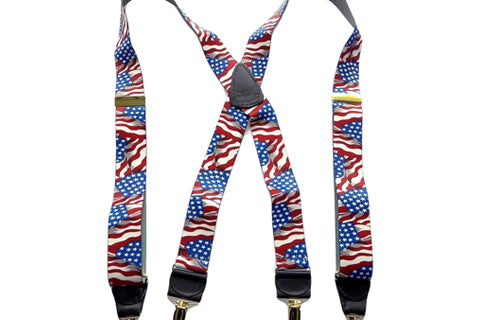
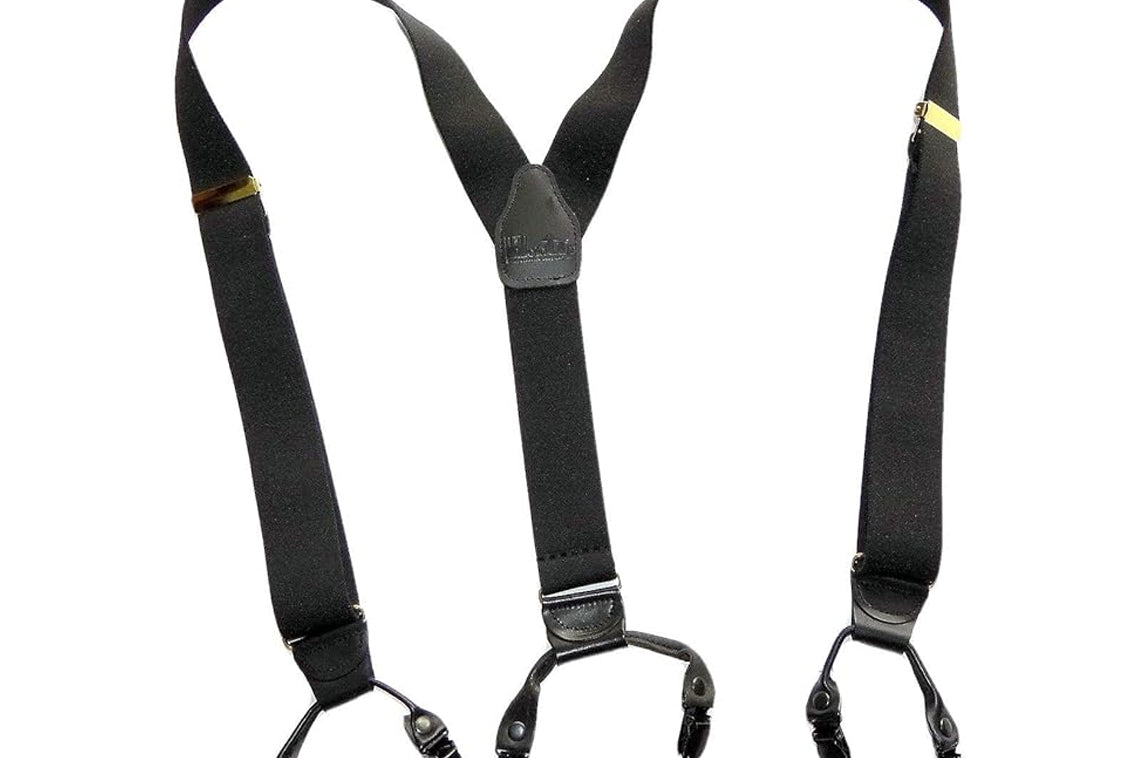
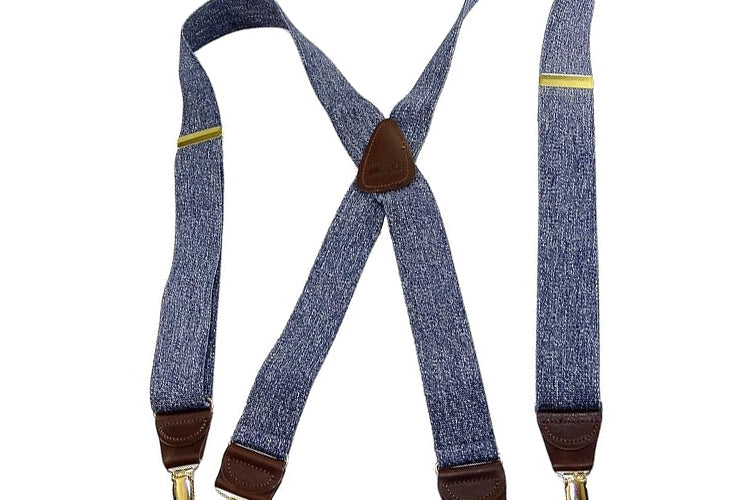
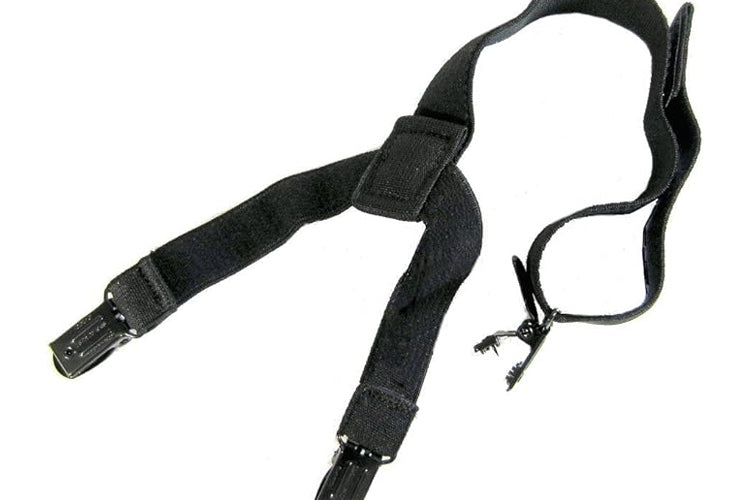

Non-stretch suspenders made from polypropylene or heavy nylon are the better choice for heavy-duty physical labor such as construction, logging, and trades work. They hold tool belts and heavy work pants securely without sagging or losing tension through the day. Elastic suspenders are the better choice for warehouse work, delivery, and jobs requiring frequent bending and reaching, where the constant give of elastic reduces shoulder fatigue and accommodates movement more naturally. Hybrid designs, with a non-stretch front and elastic back, cover both requirements for most tradespeople.
The choice between non-stretch and elastic suspenders is practical rather than aesthetic in a work context. The wrong choice creates real problems across a long workday: elastic that sags under a heavy tool belt, or non-stretch that restricts movement during repetitive reaching and bending. This guide covers material properties, durability, fit, use case matching, and maintenance so you can select the right type for your specific job.
What Is the Core Difference Between Non-Stretch and Elastic Suspenders
Non-stretch suspenders use rigid or semi-rigid strap material that does not yield under load. The tension they provide is constant and does not vary with movement. Elastic suspenders use woven or braided elastic material that stretches under tension and returns to its original length. The tension they provide varies dynamically with movement, increasing when stretched and releasing when relaxed. For physical labor, this distinction determines how the suspenders behave under a heavy load throughout the workday.
|
Feature |
Non-Stretch Suspenders |
Elastic Suspenders |
|
Load support |
Constant, does not sag under weight |
Variable, may sag as elastic fatigues |
|
Movement range |
Restricted, suited to stable positions |
Full range, suited to dynamic movement |
|
Tool belt compatibility |
Excellent, holds weight firmly |
Good for light loads, less reliable for heavy |
|
Shoulder comfort over time |
Can dig in under sustained heavy load |
Distributes pressure more gradually |
|
Durability under daily use |
Very high, maintains tension indefinitely |
Moderate, elasticity degrades over time |
|
Seasonal adaptability |
Fixed fit, requires size adjustment for layers |
Stretches over layered clothing naturally |
|
Best work context |
Construction, logging, heavy trades |
Warehouse, delivery, light lifting |
Which Materials Are Used in Non-Stretch Work Suspenders
Polypropylene is the most common non-stretch material for work suspenders. It is lightweight despite its strength, fully waterproof, and does not absorb sweat or moisture during physical work. It does not degrade in UV exposure the way rubber-based elastics do, which matters for outdoor work. What makes heavy-duty work suspenders different from standard dress styles covers the construction specifications that separate work-grade from fashion-grade products.
Heavy nylon webbing offers similar strength to polypropylene with a slightly softer hand that reduces the abrasion risk on clothing. It is the material most commonly used in tactical and utility suspenders where both strength and wearability over long shifts are required.
Leather non-stretch suspenders occupy the premium end of work-grade options. Full-grain leather develops a patina and softens slightly over time, conforming to the wearer's shoulder profile. It provides very consistent tension and resists fraying at clip attachment points better than woven fabric. Why leather outperforms synthetic materials in high-stress work applications covers the durability and maintenance advantages of leather in professional work environments.
Which Materials Are Used in Elastic Work Suspenders
Polyester elastic is the most durable elastic material for work suspenders. It resists UV degradation, moisture, and mold better than natural rubber or nylon elastic. Industrial-grade polyester elastic maintains its recovery strength under repeated high-tension cycles significantly longer than consumer-grade elastic, which matters when the suspenders are worn and stretched repeatedly every day.
Jacquard woven elastic combines structural integrity with stretch by weaving a rigid pattern into a base of elastic material. The result is an elastic that stretches but has defined limits on how far it gives, which prevents the uncontrolled sag that develops in cheaper single-weave elastics under sustained load. This is the most appropriate elastic material for moderate load work use.

Spandex-blend elastic offers maximum stretch range but the lowest durability under sustained high-tension loads. It is appropriate for jobs with minimal tool weight and frequent movement but should be avoided when the suspenders are expected to support heavy work pants or a loaded tool belt throughout the day. How elastic degrades under different conditions explains the material science behind elasticity loss and how proper care slows the process.
Which Type Works Best for Each Physical Labor Context
|
Work Context |
Recommended Type |
Width |
Reason |
|
Construction, framing |
Non-stretch polypropylene |
2 inches |
Supports tool belt weight without sag |
|
Logging, forestry |
Non-stretch, rigid front |
2 inches |
Resists gravitational pull on heavy loads |
|
Electrician, plumber |
Hybrid, non-stretch front and elastic back |
1.5 to 2 inches |
Tool support plus bending flexibility |
|
Warehouse, fulfillment |
Elastic, industrial grade |
1.5 inches |
Repetitive movement without restriction |
|
Delivery, driving |
Elastic |
1.5 inches |
Sit-to-stand transitions, light load |
|
Light trades, landscaping |
Elastic or hybrid |
1.5 inches |
Balance of support and movement |
|
Firefighting |
Non-stretch or heavy leather |
2 inches |
Gear weight, heat resistance required |
For construction work specifically, the tool belt load is the defining factor. A loaded tool belt can weigh 20 to 30 pounds, and elastic suspenders that stretch under this weight transfer the load back to the hip and waistband rather than distributing it across the shoulders as intended. How suspenders perform in construction environments covers the load rating, clip strength, and strap specification requirements for trade work. For tool belt integration specifically, pairing a tool belt with suspenders explains how the two systems work together to reduce hip and lower back strain over a full workday.
For logging and forestry, the demands are even more extreme. Non-stretch front straps with an elastic back section are the standard configuration because the rigid front holds under sustained gravitational load while the elastic back allows the trunk rotation required for chainsaw operation and tree felling. What logging suspenders need to handle covers the specific load and movement requirements of forestry work.
Comfort and Fit Across Different Body Types
Elastic suspenders are more forgiving across body type variation because the material itself accommodates different torso lengths and builds without requiring precise size selection. A single pair of elastic suspenders typically fits a range of 6 to 8 inches in torso length variation. Non-stretch suspenders require more precise sizing because the strap length is fixed and cannot accommodate variation through material stretch.
For larger or heavier builds, 2-inch wide non-stretch suspenders distribute the load across a broader shoulder contact area, reducing the point-pressure that causes shoulder fatigue over a full shift. Narrower straps concentrate all the load onto a smaller area, which becomes uncomfortable within a few hours under significant weight. Measuring correctly for work suspenders covers how to determine the right length for different torso proportions including longer torsos that fall outside standard sizing ranges.
Shoulder pads are a meaningful comfort upgrade for non-stretch work suspenders worn under heavy loads. The padding distributes the strap pressure across a wider contact area and reduces the cutting sensation that develops under sustained load with unpadded straps. Most premium non-stretch work suspenders include integrated shoulder padding at the 2-inch width.
X-Back or Y-Back for Physical Labor
X-back is the standard configuration for work and heavy-duty suspenders. The four-point back attachment distributes the load across both sides of the lower back, which is more stable during bending, reaching, and lifting than Y-back's single-point convergence. Under a heavy tool belt, an X-back holds the load more evenly and prevents the rear strap from shifting laterally when the wearer leans or twists. How X-back construction handles sustained physical demands explains the mechanical advantage of the four-point design over Y-back in active work contexts.

Y-back can work for lighter labor where the primary need is pant support rather than tool belt load distribution. The single center-back strap is less stable under asymmetric loading but is the more comfortable configuration for sustained seated or low-activity work.
Clip Mechanism Performance in Work Environments
Non-stretch suspenders typically use a lever-action clip with a retaining notch that locks the lever post-closure. This design maintains constant clamping pressure without requiring the strap tension to hold the clip in place, which means the clip stays secure even when the wearer leans forward and momentarily reduces strap tension. For work pants with thick waistbands or canvas material, wider jaw openings with reinforced teeth provide the most reliable grip.
Elastic suspender clips rely partly on the elastic tension to maintain clamping force. When the elastic is stretched during movement, the clip force increases. When the wearer bends forward and the elastic relaxes, the clip force decreases. This means elastic suspender clips can loosen slightly during sustained forward-lean activities like digging or crawling. Four-clip configurations, which attach at both sides of the front and back waistband, provide more stability than two-clip designs by distributing the load across more attachment points. How suspender clip mechanisms work covers the mechanical differences between lever, alligator, and cam-action clip designs.
For reflective safety requirements in road work or night construction, suspenders with integrated reflective strips are available in both non-stretch and elastic configurations. Reflective suspenders for high-visibility work environments covers the safety standard compliance and product options for work requiring ANSI visibility ratings.
Seasonal Adaptability for Outdoor Work
Elastic suspenders adapt more naturally to seasonal clothing changes. Over a heavy winter base layer, fleece, and work jacket, elastic stretches to maintain a consistent hold without needing length adjustment. Non-stretch suspenders require explicit length readjustment when switching between summer single-layer and winter multi-layer clothing, because the fixed strap length becomes too short to sit comfortably over thick outerwear at the same adjustment setting used in warmer months.
In wet conditions, polypropylene and nylon non-stretch materials dry faster than leather and do not absorb moisture, which prevents the strap from becoming heavy and uncomfortable in sustained rain. Elastic materials also dry reasonably quickly but can temporarily lose some recovery strength when saturated, which affects how well they hold under load until fully dry. Leather non-stretch suspenders require careful drying and conditioning after significant moisture exposure to prevent stiffening and cracking.
How to Maintain Work Suspenders for Maximum Lifespan
Polypropylene and nylon non-stretch suspenders can be hosed down or machine washed on a cold cycle in a mesh bag. Metal hardware should be towel dried immediately after washing to prevent surface rust. Store loosely coiled rather than tightly folded, and loosen the adjusters before storage to prevent the metal slider from deforming the strap material at the clamped point over time.
Leather non-stretch suspenders should not be machine washed. Wipe down with a damp cloth, allow to air dry completely away from direct heat, then apply a leather conditioner to maintain suppleness. Heat drying causes leather to stiffen and crack at the fold and adjustment points. Inspect the attachment tabs and hardware connections after every season of heavy use. Cleaning and conditioning leather work suspenders covers the full maintenance process for leather in high-use professional applications.
Elastic suspenders should be hand washed or machine washed on a gentle cold cycle in a mesh bag. Never machine dry. Air dry flat, away from direct sunlight, which degrades elastic faster than any other environmental factor. Washing and drying suspenders correctly by material type covers both elastic and non-stretch materials with specific care instructions for each.
Do Suspenders Affect Posture During Physical Labor
Suspenders improve posture during physical work by shifting trouser weight from the hip and waist to the shoulders, which allows the pelvis to sit in a more neutral position throughout the workday. A belt that cinches at the waist restricts the natural forward tilt of the pelvis during bending and can contribute to lower back strain over a long shift. Suspenders remove this restriction entirely. How suspenders affect back and shoulder health covers both the benefits and the conditions under which poorly fitted suspenders can create pressure-related discomfort.
The shoulder-distribution benefit is most significant when carrying a heavy tool belt. Belt-only support concentrates the full belt weight at the hip, which compresses the lumbar spine over the course of a workday. Suspenders lift approximately 60 to 70 percent of that load to the shoulders, which are structurally better suited to sustained weight bearing than the lumbar region. Comparing suspenders and tool belts for load distribution covers the biomechanics of each support system across different work tasks.
Frequently Asked Questions
Which is better for heavy construction work, non-stretch or elastic suspenders?
Non-stretch polypropylene or nylon suspenders are better for heavy construction work. They hold tool belt weight without sagging or losing tension through a long shift. Elastic suspenders are appropriate for lighter tasks within construction, such as finishing or trim work, where the load is lower and movement range matters more than load stability. What construction workers need from work suspenders covers the specifications that matter most for different construction roles.
How do I prevent non-stretch suspenders from digging into my shoulders?
Choose a 2-inch width with integrated shoulder padding, which distributes the strap pressure across a wider contact area. Ensure the length is correctly adjusted so the straps run at a slight forward angle rather than pulling straight up. Straps that pull vertically concentrate all load at the apex of the shoulder. A slight forward tilt distributes pressure toward the chest and upper back, which are better able to absorb sustained load. Adjusting work suspenders for correct load distribution covers the tension and positioning details that prevent shoulder discomfort.
Can elastic suspenders support a heavy tool belt?
Only if rated for the load. Consumer-grade elastic suspenders are not designed for tool belt support and will sag under sustained load. Industrial-grade jacquard woven elastic or reinforced polyester elastic at 2-inch width can support moderate tool belt loads but will still outperform non-stretch options for heavy belt configurations. Common tool belt suspender mistakes covers how to evaluate whether a suspender is genuinely rated for tool belt use.
Are there suspenders that work with a safety harness?
Yes, but the suspenders must be worn under the harness, not over it. The harness attachment points at the chest and back must not be obstructed or redirected by the suspender straps. Low-profile suspenders with slim hardware that sit close to the body work best in harness contexts. How suspenders and harnesses interact covers the positioning principles that apply to both hunting and industrial harness use.
How long do non-stretch work suspenders last compared to elastic?
Non-stretch polypropylene or nylon suspenders maintained correctly can last five to ten years of daily work use. The material itself does not degrade under normal work conditions. Failure points are typically at the hardware connections rather than the strap material. Elastic suspenders typically require replacement after one to three years of heavy daily use as elasticity degrades under repeated high-tension cycling. Industrial-grade elastic extends this to three to five years with proper care and storage.
What is the best width for work suspenders?
2 inches for heavy-duty trade work involving tool belts or sustained load carrying. 1.5 inches for moderate work with lighter loads and more varied movement. Anything narrower than 1.5 inches concentrates too much load pressure on too small a shoulder contact area for sustained physical work use. Heavy-duty suspender specifications covers width, material rating, and hardware requirements for professional work applications.
Can suspenders be worn with work boots and a safety vest?
Yes. Suspenders sit between the shirt and any outer layer, so they are fully compatible with safety vests, hi-vis jackets, and outerwear worn over the top. The suspenders hold the work pants in position under the vest without any conflict. If the safety vest has waist straps, adjust the vest over the suspenders rather than under them to avoid the vest straps interfering with the suspender clips at the waistband.
Do non-stretch suspenders work in cold weather with multiple layers?
Yes, but the strap length must be readjusted when switching from single-layer to multi-layer clothing. Non-stretch straps do not accommodate the additional torso depth created by heavy base layers and insulated jackets the way elastic does. Set the adjustment for the thickest layering combination you will wear and then tighten slightly for lighter clothing, rather than trying to set them for a mid-point. Why X-back designs handle seasonal adjustment better covers how the four-point attachment maintains stability across different clothing layer configurations.
Are non-stretch logger suspenders different from standard work suspenders?
Yes. Logger suspenders are specifically engineered for the load and movement profile of forestry work. They typically feature wider straps, a non-stretch front section rated for higher tensile loads, reinforced attachment hardware, and a specific elastic back section that accommodates trunk rotation during chainsaw operation. How logger suspenders differ from standard work suspenders covers the construction differences and explains why using a standard work suspender in a logging environment creates both comfort and safety problems.
Conclusion
Non-stretch and elastic suspenders are not interchangeable for physical labor. Non-stretch polypropylene or nylon is the correct choice when load bearing is the primary requirement, specifically for tool belts, heavy work pants, and sustained trade tasks in construction, logging, and firefighting. Elastic is the correct choice when movement range is the primary requirement, specifically for warehouse work, delivery, and lighter labor involving frequent bending and reaching.
For most tradespeople who do both, a hybrid design with a non-stretch front and elastic back covers the majority of daily work demands without sacrificing either load support or movement freedom. Choose 2-inch width for any application involving a tool belt, and inspect the clips and strap material at the start of each season to catch wear before it becomes a failure during work.