

A good pair of work pants, heavy canvas, duck cloth, or reinforced denim, is not cheap, and it is frustrating to watch a suspender clip chew through the waistband after only a few months of daily wear. The good news is that pants damage from suspenders is almost always preventable. It comes down to the type of clip, how it is attached, and how well it matches the fabric it is gripping. Here is what actually causes the damage and how to choose suspenders that protect a pants investment instead of wearing through it.
Why Suspenders Can Damage Work Pants
Most suspender damage comes from the same source: a metal clip with small teeth designed to bite into fabric for a secure grip. That grip is the whole point of a clip-on design, but it also means the same spot on the waistband gets pinched every single day. Over months of wear, that repeated pressure can wear through the weave, leave visible marks, or eventually tear a small hole at the exact point where the clip's teeth sit. Heavier fabrics resist this longer than lightweight ones, but no fabric is completely immune if the same few square inches take that pressure every day for a year.
Waistband construction plays a role too. A reinforced waistband with a doubled layer of fabric and heavier stitching distributes clip pressure across more material than a single-layer waistband. Many premium work pants use this kind of reinforced construction specifically because manufacturers expect a belt or suspenders to apply concentrated pressure there over years of wear. Checking how the waistband is constructed before buying a new pair of work pants is worth the extra minute if you know you will be attaching suspenders to it daily.
Our article on repairing holes caused by cheap suspender clips covers what to do once damage has already happened. This guide focuses on preventing it in the first place, specifically for heavy workwear rather than dress pants.
Clip-On vs Button-On for Work Pants

The two main ways suspenders attach to pants come with a real tradeoff between convenience and long-term fabric protection.
Why Clips Are More Common for Work Pants
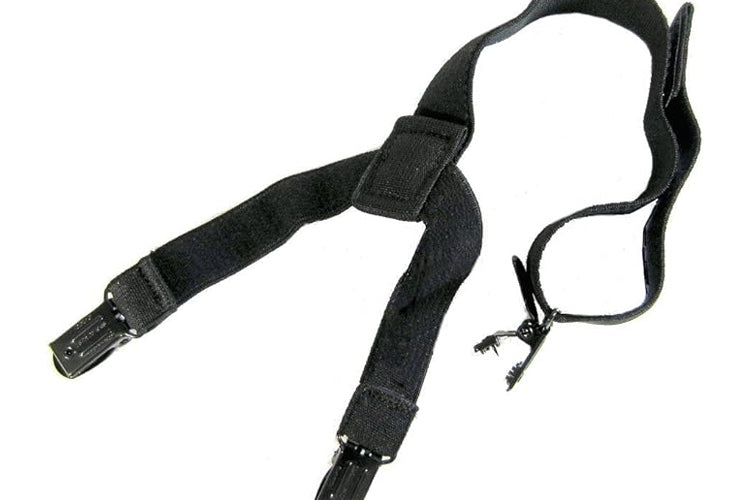
Clips attach instantly to almost any waistband without altering the pants, which is a big part of why they dominate the work suspender market. You can move a clip-on pair between different pairs of work pants in seconds, which matters if you rotate through several pairs during a workweek. The tradeoff is a single, concentrated contact point that carries all the strain of holding up the pants plus whatever gear is attached.
When Button-On Makes Sense
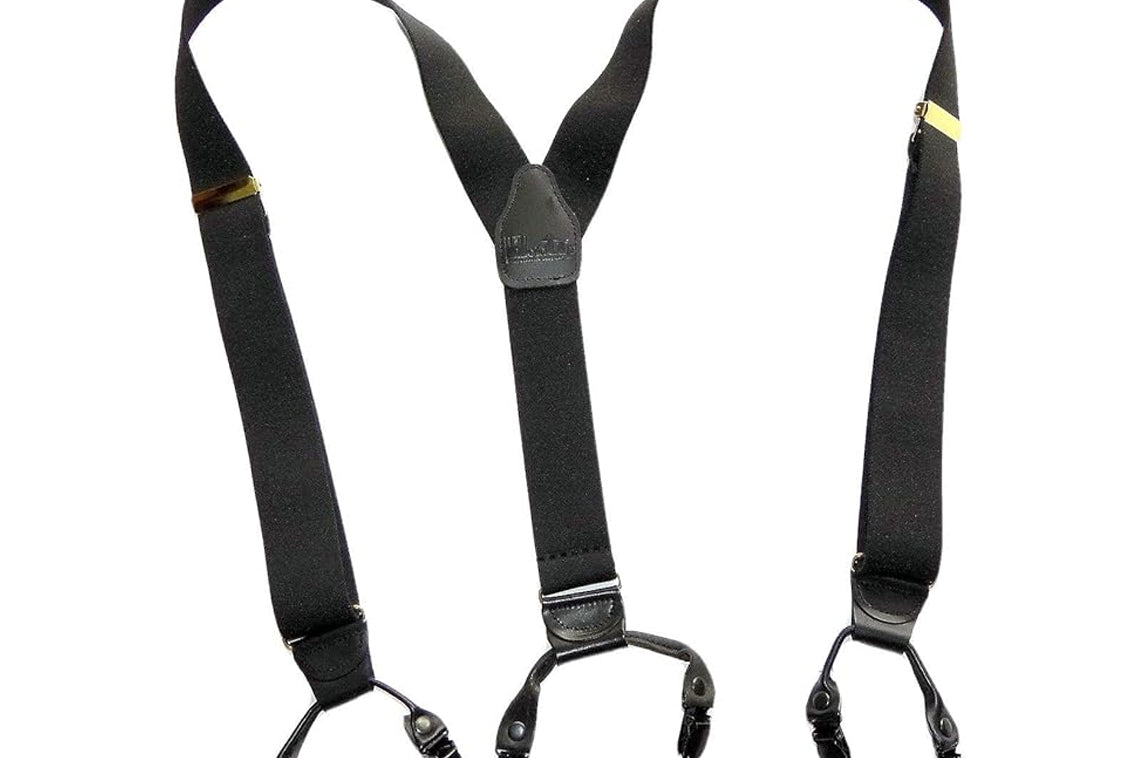
Button-on suspenders require buttons sewn into the waistband, which is more setup but spreads the connection across two points per side instead of one pinch point. That extra connection means less concentrated pressure on any single spot of fabric. For work pants you plan to keep in service for years rather than rotate frequently, having buttons added is a reasonable one-time investment that reduces long-term wear at the waistband.
Fabric Matters: Canvas, Duck Cloth, and Heavy Denim
Not all work pants fabric responds to clips the same way. Tightly woven, heavyweight materials like canvas and duck cloth generally hold up better against clip pressure than lighter fabrics, simply because there is more material for the clip's teeth to grip without cutting through to the other side. Heavy denim performs similarly well. Where problems show up fastest is at reinforced seams or double-stitched areas, since a clip clamped directly onto a seam edge concentrates pressure differently than a clip on a flat section of fabric. Whenever possible, position the clip on a flat, unseamed part of the waistband rather than directly over a seam.
Clips vs Adding Buttons: Which Should You Choose?
If you are trying to decide between sticking with clips or having buttons added to a favorite pair of work pants, a few practical questions can help:
-
Do you rotate between several pairs of work pants during the week? If so, clips are far more practical, since moving buttoned suspenders between pants isn't possible without sewing buttons into every pair.
-
Is this a pair of pants you expect to wear for years? If yes, the one-time cost of adding buttons often pays for itself in reduced waistband wear over that lifespan.
-
Do you already have visible wear at the waistband? If damage has already started, switching to a wider, rubber-lined clip and repositioning it slightly can often extend the pants' life without needing buttons added at all.
For most tradespeople who own multiple pairs of work pants, a quality clip-on pair such as a wide heavy-duty suspender with reinforced clips offers the best balance of convenience and fabric protection, reserving buttons for the one or two pairs of pants you consider worth the extra investment.

What to Look for in Work-Safe Suspender Clips
Clip design varies more than most people expect, and some designs are noticeably gentler on fabric than others.
-
Wide, flat jaws: a wider gripping surface spreads pressure across more fabric instead of concentrating it in one small point, which is easier on the weave over time.
-
Smooth or rubber-lined teeth: sharp metal teeth grip aggressively but bite hardest into fabric. A rubber or textured lining can hold just as securely with less cutting action.
-
Rounded edges on the clip body: sharp corners on the clip itself can catch and fray fabric at the edges of the contact point, not just where the teeth sit.
Our comparison of metal vs plastic suspender clips goes deeper into how clip material affects both grip and fabric wear, including which option tends to be gentler for everyday work use.
Attachment Placement and Technique
Where and how a clip is attached matters almost as much as the clip itself. Clip it onto the thickest, most reinforced part of the waistband rather than a thin or worn section. Keep the clip centered and straight rather than attached at an angle, since an angled clip concentrates force unevenly and tends to work loose or dig in harder on one side. Avoid attaching directly over a belt loop if you also use a belt occasionally, since the doubled fabric there can cause the clip to sit at an odd angle and pull unevenly.
It also helps to vary the exact attachment point slightly from day to day rather than clamping onto the identical few millimeters of fabric every single time. Moving the clip half an inch in either direction over the course of a week spreads the pressure across a wider band of the waistband instead of concentrating it in one precise spot, which is often the difference between a waistband that shows even, gradual wear and one that develops a single weak point.
Rotating and Maintaining Your Suspenders to Protect Pants
Wearing the same pair of clip-on suspenders on the same pair of pants every single day concentrates all the wear in one exact spot. If you own more than one pair of work pants, rotating which pants you wear suspenders with spreads that wear across multiple waistbands instead of wearing through one.

On the suspenders side, inspect clips periodically for teeth that have become bent or unusually sharp from wear, since damaged clip teeth grip less predictably and can cause more fabric damage than a clip in good condition. For more on keeping the suspenders themselves in good shape, see our guide on repairing a broken suspender clip at home.
If you work in a formal setting some days and heavy labor on others, it is worth knowing that the fabric-protection considerations are different for dress pants than for workwear. Our guides on protecting suit trousers from metal clips and preventing suspender clips from tearing dress pants cover that lighter-fabric scenario in more detail.
Mistakes to Avoid
-
Attaching clips over a seam or belt loop. These spots concentrate pressure unevenly and wear faster than a flat section of waistband.
-
Ignoring worn or bent clip teeth. Damaged teeth grip inconsistently and can cause more fabric wear than a clip in good working condition.
-
Using the same suspenders on the same pants every day without rotation. This concentrates all the wear in one exact spot rather than spreading it out.
-
Choosing the cheapest available clip. Thin, sharp-edged clips with no rubber lining or width to speak of tend to be the fastest way to damage a good pair of pants.
FAQs
Do rubber-lined suspender clips really make a difference?
Yes, in most cases. A rubber or textured lining increases friction against the fabric, which means the clip can hold securely with less of the aggressive biting action that bare metal teeth rely on. That translates to less visible wear over time.
Is it worth adding suspender buttons to expensive work pants?
If you plan to keep a specific pair of work pants in rotation for years, adding buttons is a reasonable one-time investment. It spreads the connection across more points and reduces the concentrated pressure that comes with a clip-on setup.
Can suspender clips damage a warranty on work pants?
It depends on the manufacturer and the nature of the damage. Wear caused by an accessory like a suspender clip is generally treated differently than a manufacturing defect, so it is worth checking the specific warranty terms for pants you are relying on heavily.
How often should I inspect my suspender clips for wear?
A quick check every few months is reasonable for suspenders worn daily. Look for teeth that have become bent, dull, or unusually sharp compared to when the clips were new, since any of those changes can affect how much fabric wear the clip causes.
Are button-on suspenders more secure than clip-on for heavy work?
Security and fabric protection are somewhat separate questions. Button-on suspenders distribute the connection across more points, which helps with both fabric wear and reliability, but a good quality clip-on pair with wide, well-maintained clips can still perform reliably for daily work use.
Does clip color or coating affect how much they damage fabric?
Not directly, but coatings that reduce friction between the metal and the fabric can make it easier for a clip to shift slightly rather than staying locked in one exact spot, which sometimes reduces concentrated wear. The bigger factors remain jaw width, tooth sharpness, and whether the clip has any lining at all.