

If you spend most of your day at a desk, you have probably caught yourself slumped over the keyboard more than once. Suspenders have become an unlikely accessory in that conversation, with plenty of blogs claiming they "fix" posture. The real answer is more useful than that. Suspenders can genuinely help desk workers sit taller, but the mechanism is simpler, and more limited, than most of what gets written about it. Here is an honest look at how suspenders affect posture, how they compare to other office-friendly posture aids, and how to use them well if you decide to try a pair at your desk.
Why Desk Work Is Hard on Posture
Sitting for long stretches puts the body in a position it was not built to hold all day. The head drifts toward the screen, the shoulders round forward, and the muscles that normally keep the spine upright get less work than they need. None of this happens all at once. It builds gradually over a workday, and then over months of workdays, until slouching starts to feel like the default position rather than something you have to correct. This is a different set of demands than what shows up in our guide to posture for industrial and manual labor work, where the physical strain comes from lifting and standing rather than sitting still.
According to Mayo Clinic's office ergonomics guide, chair height, monitor placement, and desk setup all play a direct role in how much strain a workday puts on the neck, back, and shoulders. Posture problems at a desk are rarely caused by one single habit. They are usually the result of several small ergonomic issues stacking up over hours of sitting.
How Suspenders Actually Affect Posture
Suspenders do not compress anything, strengthen anything, or correct spinal alignment on their own. What they do is change where your clothing hangs from. A belt holds trousers at the waist and has no connection to the upper body at all. Suspenders run up over both shoulders, which means the way you sit changes how the straps sit on you.

The Shoulder Feedback Mechanism
When you slouch forward, the straps shift slightly and can create a subtle pulling sensation across the shoulder blades. It is not a strong correction, more like a light tap on the shoulder reminding you that your posture has changed. Some people find that feedback is enough to make them sit back up without thinking about it. Others barely notice it at all. This is the entire mechanism behind suspenders and posture. There is no hidden mechanical support structure doing the work.
Suspenders vs. a Belt at the Waist
A belt's job stops at the waistline, so it gives no feedback about what your upper body is doing. Suspenders, because they physically connect your shoulders to your trousers, respond to your posture in a way a belt structurally cannot. That difference is the reason suspenders come up so often in posture conversations, even though the effect is passive rather than corrective. For a broader look at how the two compare beyond posture alone, see our full suspenders vs belts comparison.
What the Evidence Actually Supports
It is worth being direct about this: there is no rigorous clinical research specifically testing suspenders as a posture treatment. Claims that suspenders are "medically proven" to fix posture or that a specific percentage of wearers report less back pain are not backed by published studies, no matter how often they show up in marketing copy. What does hold up is basic physics and plenty of anecdotal reporting: shifting where trousers hang from the waist to the shoulders removes one source of downward pull at the waist, and the shoulder strap does provide a physical cue when you slouch. That is a reasonable, honest basis for trying suspenders. It is not the same as a clinical treatment for a diagnosed posture problem, and it should not be marketed as one.
Who Notices the Difference Most
Not everyone will feel the same effect from switching to suspenders. A few groups tend to notice it more than others:
-
People who currently wear a tight belt. If you routinely cinch a belt to keep trousers from sagging, moving that weight to the shoulders removes a constant point of waist pressure, which is often the more noticeable change rather than the posture cue itself.
-
Taller or shorter-than-average desk workers. Standard belts have a fixed number of holes, which does not always match an unusual torso length well. Suspenders with a wide adjustment range can be set precisely, which indirectly supports better posture just by fitting properly.
-
People with a larger midsection. Suspenders eliminate waist compression entirely, which some people find more comfortable through a full day of sitting than a belt at any tension.
-
Anyone who already sits with reasonably good posture. If your desk setup and posture are already solid, suspenders will not add much, since there is little slouching left for the shoulder feedback to respond to.
How Long It Takes to Notice a Difference
Do not expect suspenders to change your posture overnight. The shoulder feedback is subtle, and it takes repeated exposure before most people start responding to it without thinking. Anecdotally, people who stick with wearing suspenders regularly for a few weeks report the cue becoming more automatic, similar to how a person eventually stops noticing they are wearing a watch until it slips out of place. Wearing them inconsistently, a few days a week, then not for weeks, tends to blunt this effect, since there is no regular pattern for your shoulders to adjust to.
Suspenders at a Standing Desk
Standing desks introduce a different posture problem than sitting: weight shifting onto one hip, locked knees, or a forward-leaning stance. Suspenders behave similarly here since they still respond to shoulder position rather than the lower body. If you split your day between sitting and standing, the same pair works for both, though the more important habit at a standing desk is shifting your weight periodically and avoiding locking your knees, something no accessory can substitute for.
Suspenders Compared to Other Posture Aids

Suspenders are far from the only accessory people reach for when trying to sit better at a desk. Here is how they compare to the other common options.
Suspenders vs. Compression Shirts
Compression shirts apply even pressure across the shoulders and back, which is designed to hold the torso in a more upright position throughout the day. Suspenders provide no compression at all. Instead, they rely entirely on the shoulder-strap feedback described above. Compression shirts work best as an undergarment layer, while suspenders are visible and double as a style choice, which is one reason some people prefer them for everyday office wear over something worn under a shirt.
Suspenders vs. Posture Correctors and Back Braces
Posture correctors are built specifically to pull the shoulders back with adjustable straps and, in some cases, rigid panels along the spine. They apply active, continuous correction rather than a light cue. Braces like this are generally recommended for a defined period of use, since relying on them constantly can allow the surrounding muscles to weaken. Suspenders do not carry that same risk because they are not actively correcting anything. The tradeoff is that they also do far less than a proper posture corrector if you have a diagnosed alignment issue.
Suspenders vs. Lumbar Support Cushions
A lumbar cushion supports the lower back directly while seated, targeting the base of the spine rather than the shoulders. It addresses a different part of the posture chain than suspenders do. Many people who deal with lower back discomfort at a desk find more direct relief from a lumbar cushion than from suspenders, since suspenders have no contact with the lower back at all. For a closer look at how suspenders relate to lower-body discomfort specifically, see our guide on suspenders and hip pain.
Building a Posture-Friendly Desk Setup
Suspenders work best as a small addition to a desk setup that is already reasonably ergonomic, not as a replacement for one. A few adjustments make a bigger difference than any accessory:

-
Monitor height: the top of the screen should sit at or slightly below eye level so you are not tilting your head forward or down for hours at a time.
-
Chair height: feet flat on the floor, thighs roughly parallel to the ground, with the lower back supported by the chair itself.
-
Movement breaks: standing up and moving for even a minute or two every hour does more for long-term posture than any single accessory.
If you already have these basics in place, suspenders can be a reasonable, low-effort addition. If your desk setup is fighting your posture at a structural level, no accessory is going to compensate for that on its own.
Choosing the Right Suspenders for Office Wear
Not every pair of suspenders is comfortable for a full workday. A few things worth checking before you buy a pair for the office:
-
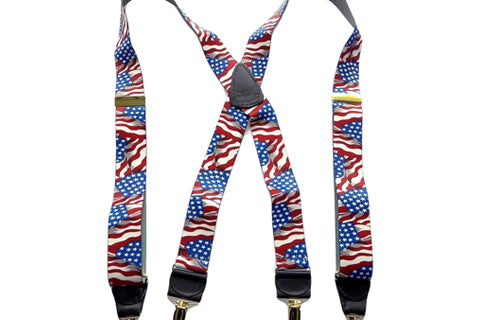
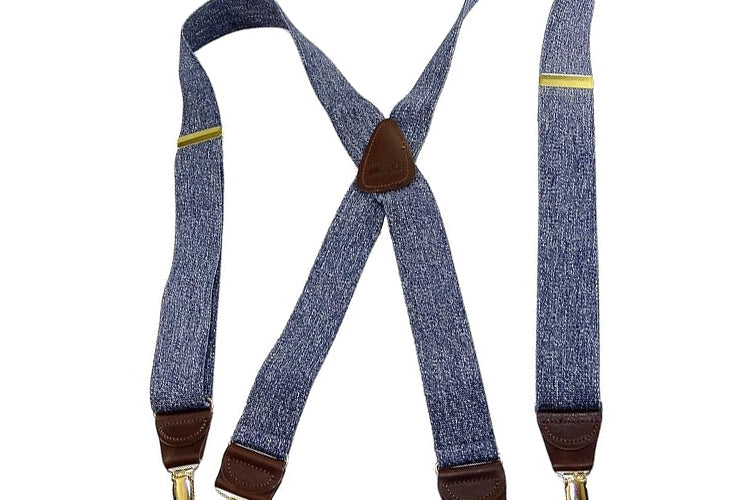
X-back style: distributes weight evenly across both shoulders, which tends to feel more secure for all-day wear than a Y-back design.
-
Adjustable elastic: lets you set the tension so the straps give feedback without feeling restrictive or digging into your shoulders by the afternoon.
-
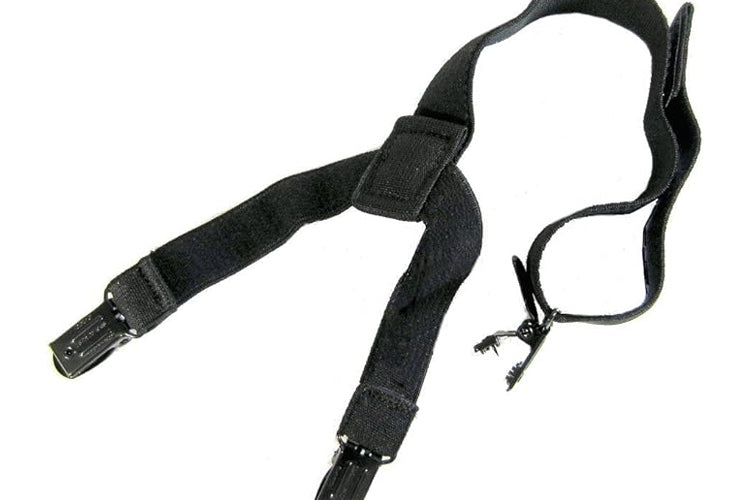
Non-slip clips or button-on ends: keep the straps from sliding off your shoulders every time you lean forward or reach for something.
-
Breathable webbing: matters if you wear a jacket or blazer over them for most of the day, since less breathable materials can feel warm under a layer.
Getting the strap placement right matters as much as the style you choose. Straps that sit too close to the neck tend to slip, while straps set too far out toward the shoulder edge can slide off entirely when you lean forward to type. A quick adjustment after putting them on, checked against how they sit when you are seated at your actual desk rather than standing in front of a mirror, makes a bigger difference than most people expect.
A classic X-back suspenders in a neutral tone works well under a button-down shirt and fits into most office dress codes without drawing attention.

Mistakes to Avoid
-
Wearing them too tight. A too-tight strap creates pressure points on the shoulders instead of a gentle cue, and can cause its own discomfort by the end of the day.
-
Relying on suspenders alone. They are a small nudge, not a fix. Pairing them with a reasonable desk setup and regular movement matters far more.
-
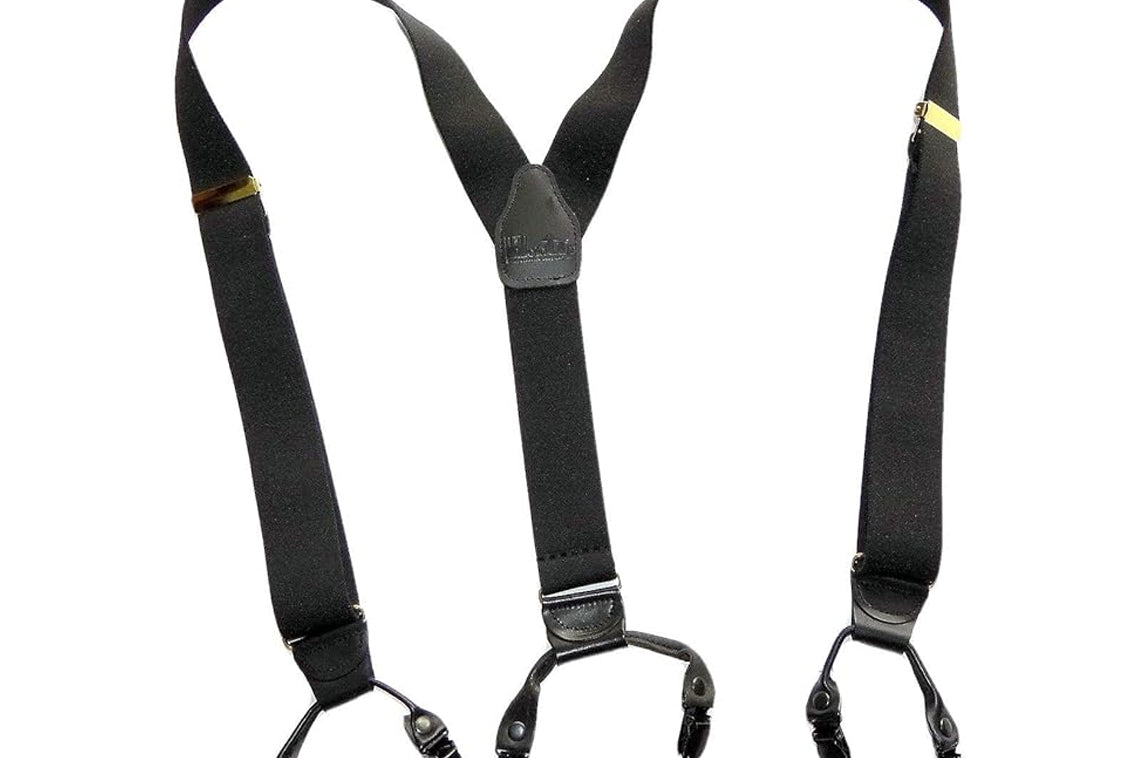
Choosing a Y-back for all-day wear. Y-back suspenders concentrate pressure at a single point on the upper back, which some people find less comfortable over a full workday than an X-back design.
-
Ignoring existing pain. If you have ongoing or worsening back or neck pain, an accessory is not a substitute for seeing a doctor or physical therapist. See our guide on whether suspenders can cause back pain if you are dealing with discomfort you think may be related to fit.
FAQs
Can suspenders replace a standing desk?
No. Suspenders may encourage better shoulder alignment while you sit, but they do not address the underlying issues that come from sitting still for long periods. A standing desk, regular movement breaks, and a properly adjusted chair still matter more for overall posture health.
Are suspenders comfortable to wear all day at a desk?
Most people find adjustable X-back suspenders comfortable for a full workday, as long as the tension is set correctly. Straps that are too tight can dig into the shoulders, so it is worth adjusting them once you sit down at your desk rather than leaving them at whatever setting you last used.
Is there scientific proof that suspenders improve posture?
Not in the form of clinical studies. The idea is based on straightforward mechanics, shoulder straps respond to how you are sitting in a way a belt cannot, plus a good amount of anecdotal reporting from wearers. Be skeptical of any source citing a specific statistic or "proven" medical benefit, since no published research currently supports those claims.
Do suspenders work for people with existing back pain?
Suspenders are not designed to treat back pain and should not be relied on as a medical solution. Some people find the shoulder feedback helpful for staying mindful of their posture, but anyone with ongoing or worsening back pain should speak with a doctor or physical therapist rather than treating an accessory as a fix.
Should desk workers choose X-back or Y-back suspenders?
X-back is generally the better choice for all-day desk wear, since it spreads weight across both shoulders rather than concentrating pressure at one point on the upper back. Y-back suspenders can still work, but some people notice more shoulder fatigue by the end of a long workday.
Can suspenders be worn with a fitted dress shirt at the office?
Yes. Suspenders are designed to sit over a dress shirt and under a jacket or blazer if you wear one, so they do not interfere with a fitted shirt. Just make sure the clips or buttons are positioned so they do not pull at the shirt fabric when you move.
How long does it take to notice a posture change from wearing suspenders?
There is no fixed timeline, since the effect depends on consistent wear rather than a single use. Some people report the shoulder cue becoming more automatic after a few weeks of regular wear, but wearing suspenders only occasionally tends to blunt that effect.
Do suspenders help with posture at a standing desk too?
The same shoulder feedback applies whether you are sitting or standing, so a single pair works for both. At a standing desk, shifting your weight periodically and avoiding locked knees still matters more for posture than any accessory.