
You've probably experienced the frustration of suspender clips damaging your dress pants. Choosing high-quality clips, positioning them correctly, and maintaining their grip can make a world of difference. But what if there's more to it than just using the right clips? Strategic placement and alternative attachment options could be the key to keeping your pants pristine.
Choose High-Quality Clips
When you're selecting suspender clips, opting for high-quality materials is essential to prevent damage to your dress pants. Stainless steel construction guarantees durability and rust resistance, while heavy-duty metal clips with large teeth maintain a firm grip without slipping.
High-quality elastic materials keep the tension consistent, preventing stretching over time. Genuine leather accents not only add elegance but also increase the longevity of your suspenders. The broader question of which material suits your lifestyle is worth exploring , elastic vs. leather suspenders behave differently under tension, and that directly affects how much stress their clips place on fabric.
By choosing premium materials, you guarantee the clips withstand daily wear and tear without degrading. For specific needs, work strength clips offer maximum holding power for demanding tasks, while casual strength clips provide adequate grip for everyday wear. Selecting the right materials and strength options keeps your dress pants safe from unnecessary wear.

Attach Clips to Sturdy Waistband Areas
To guarantee your dress pants remain intact, it's crucial to attach suspender clips to sturdy waistband areas. Knowing exactly where to clip suspenders on your waistband makes a significant difference in how much stress is placed on the fabric over time.
Start by positioning the front clips just inside or outside the front belt loops, making sure they align straight down from your shoulders. This prevents stress and keeps the fabric smooth. Always avoid clipping directly onto belt loops; instead, position clips adjacent to them. The reason is simple , belt loops are sewn with finishing thread, not structural thread, and repeated clip tension will eventually tear them loose.
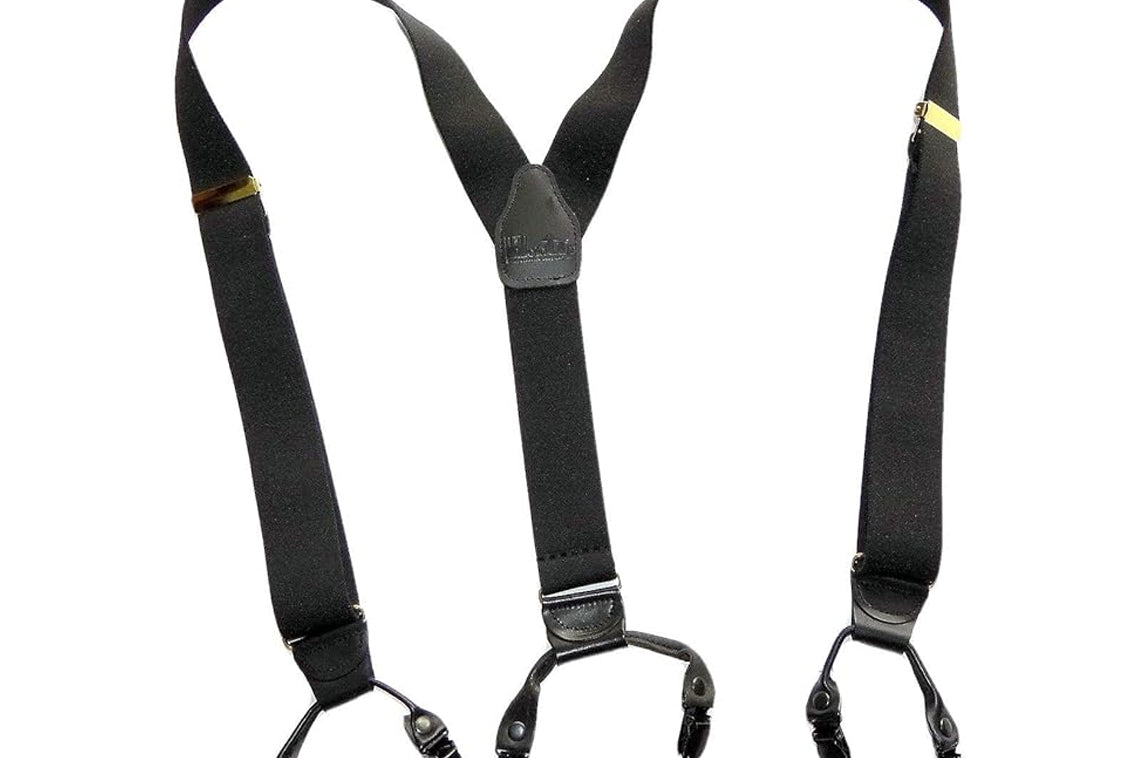
For the rear, if you're using Y-back suspenders, clip them at the center of the rear waistband, or just to the side if a belt loop is present. With X-back suspenders, align the clips where the straps naturally meet the rear waistband. Understanding the structural differences between Y-back and X-back suspenders helps you predict exactly where rear clips will land, so you can choose the sturdiest attachment point before you even put them on.
For side attachments, make certain the fabric lies flat and aligns naturally with your body shape.
Maintain Clip Grip and Tension
Once you've secured your suspender clips to the right spots on your waistband, it's important to maintain their grip and tension to confirm they function effectively. A clip that has lost its grip is twice as likely to damage fabric , it shifts, re-grips, and shifts again, each time pulling threads loose.
Start by cleaning the clips regularly; a damp cloth works wonders for removing dirt, while mild detergent and cool water keep the elastic straps fresh. Inspect the clips monthly, checking for wear or sharpness on the teeth, loose stitching, and damaged parts.
If the grip weakens, bend the rear plate slightly or use pliers to realign the jaws. A tiny drop of oil on the hinge can smooth operations. Understanding how to open suspender clips correctly , rather than forcing them , also prevents the jaws from warping, which is a common cause of uneven pressure on fabric. Handle clips gently and avoid pulling fabric too far from the top. Repair or replace clips if needed to confirm they don't damage your dress pants.
Opt for Alternative Attachments
Exploring alternative attachments for suspenders can save your dress pants from unwanted damage entirely. If clip-on styles consistently cause issues with your pants' fabric, switching attachment types is the most reliable long-term solution.
Button suspenders eliminate the risk of clip snapping, providing a discreet and elegant solution with leather ends enhancing style. They distribute tension across a reinforced button rather than pinching fabric between metal teeth. If you're new to this style, understanding how to attach suspender buttons to clothing ensures the button placement is correct and the pants are genuinely reinforced before use.
Lobster hooks attach to belt loops and withstand more tension than standard clips, although they're less formal. They're preferred in work environments like construction due to their durability. Side tabs, tailored from suit fabric, offer comfort and adjustability without clips or belts. Trigger snaps, ideal for Western wear, attach securely to belt loops, offering non-tearing support and quick-release convenience. Hidden suspenders like NoSaggs avoid clip damage entirely by supporting pants from underneath, maintaining neatness and providing comfort. For a thorough comparison of both systems, button suspenders vs. clip-on breaks down the pros and cons of each so you can make the right call for your wardrobe.
Ensure Proper Sizing and Fit
Although ensuring proper sizing and fit for your suspenders may seem straightforward, it's essential for comfort and preventing damage to your dress pants. An ill-fitting suspender exerts uneven tension , too short means constant pulling at the waistband, too long means the clips slip and re-grip repeatedly, both of which cause fabric wear.
Start by accurately measuring your torso. Use a tape measure from the front waistband over your shoulder to the back waistband, keeping it snug. Wear the pants you intend to use with your suspenders for precise results. Commonly, suspenders measure from clasp to clasp, which is important to note when determining the correct length. A full suspenders size chart guide takes the guesswork out of this measurement and accounts for variations in torso length across different body types.
Consider height-based sizing charts to select the correct suspender length:
-
Under 5'0": Opt for 36-inch suspenders.
-
5'0" to 5'9": Choose 42-inch suspenders.
-
5'10" to 6'2": Go for 48-inch suspenders.
Lastly, adjust the straps to lay flat without tightness, ensuring they don't pinch or slip, prolonging the life of your dress pants.
Frequently Asked Questions
Do suspender clips damage dress pants?
Suspender clips can damage dress pants when they are low quality, incorrectly positioned, or poorly maintained. Clips with sharp or narrow teeth concentrate tension on a small area of fabric, causing fraying or punctures over time. High-quality clips with wide, smooth teeth , positioned on the sturdy waistband rather than directly on belt loops , distribute tension evenly and prevent tearing.
Where is the safest place to attach suspender clips on dress pants?
The safest place to attach suspender clips on dress pants is on the waistband itself, adjacent to but not directly on the belt loops. The waistband is the most structurally reinforced part of the pants, built to bear tension. Clipping onto belt loops puts stress on finishing stitching that is not designed to hold sustained weight, which leads to tearing with regular wear.
Are button suspenders better than clip-on for protecting dress pants?
Button suspenders are generally better for protecting dress pants because they anchor to a reinforced button rather than gripping fabric between metal teeth. This eliminates pinch points and distributes tension across a wider, sewn-in attachment point. However, button suspenders require pants to have built-in or added buttons at the waistband, which means some preparation is needed before wearing them.
How do I stop suspender clips from slipping on dress pants?
Suspender clips stop slipping when the clip jaw is properly tensioned, clean, and positioned on flat, taut waistband fabric. Check the clip's rear plate , if the grip has weakened, use needle-nose pliers to gently tighten the jaw. Keeping the clip teeth free of dust and lint also restores grip. If slipping persists despite adjustments, replacing the clips or switching to a button-end suspender is the most reliable fix.
What suspender clip type causes the least damage to dress pants fabric?
Wide-jaw, smooth-toothed metal clips cause the least damage to dress pants fabric because they spread tension across a larger surface area. Narrow alligator-style clips with sharp ridges concentrate grip on fewer threads, accelerating wear. For formal dress pants specifically, no-slip clips with rubber-lined teeth or broad flat jaws are the safest option, providing a secure hold without abrading the fabric beneath.
Conclusion
To keep your dress pants in top shape, always choose high-quality suspender clips made from durable materials like stainless steel. Attach them to sturdy areas near the waistband and belt loops, ensuring the fabric stays flat. Regularly clean and inspect the clips for wear to maintain their grip and tension. Consider alternatives like button suspenders or trigger snaps for a secure fit. By following these steps, you'll protect your pants and maintain a polished look.