
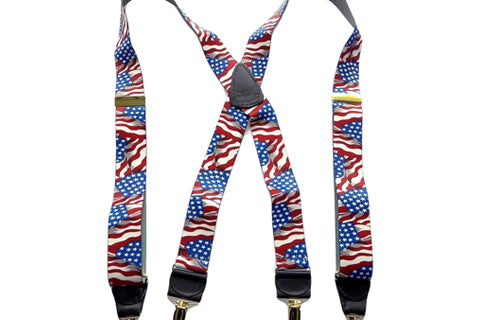
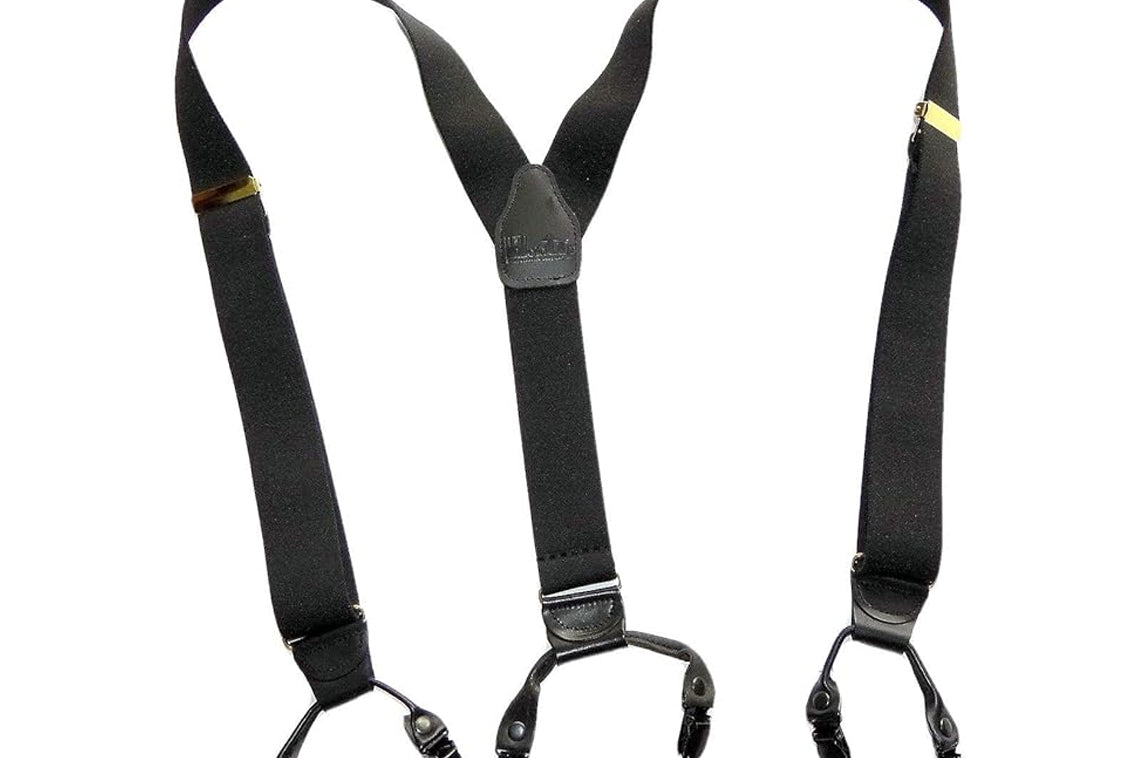
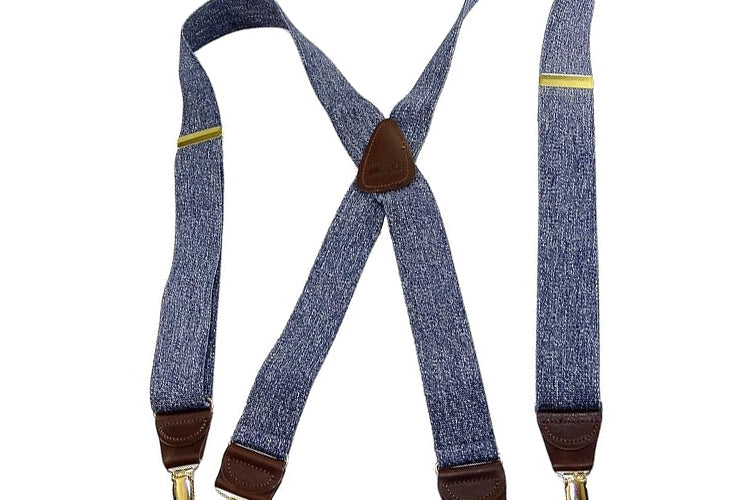
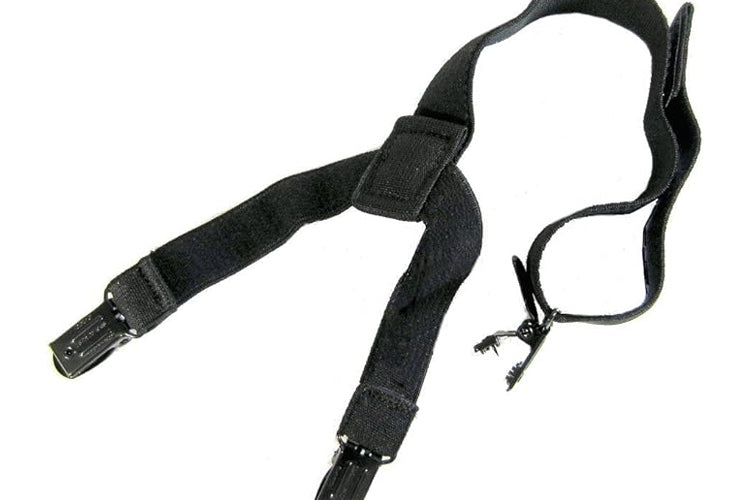

X-back suspenders cross at the back forming an "X" shape, offering better weight distribution and a wider surface area across the shoulders. Y-back suspenders meet at a single central point on the back, providing a cleaner silhouette that suits formal and slim-fit styles. X-back is preferred for all-day wear and active use; Y-back is the go-to for suits, tuxedos, and dressier occasions.
The decision between X-back and Y-back suspenders comes down to more than aesthetics-it affects how your suspenders feel throughout the day, how they work with your wardrobe, and whether they complement your body type. Both styles have been around for well over a century, and both serve specific purposes better than the other. If you've ever noticed that one pair of suspenders feels more stable while another sits cleaner under a vest, the back style is usually the reason. This guide breaks down the functional and style differences between X-back and Y-back suspenders so you can make a confident choice for every outfit and occasion.
What Are X-Back Suspenders?
X-back suspenders feature two straps that run from the front waistband, cross over each other at the center of the back, and attach at two separate points on the rear waistband-forming a distinct "X" shape. The crossing point acts like a structural anchor, keeping both straps in position even during movement. Because the straps spread across a wider area of the shoulder blades, X-back designs are particularly stable for extended wear.
-
The crossing mechanism redistributes tension across both shoulder blades simultaneously
-
Wide-strap suspenders almost always use an X-back for this very reason
-
The back structure stays in place during bending, lifting, and prolonged physical activity
This back style is the most common configuration in work, outdoor, and heavy-duty applications where the suspenders need to handle physical stress without shifting. You can explore the full range of classic X-back suspender styles to see how this back configuration is applied across different strap widths and materials.

What Are Y-Back Suspenders?
Y-back suspenders have two straps that travel over each shoulder and converge into a single strap at the back before attaching at two rear waistband points-forming a "Y" shape. This design creates a streamlined profile at the back, which is why it became the standard for formal dress suspenders. The single rear strap sits neatly at the center of your back, making it virtually invisible under a suit jacket or dress shirt.
Understanding the full range of suspender back styles helps clarify why the Y-back has remained the formal default for over a century. Y-back suspenders tend to sit flatter against the back and are generally preferred for occasions where a minimal, elegant look is the priority-or where the suspenders won't be visible at all.

X-Back vs Y-Back Suspenders: A Side-by-Side Comparison
There are many types of suspender but before choosing between the two, it helps to see how each style performs across the criteria that matter most to buyers.
|
Feature |
X-Back |
Y-Back |
|
Back shape |
Crossing straps ("X") |
Single converging strap ("Y") |
|
Weight distribution |
Spread across both shoulder blades |
Concentrated at single center point |
|
Formal suitability |
Casual to semi-formal |
Formal and business wear |
|
Stability during movement |
High |
Moderate |
|
Under-clothing profile |
Slightly fuller |
Slim and flat |
|
Best use case |
Work, outdoor, everyday |
Suits, tuxedos, dress occasions |
|
Typical strap width |
Wide (1"–2") and narrow |
Narrow (½"–1") |
Which Style Distributes Weight More Evenly?
X-back suspenders distribute weight across both shoulder blades simultaneously because the crossing straps spread tension over a larger back surface area. When one side bears more load-such as when bending forward or carrying something heavy-the cross mechanism compensates by sharing tension across both straps. This makes X-back the more ergonomic option for people who wear suspenders for several hours at a stretch.
Y-back suspenders funnel all tension into a single rear strap before it reaches the waistband. For lighter everyday wear or occasions where you're seated most of the day, the difference is minimal. But if you're on your feet for long periods or your trousers are on the heavier side, the X-back design will feel noticeably more balanced. People who experience discomfort with suspenders often find that switching to an X-back resolves the issue-a point worth considering if you've wondered whether suspenders can cause back pain.
When Does X-Back Work Better Than Y-Back?
There are several real-world situations where X-back is the clearly superior choice. Knowing when to reach for each style prevents the mistake of applying formal aesthetics to practical situations-or sacrificing comfort in the name of tradition.
-
Physical work and outdoor use: The crossed back keeps suspenders locked in position when you're bending, lifting, or moving frequently. Workwear suspenders are almost always X-back for this reason.
-
All-day comfort: If suspenders need to stay in position from morning to evening without readjusting, X-back provides the structure needed.
-
Wider strap widths: Wider straps naturally suit an X-back design because the crossing distributes added material evenly. Pairing wide straps with a Y-back tends to feel unbalanced.
-
Broader body frames: The wider support area of an X-back is especially comfortable for people with broader shoulders or a larger build. The best suspenders for larger frames almost always feature an X-back configuration.
Which Style Is Best for Formal and Business Occasions?
Y-back suspenders are the standard for formal dressing-and for good reason. The clean, single-strap rear profile sits flush against the back, prevents bunching under dress shirts, and creates the polished silhouette expected at weddings, black-tie events, and business formal settings.

When wearing suspenders with a suit, they are typically hidden under a jacket, and the Y-back design ensures nothing disrupts the drape of the fabric. When pairing suspenders with a suit, the Y-back keeps the rear profile minimal-especially important in slim or tailored cuts. Tuxedo suspenders, cocktail attire, and business formal looks nearly always call for a Y-back in a narrower strap width (½ inch to 1 inch), in silk, satin, or fine elastic.
How Do You Choose Between X-Back and Y-Back for Casual Wear?
Casual dressing is the one context where both back styles work equally well, and the choice comes down to personal preference and outfit structure. For jeans and a rolled-up flannel shirt where the suspenders are visible, either back style is acceptable. X-back gives a more rugged, utilitarian character; Y-back reads as more refined even in relaxed contexts.
When putting together casual outfits with suspenders, consider whether the back of your suspenders will actually be seen. If you're wearing them as a visible style statement over a T-shirt or open-collar shirt, the X-back's visual structure adds layering and dimension. If you want the suspenders to recede into the outfit and let other elements take focus, Y-back is the cleaner background option.
Myths vs Facts About Suspender Back Styles
A few persistent misconceptions lead buyers toward the wrong style for their needs.
-
Myth: Y-back suspenders are always more comfortable. Fact: Y-back concentrates all tension into a single rear point. For formal or light wear, the difference is negligible-but X-back is genuinely more comfortable for extended or active use.
-
Myth: X-back suspenders are only for workwear. Fact: X-back works across casual, outdoor, and even semi-formal contexts. Strap material and hardware determine formality far more than the back configuration alone.
-
Myth: Both styles fit the same way. Fact: X-back suspenders often feel more secure out of the box because the crossing back limits lateral strap movement. Y-back relies more on precise strap length to stay properly centered. Correct suspender adjustment technique matters for both, but especially for Y-back styles where alignment is critical.
-
Myth: The back style doesn't affect the front silhouette. Fact: The back shape affects strap tension distribution, which changes how the front straps sit on your shoulders and drape across your torso.
Frequently Asked Questions
Are X-back or Y-back suspenders more traditional?
Both styles have deep historical roots. Y-back suspenders dominated formal dressing through the 19th and early 20th centuries, while X-back designs became widely adopted as suspenders moved into workwear and outdoor use. Today, Y-back remains the formal standard while X-back leads in functional and casual categories.
Can I wear X-back suspenders with a suit?
Technically yes, but it's not the ideal choice. X-back creates more bulk at the back, which can interrupt the drape of a suit jacket. Y-back is the recommended style when styling suspenders with a suit because it stays flat and unobtrusive under structured tailoring.
Which back style is better for people with broad shoulders?
X-back suspenders are generally more comfortable for broader builds because the crossing distributes strap tension across both shoulder blades rather than channeling it through one central point. The wider the strap, the more pronounced this difference becomes.
Do clip-on and button-on suspenders come in both back styles?
Yes. Both X-back and Y-back configurations are available in clip-on and button-on attachment styles. The back shape is independent of the attachment method. If you're weighing which attachment works better for your wardrobe, the comparison of clip-on vs button-on suspenders covers the key tradeoffs.
Which style is easier to adjust?
X-back suspenders are generally more forgiving to adjust because once the crossing stabilizes both straps, adjustments have an even effect across the full back structure. Y-back adjustments require more precision-a single strap out of alignment at the back affects the entire rear drape.
Do leather suspenders come in X-back and Y-back?
Yes. Leather suspenders are manufactured in both back configurations, though Y-back is more common in formal leather styles. Whether you prefer elastic or leather suspenders, both materials are available in either back style depending on the occasion.
What strap width works best with each back style?
Narrower straps (½ inch to ¾ inch) pair naturally with Y-back for formal contexts. Wider straps (1 inch to 2 inches) almost always appear in X-back designs built for functional or casual wear. Pairing wide straps with a Y-back design tends to look unbalanced and performs poorly in terms of weight management.
How do I find the right size suspenders regardless of back style?
Proper fit depends on your height and torso length. The suspenders sizing guide identifies the correct strap length for your proportions so both X-back and Y-back styles sit correctly on your frame.
Can I wear suspenders with jeans in either back style?
Absolutely. Both back styles work with jeans. For a casual denim outfit, X-back suspenders lean toward a vintage workwear or rugged aesthetic, while Y-back reads as more polished. The full breakdown of wearing suspenders with jeans covers the best strap widths and attachment options for denim waistbands.
Conclusion
X-back and Y-back suspenders each have a defined purpose, and understanding that difference is what separates a well-chosen accessory from one that looks right but doesn't feel right—or functions well but looks out of place. X-back is the practical choice for active wear, wider straps, and all-day comfort. Y-back is the refined choice for suits, formal occasions, and slim-fit silhouettes. Most people benefit from having both in their wardrobe, matching each style to the context it was designed for. When you align the back style with the situation, suspenders stop being an afterthought and become one of the most reliable, functional accessories you own.