

A firefighter's turnout pants do not weigh much on the hanger. Once a firefighter puts them on over station wear, clips on a loaded duty belt, and heads into a working fire, the math changes fast. Multiple layers of flame-resistant fabric, tools hanging at the waist, and water weight from the hose line all pull down on the same waistband.
A belt alone was never built to carry that. Suspenders were, and that is the real reason they remain standard gear on the fireground rather than a style choice.
Need suspenders built for that kind of load? The Industrial Series Heavy Duty Suspenders use non-elastic front straps designed to resist stretch and sag under a full duty belt, exactly the kind of sustained weight firefighters deal with on every call.

The Weight Problem a Belt Cannot Solve
Turnout pants are built from three layers stitched together: an outer shell, a moisture barrier, and a thermal barrier. That construction protects a firefighter from heat and flame, and it also makes the pants heavy before anything else is added. Once those layers absorb water from a hose line or a soaked structure, the weight climbs further, since the same fibers built to resist flame also tend to hold onto moisture rather than shed it.
Add a loaded duty belt on top of that, radio, flashlight, hand tool, sometimes a thermal camera, and the load sitting on the hips grows heavier still. Our guide to turnout gear suspenders covers how that combination adds up over a full shift, and why gear that is fine empty becomes a problem once it is fully loaded and wet.
How Suspenders Solve the Problem Belts Create
 A belt holds pants up through waist compression. That works fine for light, dry clothing, but under real fireground weight it becomes the failure point: a belt tight enough to hold soaked, loaded turnout pants in place is also tight enough to restrict breathing and movement, which is the last thing a firefighter needs while climbing a ladder, crawling through a hallway, or forcing a door.
Suspenders carry that same load from the shoulders instead of the waist, spreading the weight across a larger, stronger part of the body and leaving the waistband free to move with the wearer rather than against them. If the straps need adjusting for a specific department's gear setup, our piece on how to adjust firefighter suspenders walks through getting that fit right so the straps hold securely without cutting into the shoulders during long calls.
H-Back, X-Back, and Y-Back: The Main Suspender Styles
Not all firefighter suspenders are built the same way, and the differences matter more than they might seem. H-back suspenders, the most common style found on structural turnout pants, use two vertical straps connected by a horizontal crossbar between the shoulder blades. That layout keeps the straps from sliding off the shoulders during heavy movement and remains the default configuration many turnout pant manufacturers build their attachment loops around.
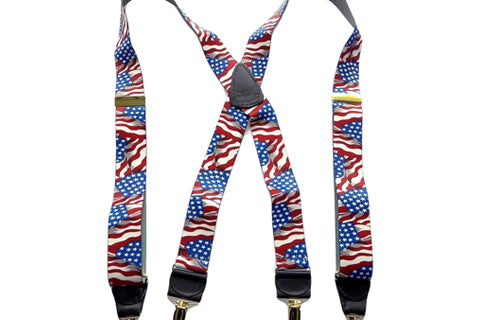
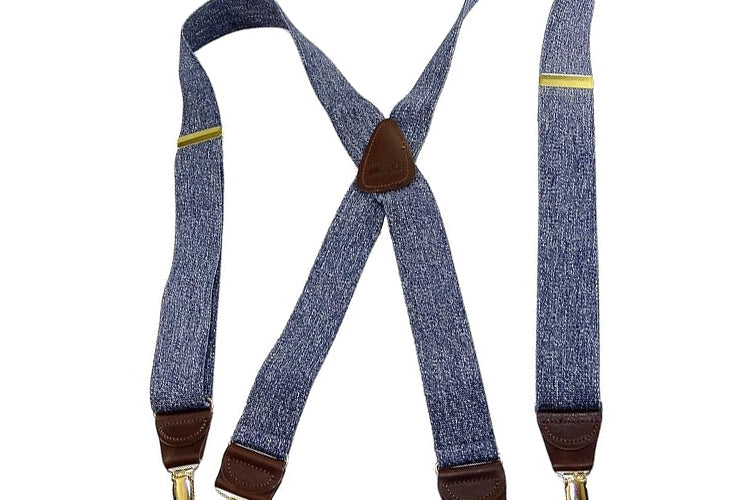
X-back suspenders cross diagonally between the shoulder blades instead, which some firefighters find distributes weight more evenly across the back, particularly for larger frames. A newer Y-back design, built more like the racerback strap on athletic apparel, has shown up in recent turnout gear lines specifically because it keeps a fuller range of shoulder motion during crawling and overhead work compared to the older H and X layouts.
Many current turnout pant systems also attach suspenders to fabric loops rather than metal hardware, since a strap that snaps into soft loops is less likely to dig in, snag, or work loose than one held by rigid metal clips under heavy load.
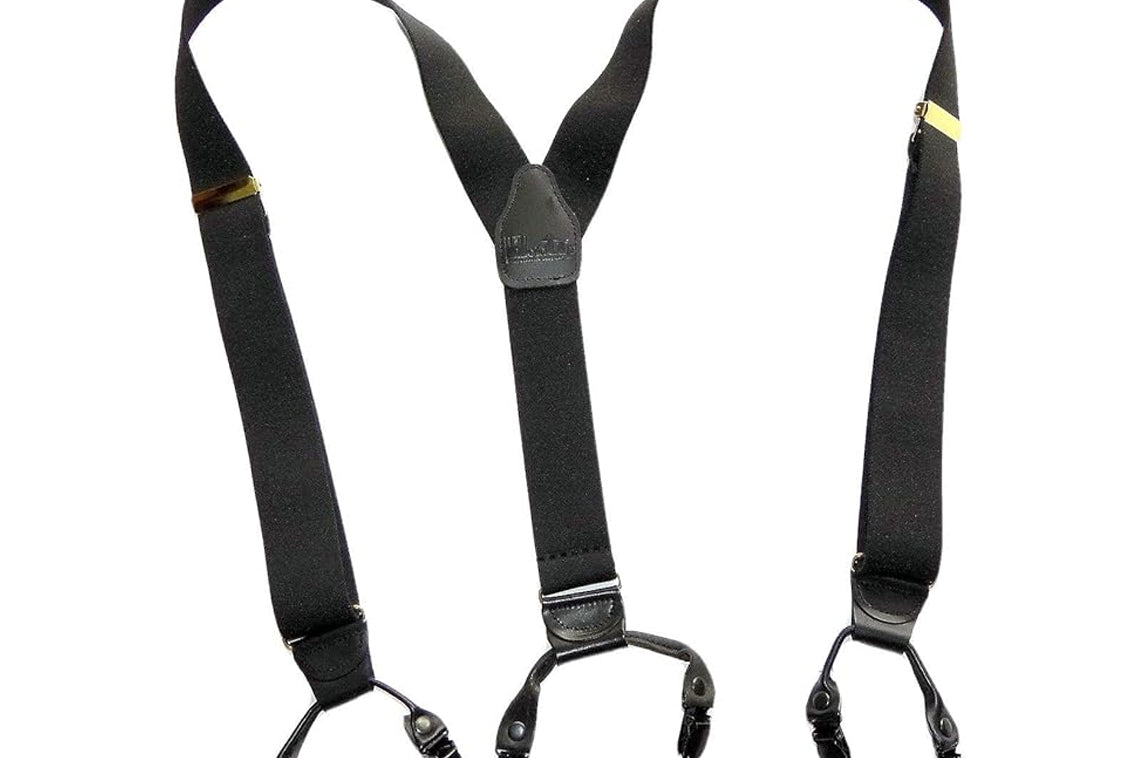
Looking for a heavier-duty option built for outdoor and high-wear conditions? The Shadow Black Outdoorsman Series suspenders use jumbo no-slip clips rated for exactly this kind of sustained, heavy load.

Built for the Job, Not Just Comfort
Suspenders have been part of firefighting gear far longer than most people realize. In the early twentieth century, they were first used to hold up the heavy rubber leggings firefighters wore before modern turnout gear existed.
As the gear evolved into the multi-layer bunker pants used today, suspenders stayed, and leather became the material of choice for many departments because it holds up to heat and repeated wear better than lighter synthetic straps. Our care guide for cleaning leather firefighter suspenders covers how to keep that material performing over years of hard use rather than one season.
According to Cal Fire Gear, a supplier that outfits wildland and structural crews, the choice between button and clip attachment styles comes down to personal preference and how often a firefighter swaps pants, but the underlying job, carrying weight without restricting movement, stays the same regardless of attachment type.
Departments in colder regions have additional considerations, which our guide to firefighter suspenders for cold climates covers in more detail.
Are Suspenders Actually Required on Turnout Gear
 Modern structural turnout pants sold by major manufacturers are certified to NFPA fire service standards as a complete system, and many current designs, including padded H-back suspenders built with fabric rather than metal attachment loops, are engineered and tested as part of that certified pant rather than as an optional accessory.
The standards do not call out suspenders by name as a mandatory item, but a protective ensemble is generally expected to be worn as its manufacturer designed it.
If a pair of turnout pants was engineered with suspender attachment loops as part of its fit and protection, skipping the suspenders means wearing the gear outside of that tested design, even if department policy does not spell that out directly. In practice, that is a large part of why suspenders show up on essentially every structural firefighter rather than only some.
Suspenders Versus a Belt Alone: The Bottom Line
Nobody is telling a firefighter they cannot wear a belt. Most do, underneath the suspenders, as a backup and to keep a shirt tucked. But relying on a belt by itself to hold up fully loaded, water-soaked turnout gear asks a single point of compression to do a job it was never designed for. Suspenders move that job to the shoulders, where the body can carry it, which is why they have stayed standard issue on the fireground for more than a century.
Frequently Asked Questions
Do firefighters wear belts at all?
Many do, but typically as a secondary layer worn with suspenders rather than as a replacement. The suspenders carry the real weight of the loaded turnout pants.
Are firefighter suspenders different from regular suspenders?
They are usually built wider and from more heat-resistant material, often leather, and are rated to carry significantly more sustained weight than suspenders meant for everyday dress or casual wear.
Can suspenders fail under heavy gear weight?
Lower-quality straps and clips can stretch, slip, or wear out faster under repeated heavy loads, which is why departments generally specify heavy-duty, non-elastic, or leather suspenders rather than standard consumer-grade pairs.
What material is best for firefighter suspenders?
Leather is a common choice because it resists heat and abrasion well over years of use, though heavy-duty non-elastic webbing is also widely used for its strength under a fully loaded duty belt.
What is the difference between H-back and X-back firefighter suspenders?
H-back suspenders use two vertical straps joined by a horizontal crossbar and are the most common style built into turnout pants. X-back suspenders cross diagonally instead, which some firefighters find spreads weight more evenly across a larger frame.
Do turnout pants come with built-in suspenders?
Many current turnout pant systems include suspenders as part of the certified design, attached to fabric loops rather than metal hardware. Older or standalone bunker pants may require you to purchase and attach suspenders separately.