
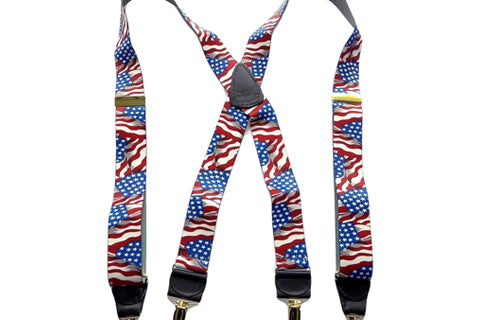
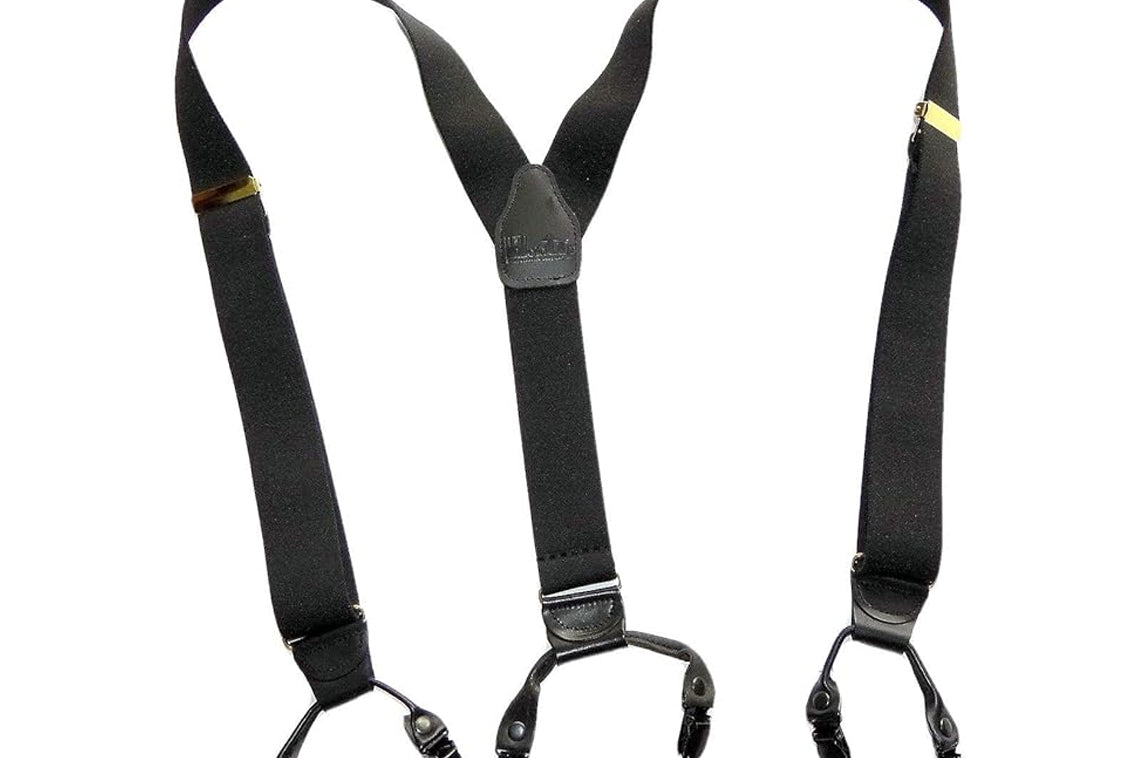
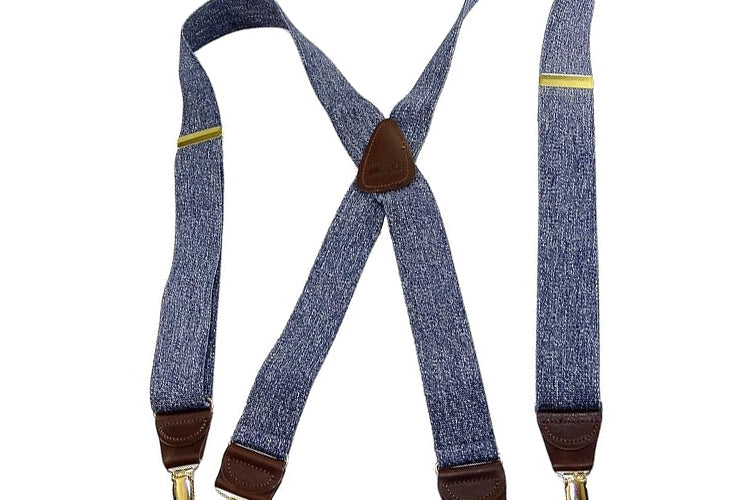
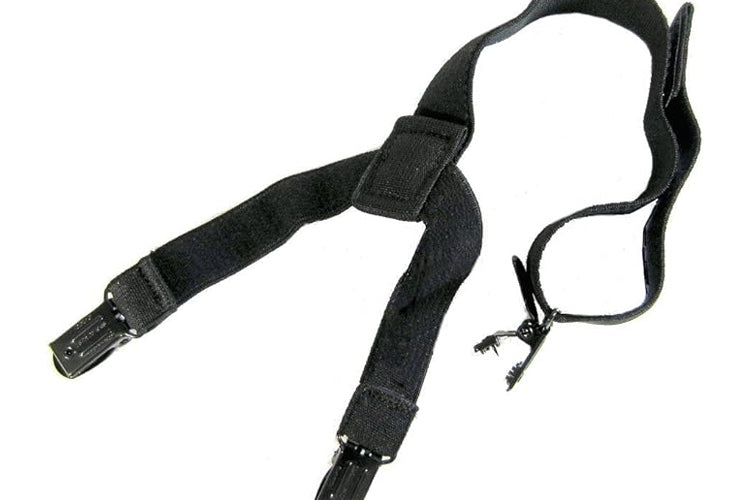

Men with a short torso should look for suspenders in adult short lengths, set the front adjustment sliders low on the strap so they sit at mid-torso rather than near the chest, choose narrower strap widths between 1 and 1.25 inches for visual proportion, and attach the clips at the natural waistline rather than below it to prevent the straps from bunching or creating excess fabric between the shoulder and the attachment point.
Wearing suspenders with a short torso is not complicated, but it does require a more deliberate approach to fit than wearing them on an average or long torso does. Standard 48-inch suspenders are calibrated for men between 5'2" and 6'4", which accounts for a wide range of heights but does not account for the variation in torso-to-leg ratio within that height range. A man who is 5'7" but carries most of his height in his legs and has a compact upper body will find that standard suspenders bunch, pull the trousers too high, or position the adjustment hardware uncomfortably close to the collarbone. Getting the fit right starts with understanding exactly why standard sizing creates these problems and what to change.
Why Standard Suspenders Do Not Work Well for Short Torsos
The fit problem with standard suspenders on a short torso is almost entirely about strap length between the shoulder and the waistband attachment point. Standard suspenders are designed with enough strap length to accommodate a long torso, and when that excess length is worn on a short torso, it has nowhere useful to go.
The excess length either gets taken up by cranking the adjustment sliders all the way to their shortest setting, which positions the sliders at or near the collarbone rather than mid-torso, or it creates slack in the strap that bunches visually between the shoulder and the waistband. Both outcomes undermine the clean vertical line that suspenders are supposed to create and make the fit look poorly considered regardless of how well the rest of the outfit is put together.
The structural issue is that suspenders adjusted to their absolute minimum tension are also at their least stable. A slider cranked fully tight has no further room to absorb any stretch from movement, which means the strap either stays stiff and uncomfortable or gradually loosens over the course of a day because the elastic has no reserve range left to work with. Understanding how to loosen and adjust suspenders correctly is a useful starting point, but for a genuinely short torso the adjustment alone is often not enough and strap length needs to be addressed at the purchase stage.
Measuring Your Torso Before Buying
Buying suspenders without measuring first is the single most common cause of fit problems for men with short torsos. Taking one measurement before purchasing saves significant frustration and eliminates the need for returns or modifications.
The correct torso measurement for suspenders runs from the back trouser attachment point, up and over the shoulder, and down to the front trouser attachment point. This is the total strap length the suspenders need to cover, and it tells you exactly which length category to shop in.
Here is how to take the measurement accurately:
- Stand in the trousers you plan to wear with the suspenders, at the position where the waistband naturally sits
- Run a soft measuring tape from the back center of the waistband, up and over the right shoulder, and down to the front right of the waistband
- Note the measurement in inches
- Repeat on the left side to check for any asymmetry
- Use the shorter of the two measurements as your reference length when shopping
Most men with a genuinely short torso will measure between 38 and 44 inches on this path, which puts them well below the 48-inch standard length. The full guidance on how to measure for suspenders covers the measurement process in detail and includes guidance on what to do when you fall between standard size categories.
Choosing the Right Strap Length Category
Once you have your torso measurement, the strap length decision becomes straightforward. Most suspender manufacturers offer suspenders in standard (48 inches), short, and extra-long lengths. For men with a short torso, the short or adult-short length category is the correct starting point rather than a standard pair adjusted to minimum tension.
Shorter suspenders positioned correctly place the adjustment slider hardware at mid-torso, which is the correct position for both comfort and appearance. The slider hardware sitting at mid-torso means the strap has room to adjust in both directions, which gives the elastic a functional range of movement rather than locking it at maximum compression.
For men with both a short torso and a taller overall height due to longer legs, this measurement approach is especially important because height alone does not determine the correct suspender length. A 6-foot man with a long-legged, short-torsoed build will often need shorter suspenders than a 5'6" man with a proportionally average torso. The extra-long suspenders for big and tall men exist for the opposite end of this spectrum, but the principle is the same: strap length should be matched to torso measurement rather than to overall height.

Strap Width and Visual Proportion on a Short Torso
Strap width has a direct visual effect on how the torso reads in an outfit, and for men with a short torso the wrong width choice amplifies the compactness of the upper body rather than working with it.
Wider straps, particularly 1.5 inches and above, create a stronger horizontal visual presence at the shoulder. On a long torso, this width is comfortably absorbed into the vertical length of the outfit. On a short torso, wide straps shorten the apparent distance between the shoulder and the waist visually and draw attention to the compactness of the upper body.
Narrower straps between 1 and 1.25 inches create a cleaner vertical line that elongates the torso visually by drawing the eye upward along the strap rather than across it. This is the same proportionality logic that applies to vertical stripes on a shirt for a short torso, applied to the suspender itself.
- 1-inch straps create the most elongating effect and work well in formal or contemporary casual contexts where a slim, clean silhouette is the goal
- 1.25-inch straps offer a balance between visual slimness and practical strap security, and suit most everyday wearing contexts for a short-torsoed frame
- 1.5-inch straps can work if the outfit calls for a more traditional or substantial look, but require attention to attachment placement to avoid shortening the torso visually
- 2-inch straps are best reserved for heavy work contexts where load support is the priority over aesthetics
The guide on how to wear suspenders if you have narrow shoulders covers related proportionality logic for men whose upper body dimensions require a more considered approach to strap sizing, and much of that guidance applies equally to the short torso context.
Clip Placement and Attachment Position
Where the clips attach on the waistband is just as important as strap length for men with a short torso. Incorrect attachment placement compounds the length problem and creates new fit issues that adjustment sliders cannot fix.
The clips should attach at the natural waistline, which is the narrowest point of the torso above the hips. Attaching the clips at the top of the waistband when the waistband sits low on the hip drops the attachment point below the natural waist, which adds effective length to the strap path and pulls the short torso problem back in through the attachment position even when the strap length is otherwise correct.
Front clips should sit in line with the trouser crease, roughly at the 11 o'clock and 1 o'clock positions relative to the waistband center. This placement distributes the forward pull of the straps evenly and prevents the waistband from tilting forward at the center front, which is a common problem when clips are placed too close to the center seam.
For men who find that standard clips do not provide enough positional stability at the attachment point, the guide on adjusting hook placement for comfort on suspenders covers the specific mechanics of how clip position affects both comfort and the stability of the whole system during wear.
The Case for Button Attachment on a Short Torso
Button attachment, where the suspender ends loop onto buttons sewn into the inside of the waistband rather than clipping to the outside, gives men with a short torso a significant practical advantage over clip-on attachment. The attachment point is fixed precisely at the intended location and cannot shift, rotate, or migrate during wear the way a clip can when the strap geometry is working against a non-standard torso proportion.
With clip-on suspenders on a short torso, the combination of a shorter strap path and the leverage applied by a compact upper body can cause clips to gradually angle or walk along the waistband during active wear. Button attachment eliminates this entirely. The suspender end is locked at the button position, and the geometry of the strap from that fixed point to the shoulder remains consistent throughout the day.
The comparison of button suspenders versus clip-on covers the full case for each method, and for men with fit challenges related to body proportion, the section on positional stability is particularly relevant. If your current trousers only have belt loops, the guide on how to convert clip-on suspenders to button-on style walks through adding waistband buttons to existing trousers without requiring professional tailoring.
Trouser Choice That Works With a Short Torso and Suspenders
The right trouser cut reinforces everything the correct suspender fit achieves and makes the whole outfit work as a coherent system rather than a set of separate pieces fighting each other.
High-waisted trousers are the strongest choice for a short torso when wearing suspenders. A high waistline raises the visual break point between the trouser and the shirt, which creates the impression of a longer torso above the waistband. Combined with suspenders that run vertically from that raised waistline to the shoulder, the outfit creates a strong upward visual line that works in the wearer's favor.
Flat-front trousers with a slim or tapered leg keep the silhouette clean and prevent visual bulk at the hip and thigh, which would counteract the lengthening effect of the suspender straps above the waist. Pleated trousers add volume at the hip and thigh, which can make a short torso look even more compact by widening the lower half of the upper body relative to the slimmer shoulder line.
Trousers that break cleanly at the shoe with minimal stacking at the hem add further length to the overall silhouette and reinforce the proportionate look that correctly fitted suspenders on a short torso create.
Shirt Tucking and the Role of Shirt Stays
A shirt that rides out of the waistband on a short torso creates a visual break between the trouser and the shirt that cuts the torso into two shorter sections rather than allowing it to read as one continuous vertical line. For men whose primary styling goal with suspenders is to create length and proportion in the upper body, an untucked or half-tucked shirt undermines that goal immediately.
Shirts with elongated tails, designed to stay tucked through a full day of movement, are the correct choice when wearing suspenders on a short torso. Pairing them with shirt tail stay-down straps ensures the shirt remains anchored from shoulder to waistband throughout the day, maintaining the clean uninterrupted vertical line that makes the full outfit look balanced and intentional.

Keeping the shirt collar and placket clean, the trouser pressed with a sharp crease, and the suspenders running straight from shoulder to waistband without any twist or diagonal pull completes the picture. Each of these details individually makes a small difference; together they add up to an outfit that reads as well-proportioned and carefully considered regardless of the underlying body dimensions.
Styling Tips That Work in Favor of a Short Torso
Beyond the fit mechanics, a few consistent styling choices make suspenders look particularly strong on a short torso by using the visual properties of the garment to create proportion rather than just accepting the body shape as a constraint.
- Vertical stripe shirts worn under suspenders reinforce the elongating line of the straps and create a strong upward visual movement that adds apparent torso length
- Keeping jacket lapels in proportion to the frame, specifically avoiding very wide lapels that create a strong horizontal line across the chest, allows the suspenders to lead the visual narrative of the outfit
- A well-fitted jacket worn over suspenders frames the torso cleanly and prevents the shirt from bunching at the sides, which can add apparent width at the waist on a compact frame
- Solid or subtly textured suspenders rather than bold patterns keep the strap itself from becoming a visual interruption in the vertical line it is creating
The full context of the art of wearing suspenders applies all of these principles together and is worth reading as a comprehensive reference for anyone developing a suspender-based wardrobe.
Frequently Asked Questions
What length suspenders should a man with a short torso buy
Men with a short torso should measure the torso path from the back waistband over the shoulder to the front waistband before buying. Most men with a genuinely short torso will measure between 38 and 44 inches on this path and should look for adult short or short-length suspenders rather than the standard 48-inch option. Buying standard length and adjusting to minimum tension is a workable but imperfect solution that positions the slider hardware too high on the chest and leaves the elastic with no functional adjustment range.
Can a short man with a short torso wear standard 48-inch suspenders
A short man with a proportionally average torso relative to his height can often wear standard 48-inch suspenders adjusted to a shorter setting without significant fit problems. The issue arises specifically when the torso is short relative to the legs and hips rather than just when the overall height is below average. If the adjustment sliders have to be set near their maximum tightness to achieve a correct fit, the suspenders are too long for the torso and a shorter length will produce a better result.
Why do my suspender straps bunch near my shoulders
Bunching near the shoulders is the most direct sign that the strap length is too long for the torso. When the strap has more length than the distance from shoulder to waistband requires, the excess fabric has to go somewhere and it typically folds or bunches near the shoulder seam or at the adjustment slider. The solution is either a shorter suspender length or a significant change in attachment position to lengthen the effective strap path, such as attaching at a lower point on the waistband.
Do Y-back or X-back suspenders look better on a short torso
Y-back suspenders typically look cleaner and more proportionate on a short torso because the single back strap creates a minimal visual footprint at the back, which prevents the rear of the outfit from looking busy or heavy. X-back suspenders spread across a wider area of the back, which can visually shorten the torso from the rear view. For formal or professional wear where a clean back silhouette matters, Y-back is the better choice for a short torso. For casual wear where function is the priority, X-back provides better load distribution and lateral stability.
Should men with a short torso tuck their shirt in when wearing suspenders
Yes, always. A tucked shirt is not optional when wearing suspenders on a short torso if the goal is a proportionate, well-fitted appearance. Suspenders create a strong vertical line from shoulder to waistband that only reads correctly when the shirt is cleanly tucked and the waistband is visible as a clear horizontal break point between the trouser and the shirt. An untucked shirt hides the trouser waistband, removes the visual anchor point for the suspender straps, and collapses the proportionate effect the correctly fitted suspenders are creating.