

Men with no hips or a flat, straight body profile can keep their trousers up reliably by using suspenders with patented gripper clasps or no-slip clips, pairing them with high-waisted trousers that have a snug waistband, using undergarment-style suspenders for extra grip, and tucking in the shirt with shirt stays to keep everything locked in position throughout the day.
If your trousers have a habit of sliding down no matter how tight you cinch a belt, you are dealing with a body shape issue that a belt was never designed to solve. Belts work by compressing the waistband against the body. When the hips are flat, narrow, or nearly the same width as the waist, there is no natural ledge for the waistband to rest against, and no amount of tightening keeps the trousers from gradually migrating downward over the course of a day. Suspenders solve this problem from a completely different angle by carrying the trousers from the shoulders instead, which removes the hip ledge requirement entirely.
Why Belts Fail for Men With No Hips
Understanding exactly why belts fail for this body shape makes it easier to understand why suspenders succeed where belts do not. The physics are straightforward and worth knowing before making any gear decisions.
A belt holds trousers up through a combination of friction and lateral compression. The waistband is squeezed inward against the body, and the horizontal resistance of the hips prevents the trousers from sliding down. On a body with pronounced hips, the waistband has a clear lower edge to catch against, which keeps the trousers stationary even when the belt tension is moderate.
On a body with narrow or absent hip definition, the waistband has no natural catch point. The trouser silhouette from waist to thigh is essentially a straight line, and a belt can only generate friction against the skin or shirt, which degrades the moment the wearer bends, sits, or moves dynamically. Tightening the belt further to compensate creates abdominal compression and discomfort without meaningfully improving trouser retention. The case for why suspenders are better than belts is most compelling precisely for this body type, where the structural case against a belt is clearest.
Choose Suspenders With Patented No-Slip Grip Clips
For men with no hips, clip security is the single most important technical specification when choosing suspenders. Standard basic clips rely partly on the resistance of the waistband fabric against the clip jaw, which in turn relies partly on the trouser sitting in a stable position on the body. When that positional stability is absent, the clip has to work harder, and a poorly designed clip will slip even on a quality waistband.
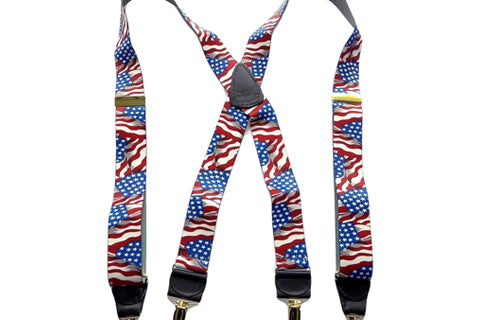
Patented gripper clasp designs use a textured or serrated inner jaw that bites into the fabric rather than simply squeezing it. This mechanical grip holds position regardless of movement, body position, or trouser weight and does not depend on a stable hip ledge to function. The classic series X-back suspenders with patented no-slip clips use exactly this clip design and are among the most reliable options for men whose trousers need active grip rather than passive friction.

For heavier trousers or very active wear, the jumbo gripper clasps on the 2-inch wide work suspenders provide even stronger grip at the attachment points, which is worth considering if standard clips have failed you in physically demanding contexts.
Use Undergarment Suspenders for Maximum Hidden Security
One of the most effective solutions for men who struggle with trouser retention and also want a clean, undetectable look under fitted clothing is the undergarment suspender. These are worn beneath the shirt rather than over it, which keeps the straps completely hidden while still providing the shoulder-carry support that solves the no-hip retention problem.
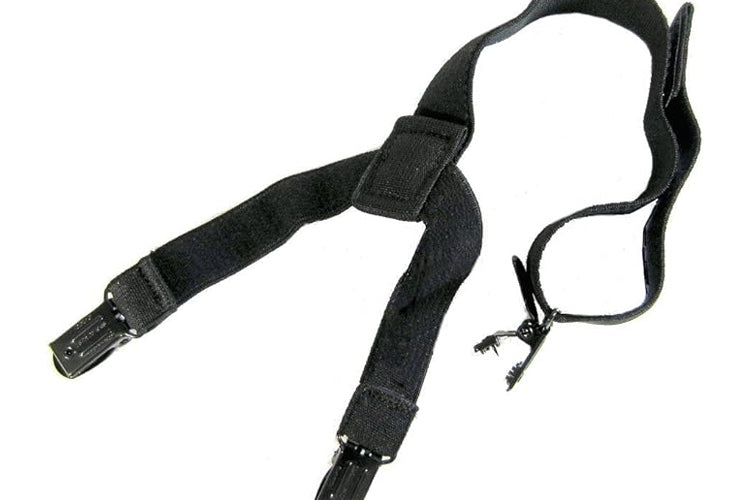
The under-ups undergarment suspenders worn under the shirt are built specifically for this purpose. The straps sit against the torso beneath the shirt, the clips attach to the inside of the waistband through or under the shirt hem, and the entire system is invisible from outside the outfit. For men who want trouser security without the visible style statement of traditional suspenders, this is the most practical solution available.

Undergarment suspenders also eliminate the issue of the shirt riding up between the suspender straps and the body, which is a common fit problem when wearing traditional suspenders over a tucked shirt with a flat torso.
Pair Suspenders With the Right Trouser Cut
Suspenders solve the weight-distribution problem, but the trouser cut determines how well that solution translates into a clean, stable result. Not all trouser styles work equally well with suspenders on a narrow hip frame.
High-waisted trousers are the strongest pairing for both suspenders and bodies with minimal hip definition. A higher waistband sits at the natural waist rather than the hip, which is typically the narrowest point of the torso on a straight-profile body. Suspenders attached at this height carry the trouser weight from the narrowest and most stable circumference point, which reduces any lateral slide that might otherwise occur.
Trousers with a slightly fitted waistband work better than very loose cuts. If the waistband is significantly wider than the waist, the trouser will rotate and shift even with suspenders holding the weight. A waistband that fits snugly at the natural waist, combined with suspenders carrying the vertical load, gives the most stable result.
For trousers cut with a straight or slim leg, the fit along the thigh and knee also matters. A trouser that fits well through the seat and thigh will naturally hang more stably under suspender tension than one that is baggy through the leg and bunches at the hip line. The broader guide on how to wear suspenders with a suit covers trouser fit selection in the context of suspender pairing in more detail.
Get the Adjustment Right for a Straight Body Profile
Incorrect strap adjustment is the most common reason suspenders fail to keep trousers in position even on bodies where they should work well. For men with no hips, there are a few specific adjustment considerations that go beyond the standard guidance.
The strap tension needs to be firm enough to hold the trouser waistband at the natural waist without pulling the trousers upward into an uncomfortable position. On a body with no hip flare, there is no structural stop that prevents the trouser from being pulled too high if the straps are over-tightened. The correct adjustment creates a neutral hold: the trousers sit at the natural waist, the straps lie flat over the shoulders, and there is no visible pulling or bunching at the attachment points.
Check these points when adjusting:
- The front clips should attach at the front of the waistband, roughly in line with the trouser crease, not at the sides
- The back clip should attach centrally at the back waistband
- Front adjustment sliders should sit at mid-torso, not riding up toward the chest
- The strap tension should be equal on both sides; uneven tension will cause the trouser to rotate or tilt
If you have ever found that your suspenders feel correct in the morning but loosen by midday, the guide on how to loosen or adjust suspenders correctly covers the adjustment mechanism and how to set it for stable long-term tension rather than a setting that gradually drifts.
Add Shirt Stays to Lock Everything in Place
Suspenders solve the trouser retention problem from above. Shirt stays solve the complementary problem from below. On a body with no hips, a shirt that is not properly anchored will work its way out of the waistband during the day, which disrupts the clean line that well-fitted suspenders are meant to create and can also interfere with the clip attachment points by bunching fabric between the clip and the waistband.
Shirt stays attach from the shirt hem down to the socks, keeping the shirt taut and tucked regardless of movement. The shirt tail stay-down straps are designed to work in combination with suspenders, keeping the shirt anchored at the hem so the suspenders can carry the trouser weight without competition from a shifting shirt.
Using both together creates a fully integrated system: suspenders hold the trousers up from above, shirt stays hold the shirt down from below, and the waistband stays cleanly positioned at the natural waist throughout the day.
Consider Button Attachment for the Most Secure Hold
Clip-on attachment is convenient and works reliably with the right clip design, but button attachment is the most secure method for any wearer who needs maximum trouser retention. Button attachment eliminates the clip entirely, replacing it with a direct connection between the suspender end and a button sewn into the inside of the waistband. There is no clip jaw to slip, no fabric to degrade under repeated grip pressure, and no lateral movement at the attachment point.
For men whose trousers shift despite good clip-on suspenders, converting to button attachment is a meaningful upgrade. The guide on how to convert clip-on suspenders to button-on style walks through the process of adding buttons to existing trousers, which is straightforward even for anyone with minimal sewing experience. The comparison of button suspenders versus clip-on covers the full case for each method and helps in deciding which is right for a given trouser type and wearing context.
Use the X-Back Configuration for Better Load Distribution
The configuration of the suspender back straps affects how the trouser weight is carried across the shoulders and how stable the attachment points remain during movement. For men with no hips, this matters because any uneven load distribution is more likely to cause lateral trouser shift than it would on a body with a natural hip flare to absorb it.
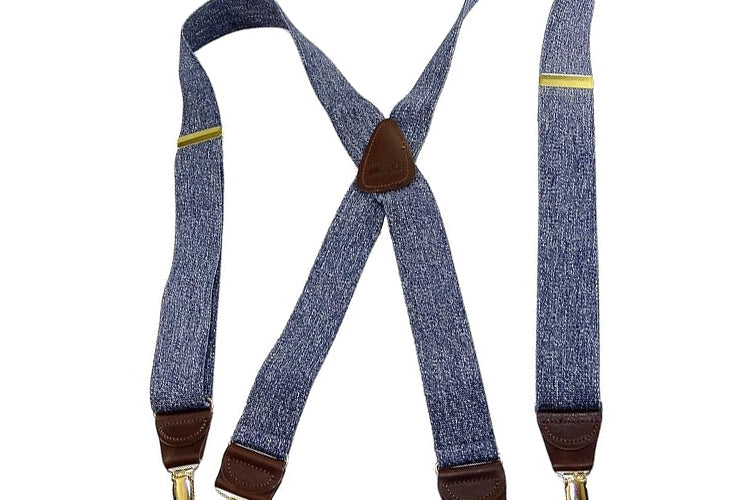
X-back suspenders cross between the shoulder blades, which creates a self-correcting tension system. When one side of the trouser is pulled down slightly by movement, the crossed straps pull back toward center automatically. This self-correction is especially valuable on a straight body profile where the trouser has less passive resistance to lateral movement.
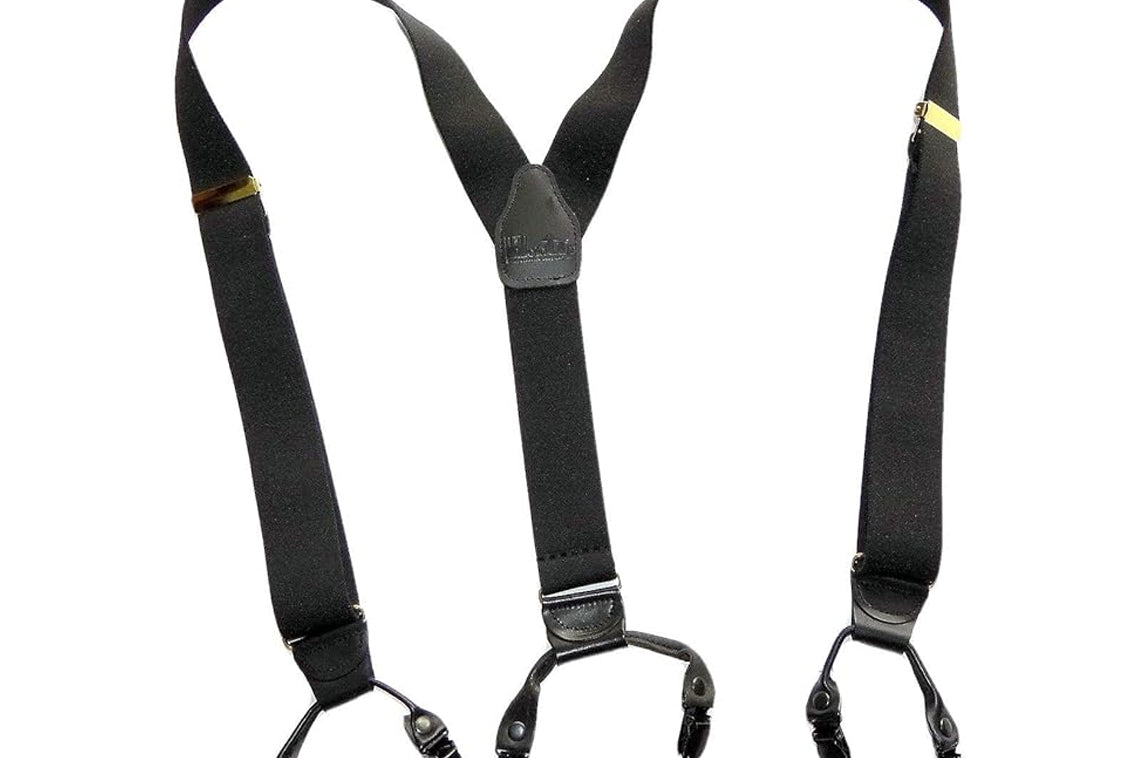
Y-back suspenders converge into a single strap at the back, which creates a cleaner line under a fitted jacket but provides less of the lateral correction that the X-back configuration offers. For men whose primary concern is trouser retention, X-back is the more functional choice. The casual series double-ups in 14 solid colors use a Y-back dual clip configuration and are worth considering when the wearing context is casual and the trouser style is lighter weight.

Styling Considerations for a Narrow Hip Frame
Suspenders do more than hold trousers up on a narrow or straight body profile. They also have a visual effect on the silhouette that works in favor of this body type. The vertical lines of the suspender straps draw the eye upward along the torso, which creates an impression of length and structure that flatters a straight frame more naturally than a horizontal belt line does.
For men with narrow shoulders alongside narrow hips, choosing a 1.25-inch strap width rather than the widest options adds visual presence to the shoulder line without being overpowering. The guide on how to wear suspenders if you have narrow shoulders covers this proportionality logic in detail and is directly relevant to the overall straight-profile body type.
Keeping the shirt tucked cleanly and choosing trousers with a slight taper through the leg further reinforces the structured look that suspenders naturally create on a straight frame. The complete guide on the art of wearing suspenders brings together fit, styling, and accessory coordination in a way that is particularly useful for anyone building a suspender-based wardrobe from scratch.
Frequently Asked Questions
Why do my trousers keep falling down even with suspenders on
The most common reasons are strap tension that is too loose, clip attachment that is slipping on the waistband fabric, or a trouser waistband that is too wide relative to the natural waist. Check that the clips are using a patented no-slip gripper mechanism rather than a basic jaw clip, that the straps are adjusted so the trouser sits at the natural waist without slack, and that the waistband itself fits snugly at the point where the clips attach. If all three are correct and the trousers still shift, converting to button attachment will provide the most secure possible hold.
Are X-back or Y-back suspenders better for men with no hips
X-back suspenders are generally the better choice for men with no hips because the crossed configuration creates automatic lateral correction when the trouser shifts during movement. Y-back suspenders work well when trouser retention is less of a concern and a cleaner line under a jacket is the priority. For daily wear where keeping trousers in position throughout a full day of activity is the main goal, X-back is the more functional starting point.
Can undergarment suspenders really keep trousers up all day
Yes, when correctly adjusted and paired with a snug waistband. Undergarment suspenders use the same shoulder-carry principle as traditional suspenders; the only difference is that the straps sit beneath the shirt rather than over it. The clip attachment still needs to be a no-slip gripper design to maintain hold through movement. The main advantage for men with no hips is that the straps are in direct contact with the body rather than separated from it by shirt fabric, which creates a more direct and stable load path from the trouser waistband to the shoulders.
Do suspenders work with jeans for men with no hips
Yes. Jeans work well with suspenders for men with no hips because denim is a heavier fabric that gives no-slip clips a substantial amount of material to grip. The main consideration with jeans is that most are cut with belt loops rather than interior button attachments, which means clip-on suspenders are the standard method. Use a patented gripper clip rather than a basic jaw clip to ensure the denim's thickness does not cause the clip to widen and slip over time. Darker wash jeans paired with suspenders in a complementary tone also create a clean, proportionate look on a straight body profile.
Should men with no hips wear wide or narrow suspenders
A 1.25-inch strap width is the most balanced choice for men with no hips. It is wide enough to distribute the trouser weight across the shoulder without creating discomfort, provides enough grip surface at the clip attachment point to hold a full day of wear, and adds a moderate amount of visual width at the shoulder line without overpowering a narrow frame. Very wide straps, such as 2-inch heavy duty options, are best reserved for heavier work trousers or physically demanding environments rather than everyday casual or formal wear on a slender build.