

When it comes to measuring for suspenders, you'll want to guarantee accuracy for a comfortable fit. It's not just about guessing your size; there's a method to it. Start by using a soft measuring tape, and position it from the rear waistline over your shoulder to the front waistline, keeping it straight. This measurement isn't just about numbers, it's about understanding how different factors like fabric elasticity and waist height come into play. Curious about the details?
Key Takeaways
-
Measure from the top of the rear waistline to the front belt loop diagonally for accurate suspender length.
-
Use a soft tape measure or string and ruler for precise measurements.
-
Consider your height and refer to a height-based sizing chart for suspender length.
-
Account for pant waist height and body shape when selecting suspender size.
-
Choose X-back or Y-back styles based on comfort and movement preferences.
Measurement Method
When you're ready to measure for suspenders, start by identifying your measurement starting point. For accurate measurement, begin at the top of the rear belt loop or waistline.
With X-back suspenders, measure from the side-back waistline, while Y-back suspenders need a center-back starting point.
Run your tape measure diagonally from this back point, over the opposite shoulder, and down to the top of the front belt loop. Make sure the tape is straight and taut, mimicking how suspenders will sit. Adjusting hardware should align with the clasp for optimal fit, ensuring that the suspenders function correctly.
Celebrity Style: Who’s Wearing Red Suspenders and How can provide more insight into the versatility of suspender styles, including how they enhance different looks.

Use a flexible tailor’s tape, keeping it snug against your body without being tight. Standing with your normal posture, record the measurement in inches or centimeters. This method guarantees suspenders fit comfortably and function as intended.
Essential Tools for Accurate Measurement
To get the most accurate suspender measurement, you'll need a soft measuring tape for its flexibility and precision. If a soft tape isn't available, you can use a piece of string to trace the path, then measure it with a ruler. Having a friend assist you guarantees the measurements are spot-on, especially when wrapping the tape or string over your shoulders. Proper sizing avoids time and money spent on exchanges.
How to Style Red Suspenders for a Bold Look is a great resource for those wanting to make a stylish impact with their suspenders, and it can inspire you to explore bold fashion choices.
Soft Tape Measure Necessity
Although often overlooked, a soft tape measure is essential for accurately measuring suspenders. It conforms to your body's curves, enabling precise torso measurements, which directly impact suspender comfort and functionality.
Here’s why a soft tape measure is crucial:
-
Flexibility: It bends easily around shoulders, chest, and back without distorting the measurement.
-
Material: Made of flexible fabric or vinyl, it’s lightweight and easy to carry, perfect for on-the-go use.
-
Accuracy: Printed with clear, precise markings, it guarantees millimeter or fraction-of-inch accuracy without stretching.
-
Practicality: Keep the tape snug but not tight to mimic natural suspender fit, and write down measurements immediately to avoid errors.
The suspenders are available in multiple sizes ranging from 42-inch to 60-inch, with the 60-inch size requiring an additional cost of $5.00. Embrace this tool for a perfect suspender fit!
Using String and Ruler
While a soft tape measure offers unparalleled convenience for fitting suspenders, sometimes you need an alternative method. Grab a piece of string to trace the suspender path, starting at your back pant line, going over one shoulder, and ending at the front pant line. Hold the string snugly against your body without pulling it too tight. Once positioned, lay the string flat on a table. Avoid stretching it to maintain accuracy.
Use a ruler with clear markings to measure the string's length in inches. Write down the measurement immediately. This method is practical when a tape measure isn't handy, though it requires attention to detail to avoid errors. Remember, string can stretch, so handle it with care. Measuring correctly before ordering is crucial for ensuring a proper fit.
Assistance for Accurate Measurement
When measuring for suspenders, having the right tools guarantees accuracy and ease. A soft measuring tape is essential for precise sizing. It flexibly tracks your body's natural contours, allowing real-time visibility and adjustment for snug, accurate measurements. Suspenders are available in 7 standard sizes ranging from 25-inch (Children) to 60-inch (Big and Tall). If you don't have a measuring tape, you can use existing suspenders as a reference. Lay them flat and measure end-to-end, ensuring they're adjusted to your current fit. Stand with normal posture for accurate readings, starting from the top of your trousers at the back, over your shoulder, to the front waistline.
Here's what you'll need:
-
Soft measuring tape for flexibility and precision.
-
Existing suspenders for reference when tape isn’t available.
-
Pen and paper to record measurements.
-
Proper posture for consistent results.
Understanding Suspender Length Sizing
To guarantee a perfect fit, understanding suspender length sizing is essential. Start by measuring from the front waistline over your shoulder to the back waistline. Choose your starting point based on your suspender style: side-back for X-back or center-back for Y-back.
Use a flexible tape measure or a string to ascertain accuracy. When measuring existing suspenders, lay them flat and measure tip to tip, fully extended. Always allow an extra 4 to 8 inches for comfort.
Suspenders can be shortened but not lengthened, so rounding up to the next size is wise. Consider the inseam depth of your pants, deeper crotch needs shorter suspenders, while shallower crotch requires longer ones.
Elastic options can stretch up to 60 inches.
Height-Based Sizing Chart
Now that you've got a handle on suspender length sizing, let's explore the height-based sizing chart.
This chart is a go-to guide for matching your height with the right suspender length. Here’s a quick breakdown:
-
Under 5'0": Opt for 36" suspenders.
-
5'0"–5'9": Go with 42" suspenders.
-
5'10"–6'2": Choose 48" suspenders.
-
6'3"–6'9": Pick 54" suspenders.
These recommendations generally align across brands, but remember that some brands might've slight differences.
For instance, Suspenders.com and SuspenderStore suggest 60" for those over 6'9".
If you're on the border or have a longer torso, considering the next size up might be wise. Always check specific brand guidelines to guarantee the perfect fit!
Adjustability and Fit Considerations
Although finding the right suspender length is a crucial step, guaranteeing their adjustability and fit is equally important for comfort and functionality.
Adjust your suspenders so they hold your pants securely without causing discomfort. Use clamps, slides, or buckles to shorten them as needed, just don’t expect to lengthen them beyond their original design. Straps should be taut but not so tight that they dig into your shoulders or restrict movement.
Test their fit by sitting, bending, and moving to verify they don’t pinch or pull. Align front straps between your side seams and fly, keeping them perpendicular to the floor.
Choose wider straps for better weight distribution and adjust for torso length and waist position for maximum comfort.
Special Considerations for X-Back and Y-Back Suspenders
While adjustability and fit are essential for comfort, the style of suspenders you choose, X-back or Y-back, also plays a significant role in how they perform.
Here's what you need to know:
-
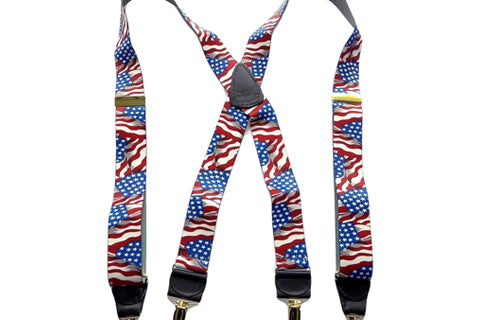
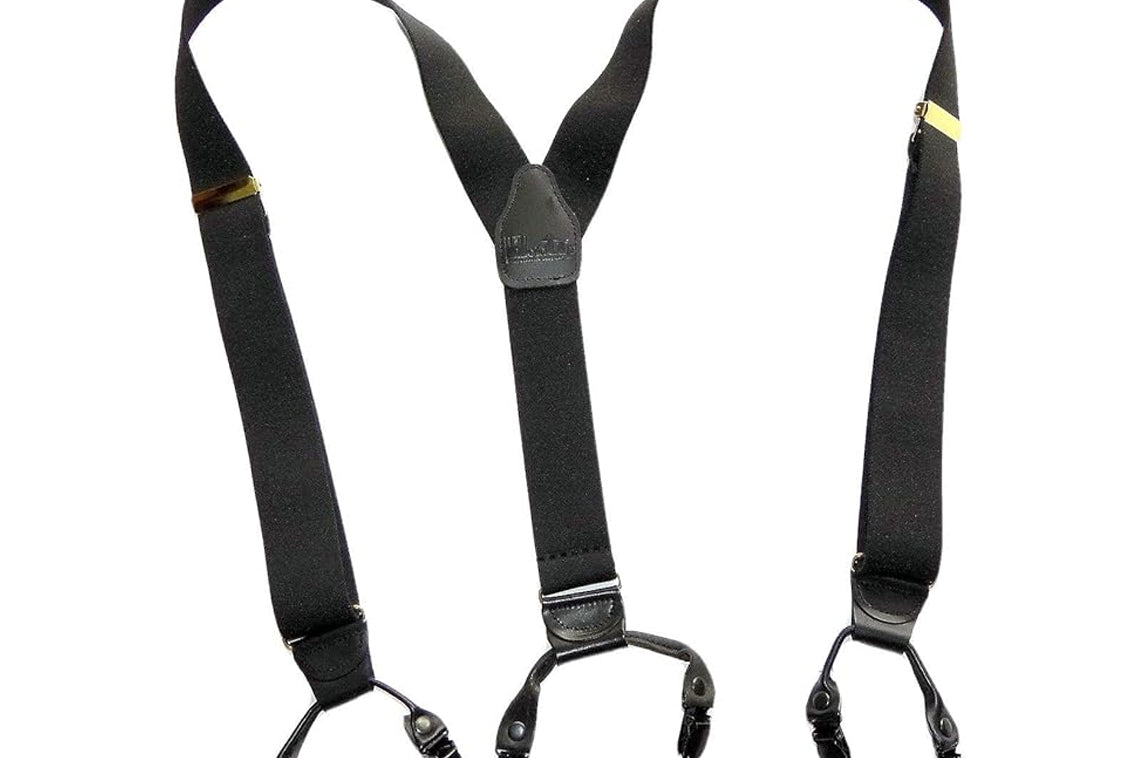
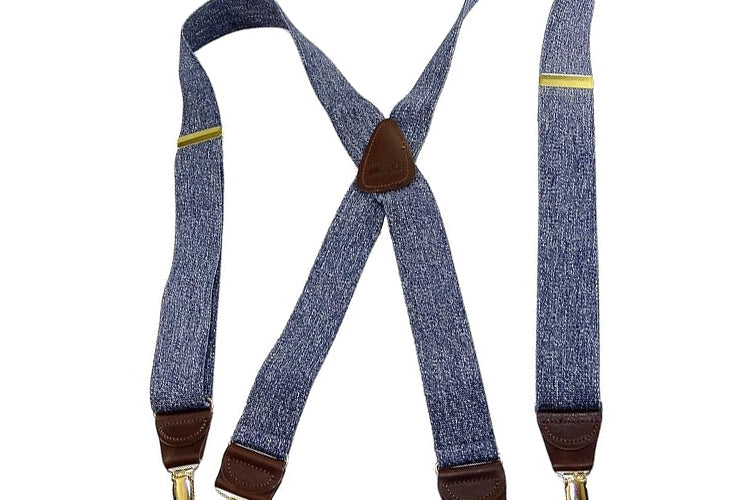
Attachment Points: X-back suspenders attach at four points, providing stability, while Y-back suspenders connect at three, offering a sleeker look.
-
Pant Compatibility: X-back suspenders work well with pants featuring a center back loop. In contrast, Y-back suspenders require a single central attachment point, like a button.
-
Weight Distribution: X-back suspenders distribute weight evenly, making them ideal for heavy-duty use; Y-back might cause shifting if not suitably attached.
-
Comfort and Fit: X-back styles prevent bulging when sitting, offering comfort for long wear, whereas Y-back may cause slight discomfort against flat surfaces.
Impact of Fabric Elasticity on Measurement
When measuring for suspenders, consider how fabric elasticity affects their fit and comfort.
Elastic suspenders are forgiving with size, allowing for easy adjustments and a snug fit that adapts to your movements.
Over time, the stretch in these materials can change, so choosing high-quality blends helps maintain their performance and longevity.
Elasticity's Role in Fit
Understanding the role of elasticity in suspender fit is crucial for achieving comfort and functionality. Elastic suspenders, typically made from polyester, rubber, and spandex blends, provide necessary stretch and strength. Here’s how elasticity impacts fit:
-
Comfortable Movement: Elasticity allows suspenders to expand and contract, adapting to your body’s movements and shapes.
-
Pressure Distribution: It reduces shoulder pressure by evenly distributing weight, preventing discomfort.
-
Dynamic Fit: High-quality elastic maintains its resilience, ensuring suspenders stay snug without becoming loose over time.
-
Measurement Adjustments: When measuring, choose a slightly shorter length to accommodate fabric stretch, ensuring a secure yet comfortable fit.
Adjustments With Elastic Suspenders
Although fabric elasticity greatly influences how suspenders fit, making the right adjustments can guarantee they’re both comfortable and functional.
Elastic suspenders offer more flexibility than non-elastic ones, so measure slightly shorter than your body length to allow for stretch. Use the built-in adjustment mechanisms like metal sliders or buckles to tailor the fit. Typically, these adjustments provide 2–4 extra inches, accommodating a range of body types. Confirm they’re snug yet not tight, avoiding discomfort or pinching.
When consulting sizing charts, consider the fully extended length, and generally opt for a size down compared to rigid suspenders. For taller individuals, elasticity compensates for minor sizing errors.
Regular adjustments maintain comfort, prevent slipping, and confirm suspenders sit well on your shoulders without digging in.
Fabric Stretch Over Time
As you select suspenders, remember that fabric elasticity plays an essential role in how they fit over time.
Elastic suspenders maintain their shape, offering a consistent fit, while leather and non-elastic materials may stretch, affecting fit and comfort.
Here's how to account for this when measuring:
-
Elastic Suspenders: Opt for a slightly shorter measurement since they’ll stretch. This guarantees a snug fit as they conform to your body.
-
Leather Suspenders: Measure with the expectation of gradual stretching. This allows for a comfortable fit over time.
-
Non-Elastics Suspenders: Aim for a precise initial measurement as they offer minimal stretch, reducing adjustment options.
-
Mix-Material Suspenders: If they include elastic sections, they’ll provide more flexibility in fit and comfort.
Influence of Pant Waist Height
When measuring for suspenders, the height of your pant waist plays an essential role in determining the correct suspender length. Higher waistbands mean longer suspenders because they increase the distance from the waistband over your shoulders. Conversely, low-rise pants require shorter suspenders since they reduce this suspension path.
Start by measuring from the back center of your waistband, over your shoulder, to the front attachment point, about 3-4 inches right of the zipper. Make sure you replicate the exact pant rise for accuracy.
Adjuster placement also changes with waist height; higher waistbands shift adjusters higher on your chest. If you frequently switch styles, consider multiple suspender sizes, as adjustable lengths have limits. This guarantees comfort and a proper fit with varying pant rises.
Body Shape and Weight Distribution
Understanding how your body shape and weight distribution affect suspender selection can dramatically improve both comfort and style.
Recognizing your body type, whether you're tall and thin, short and stocky, or have an athletic build, can guide you to the right suspender choice.
Here's how:
-
Tall and Thin: Opt for suspenders that add visual weight, enhancing your frame.
-
Short and Stocky: Vertical patterns create a slimming effect, drawing the eye upwards.
-
Athletic Build: Wider suspenders support broader shoulders and a muscular chest.
-
Plus Size: Extra-wide suspenders prevent discomfort and keep pants in place.
Consider weight distribution, like shoulder width and chest size, to choose the right suspender width and style, ensuring a balanced and comfortable fit.
Tips for Achieving the Perfect Fit
Achieving the perfect fit for your suspenders can greatly enhance both comfort and style. Start by measuring your torso length accurately. Use a flexible tape measure from the back center of your waistband, over the opposite shoulder, to the front waistband. Stand upright for a natural fit and consult size charts to match your height.
Adjust sliders or buckles to guarantee a snug fit without pinching. Your trousers should sit at your natural waist, allowing a slight break over shoes for a clean look. Choose suspender width based on your body frame and intended use; wider for support, narrower for style.
Attach straps properly to avoid misalignment, making sure they run straight from shoulder to waist for maximum comfort.
Frequently Asked Questions
Can Suspenders Be Worn With a Belt?
You can wear suspenders with a belt, but it's unconventional. Both serve the same purpose, so choose one for simplicity. If you do combine them, guarantee they complement each other in color, texture, and style for cohesion.
How Do I Clean My Suspenders?
You should spot clean suspenders using wipes or a gentle detergent. For hand washing, soak them briefly, then rinse. Dry them by air, avoiding heat. For leather components, use leather cleaner, and keep them away from direct sunlight.
Are There Suspenders for Specific Occasions?
Yes, you’ll find suspenders tailored for specific occasions. Formal types suit tuxedos, while casual ones fit everyday wear. Work suspenders handle heavy-duty tasks, and fashion varieties make bold statements. Choose based on the event's demands.
What Materials Are Suspenders Typically Made From?
Suspenders are typically made from materials like leather, silk, grosgrain, oxford cloth, jacquard fabrics, linen, cotton, and elastic. You’ll find synthetic options such as polyester and polypropylene, offering durability and flexibility for various occasions and styles.
Do Suspenders Come in Different Colors and Patterns?
Suspenders come in a wide range of colors and patterns. You’ll find solid colors like black, navy, and neon yellow, alongside patterns like argyle and paisley. Choose them to complement your outfit's style and occasion.
Conclusion
To achieve the perfect fit for suspenders, follow these steps: Measure from the waistline accurately, whether you’re using a tape measure or string. Remember, X-back and Y-back styles start from different points, so note those distinctions. Consider your height, fabric elasticity, and pant waist height. Adjustability is key; guarantee you've got room for comfort. Keep your body shape and weight distribution in mind. With these tips, you’ll find suspenders that fit just right.