

Men at 300 lbs and over typically need 54-inch or 60-inch suspenders depending on torso length, not height alone. Measure from the center of the front waistband, over the shoulder, to the center of the back waistband. If that measurement is between 48 and 54 inches, choose 54-inch. If it is between 54 and 60 inches, choose 60-inch. When close to a boundary, size up. Choose 1.5 to 2-inch width and an X-back style for the best load distribution across a heavier frame.
Standard sizing charts for suspenders are built around height. For men at 300 lbs and over, this creates a consistent problem: a man at 5'10" and 300 lbs needs longer suspenders than a man at 5'10" and 160 lbs, because the larger waist circumference increases the distance the strap must travel from the front waistband to the back waistband. Relying on height alone produces the wrong size in most cases.
This guide covers the correct measurement method, a length-by-build reference table, width and back style selection, material and hardware recommendations, fit adjustment, and care, with specific guidance for heavier frames throughout.
Why Torso Girth Matters More Than Height for Heavier Men
Functional strap length is the actual distance a suspender strap must travel from the front waistband attachment point, over the shoulder, to the back waistband attachment point. For men with a larger waist circumference, this distance increases because the strap path arcs further outward around the wider torso before reaching the back. Two men of identical height but different builds can require suspenders that differ by 6 or more inches in total length.
A standard 48-inch suspender fits most men between 5'8" and 6'1" at a lean to average build. At 300 lbs, even a man at 5'8" often needs a 54-inch suspender because his waist adds enough strap path that the 48-inch version reaches its maximum adjusted length and still pulls the trousers upward uncomfortably.
The principle is straightforward: as waist circumference increases, the strap must travel further outward before reaching the back, which means the total strap length needed increases even when the wearer's height stays the same. This is why measuring torso strap length rather than using height alone is the only reliable method for getting the right size at heavier builds.
How to Measure the Correct Suspender Length
Stand upright with a soft measuring tape. Place the tape at the center of the front trouser waistband, run it up and over the shoulder following the natural path where the suspender strap will sit, and bring it down to the center of the back waistband. This measurement is your functional strap length. Have someone assist for accuracy, as self-measurement over the shoulder is difficult to do precisely.
Always round up when the measurement falls near a size boundary. Suspenders can be shortened using the adjuster sliders but cannot be lengthened. A pair that measures correctly at maximum extension leaves no room for adjustment and becomes unwearable if anything changes such as seasonal clothing layers, a different waistband height, or minor weight gain.
|
Functional Strap Length |
Suspender Length to Order |
Typical Weight Range |
Typical Height Range |
|
Up to 48 inches |
48 inches (Standard) |
Under 220 lbs |
Up to 6'1" |
|
48 to 54 inches |
54 inches (XL) |
220 to 300 lbs |
5'8" to 6'5" |
|
54 to 60 inches |
60 inches (XXL) |
300 lbs and over |
Any height |
|
Over 60 inches |
Custom sizing required |
Very large build |
Any height |
Men at 300 lbs at average height will usually fall into the 54-inch category. Men at 300 lbs and over 6'2", or men with very large waist circumferences at any height, will typically need 60-inch suspenders. Measure rather than estimate, particularly when on the boundary between sizes.
Width and Back Style for Heavy Builds
Width directly affects how comfortable suspenders are under load for heavier men. A 1-inch strap concentrates all the weight-bearing pressure onto a very small shoulder contact area. At 300 lbs, the trouser weight being supported is meaningful, and a narrow strap will dig uncomfortably into the shoulder within a few hours. A 1.5-inch strap distributes the load significantly better. A 2-inch strap is the most comfortable option for heavy daily use and is the correct choice for work applications.
|
Width |
Pressure Distribution |
Best Context for Heavy Builds |
|
1 inch |
Concentrated, uncomfortable under load |
Not recommended at 300 lbs+ |
|
1.5 inches |
Good distribution, suitable for all-day wear |
Formal, business, everyday |
|
2 inches |
Best distribution, most comfortable under heavy load |
Work, heavy-duty, casual |
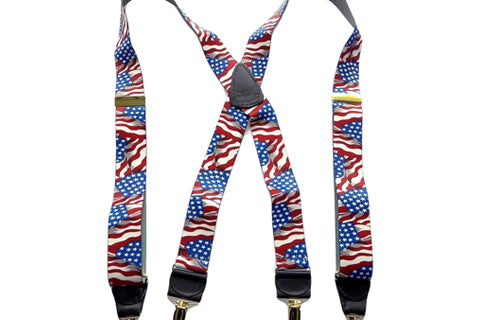
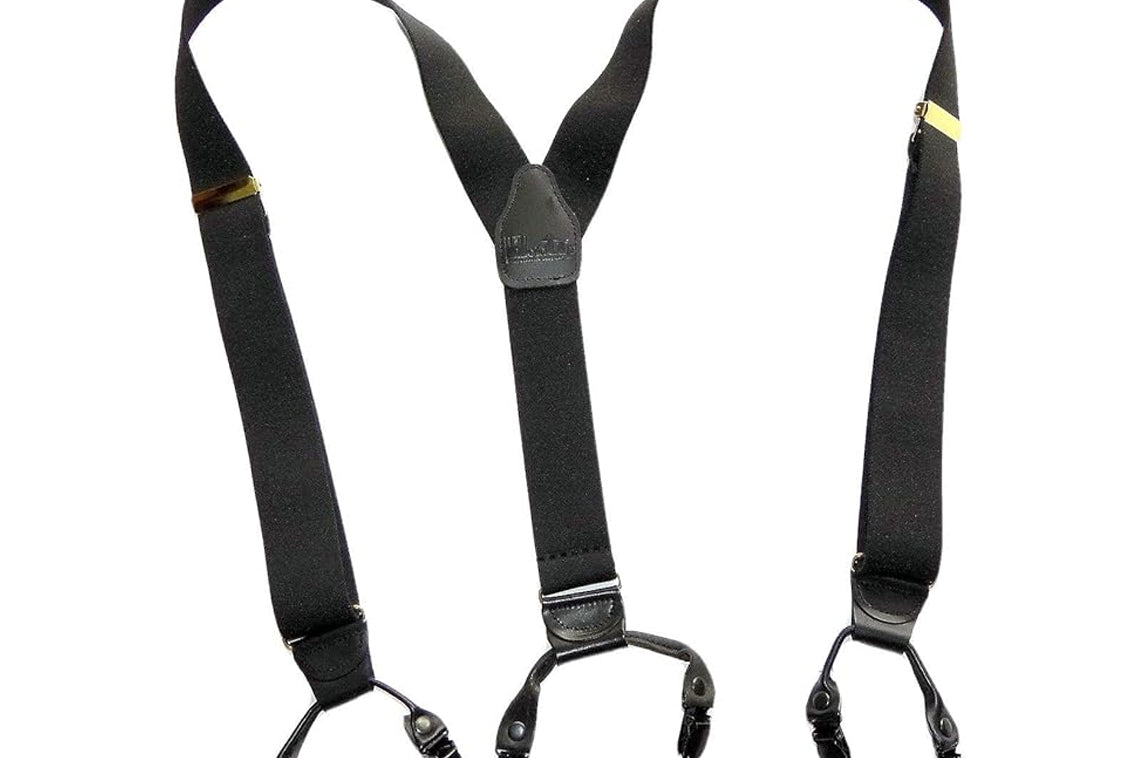
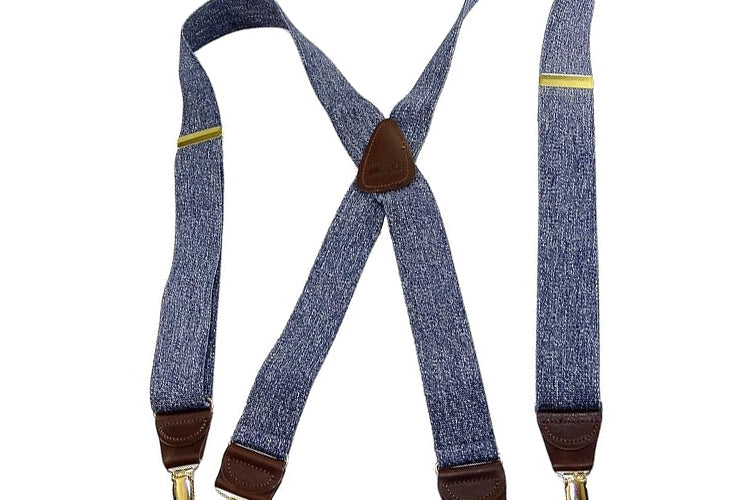
X-back is the recommended back style for heavier men. The four-point rear attachment distributes the load across both sides of the lower back rather than converging to a single point as Y-back does. Under heavier trouser weight and a wider back, X-back holds more evenly and prevents the rear strap from shifting laterally when the wearer bends or twists. The full comparison of X-back and Y-back designs across different build types explains the structural difference and covers when Y-back is an appropriate alternative for lighter formal contexts.
Which Materials Work Best for Men Over 300 Lbs
Elastic is the most practical material for heavier builds because it accommodates the natural movement and posture changes throughout the day without losing tension. A polyester or nylon-blend elastic at 1.5 to 2-inch width holds its recovery strength over time better than natural rubber or spandex-heavy blends. For men whose weight fluctuates, elastic also provides more tolerance at different points in that range than fixed-length non-stretch options.
For dress and formal occasions, a satin-finish or jacquard-weave elastic in 1.5-inch width creates the most polished appearance while maintaining the practical flexibility of elastic construction. These materials drape cleanly over the torso without the rippling or curling that can occur with cheaper loosely woven elastic.
Leather suspenders are a strong option for formal events and for heavier men who want the most durable and shape-retaining material available. Leather does not sag under load the way elastic can over years of daily use. The limitation is lower stretch, which means a precise fit is more important when ordering. A leather pair with an elastic back section provides the formal appearance of leather at the front while accommodating movement at the back. The practical guide to choosing between elastic and leather suspenders covers which material suits which context for heavier frames.
Clip-On or Button-On for Heavier Men
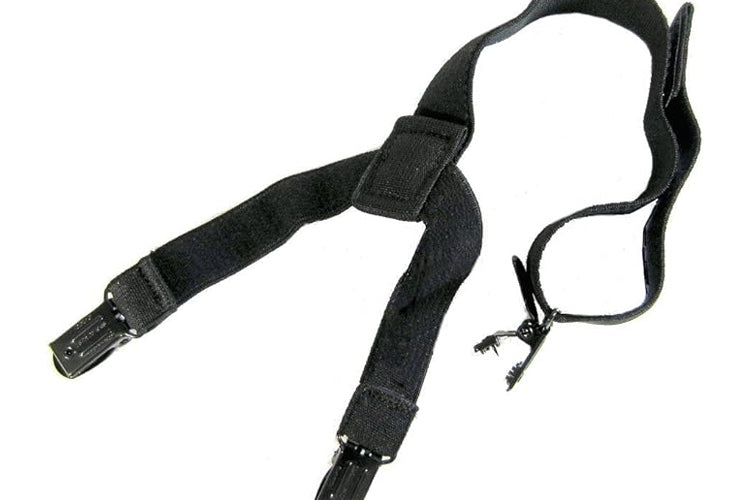
Clip-on suspenders attach directly to the waistband fabric using a cam-activated metal clip. For heavier men, the clip jaw opening width matters: standard clips are designed for standard trouser waistband thickness, and heavier work trousers or double-layer waistbands may require a wider jaw opening to grip properly. Wide-jaw clips with padded or rubber-lined grips are the correct choice for heavy waistband materials and prevent fabric damage over repeated attachment cycles.
Button-on suspenders attach to interior buttons sewn inside the trouser waistband. They provide a more secure attachment than clips at any weight level and leave no visible hardware on the outside of the trousers. For heavier men who wear suspenders daily, button-on attachment distributes the pull force across the button rather than concentrating it at a clip jaw, which reduces the risk of waistband fabric deformation over time. The detailed comparison of button-on and clip-on attachment for different use contexts covers the practical trade-offs for both styles.
How Pants Position Affects the Length You Need
Where you wear your trousers changes the functional strap length required. High-rise trousers that sit at or above the natural waist reduce the strap path length because the front and back attachment points are higher on the body, closer to the shoulder. Low-rise trousers that sit at the hip increase the strap path length because the attachment points are further from the shoulder.
For heavier men, high-rise trousers are the more comfortable and proportionally flattering choice when wearing suspenders. They sit at the narrowest part of the torso above the belly, give the suspenders a shorter, more direct path to the shoulder, and create a cleaner vertical silhouette. Low-rise trousers paired with a heavy build often create visible belly exposure between the shirt hem and the waistband as the shirt rides up with movement, which suspenders alone cannot prevent. Choosing the right trouser style and waist position for suspender wear covers the practical considerations across different pant cuts.
How to Adjust Suspenders Correctly for a Heavy Build
Attach all clips or buttons to the trouser waistband first with the straps at their longest setting. Tighten both front straps equally using the metal slider adjusters until the trousers sit at the natural waist without pulling upward. The straps should feel present on the shoulder, firm enough to be aware of, without digging in or pulling the collar toward the shoulders. A two-finger gap under the strap at the shoulder apex indicates correct tension.
Position the front adjuster slider at approximately mid-chest. Placing it too high creates a short front strap section that can dig into the upper chest. Placing it too low creates a long front section that sags away from the body when bending forward. The back adjuster, if present, should be set to keep the rear strap taut without pulling the back of the trousers upward. Step-by-step instructions for setting correct tension for different builds cover both clip-on and button-on mechanisms.
Styling Suspenders for Heavier Men
Darker solid colors in 1.5-inch width create the most streamlined visual silhouette. Navy, charcoal, black, and burgundy all work along the vertical torso line without drawing horizontal attention across the chest. A lighter or high-contrast suspender color against a darker shirt can make the horizontal chest area appear wider. For most outfit contexts, matching the suspenders to the tie or bow tie within the same color family is the simplest and most reliable coordination approach.
For formal occasions, solid-color suspenders in a satin finish at 1.5 inches, paired with a matching bow tie, is the cleanest formal combination for a heavier frame. The bow tie sits at the collar without adding a competing vertical element, which lets the suspenders define the torso line without visual conflict. The guide to formal suspender styling for different body types covers complete outfit systems including shirt, neckwear, and shoe coordination.
For casual and everyday wear, everyday outfit combinations that work for larger builds covers jeans, chinos, and casual trouser pairings that balance proportion without requiring a formal outfit structure.
How Suspenders Affect Posture and Back Comfort for Heavier Men
Suspenders hold the trousers from above the shoulder rather than cinching at the waist. This allows the pelvis to sit in a more neutral position throughout the day. A belt that tightens at the waist restricts the forward tilt of the pelvis during bending and can compress the lumbar area under a heavy belly load over a full day. Suspenders remove this restriction entirely.
For men at 300 lbs and over, this benefit is more significant than for average builds because the additional abdominal weight increases the load on the waistband and lower back when a belt is the primary trouser support. Transferring part of that load to the shoulders, which are structurally built for sustained weight bearing, reduces cumulative lower back fatigue. How suspenders affect posture and lower back strain covers both the benefits and the conditions under which poorly fitted suspenders can create shoulder discomfort instead.
Caring for Suspenders at Higher Use Levels
Heavier men who wear suspenders daily put more sustained stress on the elastic and hardware than lighter wearers. Elastic that is constantly at higher tension loses its recovery strength faster. Hand washing in cool water with a gentle detergent, air drying flat away from sunlight, and storing loosely rolled rather than tightly folded all extend the life of elastic suspenders meaningfully. The complete care guide for washing and storing suspenders by material type covers both elastic and leather with specific instructions for each.
Inspect the clip jaws and slider hardware every few months. Under sustained daily use at heavier tension, the metal can develop surface fatigue at stress points more quickly than under lighter use. Replace suspenders before a clip fails rather than after. A pair that shows visible deformation at the slider or clip housing is past its reliable service life regardless of whether the strap itself still looks intact.
Frequently Asked Questions
What length suspenders do I need at 300 lbs and 5'10"
Measure the functional strap length: from the front waistband center, over the shoulder, to the back waistband center. At 5'10" and 300 lbs, this measurement typically falls between 48 and 54 inches, making 54-inch suspenders the correct choice for most men at this build. If the measurement falls closer to 54 inches, order 60-inch to ensure adjustment room. Height alone would suggest 48 inches, which is why measuring rather than estimating is essential at this weight.
Can I wear standard 48-inch suspenders if I weigh 300 lbs
Only if your functional strap length measurement falls under 48 inches, which is unlikely at 300 lbs unless you are significantly shorter than 5'5" with a narrow shoulder profile. Most men at 300 lbs find that 48-inch suspenders reach their maximum adjusted length and still pull the trousers uncomfortably upward. Measuring is the only reliable way to confirm. When in doubt, size up to 54 inches because the straps can be shortened but not lengthened.
Is X-back or Y-back better for a 300 lb frame
X-back is better for a 300 lb frame in most contexts. The four-point rear attachment distributes load more evenly across a wider back and provides more stability during movement. Y-back converges to a single center-back point which can shift laterally on a wider back under heavier trouser weight. Y-back is an acceptable choice for lighter formal contexts where appearance is the priority and load support is minimal. For everyday or work use at this weight, X-back consistently performs better.
What width suspenders should a 300 lb man wear
1.5 inches minimum for everyday dress use. 2 inches for work or heavy-duty applications. A 1-inch strap at 300 lbs concentrates too much pressure onto too small a shoulder contact area and becomes uncomfortable within a few hours. The wider strap distributes the trouser weight and body movement forces across a broader area, which makes a measurable difference in shoulder comfort across a full day. Shoulder padding integrated into the strap adds further comfort at any width.
Do suspenders help with belt discomfort at heavier weights
Yes. Belt discomfort at heavier weights is often caused by the waistband cutting into the abdomen when seated, or the belt restricting the forward pelvic tilt required for comfortable bending. Suspenders eliminate both problems by removing the waistband as a load-bearing element entirely. The trousers are held from above, the waistband sits loosely, and the lower body is free to move without restriction. Comparing suspenders and belts for comfort at different body types covers the ergonomic differences in detail.
Should I use clip-on or button-on suspenders at 300 lbs
Button-on is the more secure and durable attachment for daily use at heavier weights. The button distributes the pull force across the full button area rather than concentrating it at the clip jaw. For heavier men who wear suspenders daily, this reduces wear on both the waistband fabric and the attachment mechanism over time. Clip-on is entirely appropriate for rented formal wear or any situation where modifying the trouser waistband is not practical. Use wide-jaw clips with padded grips for heavier or thicker waistband fabrics.
What is the best suspender color for a heavier frame
Dark solid colors: navy, charcoal, black, and burgundy. These create a clean vertical line from waistband to shoulder without drawing attention horizontally across the chest. A lighter or high-contrast color against a dark shirt can widen the visual impression of the chest and torso area. Matching the suspenders to the tie or bow tie within the same color family is the most straightforward coordination approach for any build. Choosing suspender colors that work with different outfit systems covers the full coordination framework.
Can suspenders be worn with a belt at 300 lbs for extra support
No. Suspenders and belts should not be worn simultaneously. Both hold the trousers from different anchor points and the competing tension creates discomfort and visual conflict at the waistband. If additional waist support is needed for a medical or postural reason, a separate support garment worn under the trousers is the correct solution. Suspenders alone, correctly adjusted, provide sufficient trouser support at any weight.
How often do suspenders need replacing at heavy daily use
Elastic suspenders under heavy daily use at 300 lbs typically last one to two years before the elasticity degrades sufficiently to affect performance. Signs that replacement is needed include visible sag between the shoulder and waistband when the trousers are loaded, the adjuster slider reaching its limit without achieving correct tension, and fraying at the clip attachment points. Quality industrial-grade elastic at 2-inch width lasts closer to three years with correct care and storage.
Conclusion
The correct suspender length for a man at 300 lbs and over is determined by the functional strap length measurement, not height alone. Most men at this weight need 54-inch or 60-inch suspenders depending on that measurement. When on the boundary, always size up because shortening is possible but lengthening is not.
Choose 1.5 to 2-inch width for proper load distribution, X-back for stability on a wider frame, elastic or leather with elastic back for material, and button-on attachment for daily use. Adjust for a two-finger gap at the shoulder and inspect hardware regularly. The right pair is significantly more comfortable than a standard-length pair forced to its maximum adjustment, and the difference in daily comfort across a full workday or event is substantial.