

Dress suspenders have moved from a practical undergarment to a visible style choice, and pairing them correctly is what separates a sharp look from a costume. This guide covers how to match dress suspenders to formal, business, and casual outfits, including color, width, and the rules most people get wrong. If you're shopping for a pair to start with, our formal satin-finish suspenders are a solid starting point for suits and tuxedos.

What Dress Suspenders Are and How They Work
Suspenders, called braces in the UK, are straps that run over the shoulders and attach to the waistband of your trousers to hold them up. Dress suspenders are the formal version: narrower, usually 1" to 1.5" wide, made from silk, satin, or leather, and finished with either button-end or clip-end fittings. Button-end suspenders fasten to buttons sewn inside the waistband and hold the most securely, which is why tailors favor them for suits and tuxedos. Clip-end suspenders attach directly to the fabric with a metal clasp and work on any pair of trousers, which makes them the more practical choice if you switch pants often.
A Short History of Suspenders in Menswear
Suspenders were originally a functional undergarment, designed to keep trousers at the natural waist before belt loops became standard on pants. As trouser cuts changed through the 20th century, suspenders shifted from a hidden necessity to a visible style choice, worn openly at weddings, in the office, and on the red carpet. That shift is why the rules around pairing them with an outfit matter more today than they did when suspenders were meant to stay out of sight.
Button vs. Clip: Choosing the Right Type for the Occasion

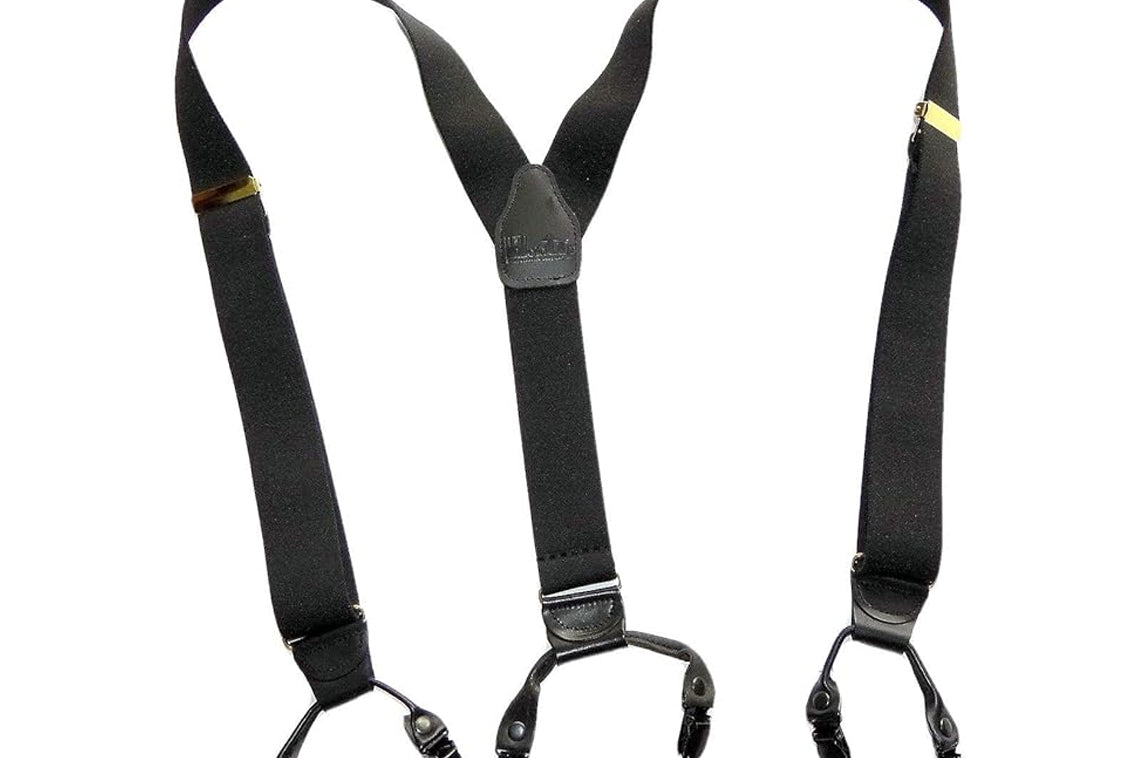
The two main styles are button suspenders and clip-on suspenders, and the choice affects both how formal the look reads and how the suspenders sit under a jacket. Button suspenders fasten to the inside of the waistband with suspender buttons, sit flatter against the body, and are the standard choice for tuxedos and formal suits, including our tuxedo black satin-finish suspenders. Clip-ons attach directly to the waistband of any trouser without requiring buttons to be sewn in, which makes them the more versatile option for business and casual wear, such as our champagne tan formal series.
Types of Suspenders: Y-Back, X-Back, and Side-Clip Styles
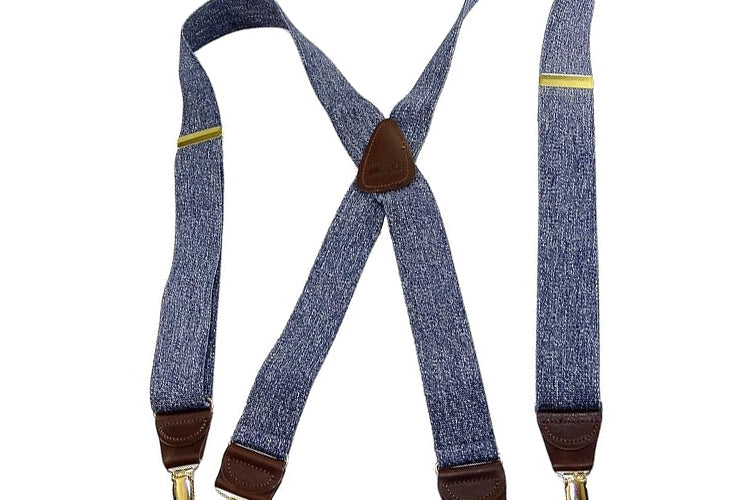
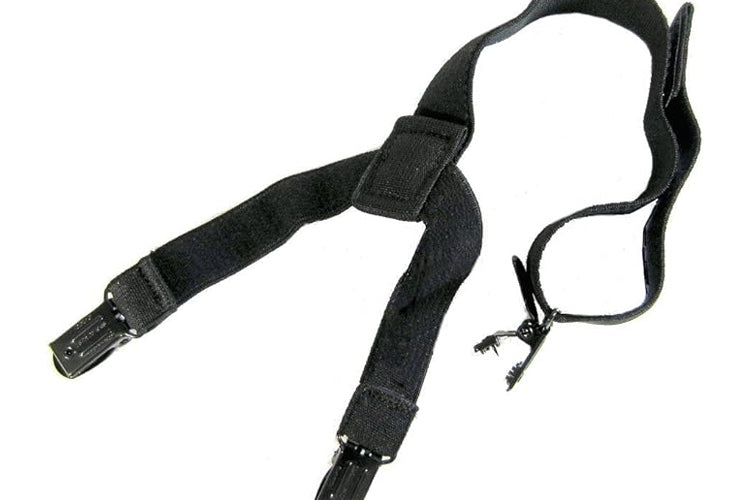
Beyond button and clip attachments, the back configuration changes how suspenders sit and how much support they give. Y-back suspenders converge into a single strap at the center of your back, which creates a cleaner line under a jacket and is the standard configuration for most dress suspenders. X-back suspenders cross between the shoulder blades for more even weight distribution, a better fit for heavier trousers or long days on your feet. A third option, side-clip or hip-clip suspenders, attaches at the hips instead of front and back, which keeps hardware away from your stomach and lower back. For a full breakdown of each configuration and when to choose one over another, see our guide to suspender types, or browse the side-clip suspender collection if front hardware is uncomfortable under a fitted shirt.

The Rules: Belt or Suspenders, Never Both
The most important rule of wearing suspenders is that they replace a belt, not accompany one. Trousers cut for suspenders sit at the natural waist and typically don't have belt loops, so wearing both looks unintentional rather than stylish. Beyond that, two guidelines carry the most weight: suspenders should be worn under a jacket, not over a bare shirt in formal settings, and the color of your suspenders should coordinate with your shoes, not necessarily match them exactly. For a deeper breakdown of this rule, see our guide on wearing suspenders with a belt.
Do's and Don'ts by Occasion
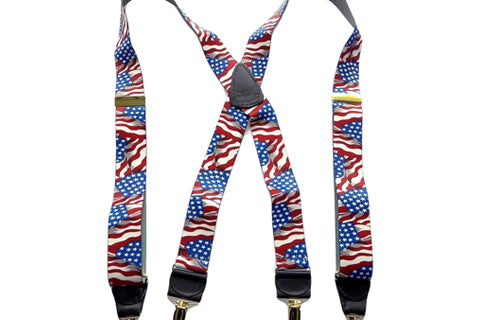
For formal events like weddings or black-tie affairs, stay with classic colors: black, white, or navy, in a satin or silk finish. For business settings, muted tones and subtle patterns like pinstripes signal polish without drawing attention. Casual settings are where you can take more risks with bold colors, novelty patterns, or contrasting clips. The one constant across all three: suspenders should coordinate with your overall palette rather than fight it, which usually means picking them after you've settled on the shirt and trousers, not before.
Balancing Suspenders With the Rest of the Outfit

Suspenders only improve a silhouette when the trousers fit properly at the waist and through the hip. Trousers cut for a belt tend to sit lower and looser, which pulls suspenders out of alignment and creates bunching at the shoulders. If you're building a suspender-first wardrobe, it's worth having trousers taken in or tailored specifically for suspender wear rather than repurposing belt-cut pants.
Step-by-Step: Pairing Suspenders by Setting
Here's how the pairing changes across the three main settings you'll wear dress suspenders in.
Formal Attire: Suits and Tuxedos
Button suspenders in black, white, or a single muted tone are the standard for formal wear. Keep the width narrow, around 1", and match the metal tone of the clasps to your other accessories, such as cufflinks or a watch case. See our full guide on wearing suspenders with a suit for width and color pairings by suit color.
Business Attire: Office and Client-Facing Settings
In a business setting, suspenders in a subdued pattern add personality without becoming the focal point of the outfit. Pair them with a crisp dress shirt and tailored trousers, and keep the width in the 1" to 1.25" range so they read as polished rather than costume-like.
Casual Attire: Jeans and Chinos
Casual settings are the place for wider suspenders, 1.5" or more, in bolder colors or patterns. They pair well with jeans, chinos, or flannel, and there's more room to treat them as a statement piece rather than a background detail.
Width, Color, and Pattern: Getting the Details Right
Width should track formality: narrower suspenders (around 1") read as more formal, while wider suspenders (1.5" and up) read as more casual. Height also plays a role taller wearers tend to look more balanced in wider suspenders, while shorter wearers often look better in a narrower strap. For color and pattern, the safest approach for a first pair is a solid color in black, navy, or burgundy, since it pairs with the widest range of outfits before you branch into patterns like pinstripes, checks, or polka dots.
Suspenders for Every Body Type
There's no body type that suspenders don't work for, but width and fit change the effect. Taller wearers generally look more proportional in a wider strap (1.5"+), while shorter wearers benefit from a narrower one (around 1") to avoid visually shortening the torso. Whatever your build, the length should be adjustable so the strap sits flat without pulling the trousers up too high or letting them sag.
For a deeper breakdown by figure, including outfit-specific tips for hourglass, pear, athletic, and petite frames, see our guide on styling women's suspenders for every body type.
Suspenders for Women
Suspenders aren't limited to menswear. Worn with high-waisted trousers, tailored shorts, or a pencil skirt, they create a retro, tailored silhouette that works for both office and evening looks. For styling ideas specific to women's outfits, see our guide on wearing a skirt with suspenders.
What Is a Suspender Dress? How to Style Suspenders With a Dress or Skirt
A "suspender dress" usually refers to a pinafore-style dress or skirt with straps built into the garment itself, a separate category from the trouser suspenders covered in this guide. If you already own a dress like that, the styling logic still applies: keep the straps visible over a fitted top, and keep the rest of the outfit simple so the straps read as intentional rather than accidental.
You can also build a similar look with a pair of our suspenders and any dress or skirt that has a waistband or belt loop sturdy enough to clip onto, worn over a blouse or fitted shirt tucked into a high-waisted skirt. Clip-on suspenders work best for this since they don't require sewn-in buttons, and a narrower, 1" strap keeps the proportions close to a true suspender-dress silhouette. Thin, matching-tone suspenders in black, tan, or burgundy coordinate with a monochrome outfit, while a contrasting color turns the straps into the focal point of the look. For office or evening settings, a pencil skirt or wide-leg trousers worn with suspenders reads as polished rather than costume-like, the same rule that governs suspenders with a suit. For more outfit ideas built specifically around women's fashion, see our guide to women's suspenders outfit ideas.
Common Mistakes to Avoid When Wearing Suspenders
A few small missteps separate a sharp suspender look from one that reads as costume-like. Keep these in mind before you head out the door:
- Wearing a belt at the same time. Suspenders and belts do the same job, and pairing them looks unintentional rather than stylish.
- Leaving suspenders too loose. Loose straps sag at the shoulders and pull the trousers off-center instead of holding them in place.
- Mixing formal and casual hardware. Wide, bold-colored clips under a suit jacket clash with the rest of a formal outfit; save them for jeans and chinos.
- Ignoring metal tone. Gold clips paired with silver cufflinks or a silver watch case read as mismatched, even when the suspenders themselves are the right color.
- Wearing suspenders with shorts the same way you would with trousers. Shorts sit lower and have a shorter rise, so suspenders usually need a shorter adjustment and a slimmer width to avoid pulling awkwardly at the shoulders.
Caring for Dress Suspenders

Silk and satin suspenders should be hand-washed or spot-cleaned and laid flat to dry machine washing and dryers wear out both the fabric and the elastic. For storage, hang suspenders by the clasps or lay them flat in a drawer; folding them repeatedly in the same spot creases the fabric and weakens the elastic over time.
Getting suspenders right comes down to matching the type, width, and color to the setting, then making sure the trousers underneath are cut to work with them rather than against them. Once that's dialed in, dress suspenders read as intentional rather than accidental, in a boardroom or at a black-tie event alike.
Frequently Asked Questions
Can I wear suspenders and a belt together?
No. Suspenders and belts serve the same function, and wearing both looks unintentional. Trousers cut for suspenders typically don't have belt loops for this reason.
Do suspenders need to match my shoes exactly?
They don't need to match exactly, but they should coordinate. A black suspender with black or dark brown shoes reads as intentional; a bright color paired with mismatched shoes reads as a styling mistake.
What width suspenders should I buy first?
A 1" to 1.25" suspender in black, navy, or burgundy is the most versatile starting point, since it works for both formal and business settings before you branch into wider, more casual styles.
Are suspenders appropriate for every occasion?
Suspenders work across formal, business, and casual settings, but the style should change with the occasion. Save bold patterns and wider widths for casual wear, and stick to narrow, solid colors for formal events.
How do I store suspenders so they keep their shape?
Hang them by the clasps or lay them flat in a drawer. Avoid folding them in the same place repeatedly, which creases the fabric and stretches the elastic unevenly.
What is a suspender dress?
A suspender dress is a pinafore-style dress or skirt with suspender straps built into the garment, a different product from the trouser suspenders covered in this guide. You can get a similar look by pairing our suspenders with a fitted top and a high-waisted skirt or dress.
Can you wear suspenders with shorts?
Yes. Shorts sit lower on the waist than trousers, so keep the suspenders adjusted shorter and choose a narrower width to avoid pulling or bunching at the shoulders.
What's the difference between Y-back and X-back suspenders?
Y-back suspenders meet at a single point in the center of your back, which sits flatter under a jacket and is standard for dress suspenders. X-back suspenders cross between the shoulder blades for more even weight distribution, better suited to heavier trousers or long days of wear.
Can suspenders be worn with a bridesmaid or formal dress?
Yes. Worn over a fitted bodice or a blouse layered under a formal dress, narrow suspenders in a color that matches the dress or the event's color palette add a tailored, retro-inspired touch without competing with the dress itself.