

Tuxedo suspenders run 3/4 inch to 1 inch wide, are made from silk, satin, or grosgrain, and button to the inside of the waistband. Regular suspenders run 1 to 2 inches wide, are made from elastic or leather, and usually clip on. Tuxedo suspenders belong at black-tie events and weddings. Regular suspenders work with everything from a business suit to a flannel shirt. If you are standing in front of a tuxedo, reach for the narrow silk pair. If you are not, a wider elastic pair will serve you better and last longer.
Tuxedo suspenders and regular suspenders look similar from across a room. Set them side by side, though, and the differences show up fast: width, material, how they attach to the trousers, and where you can actually wear them without looking like you got dressed in the dark.
Among the many types of suspenders sold today, these two categories cover almost everything a man will wear in his lifetime, one built to disappear under a dinner jacket, the other built for daily use. Get the choice wrong and it is usually the waist that gives you away, not the jacket.

What Are Tuxedo Suspenders and How Do They Differ From Regular Suspenders?
The split between tuxedo suspenders and regular suspenders comes down to four things: width, material, attachment method, and where you are allowed to wear them. Tuxedo suspenders are cut to disappear under a formal jacket and to hold up trousers that were tailored without belt loops in the first place.
Regular suspenders answer to a much longer list of jobs, from an accountant's dress shirt to a framer's tool belt, and they are built with more range in every one of those four categories to match.
Knowing which category you are holding matters more than most men assume. Wear a stiff pair of work-grade suspenders under a tuxedo and the ridge shows through the jacket in every photo. We have written up the specific mistakes we see most often in our dos and don'ts of wearing suspenders with a tuxedo, but the short version is: get the four fundamentals right and you will avoid nearly all of them.
How Do Tuxedo Suspenders and Regular Suspenders Compare Across Every Key Dimension?

Below is how the two categories stack up across the twelve dimensions that actually matter when you are choosing between them.
Formality Level
Tuxedo suspenders, sometimes called tuxedo braces, exist for one purpose: formal events where black tie is the stated or implied dress code. Put them under a sport coat and the mismatch reads immediately, even to people who could not tell you why it looks off.
Regular suspenders cover business suits, casual weekend wear, and uniformed trades, and the same pair can move between all three without looking out of place. The event decides the category; there is not much room for personal taste here.
Attachment Method
Tuxedo trousers are traditionally cut without belt loops, so tuxedo suspenders button to the inside of the waistband through interior buttonholes. Every piece of hardware stays hidden inside the trousers, which is what gives formal trousers that unbroken, tailored line at the waist.
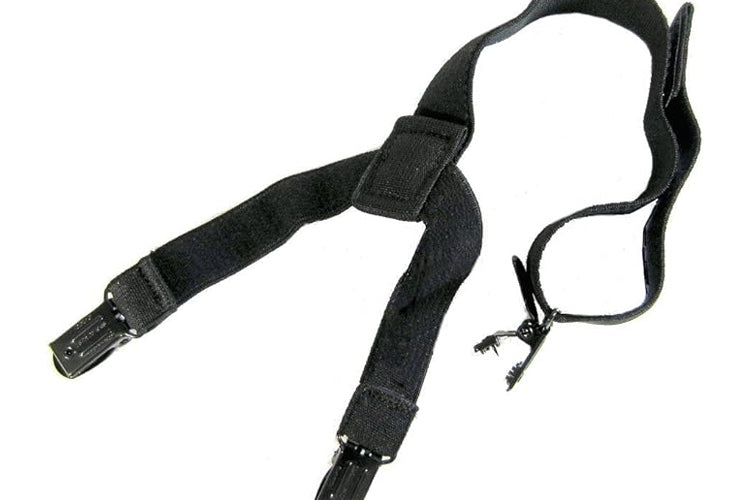
Regular suspenders split between buttons and metal clips that grip the outside edge of the waistband. Clips work across more trouser styles since they do not require interior buttons to be sewn in; buttons read as the more refined, more permanent option. We go deeper on the mechanics of both in our button suspenders vs. clip-on guide.
Material and Construction
Tuxedo suspenders are cut from silk, satin, or grosgrain ribbon, materials chosen because they lie flat under a jacket and pick up light the same subtle way a satin lapel does, rather than competing with it. The stitching is kept minimal and close to the color of the fabric so it disappears rather than draws the eye.
Regular suspenders draw from a much wider material pool, elastic, leather, woven cotton, nylon webbing, and are often built with visible stitching or contrast thread as a design feature rather than something to hide. If leather is part of your formalwear plan, our guide to leather suspenders with formal wear covers where it works and where it does not.
Width
Width is the fastest way to tell the two apart at a glance. Tuxedo and black-tie suspenders sit in the 3/4 inch to 1 inch range, narrow enough to stay invisible under a jacket without adding bulk at the shoulder. Push past 1.5 inches and you are in workwear or casual territory, styles meant to be seen rather than hidden.
Showing up to a black-tie event in 2-inch work suspenders reads about as well as pairing sneakers with a dinner jacket: technically functional, visibly wrong. Our tuxedo suspenders size guide breaks the exact measurements down by height and build if you are unsure which length to order.
Back Design
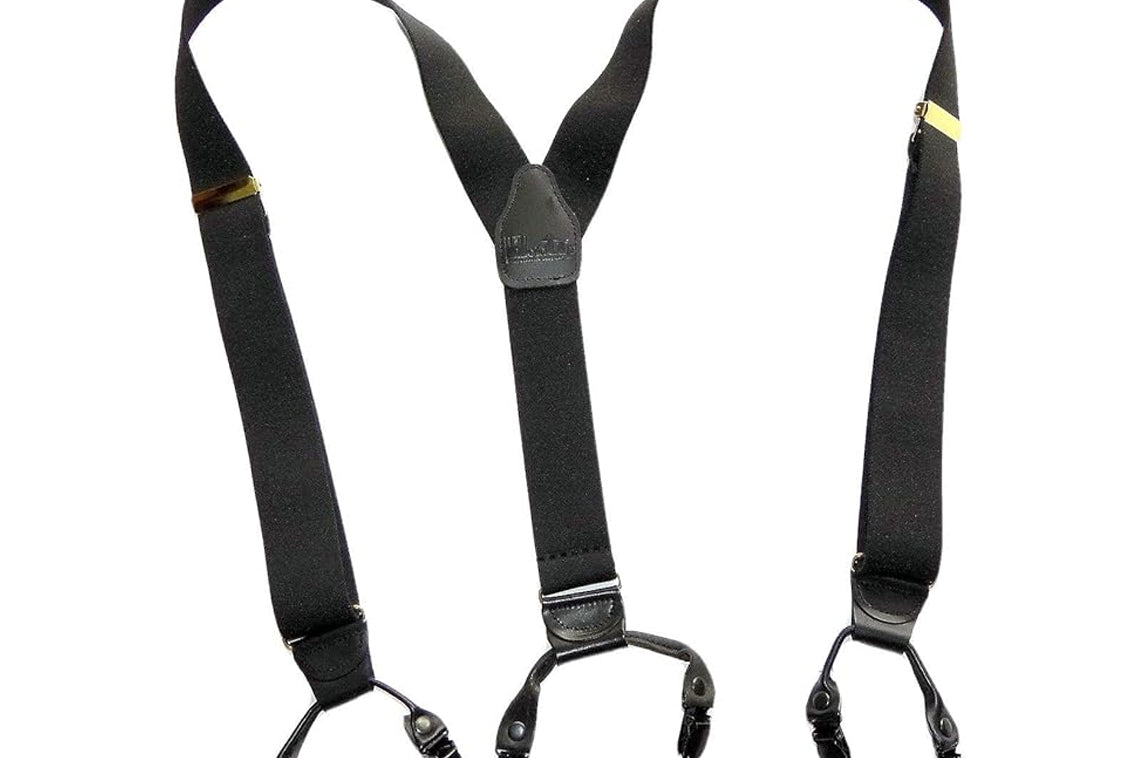
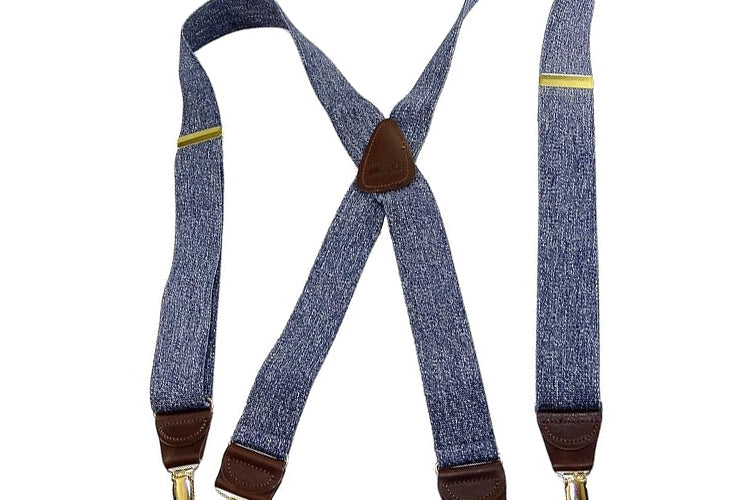
Most tuxedo suspenders use a Y-back, where both rear straps converge into a single center strap, or an X-back, where the straps cross at the center. The Y-back gives the cleanest line under a jacket; the X-back adds a little extra stability across the shoulders, and either is correct for black tie.
Regular suspenders use both of those too, plus an H-back with parallel, non-converging straps that shows up mostly in casual and workwear designs. Our guide to suspender back styles walks through which shape suits which build.
Hardware and Finish
Tuxedo suspenders keep hardware deliberately minimal: gold, silver, or antique brass adjusters with a single consistent finish that should match your cufflinks and watch case rather than compete with them. Regular suspenders draw from a wider range of hardware, polished metal through plastic, matte through chrome, since the finish is chosen for durability and cost as often as for looks.
Elasticity
Where tuxedo suspenders use elastic at all, it is tucked into the back portion of the strap, under the jacket, so the front sections you would actually see stay flat and unstretched. Regular suspenders, especially the ones built for all-day comfort, often run elastic the full length of the strap, which makes them more forgiving but noticeably more casual to look at.
Thickness and Padding
Tuxedo suspenders are thin and unpadded on purpose. Any thickness shows as a visible ridge under a fitted jacket, which defeats the point of wearing them in the first place. Some regular suspenders, particularly the ones built for a full shift of physical work, add padded straps to cut shoulder fatigue. That padding is exactly the kind of bulk formal wear cannot hide.
Length and Sizing
Tuxedo suspenders come in a narrower size range than regular suspenders, since tuxedos are usually tailored close to the body and do not need much adjustment travel. Regular suspenders stretch further in both directions, including extended lengths built for taller or larger frames, because they have to fit whatever trousers a man owns rather than one tailored garment.
If your build falls outside standard sizing, check the measurements in the width guide above before you order; getting the length wrong is one of the most common return reasons we see on formal suspenders.
Color and Pattern Options
Black tuxedo suspenders are correct in nearly every black-tie setting and are the safest default if you only own one pair. White is the other traditional option, most common with warm-weather formalwear or an ivory dinner jacket. Navy pairs specifically with a midnight blue tuxedo, and anything beyond those three colors is a judgment call best made carefully.
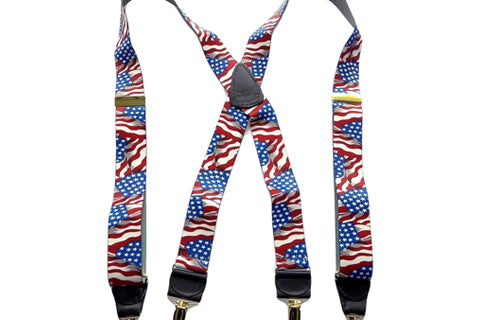
Regular suspenders open up into full color and pattern territory, stripes, plaids, novelty prints, which is exactly what makes them appropriate for casual and smart-casual wear and inappropriate for black tie.
Occasion Suitability
Tuxedo suspenders belong at black-tie events, formal weddings, proms, and galas, essentially anywhere the dress code specifies a tuxedo. They are a popular choice with grooms and groomsmen in particular, since they photograph cleanly and add a formal detail without changing the silhouette.
Our guide to groomsmen suspenders covers color matching and coordinating sizes across a wedding party. Regular suspenders fit business suits, semi-formal events, casual outfits, and trade work, depending on the specific style.
Price Point
Tuxedo suspenders generally cost more than entry-level regular suspenders, and the reason is mostly material. Silk, satin, and grosgrain cost more to source and more to work with than standard elastic webbing, and the construction has to be precise enough to keep the strap flat under a jacket. Regular suspenders span a much wider price range, from basic elastic clip-ons up through premium leather pairs that can cost as much as, or more than, a formal set.
What Types of Suspenders Work Best With a Tuxedo?

Button suspenders are the traditional choice and still the standard for a classic tuxedo look. They attach through interior waistband buttons, keep every piece of hardware out of sight, and give the cleanest silhouette of any attachment method.
Clip-on suspenders are a reasonable substitute, especially with a rented tuxedo where interior buttons were never sewn in. The clips stay hidden under the jacket and vest just as well; some men simply prefer the security and tradition of buttons for occasions that matter.
If you are wearing a vest or waistcoat over your tuxedo, the suspenders sit underneath and will not be visible at all, which makes the clip-versus-button decision more about personal preference than appearance.
Some men skip suspenders entirely in favor of a cummerbund in that scenario; our comparison of suspenders and a cummerbund for a tuxedo covers when each makes more sense. For the mechanics of wearing suspenders specifically under a vest, see our guide to tuxedo suspenders with a vest.
How Do You Style Formal Suspenders for Men?
Treat formal suspenders as a background detail that completes the outfit, not a feature piece meant to draw attention. Black tuxedo suspenders pair cleanly with a classic dress shirt, a self-tie bow tie, and a pocket square, and they should stay out of sight above the waistband once the jacket is fastened.
Our guide on whether your bow tie should match your suspenders covers when to match tones exactly and when a complementary shade works better. For a full pairing reference across bow tie, cummerbund, and suspenders together, our guide to matching tuxedo suspenders, bow tie, and cummerbund is the more complete resource.
Shoes should echo the metal tone of your suspender hardware. Polished black Oxfords with gold-hardware suspenders and a black satin bow tie keep the metal palette consistent across the whole outfit, and that kind of consistency is what separates a rented-for-the-night look from one that reads as deliberate. Our formal suspenders and shoes pairing guide covers both classic and more contemporary combinations.

Can Regular Suspenders Be Worn With a Suit?
Yes, and this is where the line between the two categories gets useful rather than strict. A business suit does not carry the same width and material rules a tuxedo does. A 1 to 1.5 inch elastic or woven suspender in a complementary color works fine with a suit and adds a formal-casual note that a belt cannot.
The rules that do apply: keep the color solid or the pattern subtle, keep the hardware polished, and make sure the whole combination reads as a choice rather than an accident. Our guide to wearing suspenders with a suit covers the specifics.
Conclusion
The choice between tuxedo suspenders and regular suspenders comes down to the event, not personal preference. For black tie, formal weddings, and anywhere a tuxedo is required, tuxedo suspenders are the correct call: narrow, made from fine material, buttoned to the inside of the waistband, and built to disappear under the jacket. For everyday wear, business suits, or casual outfits, regular suspenders give you far more range in width, material, color, and attachment.
Getting this one detail right is a quiet way to signal that you actually know what you are doing in formalwear, and it is usually the first thing an experienced groomsman or best man checks before the ceremony. If you are still deciding which pair to buy, our rundown of the best brands for tuxedo suspenders is a reasonable next stop.
Frequently Asked Questions
What is the difference between tuxedo and regular suspenders?
Tuxedo suspenders run 3/4 inch to 1 inch wide, use silk, satin, or grosgrain, button to the inside of the waistband, and are built for formal events only. Regular suspenders run wider, use elastic, leather, or fabric, can clip or button on, and work with everything from suits to casual wear. Width and material are the two differences you will notice first.
Can you wear clip-on suspenders with a tuxedo?
Yes. Clip-ons work fine with a tuxedo, especially when the trousers do not have interior buttons sewn in, and the clips stay hidden under the jacket just like buttons do. Button attachments are still considered the more traditional, more refined choice for black tie, mainly because they keep every piece of hardware completely out of sight inside the waistband.
What width suspenders should you wear with a tuxedo?
3/4 inch to 1 inch is the correct range for a tuxedo. That width keeps the streamlined line formal wear is built around. Anything from 1.5 to 2 inches reads as casual or workwear and does not belong at a black-tie event. A 1.25 inch pair can work if it is made from a formal material like silk or grosgrain, but staying in the narrower range is the safer call for strict black tie.
What color suspenders should you wear with a black tuxedo?
Black is the most versatile and correct choice for a classic black tuxedo. White is the other traditional option, especially for warm-weather formalwear or a white-tie event. Navy works specifically with a midnight blue tuxedo. Bold colors are worth avoiding in strict formal settings unless the event has an explicitly creative dress code, and your suspenders should coordinate with your bow tie rather than compete with it.
Are tuxedo suspenders and tuxedo braces the same thing?
Yes. "Suspenders" is the American term and "braces" is the British term for the same accessory. It is worth knowing the distinction before you shop from a UK retailer, since in British English "suspenders" actually refers to a garter belt, an entirely different item. Our breakdown of why suspenders are called braces in the UK covers the history behind the split.
Should groomsmen wear tuxedo suspenders or regular suspenders for a wedding?
If the wedding dress code calls for tuxedos, groomsmen should wear tuxedo suspenders in the correct formal width and material. If the dress code is business formal with suits instead, a neat pair of regular suspenders in 1 to 1.5 inches, in a coordinated color, is appropriate. The detail that matters most for a wedding party is consistency: every groomsman in the same style and color, since that is what actually shows up in the photos.