

Suspenders are shoulder-worn straps that hold up trousers by attaching to the waistband. Garters are bands worn around the leg or waist to hold up stockings. The two accessories serve completely different functions and are worn by different people for different purposes, though both have roots in 18th and 19th century fashion.
If you have ever wondered whether suspenders and garters are the same thing, you are not alone. The terms get confused regularly, partly because both involve straps and clips, and partly because the British English word "suspenders" actually refers to what Americans call garters. This article breaks down exactly what each accessory does, how each is worn, and how to choose the right one for your situation.
What Is the Difference Between Suspenders and a Garter?
Suspenders and garters look similar on the surface but serve completely different purposes. Understanding that difference starts with where each accessory attaches to the body and what it is designed to hold in place.
How do suspenders work?
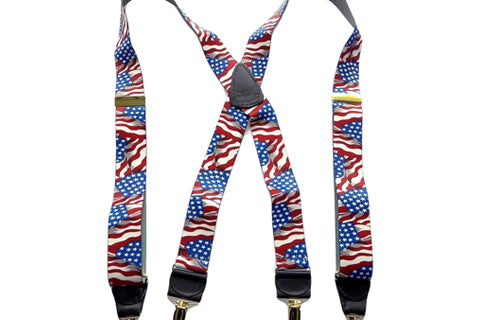
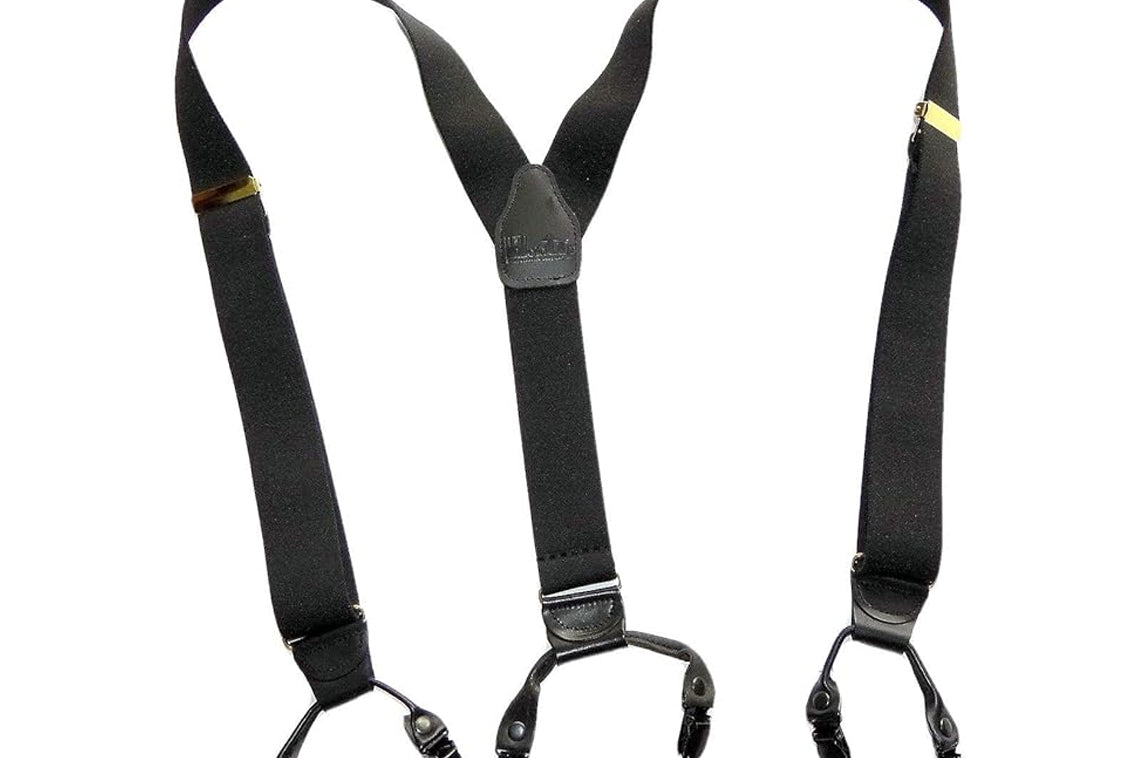
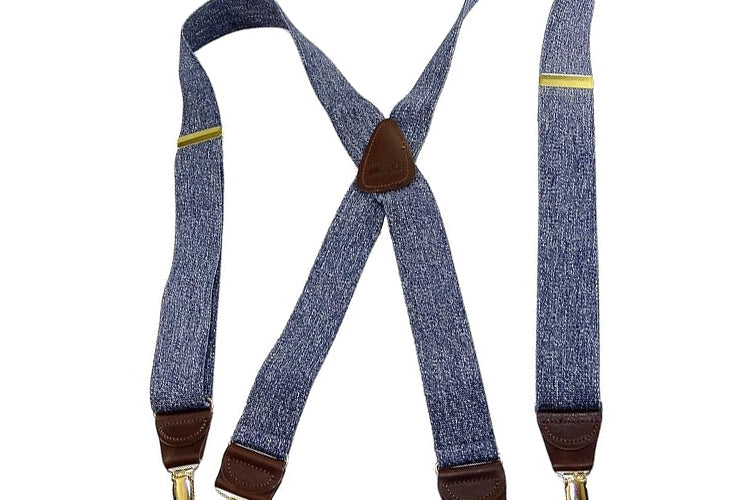
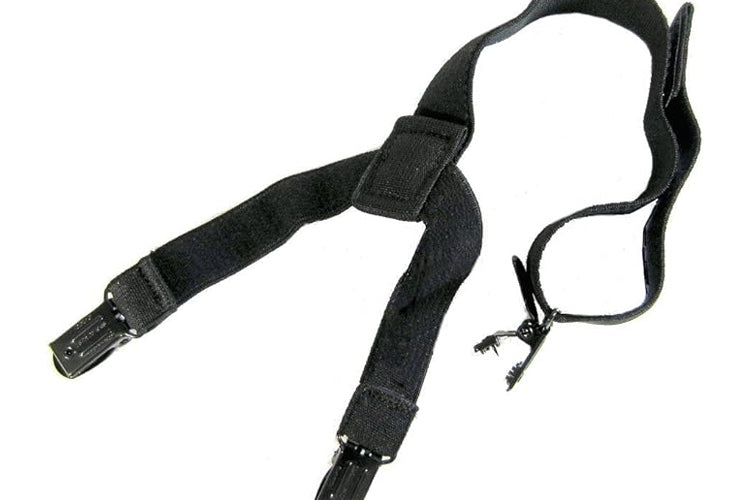
Suspenders, also called braces in British English, are a pair of elastic or leather straps that run over the shoulders and attach to the waistband of trousers. The straps come in Y-back and X-back configurations, with clips or buttons securing them to the front and back of the pants. Because the weight of the trousers is distributed across the shoulders rather than compressed at the waist, suspenders eliminate the discomfort of a tight belt while keeping pants exactly where you want them. Different varieties of suspenders are available in widths ranging from 1 inch for formal wear to 2 inches for heavy-duty work use, with materials including woven elastic, leather, and non-elastic industrial webbing.
How do garters work?
A garter belt is a band worn around the waist or hips with vertical straps hanging down to clip onto the tops of stockings, keeping them from sliding. Garters can also refer to simple bands worn just above the knee to hold up socks or stockings directly, without a belt. Unlike suspenders, which run vertically from shoulder to waist, garters operate in the lower half of the body. Sock garters for men are a separate category entirely, using a simple elastic band and clip to keep dress socks from bunching at the ankle. The hosiery-holding function of garters has remained essentially unchanged for centuries.
The simplest way to remember the distinction: suspenders hold up your pants from above, garters hold up your stockings from below.

How Do the Histories of Suspenders and Garters Compare?
Both accessories have long histories, but their timelines and cultural associations are very different. Knowing the origin of each helps explain why they are perceived so differently today.
When were suspenders invented?
Suspenders were developed in the early 18th century as a practical solution to a trouser-fit problem: waistbands at the time sat high on the torso, making belts impractical. By the 19th century, suspenders had become a standard element of men's dress, particularly in formal and business contexts. They remained dominant through the early 20th century before belts gradually took over during the mid-century period. The full history of suspenders traces through military uniforms, working-class workwear, and Wall Street boardrooms, with each era leaving a distinct mark on how the accessory is perceived today.
How did garters evolve over time?
Garters predate suspenders by several centuries. Medieval records show both men and women wearing garter bands to hold up wool hose, and the Order of the Garter, established in 1348 by King Edward III, demonstrates how central the accessory was to high-status dress at the time. By the early 20th century, the invention of elastic and synthetic hosiery changed the garter's role. Men's sock garters became a niche product, while garter belts evolved into a predominantly feminine lingerie item associated with stockings. Today, garter belts appear most often in bridal settings, vintage-inspired fashion, and lingerie, while functional sock garters retain a small but dedicated following among men who wear fine hosiery with dress shoes.
What Materials Are Suspenders and Garters Made From?
Material choice matters significantly for both accessories because it affects durability, comfort, and the occasions for which each is appropriate.
What are suspenders made of?
Most suspenders use woven elastic as the primary strap material, which provides stretch for comfort while maintaining consistent tension throughout the day. Formal suspenders typically use a satin-finished woven elastic in narrow widths of 1 inch, giving a polished, low-profile look under or over a dress shirt. Work and outdoor suspenders use wider, heavier elastic or non-elastic nylon webbing capable of supporting tool belts and heavy trousers without stretching out. Leather suspenders occupy a middle ground, using genuine or bonded leather straps with metal hardware for a rugged, heritage aesthetic. The clips or buttons that attach the straps to trousers are usually metal, though composite plastic gripper-style clasps have become popular for their stronger grip on lightweight fabrics.
What are garters made of?
Garter belts are most commonly made from lace, satin, elastic, or a combination of all three. Lingerie-focused styles prioritize delicate materials like silk lace and soft elastic bands. Functional sock garters for men use simple elastic bands, sometimes with a small metal or plastic clasp. The undergarment quality and construction of a garter belt matters for comfort, especially since the waist band and hanging straps need to stay in place through a full day of movement without digging into the skin. Adjustable strap length is a key feature to look for in any garter belt, just as adjusting suspenders to the right length is critical for a proper fit.

How Should You Wear Suspenders Properly?
Wearing suspenders correctly is more straightforward than many people expect, but a few technical details make a significant difference in both appearance and comfort.
How do you attach and adjust suspenders?
Clip-on suspenders attach directly to the waistband of trousers using metal or plastic clips at the front and back. Button suspenders require the pants to have interior buttons sewn at the waistband, which provides a more secure hold and a cleaner silhouette. Once attached, the shoulder straps should be adjusted so the suspenders sit flat without pulling the trousers upward or sagging down the chest. Using the correct suspender length for your height is the most important starting point, since straps that are too long will never hold the pants correctly regardless of how you adjust the sliders. Standard suspenders fit men up to about 6 feet tall, while extra-long versions are available for taller builds.
How do you style suspenders for different occasions?
For formal events and office settings, narrow satin-finish suspenders in black, navy, or charcoal work best under a suit jacket or with a dress shirt and trousers. The suspenders stay largely hidden under the jacket, providing a clean, supported silhouette. For casual outfits, wider suspenders in patterns or solid colors work well with jeans or chinos, worn over a tucked shirt where the straps are visible as part of the look. Wearing suspenders with a suit requires a few specific adjustments to avoid bunching at the jacket shoulders. For work and outdoor use, heavy-duty 2-inch suspenders with jumbo clips handle tool belts and cargo pants without fatiguing over a long shift.
Suspenders should never be worn with a belt at the same time in formal contexts. The two accessories serve the same function and wearing both reads as a style error. In casual contexts, some people pair suspenders with jeans that have belt loops for a relaxed aesthetic, which is acceptable as a deliberate fashion choice.
What Are the Pros and Cons of Suspenders vs Garters?
Choosing between the two comes down to what you need the accessory to do. They are not competing products for the same use case.
When are suspenders the better choice?
Suspenders are the right choice for anyone who wants to hold up trousers, improve posture, or add a structured style element to an outfit. They are particularly valuable for men whose waist and hip measurements make belt-worn trousers sit poorly, since suspenders bypass the waistband tension entirely. They work across formal, casual, and workwear contexts. The variety available is extensive, including undergarment styles that stay hidden under a shirt, sleeve garters for holding up rolled sleeves, and heavy industrial models for construction use. One practical advantage over belts: suspenders do not leave pressure marks at the waist after sitting for long periods, which matters for anyone in a desk job or driving regularly.
When do garters make more sense?
Garters are the right choice when the goal is to hold up stockings. For anyone wearing thigh-high stockings or stay-ups that tend to slide, a garter belt provides reliable hold throughout the day. Shirt garters with suspenders represent an interesting hybrid use case, where shirt-tail stays are worn under clothing to keep dress shirts tucked. Sock garters for men serve a similar niche function, keeping fine-knit dress socks from creasing at the ankle. In formal menswear contexts, sock garters are occasionally worn under trousers with tuxedo outfits where a clean sock line matters. Outside of these specific hosiery-related situations, garters have no functional role in a typical modern wardrobe.
Frequently Asked Questions About Suspenders vs Garters
Are suspenders and garters the same thing?
No, they are not the same thing. In American English, suspenders hold up trousers from the shoulders and garters hold up stockings from the waist or thigh. The confusion arises because in British English, the word "suspenders" is used to describe what Americans call a garter belt. If you are shopping or reading fashion content, pay attention to whether the source uses British or American terminology to avoid ordering the wrong product.
Can men wear garters?
Yes, men can wear garters in specific contexts. Sock garters are a traditional men's accessory worn to keep dress socks in position, and they are still used by some men who wear fine hosiery with formal outfits. Men in historical reenactment contexts also wear garters as period-appropriate accessories. Outside of these situations, garter belts are primarily a women's lingerie item in modern Western fashion.
Is it old-fashioned to wear suspenders?
No, suspenders are not old-fashioned. They have maintained consistent presence in both formal menswear and workwear, and have seen periodic fashion revivals in streetwear and vintage-inspired styling. Any accessory worn intentionally and fitted correctly reads as stylish rather than dated. The key is choosing the right style and width for the occasion rather than defaulting to whatever style was common in a previous decade.
What is the difference between a suspender belt and a garter belt?
A suspender belt and a garter belt are the same item, just described using different regional terminology. In the UK and much of Europe, the waist-worn band with hanging clips used to hold up stockings is called a suspender belt. In the US, the same item is called a garter belt. Both terms refer to the same undergarment. American-style suspenders for trousers are called braces in British English.
Do suspenders actually hold pants up better than a belt?
Yes, suspenders hold trousers more securely than a belt in most situations. A belt relies on friction at a single horizontal point at the waist, which allows pants to shift position when sitting, bending, or lifting. Suspenders distribute the load evenly across both shoulders using four attachment points on the waistband, keeping the trouser position consistent regardless of movement. For tradespeople, men with a larger waist-to-hip ratio, or anyone standing for long periods, suspenders provide noticeably more reliable hold with less physical fatigue.
Whether you lean toward the structured utility of suspenders or the vintage elegance of garters, both accessories have earned their place in fashion history. Suspenders in particular remain one of the most versatile and underused tools in a man's wardrobe, capable of elevating a suit, anchoring a work outfit, or adding a deliberate style statement to casual wear.