
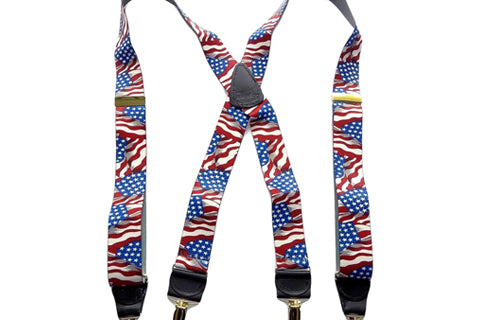
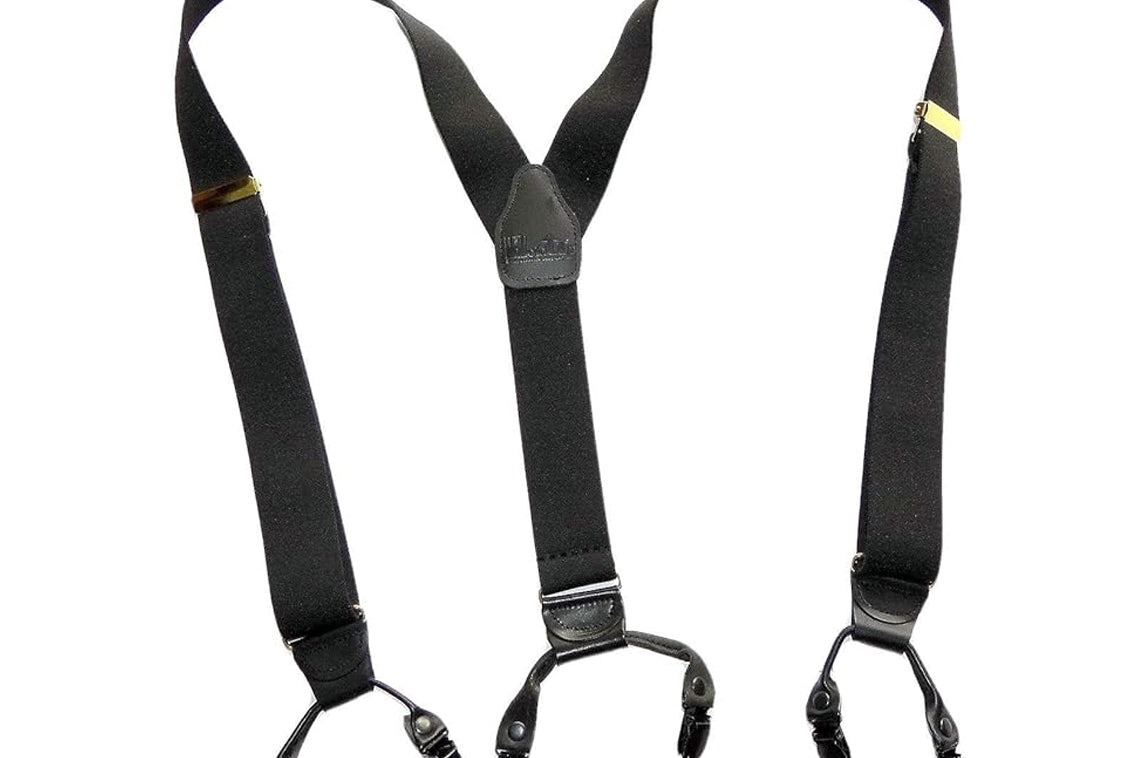
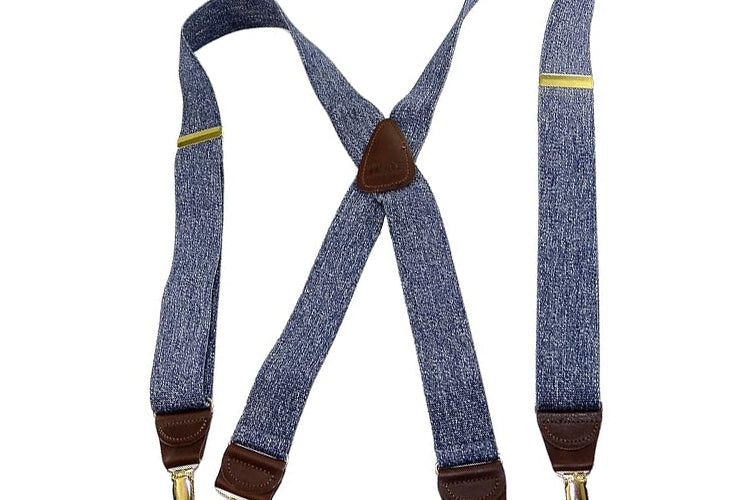
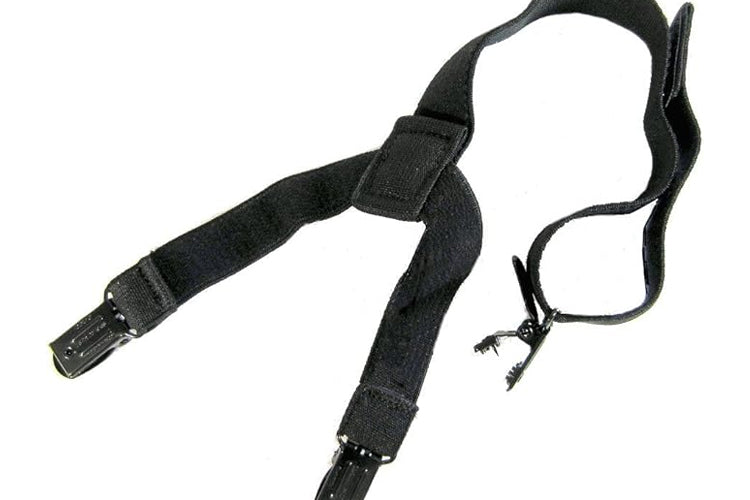

Quick answer: Shirt garters, also called shirt stays or shirt pullers, are elastic straps that run from the bottom of your shirt down to your socks, keeping your shirt firmly tucked in all day. Worn with suspenders, they create a complete garment-control system: suspenders hold your trousers at the correct height from the shoulders, while shirt garters hold your shirt hem down from below. Together they stop both a sagging waistband and an untucked shirt without constant readjustment.
If your dress shirt keeps creeping out of your waistband by mid-afternoon, suspenders alone will not fix it. They keep your trousers up, but the shirt still moves every time you sit, stand, or reach. Adding shirt garters closes that gap. This guide covers what shirt stays are and the names they go by, the main styles, how to put them on in the right order with suspenders and trousers, and how to fix the most common fit problems.
What Are Shirt Garters and How Do They Work With Suspenders?
Shirt garters are elastic straps with small clips at each end. One clip attaches to the bottom hem of your shirt and the other to the top of your sock, running down the inside of your leg. The tension in the elastic strap holds the shirt hem taut against the sock, preventing it from riding up and pulling free from the waistband no matter how much you move.
Suspenders work from the opposite direction. They clip or button to the waistband of your trousers and run up over the shoulders, holding the trousers at their correct height from above. This is fundamentally different from a belt, which tries to hold trousers up by clamping the waistband, and it means suspenders do not create pressure at the waist.
When you combine both accessories, you create a closed system of garment control. The shirt is anchored from below by the garters, the trousers are held at height from above by the suspenders, and there is nothing left to come loose. It is a combination popular with military personnel, law enforcement, and anyone who spends long hours in formal dress where a polished appearance is expected.

What Is a Shirt Puller? Other Names for Shirt Garters
Shirt garters go by several names, which is why shoppers often struggle to find them. These terms usually describe the same accessory, a strap that connects the shirt hem to the sock or foot to keep the shirt tucked:
- Shirt stays: the most common retail name in the US.
- Shirt pullers: a descriptive name, since the strap pulls the shirt hem downward.
- Shirt holders or shirt holder straps: often used for the same strap design.
- Shirt suspenders, leg suspenders, or sock-to-shirt suspenders: names that describe how the strap runs down the leg like a small suspender.
- Shirt tail garters: a name that points to where the top clip attaches.
Two similar terms describe different accessories. Sock garters are bands worn around the calf that clip to the sock to hold the sock up, not the shirt down. Braces is the British word for suspenders, the straps that hold trousers up over the shoulders. For more on the strap style itself, the guide to shirt holder straps covers how they finish a formal look.
Shirt Suspenders: Shirt Stays or Undergarment Suspenders?
The phrase "shirt suspenders" is used for two different products, so it helps to know which one you need before buying.
The first meaning is shirt stays: the sock-to-shirt straps described above, which keep your shirt tucked. The second meaning is undergarment suspenders, which are regular suspenders worn under your shirt instead of over it. They hold your trousers up while staying hidden, which suits anyone who wants the support of suspenders with a clean, unbroken shirt front. The Under-Ups undergarment suspenders collection is designed for this hidden approach.
The two can also be worn together. Undergarment suspenders handle trouser height under the shirt, and shirt stays keep the shirt itself tucked from below.
| Accessory | Attaches to | Main job |
|---|---|---|
| Shirt garters (shirt stays) | Shirt hem and socks or foot | Keep the shirt tucked in |
| Suspenders (braces) | Trouser waistband, over the shoulders | Hold trousers at the right height |
| Undergarment suspenders | Trouser waistband, under the shirt | Hold trousers up while hidden |
| Sock garters | Calf and sock | Keep socks pulled up |
How to Wear Suspenders Under a Tucked-In Shirt
Yes, you can wear suspenders under a shirt. This is the hidden approach, and it works best with undergarment suspenders that have thin, flat straps that do not show through the fabric. Here is the usual order:
- Put on your undershirt first, so the suspender straps sit on the undershirt and not directly on your skin.
- Step into your trousers and attach the suspender clips to the waistband at the front and back.
- Adjust the straps so the trousers sit at your natural waist with light tension.
- Put on your dress shirt over the suspenders, button it, and tuck it in.
- Add shirt stays last if you want the shirt hem held down as well.
A few details make hidden suspenders less visible. Choose a strap color close to your undershirt or skin tone when you wear a white or light dress shirt, keep the straps flat and untwisted, and avoid wide or leather straps, which show lines through thin shirt fabric. Some wearers prefer belt loop suspenders, which hook to the belt loops instead of clipping to the waistband, for trousers where clips are not an option.
What Are the Benefits of Wearing Shirt Garters With Suspenders?
The primary benefit is a polished, consistent appearance that requires no active maintenance during the day. A shirt that stays tucked, trousers that stay at the correct height, and a smooth waistline create an overall impression of precision and attention to detail that is difficult to achieve with belts and tucking alone.
Comfort over long periods is a significant practical advantage. Belts create continuous pressure around the waist that can become uncomfortable during extended sitting, particularly after meals or during long events. Suspenders remove that pressure by shifting the load to the shoulders. Shirt garters create mild tension along the inner leg, which most wearers stop noticing within a few minutes. The combined result is a garment system that keeps its appearance all day without the squeeze of a tight belt.
Shirt garters also solve a problem that suspenders cannot solve on their own. Suspenders hold the trousers up, but as you sit, stand, and move, the shirt fabric inside the waistband can still shift and pull upward, creating the telltale shirt billow at the waist. Shirt garters fix this specific problem by holding the shirt hem independently of the trouser waistband.
Do Suspenders Keep Your Shirt Tucked In?
Regular suspenders do not keep your shirt tucked in on their own. They attach to the trousers, not the shirt, so their job is to hold your trousers at the right height. When people search for suspenders to keep a shirt tucked in, they are usually looking for shirt stays, the leg straps that pull the shirt hem down from below.
That said, suspenders do help indirectly. Trousers held at a steady height keep the waistband in one place, so the shirt has less room to work loose than it does with a belt that slides down over the hips. For a shirt that truly stays put, pair the two:
- Everyday office wear: regular or undergarment suspenders plus Y-style shirt stays.
- Long formal events: formal suspenders plus Y-style or stirrup shirt stays.
- Active or uniform wear: heavy-duty suspenders plus stirrup shirt stays for the firmest hold.
What Types of Shirt Garters Are Available?
Shirt garters come in several configurations, and the right choice depends on how you intend to wear them and the level of hold you need.
Y-Style Shirt Stays
The Y-style is the most common design for professional and formal use. A single strap runs down from the shirt hem, then splits near the ankle into two shorter clips that attach to the front and back of the sock. This distributes the tension more evenly than a single attachment point, reduces bunching at the sock, and creates a more stable hold during active movement. The Holdup Y-style dress shirt stays use the brand's patented No-Slip metal clips.
Single-Clip Shirt Stays
Single-clip stays use one attachment point at the shirt hem and one at the sock, connected by a single strap. They are simpler to put on and remove and work well for lighter dress shirts with moderate activity levels. The tension is less evenly distributed than a Y-style design, which can cause minor bunching at the sock if the strap is tight, but for typical office or formal wear they are a practical option.
Stirrup-Style Shirt Stays
The stirrup design uses a loop that goes around the foot rather than clipping to the sock. The shirt hem clips to the top of the stirrup strap, and the loop under the foot holds the whole assembly taut. These are common with dress uniforms and provide a very secure hold because they do not rely on a sock clip that can shift if the sock slips. They take slightly more time to put on. The Holdup stirrup-style shirt stays pair the foot loop with patented gripper clasps at the shirt.
Side-Clip Shirt Garters
Some shirt garters run around the waist rather than down the leg, using adjustable bands with clips that grip the shirt hem all the way around. These are simpler in concept but rely on waist pressure to function, which reintroduces some of the comfort issues associated with belts. They suit men who want shirt-tuck security without anything running down their legs.
What Materials Are Shirt Garters Made From?
The elastic band is the most critical component, and its quality determines both the effectiveness and the life span of the garter. Good shirt stays use woven elastic that keeps consistent tension over months of regular use. Lower-quality elastic can stretch out of shape quickly, leading to a loose, ineffective hold. Checking the thickness and weave density of the elastic band before buying is worth the extra attention.
Nylon and cotton webbing are also used for the main strap, particularly in heavy-duty stays where durability in active conditions is a priority. Nylon is stronger and more moisture-resistant than cotton, while cotton is softer against the skin and better suited to everyday office wear.
The clips are usually metal or hard plastic. Metal clips, particularly those with a no-slip grip surface, give a more secure hold and are less likely to release accidentally during movement. Plastic clips are lighter and gentler on delicate sock fabrics but can lose their grip over time. For regular wear with dress socks, metal clips with a grip surface offer a good balance of security and fabric care.
How Do You Wear Shirt Garters With Suspenders Properly?
The order of dressing matters when wearing both accessories. Shirt garters go on before your trousers, and suspenders go on last. Follow these steps:
- Put on your undershirt, dress shirt, and socks.
- Tuck your shirt in and pull it smooth at the waist.
- Clip the top of each shirt garter to the shirt hem at the front and back of each leg.
- Route each strap down the inside of the leg and attach the bottom clip to the sock, or slip the stirrup under your foot.
- Adjust the strap length until there is light, even tension without bunching.
- Put on your trousers over the garters.
- Attach the suspenders to the back of the trousers, bring the straps over your shoulders, and attach the front.
- Adjust the suspenders until the trousers sit at the correct height with light upward tension.
The shirt should feel held but not pulled. You should not feel the strap dragging your shirt out of place when you raise your arms. For detailed suspender sizing, the guide on how to adjust suspenders covers each step.
Where to Place Shirt Stays
Placement decides whether the shirt stays smooth or pulls into creases. Clip the front stay roughly in line with the crease of your trouser leg and the back stay directly behind it, rather than at the side seam. Attach the sock clips to the body of the sock just below the top band, not on the band edge itself. This keeps the pull straight and even down each leg.
Clip-On vs Button-On Suspenders With Shirt Stays
Shirt stays work with both styles of suspenders. Clip-on suspenders grip the trouser waistband directly, so they work with almost any trousers. Button-on suspenders attach to buttons sewn inside the waistband, which suits tailored trousers made with suspender buttons. Either way, the suspenders handle the trousers and the shirt stays handle the shirt, so the two never compete for the same fabric.

How Do You Choose the Right Shirt Garters to Pair With Suspenders?
The most important variable is the level of activity you need them for. For seated office work or a formal event with limited movement, single-clip or Y-style stays in a mid-weight elastic are usually enough. For all-day active use, standing presentations, or physical work in formal dress, Y-style or stirrup designs with a heavy-duty strap and metal clips give a more secure hold.
Fit matters more than most buyers expect. Shirt garters are adjustable over a range of lengths, and finding the correct setting for your height and torso length is essential. Too short and they create discomfort and uneven sock wear; too long and the tension is not enough to hold the shirt down. Adjust them while standing upright in your normal posture, not while seated.
Color is a minor consideration but worth noting for formal settings. Black shirt stays under black trousers are practically invisible. White or tan stays can show a flash of color at the ankle if the trouser rides up, so match them to your socks and trousers. If you also wear sleeve garters, the guide to sleeve garters with suspenders covers how all three accessories work together.
Shirt Suspender Size and Fit: How Tight Should They Be?
Most shirt stays and suspenders are adjustable, so getting the fit right is less about buying an exact size and more about setting the length correctly for your body. The two accessories are sized in different ways.
Sizing Shirt Stays
Shirt stays adjust through a slide on each strap. Taller wearers, or anyone with a long distance between the shirt hem and the sock, should check the maximum strap length before buying. Set them while standing: the strap should feel lightly stretched, with the shirt hem held smooth but not pulled into creases at the front of your trousers.
Sizing Suspenders
Suspender length depends on your height and torso length, and most styles adjust with sliders on the front straps. They are tight enough when your trousers sit at your natural waist without sagging, and loose enough that you can slip a couple of fingers under the strap at your shoulder. If the straps dig into your shoulders or lift the trousers above your waist, lengthen them.
Stopping Suspenders From Slipping
Suspenders that slide off the shoulders are usually too loose, twisted, or set too wide. Shorten the straps slightly, check that each strap lies flat, and clip onto the thicker part of the waistband. The back style also matters. Y-back suspenders meet at one point on the back, while X-back suspenders cross at the back and have two rear attachment points, which many wearers find keeps the straps more stable on the shoulders.
What Occasions and Outfits Are Shirt Garters Most Suitable For?
Shirt garters are most commonly associated with formal dress, military and police dress uniforms, and professional attire where a tucked shirt and correct trouser height must be kept for long periods.
For civilian wear, they are particularly useful for long formal events such as weddings, galas, or black-tie evenings where you will be sitting, standing, dancing, and moving for hours without a chance to readjust. Paired with formal suspenders, they create a consistently polished look. For the rules on formalwear, the dos and don'ts of wearing suspenders with a tuxedo covers what to follow.
They are also useful for everyday office wear if your dress shirts tend to come untucked during a normal working day. Men with longer torsos, or those who wear high-rise trousers with formal shirts, often find that even good shirts pull free from the waistband during long periods of sitting. Shirt garters solve this rather than requiring a tuck mid-afternoon. If you prefer your suspenders hidden as well, the guide to wearing suspenders under the shirt explains that approach.

What Shirt Should You Wear With Suspenders?
Suspenders work with more shirts than most people expect, from a crisp white dress shirt to a casual t-shirt. The shirt you choose sets the tone of the outfit and also decides whether shirt stays make sense.
White Dress Shirt With Suspenders
A white shirt with suspenders is the classic combination for weddings, suits, and office wear. Black, navy, or gray suspenders give a sharp contrast, while tan suspenders look softer and more relaxed. Add a necktie or bow tie for a formal look, and use shirt stays to keep the white shirt smooth at the waist, where any billowing is easy to see.
Black Shirt With Suspenders
A black shirt with suspenders gives a darker, more modern look. Black suspenders on a black shirt create a tonal outfit that looks clean and subtle, while gray, white, or patterned straps stand out for a bolder effect. Tonal black also hides any clip or strap that shows at the waistband.
Button-Down Shirt With Suspenders
A button-down shirt with suspenders sits between formal and casual. Pair it with chinos or dress pants and clip-on suspenders for a smart everyday outfit, or choose button-on suspenders with leather ends on tailored trousers for a more vintage style.
T-Shirt With Suspenders
Suspenders with a T-shirt are a casual fashion choice, usually worn with jeans or work trousers. Thinner straps and simple colors keep the look relaxed. Shirt stays are not needed here, since a T-shirt is often worn untucked.
Suspenders With an Untucked Shirt
You can wear suspenders with an untucked shirt, with the straps under the shirt or over it. Under the shirt keeps the outfit tidy while still holding your trousers up. Over an untucked shirt is a more casual, streetwear-style look. Shirt stays only work with a tucked shirt, so leave them out with this style.
What Are Alternatives to Shirt Garters for Keeping a Shirt Tucked In?
Several alternatives exist for men who want a tucked-in shirt without straps running down the leg.
Shirts with extended tails are cut longer than standard dress shirts so they reach far enough below the waistband to stay put. These work well for lighter office wear but are less reliable during active movement. Slim-fit shirts have less fabric through the torso to billow, which helps them stay tucked longer than a regular-fit shirt.
Bodysuit shirts use a snap closure at the crotch, similar to an undergarment, so the shirt physically cannot come untucked. They give a very secure hold, though they take more time in the restroom and can feel restrictive for some wearers.
Non-slip grip tape inside the trouser waistband adds friction between the shirt and the waistband without any hardware. This works for moderate activity but tends to lose grip as body heat and moisture build up during long wear.
How Do You Care for and Maintain Shirt Garters?
Proper care extends the usable life of shirt garters. After each wear, open the clip fully before releasing it rather than pulling the clip away from the fabric. Forcing clips off the sock or shirt wears out the clip spring and can damage the fabric.
Hand wash in lukewarm water with a mild detergent. Avoid bleach and harsh chemicals, which degrade elastic fibers and discolor the strap. After washing, gently squeeze out excess water and lay the stays flat to air dry. Never tumble dry, since heat breaks down elastic quickly. The same principles that apply to washing and drying suspenders apply here, since both use similar elastic and clips.
Inspect the clips and elastic regularly. Clips that no longer grip firmly, or elastic that feels limp after stretching, mean the pair needs replacing. Catching these signs early avoids a garter failing mid-event. Store them flat or loosely coiled in a drawer away from direct sunlight.
Shirt Garter Problems and How to Fix Them
Most shirt garter complaints come down to length, clip position, or worn elastic. Here are the three most common issues.
Too tight or leaving marks: the length is set too short. Lengthen the strap slightly until there is tension without pressure. The garter should feel present but not uncomfortable after the first few minutes.
Sliding down or not holding the shirt: the strap is too long, the clips are not gripping firmly, or the elastic has lost its tension. Attach a clip and pull gently. A working clip should not release under moderate downward pressure. If it does, the clip is worn, and the stays need replacing.
Bunching at the sock: the clip is attached to the very top edge of the sock. Move it 1 to 2 centimeters below the top band to spread the tension and stop most bunching.
Are Shirt Garters With Suspenders Worth It?
For anyone who wears dress shirts for long days, yes. Shirt garters and suspenders each solve a problem the other cannot: suspenders stop trouser sag from above, and shirt garters stop the shirt from untucking below. If you want to stop fixing your shirt throughout the day, start with a Y-style pair for everyday wear or a stirrup pair for the firmest hold, and spend a few minutes getting the length right the first time you wear them.
Frequently Asked Questions
What is a shirt puller?
A shirt puller is another name for a shirt garter or shirt stay. It is an elastic strap that clips to the hem of your shirt and to your sock or foot, pulling the shirt down so it stays tucked into your trousers.
What are shirt garters and how are they different from suspenders?
Shirt garters, also called shirt stays, are elastic straps that run from the bottom hem of a dress shirt down to the sock, keeping the shirt tucked in. Suspenders run from the trouser waistband up over the shoulders, holding the trousers at the correct height. Shirt garters prevent shirt untucking, and suspenders prevent trouser sag, so the two work together rather than overlapping.
Are shirt garters necessary if you already wear suspenders?
Not strictly, but they solve a problem suspenders cannot. Suspenders hold the trousers up, but the shirt inside the waistband can still shift and billow as you move. Shirt garters anchor the shirt hem from below. For casual or low-activity wear, suspenders alone may be enough. For formal events or long workdays, adding shirt garters gives a noticeably cleaner result.
How do you put on shirt garters with suspenders?
Put on your shirt and socks first, then attach the shirt garters before your trousers. Clip each garter to the shirt hem at the front and back of each leg, run the strap down the inside of the leg, and attach the bottom clip to the sock. Adjust for light, even tension. Then put on your trousers and attach and adjust your suspenders last.
Where should shirt stays be placed?
Clip the front stay in line with the crease of your trouser leg and the back stay directly behind it, rather than at the side seam. At the bottom, attach the clip to the sock just below the top band to keep the pull straight and avoid bunching.
What is the difference between Y-style and single-clip shirt stays?
Y-style stays split into two clips near the ankle, attaching to both the front and back of the sock. This spreads the tension more evenly, reduces bunching, and holds better during movement. Single-clip stays use one attachment point at the sock, which is quicker to put on but less even. For active wear or all-day formal dress, Y-style stays are the better choice.
Are sock garters the same as shirt stays?
No. Sock garters are bands worn around the calf that clip to the sock to keep socks pulled up. Shirt stays connect the shirt hem to the sock or foot to keep the shirt tucked in. They solve different problems, although both are worn under the trousers.
Do suspenders keep your shirt tucked in?
Not directly. Suspenders hold your trousers at the right height, which keeps the waistband steady, but they do not attach to the shirt. To keep a shirt tucked in, pair your suspenders with shirt stays that hold the shirt hem down from below.
Can you wear suspenders under a shirt?
Yes. Undergarment suspenders are made to be worn under your shirt. Put them on over your undershirt, clip them to your trousers, then put on and tuck in your dress shirt. Thin, flat straps in a light color show the least through the fabric.
How tight should shirt stays be?
Shirt stays should feel lightly stretched while you stand. The shirt hem should be held smooth without being pulled into creases, and you should stop noticing the straps after a few minutes. If they leave marks or pull when you bend your knees, lengthen them slightly.
Can women wear shirt garters?
Yes. Shirt garters work the same way for anyone wearing a tucked shirt or blouse with trousers. They are useful with uniforms, formal wear, and office outfits where a blouse tends to come untucked during the day.
Can shirt garters be worn comfortably all day?
Yes, when correctly fitted. The straps should create light, consistent tension that you stop noticing within a few minutes. Discomfort usually means the length is set too short. Lengthen the strap until the garter feels present but not forceful, and check that the sock clips sit below the top band.
How long do shirt garters last?
It depends on how often you wear them and how you care for them. The elastic is usually the first part to wear out, gradually losing its spring after repeated stretching and washing. If the elastic feels limp rather than springy, or the clips no longer grip firmly, it is time for a new pair. Avoiding tumble dryer heat and bleach extends their life.