
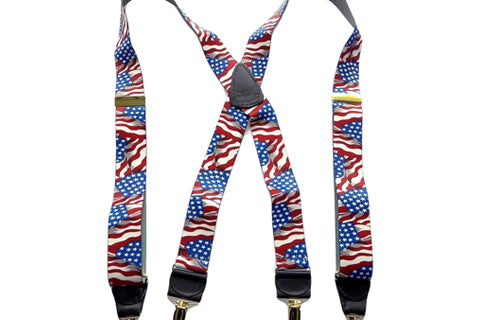
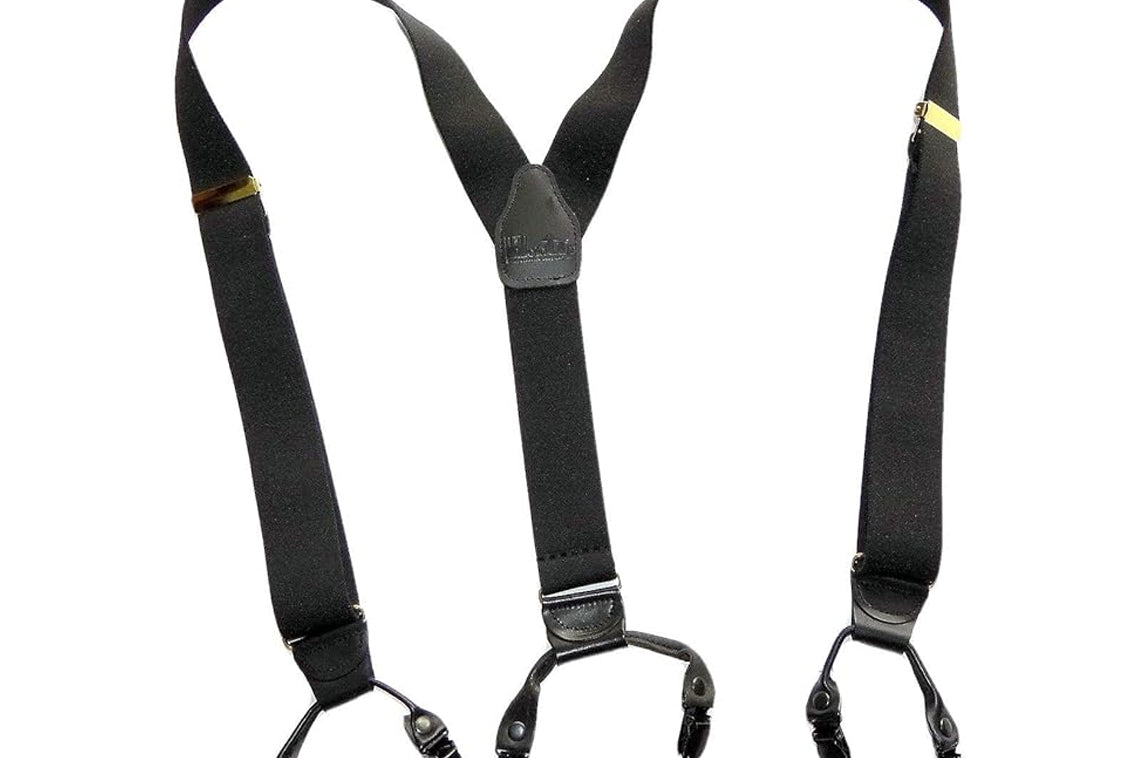
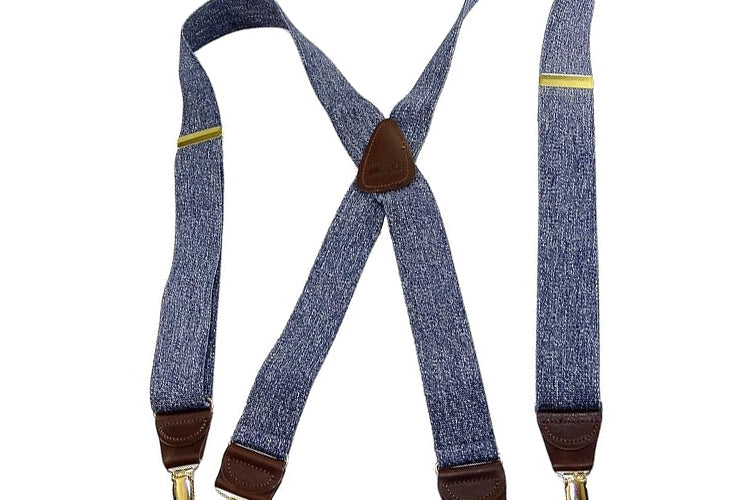
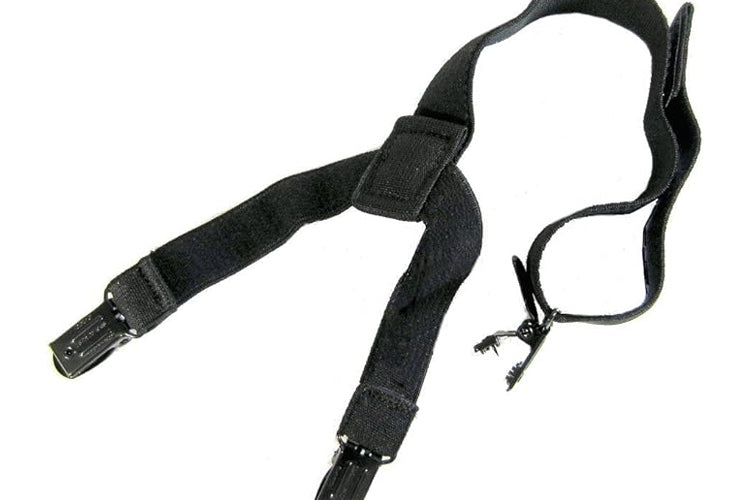

Short answer: belts slide because they fight gravity from the wrong angle. Suspenders don't. If you're carrying extra weight in the midsection, the fastest fix for how to keep pants up with a big belly is wide, elastic suspenders (1.5 to 2 inches) that hang the pants from your shoulders instead of your waistline. High-waisted or elastic-insert pants, a wide non-slip belt, and a tucked-in shirt all help too, but they're supporting players. Suspenders are the fix that actually holds.
We build suspenders for a living, and the question we hear most often at HoldUp isn't "which color" or "leather or elastic." It's some version of "how do I keep these pants from sliding down my belly by 2pm," and more often than not it traces back to skipping the basics of measuring for suspenders in the first place. So this guide skips the generic advice you've probably already tried and focuses on what actually changes the outcome for men figuring out how to wear pants with a big belly, day in and day out.
 Why Does a Big Belly Make Pants Fall Down?
Once your waist measurement passes your hip measurement, the pants have nothing to rest on. A belt just gets pushed down and out by the belly above it, and every step loosens it a little more. That's the whole mechanical problem: a belt tries to hold pants up from a point that's sloping downward, while suspenders pull the weight upward from a point that isn't going anywhere, your shoulders.
The Role of Fabric and Fit
Stiff, non-stretch fabric makes this worse because it won't move with you, so every time you sit or bend, the waistband gets shoved lower and stays there. Pants with some give in the waist, or a construction that's built to work with suspender buttons rather than fight a belt, hold their position far better through a normal workday, which is really the core case for suspenders vs adjustable-waist pants in the first place.
How Do You Choose the Right Pants for a Big Belly?
The pants themselves matter before you even add an accessory. Here's what tends to hold up for bigger frames, and why.
Pants with Elastic Inserts
Side elastic inserts flex with your body instead of cutting into it, which means the waistband stays roughly where you put it in the morning instead of migrating south by lunch. This matters more than most guys expect: a rigid waistband on a fluctuating midsection is fighting your body all day, and it loses.
Pants with a High Waistband
A higher rise gives the fabric more surface area to sit on above the widest part of your belly, instead of trying to balance right at the point where it's steepest. That extra height is the difference between a waistband that stays put and one that's constantly sliding off a slope.
Pants with a Relaxed or Loose Fit
A relaxed cut through the hip and thigh takes pressure off the waistband itself, so it isn't stretched tight enough to roll or slip. You lose a little of the tailored look, but you gain a fit that stays in place without constant adjustment, which for most men is the better trade.
Best Alternative for Comfort with These Pants
Wide elastic suspenders pair with any of the styles above and solve the problem those pants can't solve alone. Because the weight of the pants sits on your shoulders instead of your stomach, there's no pressure point to slide off of in the first place.
Adjustable straps let you dial in the exact drop length, and getting that starting length right matters more the bigger your frame is, our breakdown of suspender length for bigger builds covers exactly how to land on the right one, so the pants sit at the same height whether you're standing, sitting, or reaching for something on a top shelf.

What Accessories Help Keep Pants Up With a Big Belly?
If you're not ready to switch pants entirely, a few accessories can buy you real improvement on their own.
Non-slip Waistbands
A rubberized or silicone lining inside the waistband, either built in or added as a grip strip, catches on your shirt or skin instead of sliding across it. It's not as reliable as suspenders for a larger belly, but it's a reasonable option for guys who won't wear a belt or suspenders under any circumstances.
Belts

A belt can still work, it's just less forgiving than suspenders once there's real weight for it to fight. Since suspenders and belts each have their advantages, the honest answer is that belts do best on men whose belly sits mostly above the waistband rather than hanging over it. Get the width and material right and a belt still earns its place in the rotation.
Selection of the Right Belt
- Width: A narrow dress belt has almost no chance against a bigger midsection; go wider than you think you need, especially once you factor in belts and back health.
- Material: Textured leather or webbing grips better than smooth, polished leather, which tends to slip against fabric.
Proper Adjustment
- Loops: Skipping loops lets the belt twist and ride up on one side, so use every loop the pants have.
- Buckle: Snug enough to hold weight, loose enough that you're not fighting it after a meal, that's the actual sweet spot, not the tightest hole you can reach.
Are Suspenders the Best Solution for Keeping Pants Up With a Big Belly?

For most men asking how to keep pants up with a big belly, yes, suspenders are the most reliable answer, because they never touch the part of you that's actually the problem. The weight goes to your shoulders, full stop. Getting the fit right takes three things:
- Attachment Points: Button-on or clip-on, every attachment point needs to actually grip, a loose clip will slide down the fabric under load and undo the whole benefit.
- Adjustment: Snug is correct, tight is not, suspenders that are cranked too short will ride up and pull your pants uncomfortably high with every step. If you're unsure of your size, this guide on adjusting suspenders walks through it properly.
- Positioning: Straps that sit too close together on the chest or slip off the shoulder toward your arm lose most of their holding power, they need to sit squarely on top of the shoulder, roughly where a backpack strap would, our guide to proper suspender placement has the exact spot if you want to double-check yours.
How Do Dressing Techniques Help With Fit?

Layering
Wearing suspenders under your shirt gets you all the holding power with none of the visible straps, which is why it's the most common setup for office and business-casual wear. A plain undershirt does something similar on a smaller scale: it adds a layer of friction between shirt and waistband that cuts down on slipping. Tucking in, on top of either option, closes the last gap the pants could slide through.
Tailoring
Off-the-rack pants are cut for an average shape that doesn't exist on a bigger belly. A tailor can move the button, taper or let out the seat, and adjust the rise so the waistband actually matches your body instead of the mannequin's. It costs more up front than any accessory, but it fixes the fit problem at the source instead of working around it.
Does Posture Affect How Well Your Pants Stay Up?

Posture
Slouching rolls your hips forward and steepens the slope your pants are already sliding down, so standing straighter genuinely buys you time before the next adjustment. It won't replace suspenders, but paired with them it means fewer mid-day tugs at the waistband.
The Role of Suspenders in Posture Correction
Because suspenders carry the pants' weight on your shoulders instead of pulling on your waist, they take a load off your lower back that a tight belt actually adds to. Men who've switched after years of cinching a belt tight enough to hold often notice less end-of-day lower-back fatigue, not more, which runs against what most people assume about wearing straps over the shoulders. The mechanism lines up with how a sagging waistband pulls on posture in the first place: remove the pull, and the slouch it causes eases too.
Regular Adjustments
Even the right setup drifts a little over a long day. A quick check after sitting for a while, and a small tug at the strap length rather than the waistband, keeps everything where it started without you having to think about it.
Diet and Exercise Tips
None of the above replaces the long game. Core strength and a modest reduction in waist size change how pants sit on you more than any accessory can, and they mean you'll eventually need less from the suspenders or the wide belt, not more. That's a slower fix, but it's the one that keeps paying off.
Conclusion
Getting pants to stay up over a big belly comes down to three moving parts: pants cut to actually fit the shape you have, an accessory that holds weight from the right place, and a couple of habits that buy you extra hours before anything needs adjusting. Suspenders do the heaviest lifting of the three because they solve the mechanical problem directly instead of working around it.
Start with wider, well-fitted suspenders, add a properly tailored pair of pants if you're due for one, and treat belts and non-slip grips as backup rather than the main plan. That combination is what actually holds up through a full day, not just a photo.
Frequently Asked Questions
Are there any health concerns with wearing pants too tight around a big belly?
Yes. A waistband cinched tight enough to hold pants up over a big belly puts constant pressure on the abdomen, and that's been associated with digestive discomfort, acid reflux, and nerve compression in the front of the hip. If you're relying on a tight waist to keep pants up, that's a sign to change the method, not tighten it further, a properly sized pair with suspenders takes the pressure off entirely.
Does tucking in my shirt make a difference?
It does, and it's one of the cheapest fixes available. A tucked shirt adds friction right at the point where pants tend to slide, which slows the slide even before you add a belt or suspenders. Combine it with either and the two effects stack.
Can suspenders be a solution for keeping pants up with a big belly?
Yes, and for most men it's the solution that actually works rather than just helps. Suspenders hold pants from the shoulders, so the belly never becomes the pressure point that causes sliding in the first place. Wide elastic suspenders, 1.5 to 2 inches, spread that weight properly instead of digging into one narrow band of shoulder.
What types of belts are best for those with a larger belly?
Wide elastic or webbing belts hold up better than standard leather because they flex with movement instead of digging in and slipping when you sit down. If a belt is your preference, look for a wide profile and a buckle mechanism that locks rather than one that relies on friction alone.
What is the best suspender width for a big belly?
1.5 to 2 inches is the range we'd point you toward. That width spreads the pants' weight across enough shoulder surface to avoid pressure points while still giving you real holding strength. Narrower fashion suspenders, under an inch, are made for lightweight trousers and typically can't support a heavier fabric or fuller frame the same way.
Should suspenders be worn over or under a shirt with a big belly?
Either works mechanically, it comes down to the look you want. Over the shirt reads as a deliberate, classic style choice. Under a looser shirt, they disappear entirely while still doing the same job, which is why it's the more common pick for men who want the support without the visible straps.