
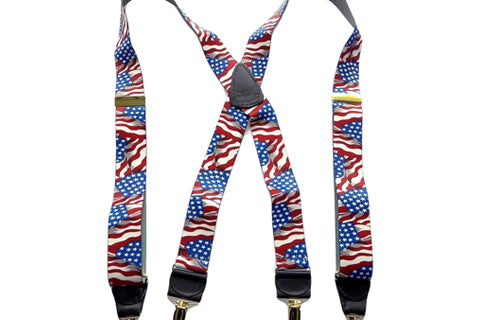
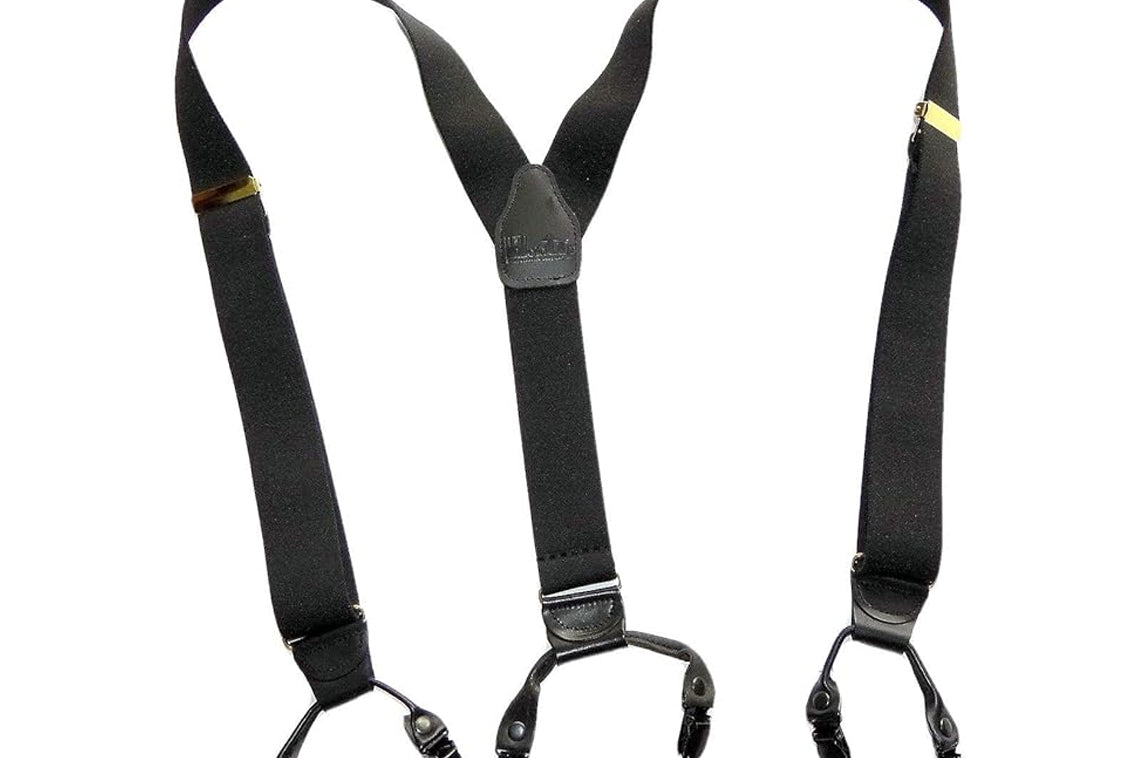
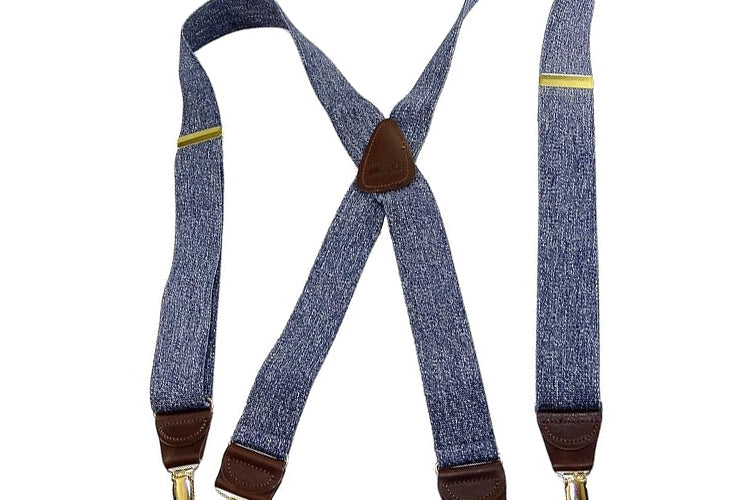
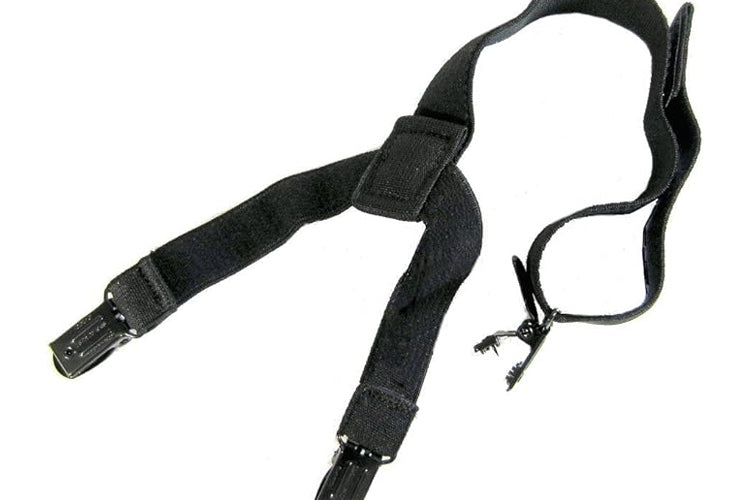

Suspenders originated in France in the early 1700s as hidden undergarments called bretelles. British tailor Albert Thurston formalized the modern suspender in 1822 with his H-back design using leather loops and buttons. Over the following two centuries, suspenders evolved through X-back and Y-back styles, fell in and out of fashion, and are now worn as both a functional and stylish accessory in formal menswear, casual attire, and workwear.
Imagine you are Charles Dickens, finding yourself vexed by your trousers slipping yet again as you work through what we now know as "A Tale of Two Cities." For centuries before pants even had belt loops, innovative minds relied on a ground-breaking fashion invention that not only held up trousers but also made a style statement.
They are none other than suspenders. This clothing accessory has punctuated history at various points, shaping and molding itself along with ever-evolving trends in menswear. So where did they come from, who invented them, and what shaped them into what we wear today? Here is a journey through the full history of suspenders.

What Are Suspenders and What Were They Originally Called?
Suspenders, also known as braces, are straps worn over the shoulders to hold up trousers or pants. The term "braces" remains the standard in the UK and much of Europe, while "suspenders" is the dominant American term. The two words refer to the same accessory. For a closer look at how the terminology differs by region and context, the full breakdown of suspenders vs. braces covers the distinction in detail.
Early versions were called bretelles in France, where they emerged in the 1700s as hidden undergarments. The modern suspender as most people recognize it today, with adjustable elastic or fabric straps and clip or button attachments, developed over the course of the 19th and 20th centuries through a series of refinements in design and materials.
Where Did Suspenders Originate?

The earliest known precursors to suspenders appeared in France in the early 18th century. These bretelles were simple ribbons of fabric attached to buttonholes at the waist of breeches and tied up to a waistcoat. They functioned as undergarments, keeping shorts and underpants positioned beneath outer garments, and were never intended to be visible. A gentleman of the period would wear an undershirt tucked into his underpants with bretelles holding everything in place beneath his outer clothing. Aesthetics were irrelevant because no one was meant to see them.
At this stage, suspenders were strictly functional. The question of whether they were a fashion accessory or purely a utility item would not arise until well into the following century, when they began to appear above the waistcoat and become visible parts of a man's attire.
Suspenders in the 1700s: Form Before Fashion

Through the 1700s, suspenders remained primarily hidden items worn by men alongside knee socks or stockings. The construction was minimal: narrow fabric ribbons, sometimes embroidered with silk or wools, attached to buttonholes and used to keep undergarments correctly positioned. No one much cared what they looked like because visibility was never the point.
By the late 1700s, however, a subtle shift began. Some men started wearing wider-banded braces, and a brief fashion moment emerged around matching the color of one's suspenders to one's shirt, creating a coordinated but understated look. This minimalistic approach did not last long, but it marked the beginning of suspenders transitioning from purely hidden utility to something with at least passing stylistic consideration.
The usefulness of suspenders can be compared to an invisible boost of confidence: they are there when you need support but go unseen when you do not think about them.

Who Invented Suspenders? The Albert Thurston Story
Albert Thurston is universally credited with inventing the modern suspender. In 1822, Thurston opened his clothing store in London and began manufacturing braces commercially. His first model used an H-back configuration with leather loops that attached to buttons sewn on the inside waistband of trousers. The design was clean, functional, and far more structured than anything that had come before.
Thurston's earliest braces were made from box cloth and sold for approximately eight pence per pair, making them accessible to working men who needed durability. As his reputation grew and his clientele expanded, he moved into premium materials including silk and, for his most affluent customers, gold-threaded versions. By the mid-1800s, Thurston had repositioned suspenders from a humble utility item into a luxury accessory available across a wide price range.
The Move From H-Back to X-Back and Y-Back Designs
Thurston did not stop at the H-back. Over time, he expanded his line to include both X-back and Y-back configurations, which quickly became popular across Europe. The X-back design uses two crossing straps at the rear, offering a more secure hold that distributes weight more evenly across the shoulders. The Y-back uses a single strap at the center back that splits into two near the shoulders. Each style carries different practical and aesthetic qualities, something that remains true today. For anyone curious about how the two compare in modern use, the Y-back vs. X-back comparison explains the differences clearly.
Thurston's pioneering work established a design vocabulary for suspenders that shaped the category for the next two centuries. His London shop, Albert Thurston Ltd., still operates today and remains one of the oldest continuously operating suspender manufacturers in the world.
How Did Suspenders Evolve Through the 19th Century?

After Thurston established the foundation, other contributors helped develop and popularize suspenders further, particularly in America where the accessory had not yet taken hold.
Benjamin Franklin's Contribution
Benjamin Franklin is noted in fashion history for wearing "strap on bottoms" that functioned as early suspenders while also doubling as pockets. The design was unusual enough that Europeans found it amusing, but it demonstrated an early American willingness to experiment with garment support systems beyond simple waistbands. Franklin's practical approach prefigured the American take on suspenders as a functional-first accessory.
Mark Twain and the First American Patent
The figure most responsible for bringing suspenders into mainstream American use was Samuel Clemens, better known as Mark Twain. In 1871, Twain patented a design for "Adjustable and Detachable Straps for Garments" that featured metal clasps instead of the leather loops used by Thurston. His design allowed men to remove their suspenders without taking off their shirts or trousers, a practical improvement that addressed a real inconvenience in everyday use.
Twain also helped popularize suspenders in America through his writing and public persona. While suspenders had been standard in Europe for decades, they were not yet a staple of American menswear. Twain's patent and his cultural influence helped establish them as a legitimate and fashionable alternative to the waistband systems men had been using. The suspender had crossed the Atlantic with serious momentum.
What Impact Did World War I Have on the History of Suspenders?
Suspenders reached peak ubiquity in men's professional dress through the late 19th and early 20th centuries, and then World War I changed the trajectory entirely. Military uniforms during the war were designed around belts, which were more practical than suspenders for soldiers who needed to carry equipment and move freely. Men who served became accustomed to belts as standard trouser support, and when they returned to civilian life, that habit came with them.
The fashion industry compounded this shift through the 1930s. Western films were bringing cowboys and their flashy belt buckles into popular culture, and the belt began to feel modern and aspirational in a way that suspenders no longer did. For a generation of men who associated belts with military service and masculine imagery, suspenders began to seem old-fashioned.
Who Kept Wearing Suspenders After Belts Took Over?
Despite the broader shift toward belts, a loyal core of suspender wearers persisted. Professionals such as lawyers, politicians, and broadcasters continued wearing them because they found suspenders genuinely more comfortable for long days in formal attire. Suspenders eliminate the pressure of a waistband digging into the midsection, making extended sitting far more tolerable. In European tailoring culture, suspenders with suits never fell out of fashion in the same way they did in America, and bespoke tailors continued making trousers with interior button attachments as standard.
Franklin Roosevelt became one of the most visible suspender wearers of the mid-20th century, and his image reinforced the association between suspenders and a certain kind of confident, establishment authority. The accessory had shifted from universal menswear to a deliberate stylistic choice, which in some ways gave it more meaning than it had when everyone simply wore it.
How Did Pop Culture Revive Suspenders in the 20th Century?
Suspenders have experienced several distinct revivals since their post-WWI decline, each driven by a different cultural moment.
Elvis Presley and Rock and Roll
In the 1960s, rock musicians began incorporating suspenders into their stage outfits as a way of mixing vintage and theatrical elements. Elvis Presley famously wore gold-colored braces during his 1968 comeback tour, and the image became instantly iconic. This proved that suspenders could carry powerful visual energy even in entirely non-traditional settings. Stage wear has its own logic, and suspenders offered performers a strong visual line that read well from a distance.
Wall Street and the Power Dressing Era
The most significant modern revival came in the 1980s, when the Wall Street power dressing aesthetic made suspenders a symbol of ambition and authority. Michael Douglas wearing bold red suspenders in the 1987 film "Wall Street" sparked widespread interest in the accessory among men who wanted to project professional confidence. The look spread quickly and suspenders became associated with a particular kind of driven, assertive menswear that defined the decade.
Hip-Hop Culture in the 1980s
Simultaneously, hip-hop artists were adopting suspenders for an entirely different reason. Run DMC and their peers wore suspenders with Adidas tracksuits, baseball caps, and heavy gold chains, creating an urban aesthetic that brought the accessory into a completely new cultural context. The same item that appeared on Wall Street traders and in corporate boardrooms was also defining street style in New York, demonstrating the genuine versatility of suspenders as an accessory across very different communities.
Larry King and the Broadcaster Association
Television broadcaster Larry King made suspenders one of his most recognizable style signatures over his decades on CNN's Larry King Live. His consistent use of bold-colored suspenders helped cement the accessory's association with professional broadcasting culture and kept it visible to mainstream American audiences through the 1990s and 2000s.
What Is the Current Cultural Significance of Suspenders?
Today, suspenders occupy a flexible position in fashion and dress culture. They appear in formal tailoring as a classic menswear accessory, in workwear as practical support for heavy trousers and tool belts, in casual dress as a vintage-inspired styling choice, and in professional settings where they have never truly left. The ongoing question of whether suspenders are back in style has a straightforward answer: they never fully left, and each decade sees them reclaimed by a new group of wearers for a new reason.
Firefighters wear suspender-topped pants as part of their working uniform, reinforcing the connection between suspenders and a kind of serious, responsible functionality. The "nerd" archetype in popular culture has long been depicted in suspenders, which attaches a different kind of symbolism around intellectualism and precision. And in formal menswear, suspenders remain one of the cleaner alternatives to a belt when wearing a well-cut suit, since they avoid the visual interruption of a waistband across the trouser break.
Suspenders vs. Belts: A Debate That Never Ends
The debate over whether suspenders or belts are the superior option for holding up trousers continues today with no sign of resolution. Each has genuine practical advantages. Belts are faster to put on, more widely compatible with all trouser styles, and less likely to require adjustment throughout the day. Suspenders offer better comfort over long periods, cause no pressure on the waist or abdomen, and can improve posture by distributing the weight of the trousers across the shoulders rather than the hips. For anyone dealing with lower back discomfort from belt wear, the relationship between suspenders and back pain makes a compelling case for trying the alternative. The full comparison between the two accessories is covered in detail in this guide on whether suspenders or belts reign supreme.
How Have Suspender Materials and Styles Evolved?
The materials used in suspenders have tracked closely with broader industrial and fashion developments. Albert Thurston's earliest braces used box cloth and leather loops. As elastic became commercially available in the mid-19th century, it replaced rigid fabric for most everyday suspenders, offering the stretch and give that made all-day wear far more comfortable. The comparison between elastic vs. leather suspenders remains relevant today because both materials continue to serve different purposes and audiences.
Leather suspenders maintained their association with premium tailoring and formal dress, while elastic versions became standard for workwear, casual wear, and anyone who prioritized function over tradition. Contemporary options now include nylon webbing for heavy-duty applications, silicone for lightweight casual use, and satin-finished fabrics for formal occasions. The range of suspender types available today reflects that two centuries of refinement have produced a category flexible enough to serve almost any need.
Vintage Suspenders and the Appeal of Older Designs
Vintage suspender styles carry their own distinct appeal. Antique button-attachment models, box cloth braces, and early silk versions are collected and worn by people who appreciate the craftsmanship and historical character that newer manufacturing cannot replicate. The history of vintage suspender clasps and their distinctive hardware is its own subject within suspender collecting. For anyone interested in wearing or sourcing older styles, the full guide to vintage suspenders covers what to look for and how to wear them in a contemporary context.
Conclusion
The history of suspenders spans more than three centuries and touches on industrial history, military culture, Hollywood imagery, music, and the ongoing conversation about what men should wear and why. From hidden French undergarments in the 1700s to Albert Thurston's 1822 London shop to Elvis's gold braces and Wall Street's power dressing, suspenders have repeatedly reinvented themselves without ever fully disappearing. They remain one of the most historically layered accessories in menswear, and their continued presence across formal tailoring, workwear, and casual dress suggests they are not going anywhere.
Frequently Asked Questions
When were suspenders first invented?
The earliest precursors to suspenders, called bretelles, appeared in France in the early 1700s. These were simple fabric ribbons used as hidden undergarments to hold up breeches. The modern suspender as most people recognize it today was formalized by British tailor Albert Thurston in 1822, when he began manufacturing structured braces with leather loops and button attachments from his London shop.
Who invented suspenders?
Albert Thurston is credited with inventing the modern suspender in 1822. His London-based clothing shop introduced the H-back design with leather loops and interior button attachments that became the template for all subsequent suspender development. American author Mark Twain later contributed by patenting adjustable detachable straps with metal clasps in 1871, which helped bring suspenders to mainstream American menswear.
What are suspenders originally called?
The early French precursors were called bretelles. When British tailors formalized the accessory in the 19th century, the standard term became "braces," which remains the dominant term in the UK and much of Europe. The word "suspenders" became the American standard and is now the most widely recognized term internationally, though both words refer to the same accessory.
Why did suspenders fall out of fashion?
Suspenders declined in mainstream popularity primarily because of World War I. Military uniforms were designed around belts, and men who returned from service brought the habit with them into civilian dress. The rise of Western film imagery in the 1930s, which glamorized belt buckles, reinforced the trend. Suspenders retained loyal followers in professional and European tailoring contexts but lost their status as the universal default for trouser support.
What is the difference between elastic and leather suspenders?
Elastic suspenders offer stretch and give, making them more comfortable for all-day wear and better suited to active use or casual dress. Leather suspenders are more rigid and carry a classic, formal character that suits traditional tailoring. Leather requires more maintenance but tends to age attractively and is associated with premium menswear. Elastic versions dominate workwear, casual wear, and everyday use because of their comfort and versatility.
Do suspenders help with back pain?
Many wearers report that suspenders reduce lower back and waist discomfort compared to belts. Because suspenders distribute the weight of trousers across the shoulders rather than concentrating it at the waist, they eliminate the pressure that a tight belt creates around the midsection and lower back. This can be particularly beneficial for people who sit for long periods or who carry additional weight around the abdomen. Suspenders also encourage a more upright posture by gently pulling the trousers upward from the shoulders rather than constraining the waist.