

Yes, you can wear suspenders to a black tie event, and in many cases they are the more correct choice than any alternative. Traditional tuxedo trousers are designed without belt loops specifically to be worn with suspenders. Choose button-on styles in black silk or satin between 1.25 and 1.5 inches wide, keep them hidden beneath your jacket throughout the evening, and skip the belt entirely.
Most men either default to whatever came with the tuxedo rental or reach for a belt out of habit, neither of which produces the clean, uninterrupted silhouette that black tie requires. The reason suspenders are treated as the preferred trouser-support option in formal style guides is not tradition for its own sake but structural logic. A belt introduces a horizontal buckle and hardware at the waist that fragments the vertical line of the tuxedo. Suspenders eliminate that interruption entirely. Understanding why the construction of tuxedo trousers points toward suspenders makes every subsequent decision in building the look easier.
Why Tuxedo Trousers Are Built for Suspenders
Tuxedo trousers are architecturally different from standard dress trousers in a way that makes the case for suspenders before any styling decision is made. The waistband sits at the natural waist rather than the hip. There are no belt loops because the design never anticipated a belt. The internal suspender buttons are already sewn in at precise positions, typically two at the back and four at the front, because the trouser was engineered to hang from the shoulders rather than be cinched at the waist.
This construction produces a specific result when suspenders are used correctly. The pleats lie flat, the front crease stays sharp throughout a long evening, and the fabric falls without any distortion caused by a tight waistband or compressive belt. A belt on a tuxedo does not just look wrong by convention; it structurally works against the garment's intended hang. The full case for why suspenders are better than belts is rooted in exactly this mechanical reality, applied at its most visible in a formal black tie context.
Button Versus Clip Attachment for Black Tie
The attachment method is the decision that most clearly distinguishes a properly considered black tie look from one that is close but not quite correct. Button attachment is the traditional and formally correct choice for tuxedo wear.
Button-on suspenders fasten to the interior buttons already sewn inside the waistband of quality tuxedo trousers. There is no visible hardware at the waistband, no clip jaw that could widen or shift during the evening, and no mechanical component that draws attention when the jacket briefly opens during movement. The result is a completely seamless waistline that matches the clean construction of the tuxedo itself.
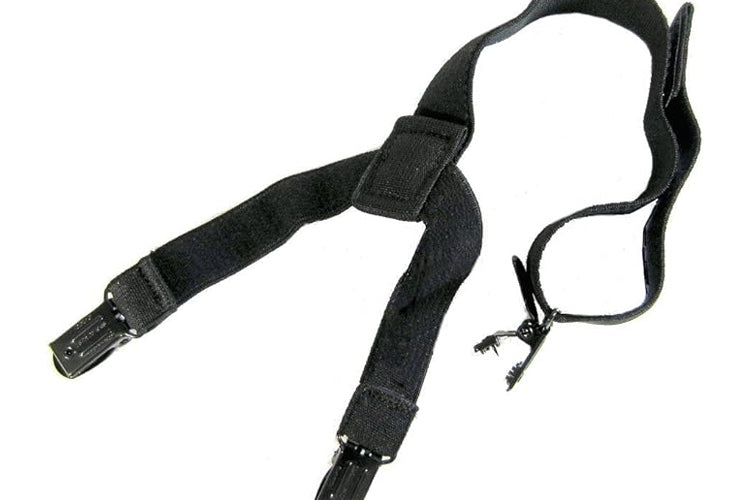
Clip-on suspenders are a practical alternative when the trousers do not have internal suspender buttons and alteration before the event is not possible. When clips are the only option, choosing a refined finish with discreet hardware rather than a standard exposed jaw clip keeps the result as close to formal as possible. The full comparison of button suspenders versus clip-on covers the specific contexts in which each type performs correctly and the simple process of adding buttons to existing trousers. For formal fabrics specifically, the guide on plastic-lined suspender clips for silk and wool covers how to attach clips to fine tuxedo fabrics without damaging the weave.
Choosing the Right Width for a Tuxedo
Width affects the visual proportion of the suspenders against the tuxedo and is one of the decisions where getting it wrong is immediately visible. The correct range for black tie is 1.25 to 1.5 inches.
This width range is not arbitrary. It reflects a consistent principle across formal menswear: the strap needs to be substantial enough to look refined and proportionate against wide tuxedo lapels and pleated formal trousers, but not so wide that it crosses into workwear territory. The following breakdown clarifies where each width sits on the formality spectrum:
| Strap Width | Formality Reading |
|---|---|
| Under 1 inch | Too narrow for black tie; reads as trendy or casual |
| 1 to 1.25 inches | Acceptable but at the lower edge of formal proportion |
| 1.25 to 1.5 inches | Ideal for black tie; balanced, traditional, and proportionate |
| 1.38 inches | A common manufacturer baseline that sits perfectly in the correct range |
| 2 inches and above | Workwear associations; not appropriate for black tie |
The proportionality logic here mirrors the same principle in the guide on the art of wearing suspenders: every element of the outfit should be in visual proportion with the others, and the strap width is the specification that determines whether the suspenders strengthen or undermine the tuxedo's silhouette.
Color and Material for Black Tie Suspenders
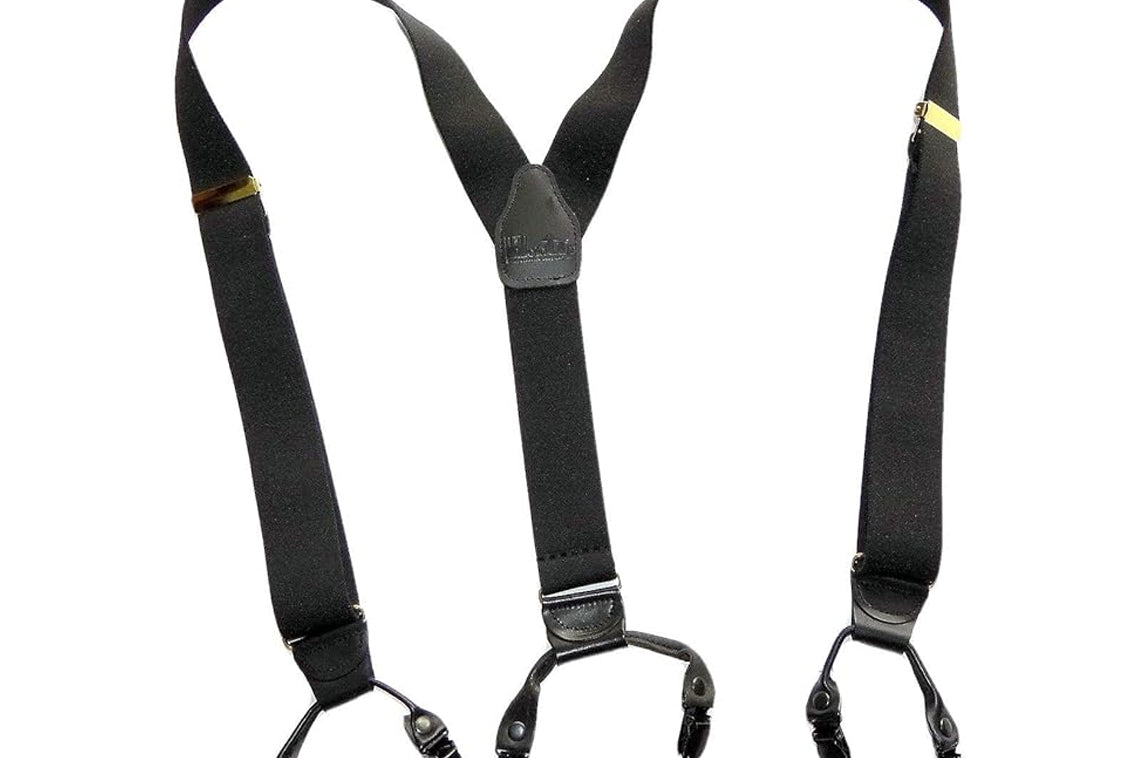
Black silk or satin suspenders are the standard choice for a black tuxedo, and they are the starting point for every other color and material decision at this formality level. The sheen of silk and satin complements the tuxedo fabric, the lapel facing, and the bow tie without competing with any of them. The color keeps the waistline invisible and the silhouette clean.
The material list for black tie suspenders in order of formality:
- Silk: The most refined option. Smooth, subtly lustrous, and the correct choice for the highest-stakes formal occasions.
- Satin-finished woven fabric: Slightly more structured than silk but equally appropriate. The formal series satin-finished suspenders represent the correct product category for black tie wear.
- Grosgrain: A structured ribbon fabric with a ribbed texture that is particularly appropriate when the tuxedo's lapels are faced in grosgrain rather than satin, creating a deliberate material connection.
- Quality elastic with a refined finish: Acceptable when it reads as deliberately formal rather than sporting or casual.
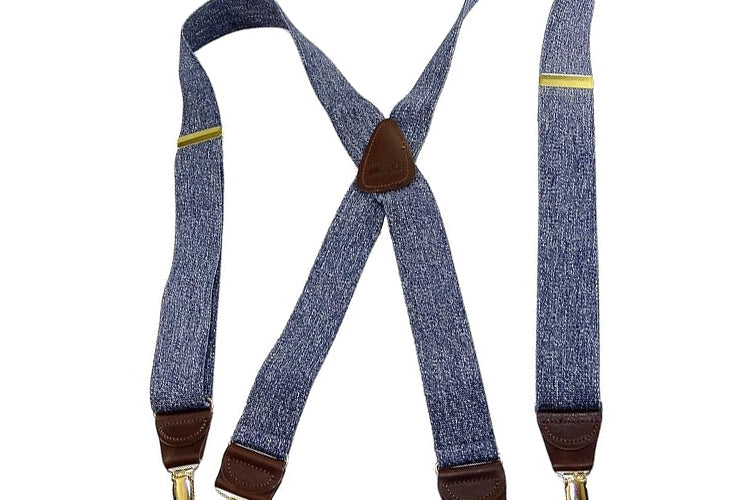
What to avoid entirely: canvas, heavy elastic webbing, cotton, knit, and any material associated with workwear or casual wear. These signal the wrong context regardless of color and cannot be compensated for by getting everything else right. The comparison of canvas versus leather pad suspenders explains where each material sits on the formality spectrum and why material choice carries as much weight as color at this level.
Attaching Suspenders to Tuxedo Trousers Correctly
Correct attachment at the start of the evening prevents every fit problem that might otherwise develop during a long formal event. The process is straightforward when the steps are followed in order.
Here is the correct attachment sequence for button-on suspenders with tuxedo trousers:
- Confirm the trousers have internal suspender buttons. If they are missing, have a tailor add them before the event rather than trying to make clips work on formal fabric.
- Before fully putting the trousers on, fasten the front suspender loops to the front interior waistband buttons. Space them evenly so the straps will hang symmetrically.
- Put the trousers on and fasten the back loops to the rear button, using the center-back single button for Y-back suspenders or two rear buttons for X-back.
- Adjust the strap length so the trousers sit at the natural waist without sagging or pulling upward. The front adjustment sliders should sit at mid-torso, not riding up toward the collarbone.
- Check that both straps lie flat over the shoulders with no twisting. A final mirror check confirms even placement and clean strap lines before the jacket goes on.
For anyone wearing suspenders with a formal tuxedo for the first time, the guide on how to measure for suspenders ensures the correct strap length is purchased before the event, which eliminates the most common attachment problem.
Coordinating Suspenders With the Rest of the Tuxedo Ensemble
Coordination at black tie level is about balance rather than exact matching. Each element has a role and should occupy it without competing with the others for visual attention.
The white dress shirt provides the foundation. A plain or minimally textured front with French cuffs gives the shirt the formality it needs to anchor the rest of the outfit. The shirt's color creates clean contrast against the black tuxedo and allows the bow tie to read clearly against it.
For the bow tie, the coordination logic with suspenders follows a simple rule: if the bow tie is patterned, keep the suspenders in a solid black. If the suspenders have any texture or weave pattern, a solid black bow tie prevents both from competing. The full pairing logic is covered in the guide on matching tuxedo suspenders with a bow tie and cummerbund, which includes the cummerbund decision for those who choose to include it.
The jacket guides the proportionality of everything else. Wider lapels work with the 1.5-inch end of the suspender width range; a slimmer lapelled tuxedo suits the 1.25-inch end. The jacket stays on throughout the event, which means the suspenders function invisibly and the coordination decisions serve the overall silhouette rather than the suspenders individually.
Shoes should be black leather Oxfords in patent or highly polished plain leather. The metal finish on the suspender hardware should match the cufflinks and any other metal accessories. Silver hardware with silver cufflinks; gold with gold. This level of consistency in metal tone is one of the details that separates a carefully assembled formal look from one that is almost right.
Should Suspenders Ever Be Visible at a Black Tie Event
No. At a black tie event, suspenders are a functional element rather than a decorative one. Their job is to keep the tuxedo trousers at the correct position and the waistline clean. Both of those functions happen invisibly beneath the jacket.
Keeping the jacket on throughout the event is the single most important rule for maintaining this invisibility. Brief accidental exposure during movement is not a problem, but continuous visibility signals either a fit issue or a misunderstanding of how suspenders work in a formal context.
Four rules that keep the suspenders invisible throughout a formal evening:
- Keep the jacket on at all times during formal portions of the event
- Ensure the jacket fits correctly through the chest and shoulders so it does not gap or shift during movement
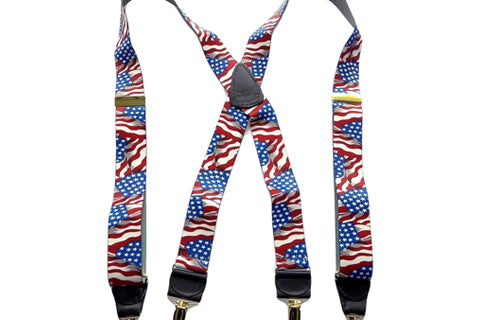
- Choose solid, understated suspenders in classic colors rather than novelty designs that would draw attention if briefly glimpsed
- Never wear suspenders over the shirt as a visible style statement in a black tie context
For anyone concerned about physical comfort over a long formal evening, the guide on how to stop suspenders from digging into shoulders addresses the fit adjustment that prevents shoulder discomfort from affecting posture and presence throughout the event.
Which Black Tie Occasions Call for Suspenders
Any black tie occasion involving a tuxedo is an occasion where suspenders are not just acceptable but structurally appropriate. The specific events where this applies most clearly include:
- Black tie weddings: Button-on suspenders in black silk or satin keep the look polished and the tuxedo silhouette intact throughout a long ceremony and reception.
- Galas and charity events: These follow the same no-belt tuxedo construction standards as standard black tie. The guide on groom and groomsmen matching suspenders covers coordinated formal suspender styling across a group.
- Award ceremonies and formal dinners: The stricter the dress code, the more the formal construction of tuxedo trousers points toward suspenders as the correct choice.
- Opera and evening formal events: Traditional black tie standards at these occasions treat suspenders as part of proper tuxedo construction rather than an optional accessory.
When the invitation says black tie and the outfit is a tuxedo, suspenders are the expected trouser-support method. The only question is which version of them to choose.
Frequently Asked Questions
Can women wear suspenders to a black tie event
Yes. The same governing principles apply regardless of the wearer. The full outfit needs to match the formality level of the occasion before the suspenders become relevant. For women, this means a tailored formal trouser or high-waisted skirt in a refined fabric, thin button-on or discreet clip suspenders in black or white, and accessories that maintain the same restrained, polished standard throughout. Avoid wide straps, casual materials, or visible clip hardware at the waistband. The suspenders should function as a clean structural detail rather than the focal point of the outfit.
Are suspenders appropriate for an outdoor black tie event
Yes. The outdoor setting does not change the dress code requirements. A black tie invitation at an outdoor venue carries the same formal standard as one at an indoor ballroom. The practical adjustment for outdoor wear is fabric weight: lighter silk or satin suspenders in warm weather conditions are more comfortable than heavier materials without any reduction in formality. Keep the jacket on as much as the temperature allows and ensure the rest of the outfit maintains the same restrained standard the dress code requires.
Can suspenders be worn with a black tie vest or waistcoat
Yes, and the combination is one of the cleanest possible formal looks because the waistcoat conceals the suspenders entirely while the button attachment continues to hold the trousers in position beneath. The result is a polished three-piece tuxedo aesthetic where the suspenders are functionally active and completely invisible. Avoid combining a cummerbund and waistcoat simultaneously as the two pieces serve the same covering function and wearing both creates unnecessary layering at the waist.
Do suspenders affect how a tuxedo jacket sits
Yes, positively. Suspenders hold the tuxedo trousers at the correct natural waist height, which keeps the shirt fully tucked and eliminates the bunching or shifting that can occur when a trouser waistband drops during an evening. With the trousers sitting correctly, the jacket hem falls at the right position, the back of the jacket lies flat, and the overall silhouette holds its intended shape through hours of sitting, standing, and moving. Suspenders are one of the reasons that a well-dressed formal outfit looks as sharp at the end of the evening as it did at the beginning.
Are vintage suspenders acceptable for a modern black tie event
Yes, provided they meet the current standards for condition, color, and construction. Vintage suspenders in black silk or grosgrain with intact hardware and no visible wear are a legitimate and often beautifully crafted option for formal occasions. Avoid vintage suspenders with ornate decorative hardware, novelty designs, or any visible damage to the fabric or attachment points. The standard is clean, understated, and refined regardless of the age of the piece, and vintage suspenders that meet that standard are often superior in material quality to many contemporary options.