
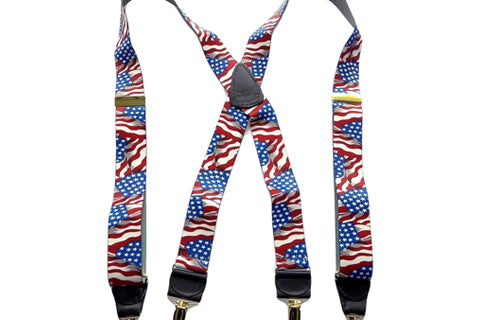
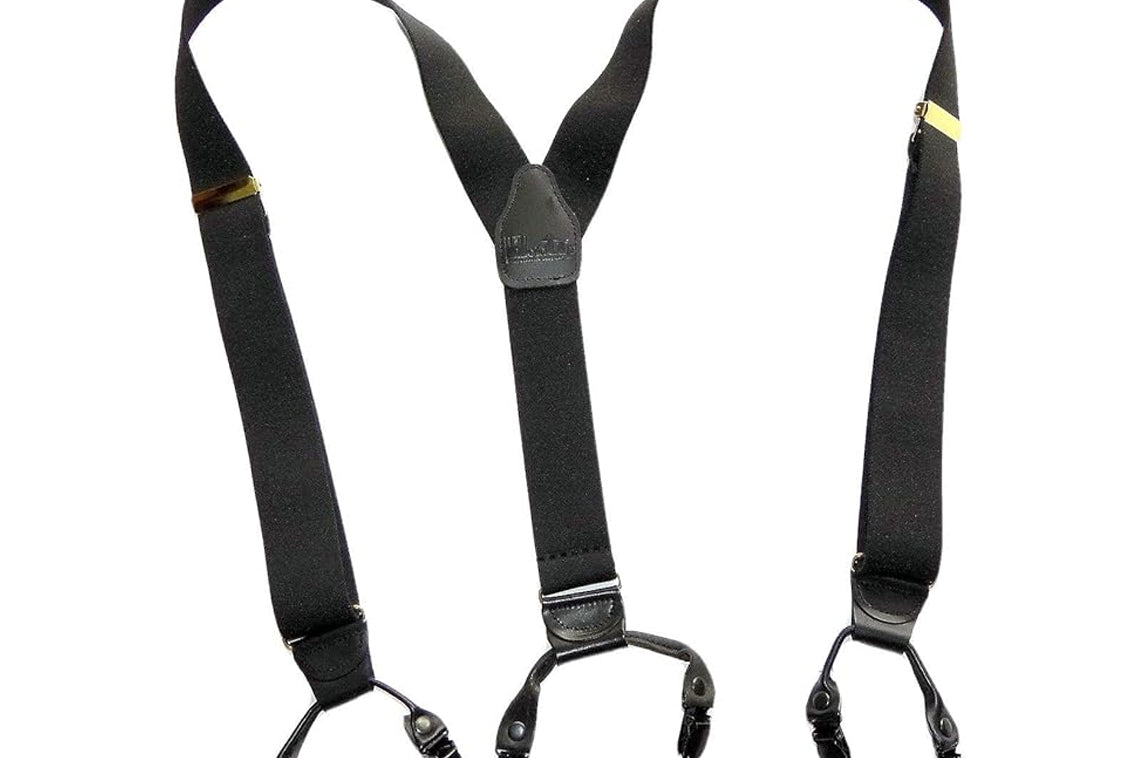
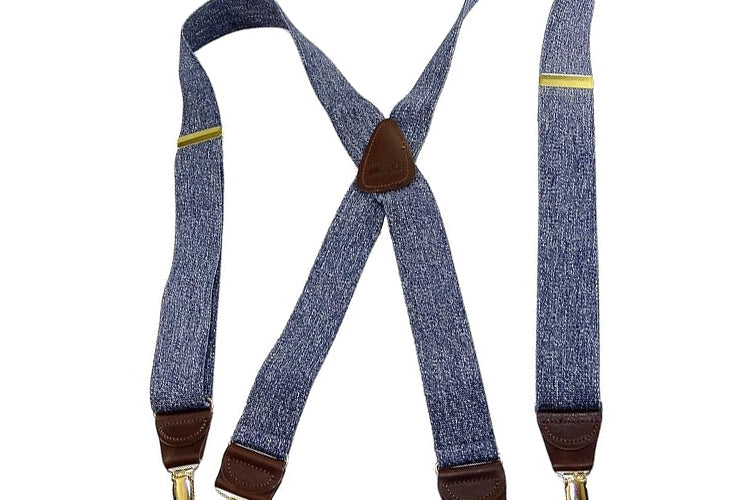
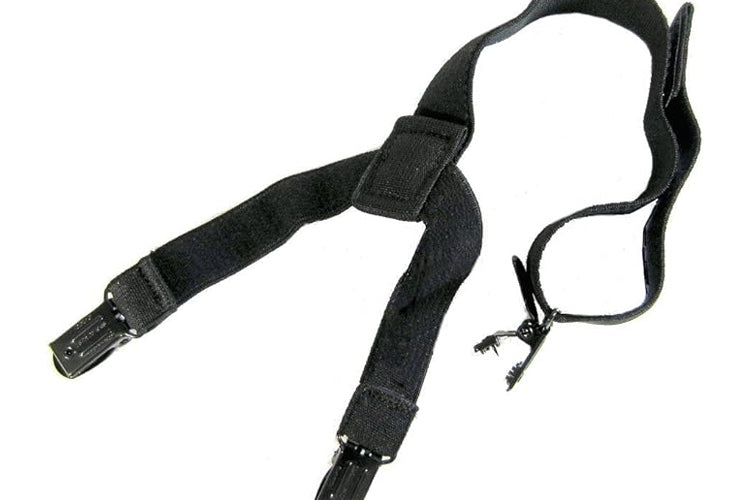

You're standing in front of a rack of twelve-dollar belts, wondering if switching to suspenders is actually the more responsible choice, or if that's just a convenient story accessory brands tell to sell a product. It's a fair question, and the honest answer is more complicated than "suspenders are green, belts are not." Category alone doesn't determine environmental impact. Materials, construction quality, and how long the item actually gets used matter far more than whether it goes around your waist or over your shoulders.
Quick answer: a well-made pair of suspenders generally has a smaller footprint than a cheap, frequently replaced belt, mainly because suspenders use less material per unit and quality pairs last far longer. But a cheap, synthetic pair of suspenders bought and discarded quickly isn't meaningfully better than a cheap belt. The category matters less than the specific product and how long you keep it.
Where suspenders have a genuine advantage: less material, longer life

A full belt strap runs the length of your waist in leather or synthetic material, plus a buckle. Suspenders use two narrower straps and lighter hardware to do a comparable job, which means less raw material goes into making them in the first place. That's a straightforward, material-quantity advantage that holds regardless of what either item is made from.
The bigger factor is durability. Holdup's own guide to extending the life of suspenders covers this in detail: a well-constructed pair, properly cared for, can last a decade or more, largely because the main failure points (elastic fatigue, hardware wear, fabric stress) are gradual and preventable rather than sudden. One of the most consistently supported ideas in sustainability research is that extending a product's useful life reduces its overall environmental footprint more reliably than almost any other single change, since it lowers how often new materials, energy, and manufacturing capacity get consumed to replace it. A suspender pair worn for ten years, instead of five cheap belts replaced over the same period, is a real reduction in total material consumption, not just a marketing claim.
Where the story gets complicated: materials matter more than category
This is where a lot of sustainability claims fall apart under scrutiny, and it's worth being upfront about it. Suspenders are not automatically the more natural or eco-friendly option. Most suspenders combine leather or fabric straps with synthetic elastic and metal hardware, and that elastic component carries the same synthetic-material tradeoffs as a vegan or synthetic belt.
Leather: durable, but not environmentally free
Genuine leather production has real environmental costs. Raising livestock requires significant land, water, and feed, and the tanning process uses chemicals, including chromium salts and other compounds, that require careful handling to avoid contaminating water sources. Leather's advantage isn't that it's low-impact to produce. It's that it tends to last considerably longer and can be conditioned and repaired rather than replaced, which spreads that initial impact over many more years of use.
Synthetic materials: lower production impact, shorter useful life
Synthetic materials like polyurethane, commonly used in vegan leather and cheap belts alike, generally require less land and water to produce than raising livestock for leather. Industry lifecycle data, including figures referenced from the Sustainable Apparel Coalition's Higg Materials Sustainability Index, has shown synthetic (PU) leather production generating meaningfully lower emissions per unit than bovine leather in some comparisons. The tradeoff is durability and end-of-life: synthetic materials are typically petroleum-based, don't biodegrade, and tend to crack or degrade faster than quality leather, which means more frequent replacement over time even if any single unit's production footprint looks smaller on paper.
The practical takeaway: a cheap synthetic belt and a cheap synthetic-strap suspender are closer environmental cousins than the "suspenders are sustainable" framing usually admits. The advantage suspenders have isn't the material, it's that a quality pair, in any material, tends to get built and cared for with longevity in mind in a way a three-dollar fast fashion belt almost never is.
What fast fashion belts specifically cost the environment

The environmental case against fast fashion accessories generally isn't really about belts versus suspenders. It's about volume and disposability. A typical fast fashion belt is manufactured quickly and cheaply, usually from synthetic materials with fossil-fuel origins, priced to be replaced rather than repaired, and rarely designed with any end-of-life plan beyond the trash. Multiply that by how many belts get sold and discarded every year, and the category becomes a meaningful contributor to the broader textile waste problem, even though any single twelve-dollar belt looks harmless on its own.
That broader problem is well documented. Earth.org reports that the average American generates roughly 82 pounds of textile waste a year, and separately notes that leather tanning is among the more chemically intensive stages of the fashion supply chain. Neither of those facts is specific to belts, but both apply directly to how belts, cheap ones especially, get produced and thrown away.
Repairability is the biggest differentiator, and it's a choice, not a category
The single factor that most reliably separates a sustainable accessory from a disposable one is whether it's designed to be repaired. Suspenders built with replaceable elastic sections, quality stitching, and serviceable hardware let you fix the one part that eventually wears out (usually the elastic) instead of discarding the whole piece. Holdup's guides on extending suspender life and fixing common leather suspender problems both cover this directly. Most fast fashion belts offer no equivalent: a cracked synthetic strap or a broken buckle usually means the whole belt gets replaced, since there's rarely a repair path built into a product designed to be cheap and disposable in the first place.
This is really the honest version of the sustainability argument for suspenders: it's not that the category is inherently green, it's that quality suspenders are far more likely to be built with repair and longevity in mind than the belts they're being compared to.
End of life: recycling reality for both

Neither belts nor suspenders are simple to recycle, and it's worth being honest about that instead of implying suspenders solve the disposal problem. Both combine multiple materials, leather or fabric, elastic, and metal hardware, in a single item, and mixed-material products are consistently harder for textile recyclers to process than single-material ones. Standard textile recycling programs do accept belts and similar accessories (New York's state recycling guidance specifically lists belts among acceptable items), and the same drop-off and mail-in programs generally accept suspenders too, but neither gets recycled as cleanly as a single-fiber garment would.
Packaging, shipping, and labor: the parts of the story often left out
Materials and durability get most of the attention in accessory sustainability comparisons, but they're not the whole picture. A few other factors apply equally to suspenders and belts, and neither category has an automatic advantage on any of them.
Packaging varies by brand, not by product type. A suspender pair shipped in excessive plastic packaging isn't more sustainable than a belt shipped in minimal, recyclable packaging, regardless of what either item is made from. If packaging waste matters to your decision, it's worth checking a specific brand's practices rather than assuming suspenders default to less packaging.
Shipping distance and manufacturing location work the same way. A suspender pair manufactured overseas and shipped a long distance carries more transportation-related impact than a belt made and sold regionally, and vice versa. Domestic manufacturing isn't automatically greener either, since it depends heavily on how materials are sourced before final assembly, a topic worth its own honest look rather than a blanket assumption in either direction.
Labor standards are a separate ethical question from carbon footprint or material choice, and worth evaluating on their own terms. Brands that are transparent about where and how their products are made, in either category, make that evaluation easier than ones that aren't.
None of these factors are decided by the suspenders-versus-belts question itself. They're decided by the specific manufacturer, which is the same conclusion the materials and durability sections above kept arriving at: the product matters more than the category.
So, are suspenders actually more sustainable?

Sometimes, and it depends more on the specific product than the category. A well-made pair of suspenders, built with repairable elastic and quality hardware, kept for a decade instead of replaced every year or two, has a real, defensible sustainability advantage over a cycle of cheap, disposable belts. A cheap pair of synthetic suspenders bought on impulse and discarded within a year does not have that advantage, and claiming otherwise would be the kind of unsupported environmental claim worth being skeptical of wherever you see it.
The honest framing is this: durability and repairability, not the accessory category, are what actually reduce environmental impact. Suspenders happen to be a category where quality construction and long usable life are common and well-documented. That makes them a reasonably good bet for someone trying to buy less and replace less often, but it's the buying-less-and-replacing-less-often part doing the actual work, not the suspenders themselves. If sustainability is genuinely part of the decision, the more useful question isn't "suspenders or belts," it's "how long will this specific item actually last, and can it be repaired when it starts to wear."
How to make suspenders the more sustainable choice, in practice
-
Choose repairable construction. Look for suspenders with replaceable elastic sections and quality, serviceable hardware rather than fused or riveted components that force full replacement at first failure.
-
Buy fewer, better pairs. One quality pair worn regularly and cared for beats several cheap pairs replaced in succession, both for your wallet and for total material consumption.
-
Repair before replacing. A cracked strap, tarnished clip, or stretched elastic section is usually fixable. See the guides linked above before assuming a pair is done.
-
Recycle or donate responsibly at end of life. When a pair genuinely reaches the end of its usable life, textile recycling programs and donation centers that accept belts and accessories will generally take suspenders too, rather than sending them to a landfill.
Frequently Asked Questions
Are suspenders automatically more environmentally friendly than belts?
No. The category itself doesn't determine environmental impact. A cheap, synthetic pair of suspenders replaced frequently isn't meaningfully better than a cheap belt. The real advantage shows up specifically with well-made, repairable suspenders kept in use for years, not with suspenders as a category.
Is real leather or synthetic material more sustainable for an accessory like this?
Neither wins outright. Synthetic materials generally require less land and water to produce, but degrade faster and don't biodegrade. Leather has a heavier production footprint but tends to last longer and can be repaired and conditioned. Durability and end-of-life plans matter more than the raw material choice alone.
What makes a fast fashion belt worse for the environment than a quality accessory?
Mainly the replacement cycle. Fast fashion belts are typically cheap synthetic materials, priced and built to be replaced rather than repaired, with little to no end-of-life plan beyond disposal. The environmental cost comes from how often they get thrown away and replaced, not from any single belt in isolation.
Can suspenders be recycled at the end of their life?
Generally, yes, through the same textile recycling and donation programs that accept belts and other clothing accessories. Mixed materials (fabric or leather, elastic, and metal hardware) make full recycling more complex than a single-fiber item, but most programs will still accept them rather than send them to a landfill.
Does buying leather suspenders support unsustainable farming practices?
Leather production does carry real environmental costs, including land, water use, and chemically intensive tanning. It's a legitimate concern if sourcing matters to you, and worth researching a specific brand's tanning and sourcing practices rather than assuming all leather is produced the same way.
Is it more sustainable to repair old suspenders or replace them with a new eco-friendly pair?
Repair almost always wins. Keeping an existing product in use, regardless of what "eco-friendly" material a replacement is made from, avoids the resource and manufacturing cost of producing something new entirely. Replace only when the item is genuinely beyond repair.