
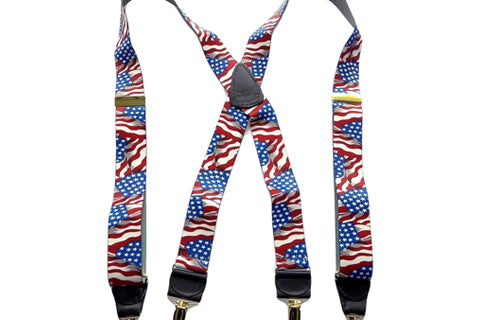
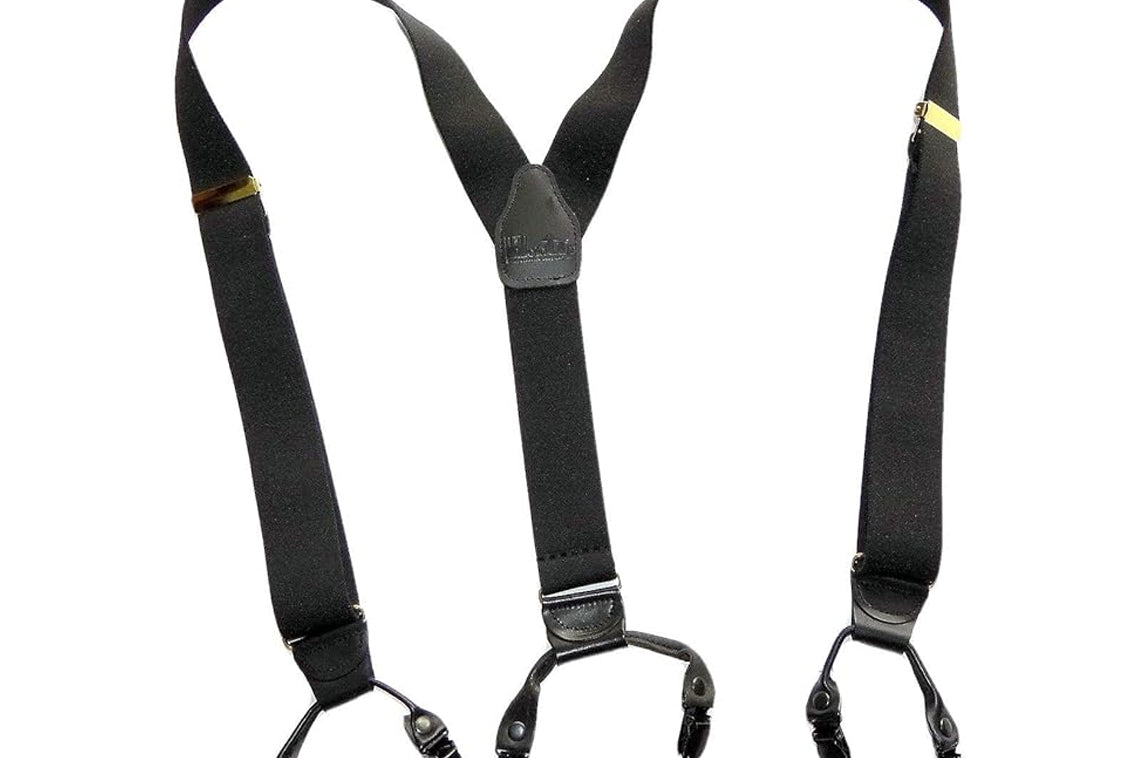
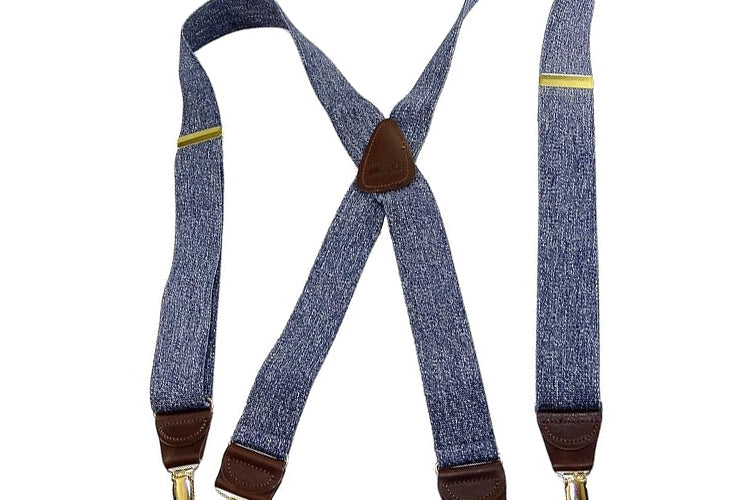
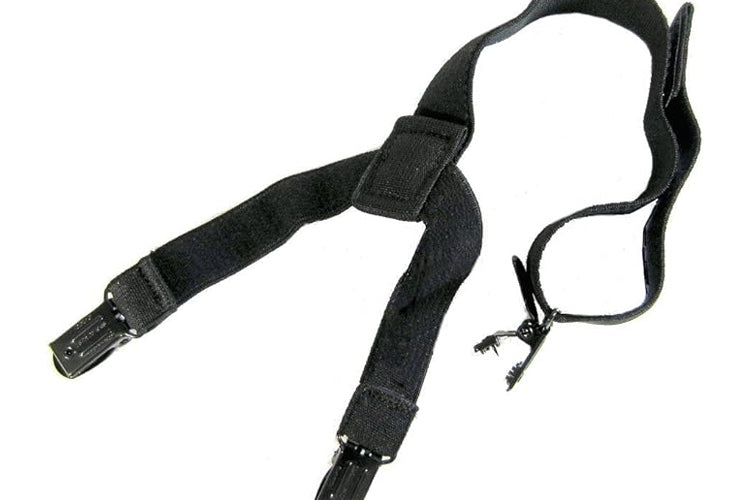

There's a drawer somewhere with two or three pairs of suspenders in it that don't get worn anymore. Maybe the elastic has lost its snap, maybe they just don't match anything you own now, maybe they came with a suit you don't wear to that job anymore. Throwing them in the trash feels wasteful, but it's not obvious what the alternative actually is. Suspenders aren't like a soda can you toss in the blue bin, and they're not accepted by most curbside recycling programs either. Here's what actually happens to them at each stage, and the real options for keeping them out of a landfill.
Quick answer: if they're still wearable, donate them to a thrift store or clothing donation bin, the same way you would a belt. If they're worn out, most textile recycling programs (drop-off bins, mail-in services, or in-store collection at retailers like H&M) accept suspenders alongside other clothing accessories. If you want to keep them out of the waste stream entirely, several of the individual parts (elastic, leather, metal clips) can be repurposed directly.

Repair first: check before you retire a pair
Before deciding a pair is done, it's worth confirming it actually is. Most suspender failures come down to one of three things: stretched elastic, tarnished or bent hardware, or wear at the attachment points, and all three are usually fixable. Holdup's guides on extending the life of your suspenders and common leather suspender problems cover the specific fixes in detail. If a pair genuinely can't be repaired, or the cost of repair doesn't make sense for what they're worth to you, that's when the options below actually apply.
What actually happens if you throw them in the trash

Suspenders thrown in household trash go to a landfill like any other textile, where the synthetic elastic and any petroleum-based components can take decades to break down, and even natural materials like leather and cotton decompose slowly once compacted and deprived of oxygen underground. This isn't a suspenders-specific problem. It's the textile waste problem generally: New York State's environmental agency estimates that the average person discards around 81 pounds of clothing and textiles a year, and that roughly 85 percent of it ends up as landfill waste rather than being reused or recycled, even though most of it could be. Suspenders fall into the same category as belts, ties, and other small accessories on that list of items that are almost always recyclable but rarely actually get recycled, mostly because people don't realize there's an alternative to the trash can.
Recycling old suspenders: what's actually possible
Suspenders are a mixed-material product: fabric or leather straps, elastic sections, and metal hardware, all combined into one item. That combination makes them harder for textile recyclers to process cleanly than a single-material garment, but it doesn't make them unrecyclable. A few real options:
-
Municipal and community textile bins. Many cities run textile-specific drop-off programs separate from curbside recycling. These generally accept clothing accessories, including belts and suspenders, alongside shirts and pants.
-
In-store retailer collection. Some clothing retailers, H&M among them, run in-store take-back bins that accept textiles and accessories of any brand, not just their own, and sort them for reuse, downcycling, or fiber recovery.
-
Mail-in textile recycling services. Companies like TerraCycle and Retold Recycling offer prepaid bags or boxes for shipping worn-out textiles, including accessories, when there's no local drop-off option nearby.
-
Nonprofit textile recyclers. Organizations that specialize in post-consumer textile recovery sort usable items for resale and route the rest into industrial rags, insulation material, or fiber for new products. Many operate drop boxes in parking lots, at schools, or outside apartment buildings, so it's worth checking whether one already exists nearby before assuming a special trip is required.
One practical tip: if a program's guidelines ask you to separate materials, unclip or cut away large metal hardware first, since some recyclers process fabric and metal through different channels. When in doubt, a quick call to the specific program answers this faster than guessing.
It's worth understanding why the mixed-material construction matters so much here. A textile recycler sorting incoming donations generally separates items by material type before processing: cotton and other natural fibers go one direction, synthetics go another, and metal or hard plastic components get pulled out entirely before either fabric stream gets shredded into fiber for insulation, rags, or new material. A single-fiber cotton shirt sails through that sorting process. A pair of suspenders, with a fabric or leather strap, a synthetic elastic section, and metal clips or buckles all riveted or stitched together, requires manual separation before any of those three materials can actually be recovered and reused, which is more labor-intensive and part of why some smaller programs prefer accessories arrive already separated, or route them to secondhand resale instead of material recovery.
Donating suspenders that still have life in them

Recycling and donating aren't the same thing, and donating is the better option whenever a pair is still genuinely wearable. Thrift stores, consignment shops, and community clothing drives can resell or redistribute suspenders in good condition directly to someone who'll use them, which avoids the energy and processing cost of recycling entirely. This is worth doing even for suspenders that just don't fit your current style or wardrobe anymore. Someone else's formalwear collection, costume closet, or first foray into wearing suspenders is a better outcome than a bin, provided the elastic still holds and the hardware still works.
A little preparation goes a long way toward making sure a donation actually gets used rather than discarded at the sorting stage. Give the straps a quick wipe or spot clean if they've picked up dust or a faint odor from storage, confirm the clips or buttons still grip properly, and pair them together rather than donating a single stray strap. Most donation centers will still take suspenders showing normal wear, but a five-minute check beforehand meaningfully increases the odds they go straight to the shelf instead of the recycling stream.
Repurposing ideas beyond the obvious
If you'd rather keep a sentimental or well-loved pair out of the donation and recycling stream entirely, the individual components are genuinely useful on their own:
-
Elastic straps as utility straps. Old suspender straps work well as improvised straps for securing loose items in a car trunk, bundling cords, or lightly bracing a young plant to a garden stake.
-
Leather ends into small leather goods. A local cobbler or leatherworker can often cut and finish leather suspender ends into a keychain fob, luggage tag, or bookmark, which is a nice way to keep a sentimental pair (a father's or grandfather's, for instance) in daily use in a different form.
-
Metal clips repurposed for hanging. The clips themselves work well for hanging tools in a garage, clipping cables together, or securing a bag flap, independent of the rest of the suspender.
-
Costume and dress-up use. School drama departments, community theater groups, and costume closets are consistently short on suspenders for period pieces and character costumes, and are usually happy to take a donated pair regardless of current condition.
-
DIY tool-carrying straps. A sturdy pair of old suspenders, clipped to a work apron or overalls waistband, can double as an improvised hands-free carrying system for a garage or workshop.
A note on vintage or inherited suspenders
A pair that belonged to a father or grandfather deserves a different set of options than a worn-out pair bought last year. Before recycling or repurposing anything with real sentimental weight, it's worth getting an opinion from a leatherworker or tailor experienced with vintage accessories. Older leather suspenders were often built with thicker hides and more substantial hardware than most current production, which means a pair that looks retired at first glance may actually be a strong candidate for restoration rather than repurposing. If restoration genuinely isn't practical, converting the leather ends into a small keepsake, a bookmark, a wallet insert, or a fob, keeps the sentimental material in use rather than in a landfill or a recycling stream where its history doesn't survive the process.
When it's genuinely time to recycle

Not every pair is worth repurposing, and that's fine. If the elastic has permanently lost its stretch, the hardware is corroded or broken beyond a simple fix, or the fabric or leather is torn through, recycling is the right move over letting them sit in a drawer indefinitely or sending them to a landfill. The options above (municipal bins, in-store collection, or mail-in services) all take suspenders in this condition, since textile recyclers are used to processing well-worn, not-currently-wearable items.
A quick sorting checklist
|
Condition |
Best option |
|
Still fits, still functions, just don't wear them anymore |
Donate to a thrift store, consignment shop, or clothing drive |
|
Minor wear: loose clip, small elastic stretch, light scuffing |
Repair first, see the linked care guides above |
|
Sentimental value but no longer wearable |
Repurpose the leather, elastic, or hardware individually |
|
Costume-appropriate but not everyday wearable |
Donate to a school, theater group, or costume closet |
|
Elastic dead, hardware broken, fabric torn through |
Recycle through a textile drop-off, in-store bin, or mail-in program |
None of these options take more than a few extra minutes compared to tossing a pair in the trash, and most of them, donation especially, take less effort than finding a recycling program at all. The trash can is the only option on this list that guarantees the material is gone for good rather than reused, repaired, or given a second life somewhere else.
Frequently Asked Questions
Can suspenders be put in curbside recycling bins?
No. Curbside recycling is generally set up for glass, metal, paper, and rigid plastics, not textiles. Suspenders and other clothing accessories need a dedicated textile recycling program, either a community drop-off bin, an in-store collection point, or a mail-in service.
Do textile recycling programs accept mixed-material items like suspenders?
Most do, since belts, shoes, and other mixed-material accessories are common in the donation and recycling stream already. The mixed construction makes full material recovery more complex than a single-fiber garment, since fabric, elastic, and metal typically need to be sorted separately, but it doesn't disqualify the item from being accepted.
Should I remove the metal clips before recycling suspenders?
Check the specific program's guidelines first. Some textile recyclers process everything as submitted, while others prefer large metal hardware separated out before the fabric or leather goes through their sorting line. A quick look at the program's website or a short call clears this up faster than guessing.
Where can I donate suspenders that are still in good condition?
Thrift stores, consignment shops, and community clothing drives are the most straightforward options. Costume departments at local schools or theaters are also a strong option, since they're often specifically looking for accessories like suspenders for period costumes, and are usually glad to take a pair even in slightly worn condition.
What are some creative ways to repurpose old suspenders?
The elastic works well as improvised utility straps for securing items or lightly staking a plant. Leather ends can be cut down into small goods like a keychain fob or bookmark by a cobbler or leatherworker. The metal clips are useful on their own for hanging tools or bundling cords.
Is it better to donate or recycle old suspenders?
Donate first, if they're still wearable. Reuse keeps the product in its original form and avoids the energy cost of processing it into something else. Recycling is the right call once a pair is genuinely worn out and can't be repaired or reasonably donated to a thrift store or costume closet.
Can a cobbler or tailor restore old suspenders instead of throwing them away?
Often, yes, especially for leather suspenders with worn conditioning, minor stitching issues, or elastic sections that need replacing. This is particularly worth pursuing for a sentimental or vintage pair, where restoration preserves more of the original piece than repurposing or recycling would.