

Suspenders have gone through more than two centuries of change in materials, attachment hardware, and purpose. Comparing a genuinely old pair to a suspender made today is not really a "which one wins" question. It is a question of construction, condition, and what you actually need them to do: hold up dress trousers for a wedding, stay put through a work shift, or complete a period-accurate outfit. This guide walks through the real differences so you can tell them apart and choose with confidence.
 What "Vintage" Actually Means
These terms get used interchangeably online, but they describe different things. Shoppers also search using "retro," "antique," and "old-fashioned" as stand-ins for vintage, and while the words overlap in casual use, they all describe one of the three categories below.
- Authentic vintage suspenders were manufactured in an earlier period and have survived to today, with original hardware, stitching, and materials intact (or repaired).
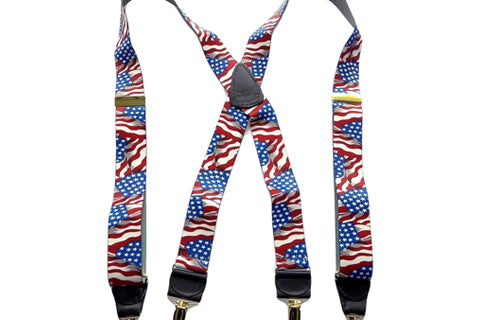
- Vintage-style or vintage-inspired suspenders are newly made products designed to echo an older look, such as a jacquard weave or a leather cross patch, but built with current materials and hardware.
- Modern suspenders are contemporary products made for today's formalwear, workwear, or casual clothing, with no attempt to reproduce a historical style.
Age alone does not confirm authenticity. Construction details, hardware design, stitching, material wear, and documented origin all factor in, and no single feature dates an item on its own. If you are buying something described as genuinely old and the value matters to you, a specialist in vintage clothing is a better judge than a general description online.
Retro, Antique, and Old-Fashioned Suspenders: Same Category, Different Words
 "Retro suspenders," "antique suspenders," "old-fashioned suspenders," and "old-school" or "old-style suspenders" all describe the territory covered above, not a separate product type. The words just carry different connotations, and knowing which one fits your situation makes shopping easier.
"Retro" usually points to vintage-style or vintage-inspired suspenders: newly made pairs styled to evoke a past decade, worn for the aesthetic rather than for authenticity. It is a trend term as much as a construction term. "Antique" is the stricter word; used precisely, it implies genuine age, appraisers and collectors generally reserve it for pieces with real years and documented history behind them, so it applies most accurately to authentic vintage suspenders rather than new reproductions.
"Old-fashioned" and "old-school" are casual, non-technical descriptions. They can mean an authentic vintage pair, a vintage-style reproduction, or simply a traditional wide-strap, button-on silhouette that reads as classic regardless of when it was actually made. None of these labels changes the construction questions that actually matter, attachment method, material, and condition, which the sections below cover in detail.
A Brief, Qualified History
Early trouser-support straps, sometimes called bretelles, appeared in France in the early 1700s as a hidden undergarment rather than a visible accessory. Braces made of ribbon or cloth and fastened with buttons followed through the 18th century.
The suspender most people picture today traces to London tailor Albert Thurston, who began manufacturing structured braces in the 1820s using boxcloth, a tightly woven wool, with leather loops that buttoned inside the waistband. Metal clip attachments became commercially available later, generally placed around the 1890s, offering an alternative to sewn-on buttons.
High-waisted trouser cuts through the 19th and early 20th centuries made belts impractical, which is a large part of why suspenders were standard menswear for so long. The belt's rise is usually tied to the 1920s and 1930s, with some historians linking the shift partly to men returning from World War I accustomed to a uniform belt; trouser cuts also dropped lower, which made a belt workable in a way it hadn't been before. For more on how suspenders held their ground through that particular decade, see our 1920s suspenders fashion era piece.
Suspenders did not disappear after that. They persisted in formalwear, workwear, and periodic fashion revivals through the 20th century and into today. For a fuller account, see our history of suspenders, and for the terminology question, see suspenders vs braces.
Attachment Methods Compared
Button-On Suspenders
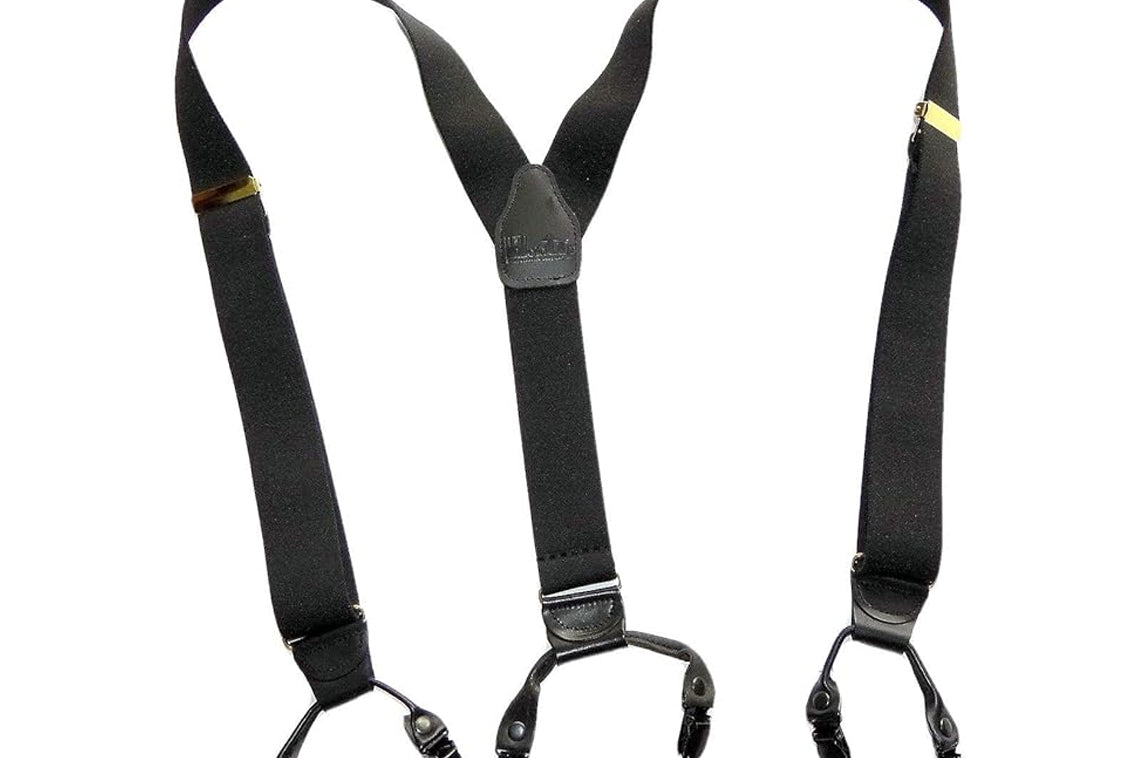
Button-on suspenders attach with leather or fabric loops that slip over buttons sewn to the inside of the trouser waistband. This is the older, tailoring-associated method, and it is still specified for formalwear and tuxedo trousers that are cut without belt loops. It requires trousers with suspender buttons already in place, or a tailor to add them, and the strap cannot be moved once the buttons are set. Its advantage is a clean, non-slip hold with nothing visible at the waist.
Clip-On Suspenders
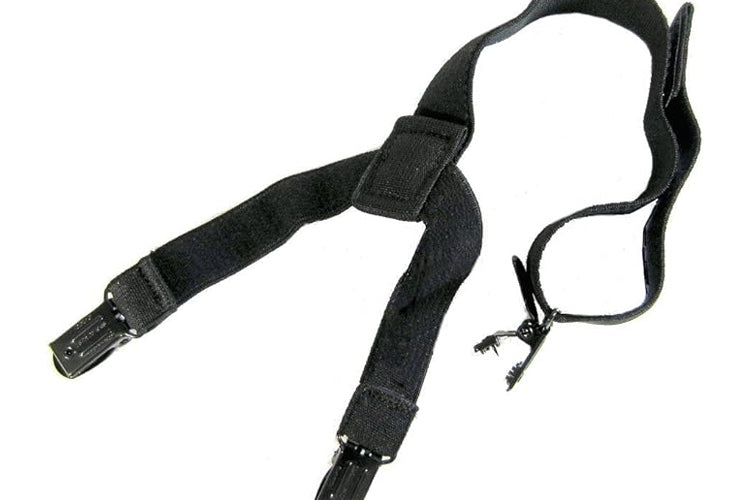
Clip-on suspenders use metal or plastic clips that grip the top of the waistband directly, with no buttons required. This is the more common modern format because it works on almost any pair of trousers without alteration. Grip quality varies by clip design and material; lower-quality clips can mark or wear delicate dress fabric over repeated use, which is why some brands, including several in our own catalog, build no-slip or gripper-style clips specifically to reduce that risk.
You can read the story behind our own patented gripper clasp if you want the specifics. For a closer look at the tradeoffs, see our button suspender vs clip-on comparison and our broader guide to suspender types.
Other Modern Attachment Systems
Beyond the two classic methods, some current products use dual clips for extra security, side or hip-clip designs favored by trucker and driving styles, and no-buzz or airport-friendly clasps built without metal parts for easier travel through security screening. Not every trouser is compatible with every attachment type, so it is worth checking a product's specifics before buying rather than assuming universal fit.
Materials and Construction
 Vintage suspenders commonly used wool boxcloth, cotton canvas, leather, or silk, with non-elastic or partially elastic webbing depending on the era and maker. Modern suspenders typically rely on elastic webbing (a blend that may include rayon, polyester, or cotton) for the stretch and give most wearers expect today, paired with leather or synthetic ends, metal or resin clips, and adjustment sliders. Jacquard-woven patterns and satin finishes, both historically associated with formal suspenders, are also used in current formal and dress lines.
Material names alone don't determine quality in either category. What matters more is webbing strength and elastic recovery, stitching consistency, hardware plating and corrosion resistance, leather condition and finish, and how much adjustment range the strap actually offers.
A well-built modern elastic suspender can outperform a stiff, decades-old non-elastic pair in day-to-day comfort, and a well-preserved vintage boxcloth pair can outlast a poorly stitched new one. For a material-specific breakdown, see elastic vs leather suspenders.
Fit and Comfort
Fit depends on strap width, torso length, adjustment range, and back configuration (X-back or Y-back), not simply on whether a pair is old or new. Vintage suspenders were generally sized to the trouser rises common in their era, which tended to sit higher on the waist; if the elastic or leather is original and intact, that doesn't guarantee it will suit a modern low or mid-rise trouser.
Adjuster placement, button spacing, and strap length all need to line up with the trousers being worn, which is why trying a vintage pair on the actual garment matters more than the pair's age. Modern suspenders more often come in labeled standard, tall, or extended-length options, which can simplify fitting for larger or taller frames.
Neither style is universally more comfortable. A worn-in leather cross patch can feel better against the shoulder than a stiff new one, and elastic recovery in a quality modern pair can outperform aged elastic that has lost its stretch.
Durability Without Generalizing
Some vintage suspenders were built from durable materials with skilled construction and have genuinely held up. But age works against materials regardless of category: elastic loses recovery, thread weakens, leather can dry out or crack, and metal hardware can corrode or loosen.
 A well-made modern pair in good condition can be more reliable day to day than a deteriorated vintage pair, even one made from historically durable materials. Condition, not the vintage-or-modern label, is the better predictor of how a given pair will perform. If you're troubleshooting a leather pair specifically, see common leather suspender problems.
Sustainability: What Actually Matters
Sustainability depends on more than the vintage-or-modern label. Reusing an existing item avoids new manufacturing and transportation, which is a real advantage, but only if the item is still functional rather than being replaced again shortly after purchase.
On the modern side, sustainability depends on the specific materials, manufacturing process, and how long the product actually lasts in use; broad claims like "eco-friendly" or "organic materials" only apply where a brand has specifically documented them, which we can't verify for a general market comparison.
Buying secondhand isn't automatically the better environmental choice in every case, and a new, well-made pair that lasts many years can outperform a fragile vintage piece that needs frequent repair or early replacement.
Vintage vs Modern Suspenders at a Glance
| Feature | Authentic Vintage | Modern |
|---|---|---|
| Typical attachment | Often button-on, sometimes early clip designs | Commonly clip-on; button-on still made for formalwear |
| Common materials | Wool boxcloth, cotton canvas, leather, silk | Elastic webbing, leather or synthetic ends, satin, jacquard weave |
| Adjustability | Varies by maker and era; may be limited | Commonly adjustable via sliders; standard, tall, and extended lengths available |
| Compatibility with modern trousers | Depends on button placement and rise; may need alteration | Generally broad, especially clip-on styles |
| Condition concerns | Elastic fatigue, dried leather, corroded hardware | Depends on build quality; generally lower risk when new |
| Best suited for | Collectors, period costume, occasional formal wear | Regular wear, work, weddings, contemporary suits |
How to Identify Authentic Vintage Suspenders
If you're evaluating a pair described as genuinely old, look at several details together rather than relying on any single clue:
- Labels, maker marks, or stamped hardware
- Hardware design and finish consistent with the claimed era
- Hand or machine stitching quality and pattern
- Type of adjustment hardware used
- Whether the attachment method (button-on versus clip) matches the claimed period
- Material aging: leather patina versus cracking or damage, elastic that has visibly hardened or separated
- Any documented provenance or seller history
None of these alone confirms age. A seller's description isn't a guarantee, and reproduction or vintage-inspired pieces can look convincing at a glance. If authenticity or value genuinely matters, ask a qualified vintage clothing specialist to assess the piece directly. For hardware specifics, see vintage suspender clasps.
Choosing Between Vintage and Modern
Vintage tends to make sense for collectors, period-accurate costume, and occasional formal wear where original construction and patina are part of the appeal. Modern tends to make sense for regular wear, work, weddings, and contemporary tailoring, especially where reliable elasticity, specific sizing, or easy replacement matter.
Quick checklist before you buy either:
- Intended use: everyday, formal, work, or costume
- Attachment preference: button-on or clip-on
- Trouser compatibility: does the trouser have suspender buttons, and what is the rise
- Fit: strap length, torso length, X-back or Y-back
- Material and hardware condition, if buying vintage
- Elastic recovery, if buying modern
- Formality of the event or setting
- Maintenance you're willing to do
- Frequency of wear
- Budget
Styling Guidance
 Button-on suspenders pair naturally with higher-rise trousers and waistcoats, since that combination hides the strap and buttons for a clean formal line. Clip-on suspenders work well with casual and mid-rise trousers where visible clips aren't a concern.
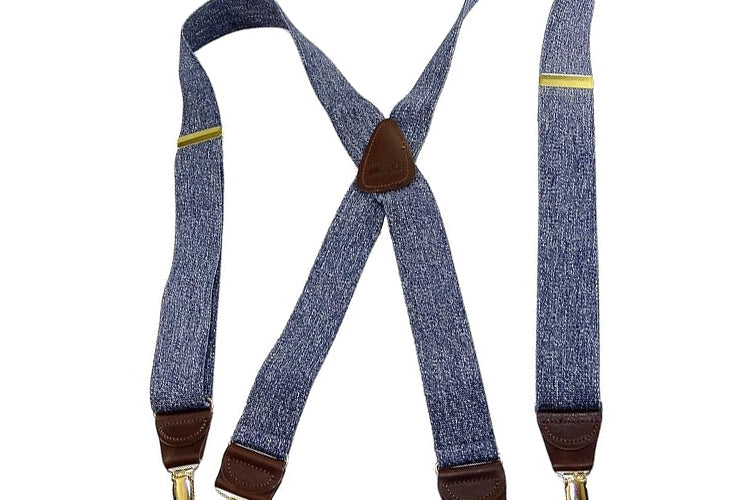
If your goal is a casual look that still reads polished rather than old-fashioned, our guide on wearing suspenders casually walks through the specifics. Leather-trimmed suspenders suit rugged casual outfits, while satin or jacquard-patterned pairs are built for suits and tuxedo trousers.
Match leather details (belt, shoes, watch strap) where you can, and keep strap width proportional to your build: narrower straps read as more contemporary, wider straps read as more traditional. Suspenders are not restricted to one gender, and both button-on and clip-on styles are made in men's and women's cuts.
If you're wearing suspenders under a vest or jacket, the attachment hardware stays hidden either way, so choose based on trouser compatibility rather than visibility. For outfit-specific direction, see how to wear vintage suspenders and our full guide to vintage suspenders for men.
Final Thoughts
The real distinction between vintage and modern suspenders is not functional versus decorative, or durable versus fragile. It's construction era, attachment method, and condition. A genuinely old pair in good shape can be a striking, well-made accessory. A well-built modern pair can be just as reliable, and easier to fit to a current wardrobe.
Match the choice to what you're actually wearing them for, check the details above before buying either, and you'll end up with a pair that works rather than one that just looks the part. If you're after a modern pair with a vintage-inspired look, our leather double-up suspenders are a good place to start.
Frequently Asked Questions
What is the difference between vintage and modern suspenders?
Vintage suspenders were manufactured in an earlier period and may use non-elastic wool or cotton webbing, leather ends, and button attachments. Modern suspenders are current production, typically with elastic webbing, adjustable sliders, and clip attachments, though modern button-on formal styles still exist. The differences center on construction era and materials, not on which is inherently better.
How can you tell if suspenders are genuinely vintage?
Check for period-consistent hardware, maker marks or labels, stitching style, and material aging such as leather patina or hardened elastic. No single feature confirms age on its own. Documented provenance and a specialist's assessment are more reliable than appearance alone.
Are vintage suspenders better than modern suspenders?
Neither is universally better. A well-preserved vintage pair with intact hardware can perform well, but age also weakens elastic, thread, and leather. A well-built modern pair in good condition often performs more reliably for everyday wear. Condition and construction quality matter more than the vintage label.
Were vintage suspenders elastic?
Early suspenders commonly used non-elastic materials such as wool boxcloth or cotton canvas rather than stretch webbing. Elastic materials became more common as suspender manufacturing developed, though the exact timeline varied by maker and market.
Did vintage suspenders use clips or buttons?
Button attachment was the earlier standard, tied to trousers with buttons sewn inside the waistband. Metal clip attachments became commercially available later, generally associated with the 1890s onward, offering an alternative that didn't require altered trousers.
Can vintage suspenders be worn with modern trousers?
Sometimes, but not automatically. Button-on vintage suspenders require trousers with suspender buttons in the right position, and older sizing may not match a modern trouser's rise or waistband. Check attachment compatibility and try the pair on the actual trousers before assuming a fit.
Are vintage suspenders back in style?
Vintage and vintage-inspired suspenders have seen renewed interest as part of broader retro and workwear trends in menswear, though modern clip-on styles remain the more common everyday choice. For a closer look at what's driving that renewed interest, see our piece on whether suspenders are back in style.