

The 1920s is often remembered as the golden age of the suspender, but the real story is a little more interesting than that. The decade was actually the turning point when suspenders, which had dominated menswear for a century, began losing ground to the belt. For the full timeline beyond this one decade, see our general history of suspenders. Understanding why the 1920s mattered so much helps explain a lot about how modern trousers, and modern suspenders, ended up the way they are.
Menswear Before the 1920s: The Suspender Standard
Suspenders as we would recognize them trace back to the 1820s, when British tailor Albert Thurston is generally credited with commercializing the modern design. Early versions used boxcloth, a tightly woven wool, with leather ends that buttoned into the waistband of the trousers. The original shape was an H-back, with two straps running front to back and a crossbar holding them together. For most of the 19th century, trousers were simply not designed to be worn with a belt. They had no belt loops, and suspenders were the standard, practical way to keep them at the waist.
World War I and the Rise of the Belt

The shift away from suspenders traces back to World War I. Military uniforms of the era used belts rather than suspenders, and the large number of men who served came out of the war accustomed to wearing one. At the same time, trouser styles were trending toward a lower waistline than the Victorian and Edwardian styles that came before. That combination, soldiers used to belts plus a changing silhouette, set up the shift that played out through the 1920s.
The 1920s: A Decade of Transition, Not a Suspender Peak
This is where a lot of casual fashion-history content gets it wrong. The 1920s were not the high point of suspenders as an essential, belt-proof accessory. They were the decade when suspenders were still common, especially for business and formal dress, while belts steadily gained ground. Trousers began to appear with belt loops during this period, something that would have been unusual a generation earlier.
Suspenders Still Dominated Business and Formal Wear
Despite the shift underway, suspenders remained the more traditional and widely worn option for tailored suits and business attire throughout the decade. A well-dressed man in a three-piece suit was still far more likely to be wearing suspenders under his vest than a belt.
Trousers Began Getting Belt Loops
Belt loops were not a fixture on trousers before this era. Their gradual introduction during and after the 1920s is one of the clearest physical signs of the shift taking place, and it is part of why the following decade saw such a dramatic swing toward belts.
What a Well-Dressed Man Wore in the 1920s
A typical formal or business outfit paired a vest over a dress shirt, a jacket on top, and high-waisted trousers underneath. Suspenders were worn beneath the vest, completely out of sight. That is an important detail, since it shaped how suspenders were viewed at the time. Shirts were typically worn with detachable collars, and a tie or bow tie finished the look, along with a hat, since going bareheaded in public was uncommon for adult men throughout the decade.

Materials and Styles of the Era
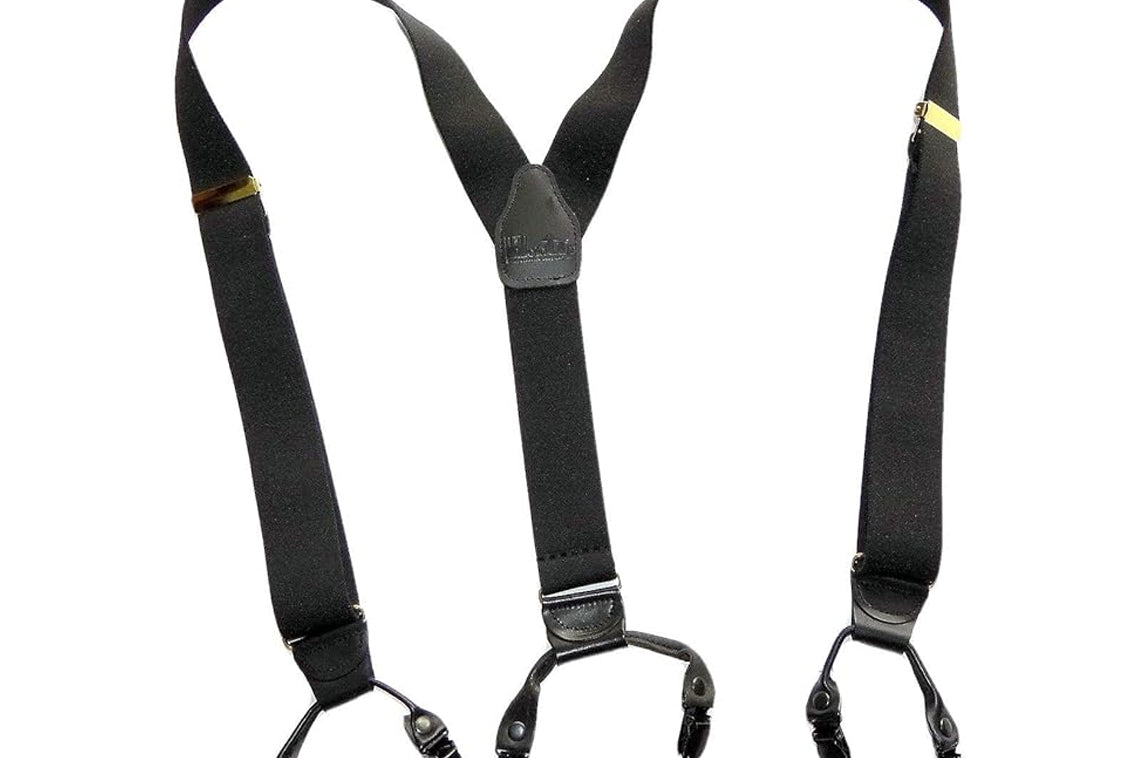
Suspenders in the 1920s were typically button-on rather than clip-on, since clip attachments did not become common until later decades. Materials ranged from durable cotton webbing for everyday wear to silk for more formal occasions, finished with leather ends and adjustable buckles rather than the metal clips seen on most modern suspenders. Colors and patterns tended to be understated, since the straps were meant to be functional and hidden rather than a visible style statement.
Suspenders Across Social Classes
Not every man in the 1920s could afford a full three-piece suit with a matching vest, jacket, and trousers. Working-class and lower-income men often wore whatever combination of jacket, vest, and trousers they could find in similar shades, sometimes mismatched, and suspenders remained the practical choice regardless of income level, since they were inexpensive to make and simple to repair. Suspenders were also common in boys' clothing throughout the decade, often worn visibly rather than hidden, since the same modesty rules that applied to grown men were less strictly enforced for children.
Common Misconceptions About 1920s Suspenders
A lot of casual fashion content repeats the idea that belts barely existed in the 1920s and that suspenders were the only practical option. That is not accurate. Belts were already gaining real traction throughout the decade, driven largely by the number of men who had worn them in military uniform during World War I. The more accurate picture is a decade of overlap: suspenders still led in business and formal settings, while belts were steadily becoming more common in casual and everyday wear, setting up the near-total shift that Life magazine documented by the end of the 1930s.
Why Suspenders Were Considered Underwear-Like
One detail that surprises a lot of people: suspenders were considered something close to underwear in this era, and it was seen as improper for a man to be seen in public with his suspenders visible. That is a large part of why they were worn under a vest rather than over a shirt. It was only in the following decades, as jackets and vests came off more often in public, that visible suspenders gradually became socially acceptable.
How the Shift Fully Played Out by the 1930s
The transition that began in the 1920s continued into the following decade. According to the history documented on Wikipedia's suspenders entry, Life magazine reported in 1938 that roughly 60% of American men had switched to belts over suspenders. Suspenders never disappeared, and they remained the norm with formal trousers in the UK well beyond that point, but the 1920s is genuinely the decade where the balance began to tip.
For a look at how suspenders originated even earlier, the USS Constitution Museum's collection notes on suspenders describe how the accessory was already an established menswear staple by the early 19th century, worn with the high-waisted trousers that were standard long before the 1920s came along.
How 1920s Suspenders Were Made
Thurston's original 1820s design used boxcloth, a densely woven wool, with leather tabs that buttoned into the waistband. By the 1920s, manufacturing had modernized, but the basic construction stayed close to that original approach. Straps were woven rather than cut from sheet material, which kept them from fraying at the edges, and the leather ends were reinforced at the button hole since that was the point under the most repeated stress through a normal day of sitting, standing, and bending.
Adjustment came from a sliding buckle rather than a stretch of elastic doing all the work, which is part of why properly fitted 1920s suspenders held their length through a full day rather than gradually sagging the way a fully elastic strap can. Cotton webbing was standard for everyday and work suspenders, while silk was reserved for suspenders meant to be worn with formal or evening dress.
Suspenders and the Etiquette of Removing a Jacket

Suspenders being treated as underwear-adjacent had a real, practical consequence: a man could not simply take off his jacket in public the way it is common to do today. This mattered enough that it was already a known issue before the 1920s.
A heatwave in 1893 reportedly pushed a number of men to switch to belts specifically so they could remove a jacket in public without exposing suspenders and still appear decent. That same underlying tension, wanting to cool off without breaking a dress code, continued to play out through the 1920s, and it is part of the quieter, practical pressure that pushed men toward belts even as suspenders remained the more traditional choice for a full, buttoned-up outfit.
A Different Pace in the UK
The shift toward belts did not happen at the same speed everywhere. It took hold earlier and more completely in the United States than in Britain, where suspenders are traditionally called braces, and where they remained standard with suits and formal trousers well past the 1920s. Part of that slower shift in the UK has been credited to the influence of the Duke of Windsor, later King Edward VIII, who was seen wearing belts in the years before his 1936 abdication and helped nudge British menswear in that direction. Even so, braces held on with formal dress in Britain far longer than the belt-dominant trend that had already taken over in America by the 1930s.
1920s Suspenders in Popular Imagery
Much of the modern image of "Gatsby-era" style, with its three-piece suits, high-waisted trousers, and clean tailoring, comes from films and stage productions set in the decade rather than from photographs of ordinary men on the street. That imagery is generally accurate to the silhouette of the era, but it can exaggerate how visible suspenders actually were day to day, since real suspenders from the period were almost always hidden under a vest rather than shown off the way costume design sometimes presents them. It is a similar dynamic to how our piece on 90s suspenders fashion covers a much later decade where suspenders were worn far more visibly and deliberately as a style statement.
Recreating the 1920s Suspender Look Today

To bring a 1920s-inspired look into a modern outfit, start with button-on vintage-style suspenders rather than clip-on styles, since the button attachment is closer to the original construction. Pair them with high-waisted trousers, a vest, and a jacket, and keep the suspenders hidden underneath just as they were originally worn if you want an authentic look. A subtle stripe or a solid neutral tone keeps the outfit feeling period-appropriate rather than costume-like. For more general styling guidance beyond the 1920s specifically, see our tips on wearing vintage suspenders.
For a themed event or a costume rather than an everyday outfit, wearing the suspenders visibly over a shirt without a vest is a reasonable compromise, since most people attending a 1920s-themed party will recognize the look faster with the straps on display, even if it is not strictly how the style was worn at the time.
FAQs
Did men stop wearing belts in the 1920s?
No, it was the opposite. Belts were becoming more common during the 1920s, not less, as trousers increasingly started to include belt loops. Suspenders were still the more traditional choice for formal and business wear, but the decade marked the beginning of the shift toward belts rather than a peak of suspender-only dressing.
What made 1920s suspenders different from modern ones?
The main differences are the attachment method and materials. Suspenders from the era typically buttoned onto the trousers rather than clipping on, and they were commonly made from cotton or silk with leather ends and buckle adjusters, rather than today's more common metal clips and elastic webbing.
Why were suspenders hidden under a vest in the 1920s?
Suspenders were considered close to an undergarment at the time, and it was seen as improper to show them in public. Wearing a vest over them kept the straps out of sight, which was the accepted standard for a well-dressed man throughout the decade.
When did belts overtake suspenders in popularity?
The shift accelerated through the 1930s. Life magazine reported in 1938 that about 60% of American men had switched to belts, meaning the changeover that started in the 1920s was largely complete by the end of the following decade.
Are button-on suspenders still available today?
Yes. Button-on suspenders are still made and sold, mainly for people who want a more traditional or formal look or who are recreating a specific historical style. They require trousers with buttons sewn into the waistband, which is less common on modern pants than it was in the 1920s.
Why did suspenders last longer in the UK than in the US?
Suspenders, called braces in Britain, stayed standard with formal and business dress well after American men had largely switched to belts. The slower shift is often linked to British menswear norms staying more conservative and to prominent figures like the Duke of Windsor continuing to influence style even as belts spread elsewhere.
What were 1920s suspenders made of?
Everyday and work suspenders were typically made from woven cotton, while silk was reserved for formal or evening wear. Straps ended in leather tabs that buttoned into the trouser waistband, with a sliding buckle used to adjust the length rather than relying on elastic stretch alone.