

Suspenders for kids help keep pants secure through active play without the tight waistband a belt requires, and they work for everything from toddler playwear to formal family photos. This guide covers how to pick the right size and width for your child's age, clip-on versus button styles, X-back versus Y-back fit, safe adjustment, and basic care so the suspenders last. Whether your child is moving out of diapers or getting dressed up for a wedding, the right pair solves a real clothing problem while adding some personality to the outfit.
 Why Suspenders Work Well for Kids
Belts often create pressure points at a child's waist, especially when they sit, bend, or play. Suspenders distribute that weight across the shoulders instead, which is more comfortable for kids who are constantly in motion.
For toddlers moving out of diapers, suspenders give pants extra hold without a tight waistband, which is useful during potty training when clothes need to come off quickly. Because adjustable suspenders can extend several inches, they also last through growth spurts better than a belt does, so a single pair often fits longer than a pair of pants.
Suspenders are also simple for young children to manage on their own. Clipping the front, bringing the straps over the shoulders, and clipping the back is easier for most preschoolers than threading a belt through loops and finding the right hole, which supports a bit of independence at dressing time.
They're also gender-neutral by design: the same colors, widths, and back styles work equally well for boys and girls, so sizing and comfort matter more than any "boy" or "girl" label.
Choosing the Right Size for Your Child
 Children's suspenders are usually sized by age or height rather than exact measurements. Your child's actual torso length matters more than their age on the label, so use the age ranges below as a starting point and confirm with a quick measurement.
| Size Category | Typical Age Range | Typical Width |
|---|---|---|
| Infant | 0 to 24 months | 1/2" to 3/4" |
| Toddler | 2 to 5 years | 1/2" to 3/4" |
| Child | 5 to 10 years | 3/4" to 1" |
| Youth | 10 to 16 years | 3/4" to 1" |
To measure, have your child stand straight and measure from the front waistline of their pants, over the shoulder, to the back waistline. Most children's suspenders offer 4 to 8 inches of adjustment, so a slightly longer size still works once you take up the slack.
When in doubt, size up rather than down. If your child is unusually tall for their age, check the maximum adjustment length before buying, since a size built for their age group may not extend far enough. Our suspenders size chart guide breaks down measurements by age group in more detail, and our guide to choosing suspenders for kids walks through the full selection process step by step if you want more depth than this overview covers.
Width matters too. Infants and toddlers typically do better in narrower suspenders, since that's proportionate to their frame. Older kids usually move to wider styles, which sit more comfortably on broader shoulders and hold up heavier fabrics like dress pants.
How to Put Suspenders on a Child
Once you have the right size, attaching clip-on suspenders takes only a few steps:
- Clip the two front ends onto the waistband of the pants, spaced a few inches apart on either side of the center.
- Bring both straps up and over the shoulders, crossing them at the back if the pair is X-back, or letting them meet at a single point if it's Y-back.
- Clip the back end(s) to the waistband, then check that the straps sit flat against the shoulders without twisting.
- Adjust the sliders on each strap until there's gentle, even tension, not tight and not sagging.
Button suspenders follow the same order, but the ends loop through fabric buttons sewn into the waistband instead of clipping on.
Clip-On or Button Suspenders for Kids
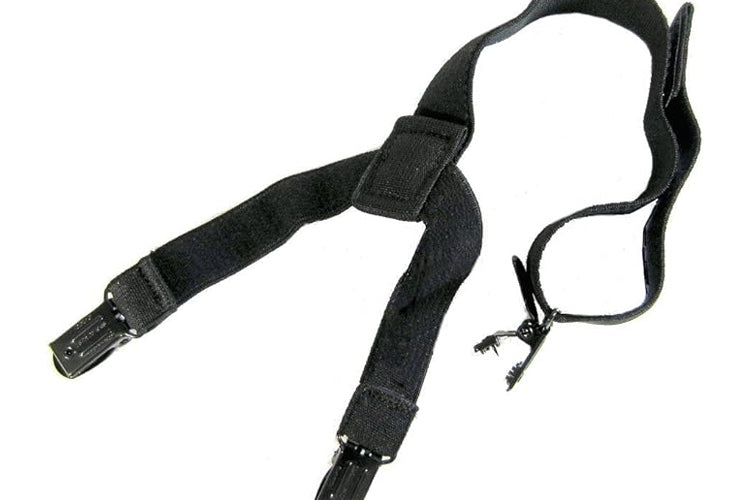
For most families, clip-on suspenders are the more practical choice for children. They attach directly to any waistband with spring-loaded clips, so there's no sewing or special pants required, and you can add them to an outfit for one event and remove them right after. Look for clips designed for kids' clothing, since these grip firmly without leaving marks or tearing fabric. Our page on clip-on versus button suspenders compares both attachment styles if you're deciding which fits your family's needs.
Button suspenders look more traditional but require pants with suspender buttons already sewn in, which limits which outfits they work with. For children who are still growing quickly, that extra step usually isn't worth it, and clip-on styles move easily between different pairs of pants as your child grows.
X-Back or Y-Back Suspenders
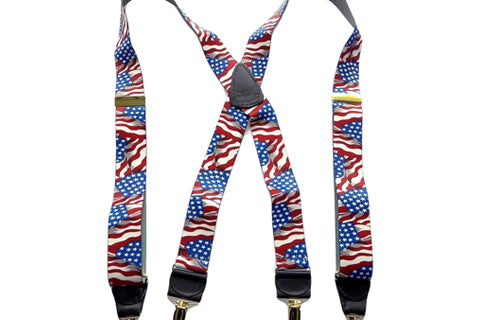
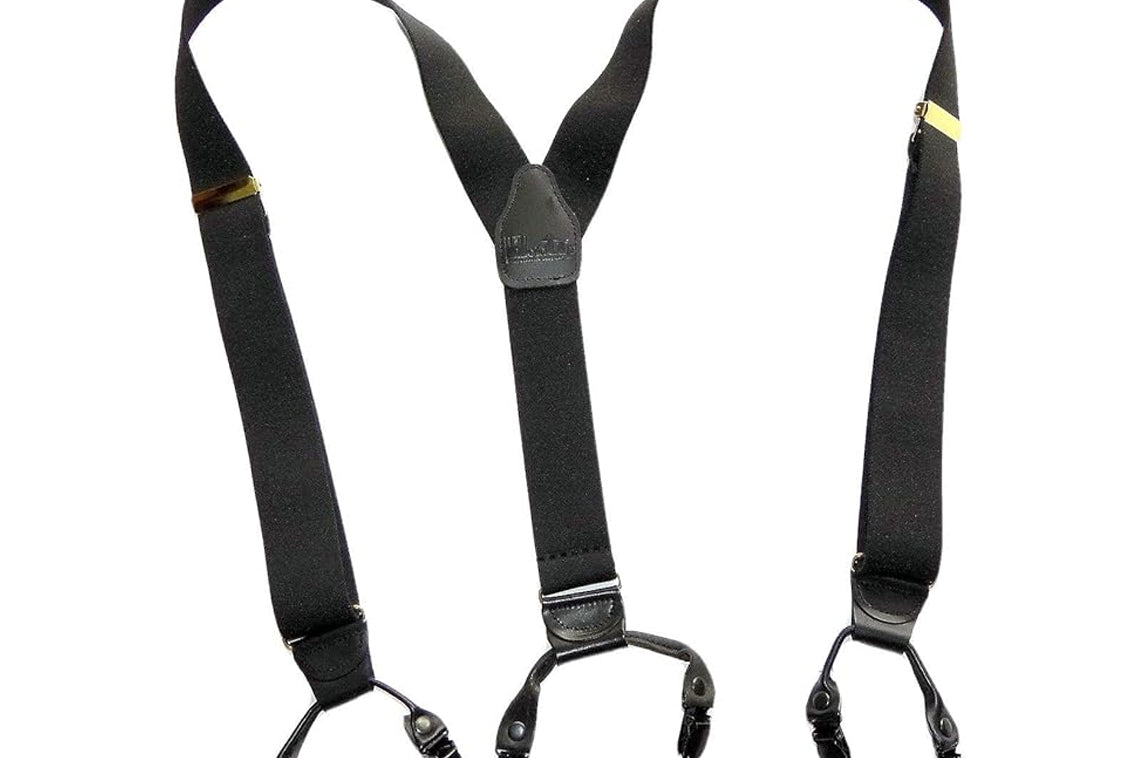
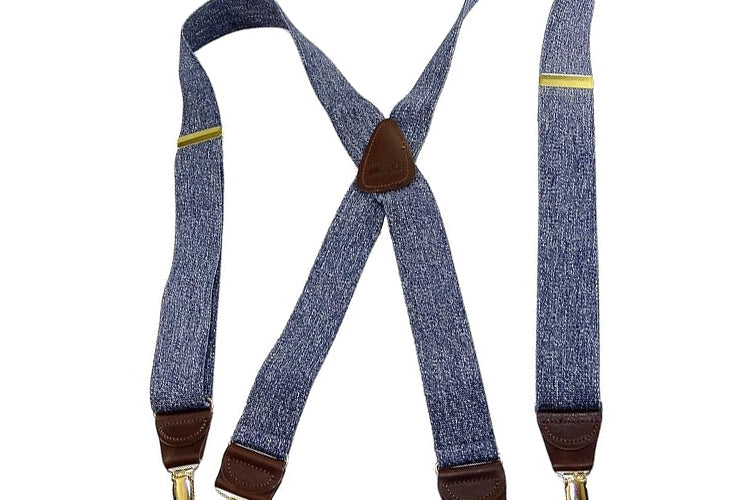
Suspenders generally come in a Y-back shape, where the straps join in a single point at the back, or an X-back shape, where the straps cross independently. X-back styles tend to stay in place better on kids because the crossed straps distribute tension across a wider area of the shoulders, which matters for children with narrower or more sloped shoulders. Our X-back versus Y-back comparison covers the difference in more detail if you want to weigh both options.
 Materials and Durability: What to Look For
Not all kids' suspenders hold up the same way, and the materials matter as much as the size. Sturdy metal clips grip a waistband more securely than plastic ones and are less likely to snap during rough play, though metal clips should be wiped dry and checked for rust if they get wet.
Elastic quality affects durability just as much: firm, higher-quality elastic keeps its snap through repeated stretching, while thin elastic wears out and starts to sag within a season of regular wear.
Some newer styles add a non-slip silicone strip on the inside of the strap, which helps keep suspenders from sliding off narrow or sloped shoulders without adding bulk. For a pair that will see daily wear, check the stitching at the clip attachment points, since that's usually the first spot to give out on a lower-quality pair.
Colors, Patterns, and Novelty Styles
Suspenders for kids are as much a fashion choice as a practical one, with far more color and pattern variety than adult styles. Solid colors like black, navy, and gray cover formal wear, while brighter, colorful prints (stripes, plaid, polka dots) work for everyday, playful outfits.
Trendy novelty and themed designs featuring holiday motifs, sports, or favorite characters are popular for school pictures, costumes, and gift-giving, and matching suspender-and-bow-tie sets are a common pick for weddings and graduations, since they let a child's personality show without changing what pants they can wear.
If your child has a strong color preference, that's often a better guide than matching an outfit exactly: a suspender they're excited to wear is one they'll actually keep on.
Styling Suspenders for Different Occasions
 The right suspenders can dress an outfit up or down, so the best pick usually depends on where your child is wearing them.
Formal Events and Photos
For weddings, graduations, holiday photos, or other dressy occasions, classic colors like black, navy, or burgundy pair well with a dress shirt and dress pants for coordinated formal attire. Black suspenders with a white shirt create a simple look that photographs well. Adding a bow tie is a common finishing touch. Our page on pairing suspenders with a bow tie has more ideas on color combinations that work well together.
Casual Wear and Costumes
For everyday outfits, brighter colors and patterns let kids show some personality, and suspenders pair easily with jeans, shorts, or a t-shirt. Suspenders also show up often in costume outfits, since they're an easy way to add character to a look without altering clothing. If you're planning a costume, our suspenders Halloween costume ideas has specific outfit combinations.
Suspenders for Girls
Suspenders work just as well for girls as boys. For dressier looks, narrow suspenders in soft colors pair nicely with a blouse and skirt or a jumper dress. For everyday wear, the same jeans-and-t-shirt pairing works, and bolder colors or patterns let girls pick a style that feels like their own.
Fit, Comfort, and Safety
Suspenders should sit with gentle tension, not pull tightly against the shoulders. If they're too loose, they'll slip; if they're too tight, they'll dig in when your child sits or bends. Check the fit after your child has been wearing them for a few minutes of normal movement, not just when they first put them on.
Suspenders are generally considered safer than belts for active play, since they don't have a rigid buckle that can cause injury during a fall. That said, young children should be supervised while wearing any clip-on accessory, and it's worth teaching kids not to pull or snap the elastic, which can pinch or damage the suspenders. Choose clips sturdy enough to hold through active play but designed to release if snagged on playground equipment.
Caring for Kids' Suspenders
 Most children's suspenders do best with hand washing in cool water and a small amount of mild detergent, followed by a thorough rinse. Avoid hot water and skip the dryer entirely, since heat breaks down elastic over time. Gently squeeze out excess water, roll the suspenders in a towel to absorb moisture, and lay them flat to dry.
- Unclip suspenders after each wear instead of leaving them attached to pants, since constant tension stretches the elastic.
- Store them flat in a drawer or hanging, away from direct sunlight and humid spaces like attics or cars.
- Check the clips periodically for loose teeth or grips, and wipe metal clips dry if they get wet to prevent rust.
Signs It's Time for a New Size
If suspenders keep slipping off your child's shoulders even after adjusting them, or if the elastic feels stretched out and doesn't snap back, it's usually time to size up rather than keep tightening the current pair. Daily-wear suspenders typically hold up for 6 to 12 months before the elastic loses tension; suspenders worn only for occasional events can last several years with proper care.
Common Mistakes to Avoid
- Buying by age alone instead of measuring torso length, which leads to a size that's too short or too loose.
- Leaving suspenders clipped to pants between wears, which stretches the elastic faster than necessary.
- Choosing button suspenders before checking whether your child's pants actually have the buttons installed.
- Skipping supervision the first few times a young child wears clip-on suspenders.
Conclusion
Getting suspenders right for a child comes down to accurate sizing, a style that matches how they'll actually be worn, and a little basic care between uses. Start with one adjustable pair in a neutral color, and expand from there once you know how your child wears them day to day.
Frequently Asked Questions About Kids' Suspenders
At what age can kids start wearing suspenders?
Children can wear suspenders from infancy, with softer clips and narrower straps designed for smaller bodies. As they grow, they move into wider suspenders sized for better support. There's no upper age limit, so the right approach is choosing a size and width that matches your child's current stage rather than a specific age cutoff.
Are suspenders safe for active kids who run and play?
Yes, suspenders are generally a safer choice than belts for active play, since they don't have a rigid buckle. Young children should still be supervised while wearing them, and it helps to teach kids not to pull or snap the elastic. Choosing clips that hold securely but release if snagged is worth checking for before you buy.
How do I stop suspenders from slipping off my child's shoulders?
Start by adjusting the length so there's gentle tension without pulling. If slipping continues, an X-back style usually holds better than Y-back on narrower or sloped shoulders, since the straps cross and distribute tension more evenly. If the suspenders slip even after adjusting properly, your child may simply need the next size up.
Should I choose clip-on or button suspenders for my child?
Clip-on suspenders work with any pants and are easier to move between outfits, which makes them the more practical option for most children. Button suspenders require pants with buttons already sewn in, so they're a better fit for families who already have those pants or want a more traditional look for a specific occasion.
Can suspenders be worn with any pants?
Clip-on suspenders work with most pants that have a sturdy waistband, including jeans, dress pants, and khakis. Very thin or elastic waistbands may not give the clips enough material to grip. Button suspenders only work with pants that already have suspender buttons installed.
How long do kids' suspenders typically last?
It depends on how often they're worn. Suspenders worn daily usually last 6 to 12 months before the elastic loses some of its hold. Suspenders kept for occasional dress-up events can last several years, especially with proper hand washing and flat storage between wears.
Are boys' and girls' suspenders different?
Not structurally. The same clip styles, back shapes, and widths work for both, so the choice usually comes down to color and pattern rather than a separate "boys" or "girls" design.
How much do kids' suspenders typically cost?
Most kids' suspenders range from about $5 to $20, depending on materials and whether they come as part of a matching bow tie set. Simple single-color clip-on pairs sit at the lower end, while sets with premium clips or coordinated accessories cost more.
Should I buy more than one pair?
If your child wears suspenders regularly, having two pairs means one can be washed while the other stays in rotation. For occasional use, such as holidays or family photos, one neutral pair in black, navy, or gray is usually enough.