
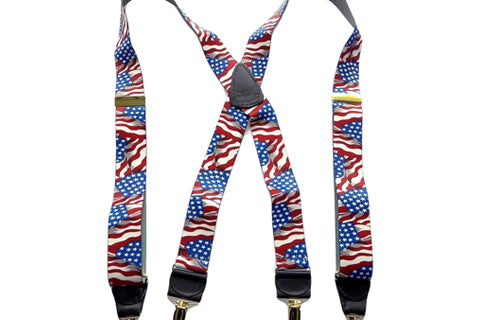
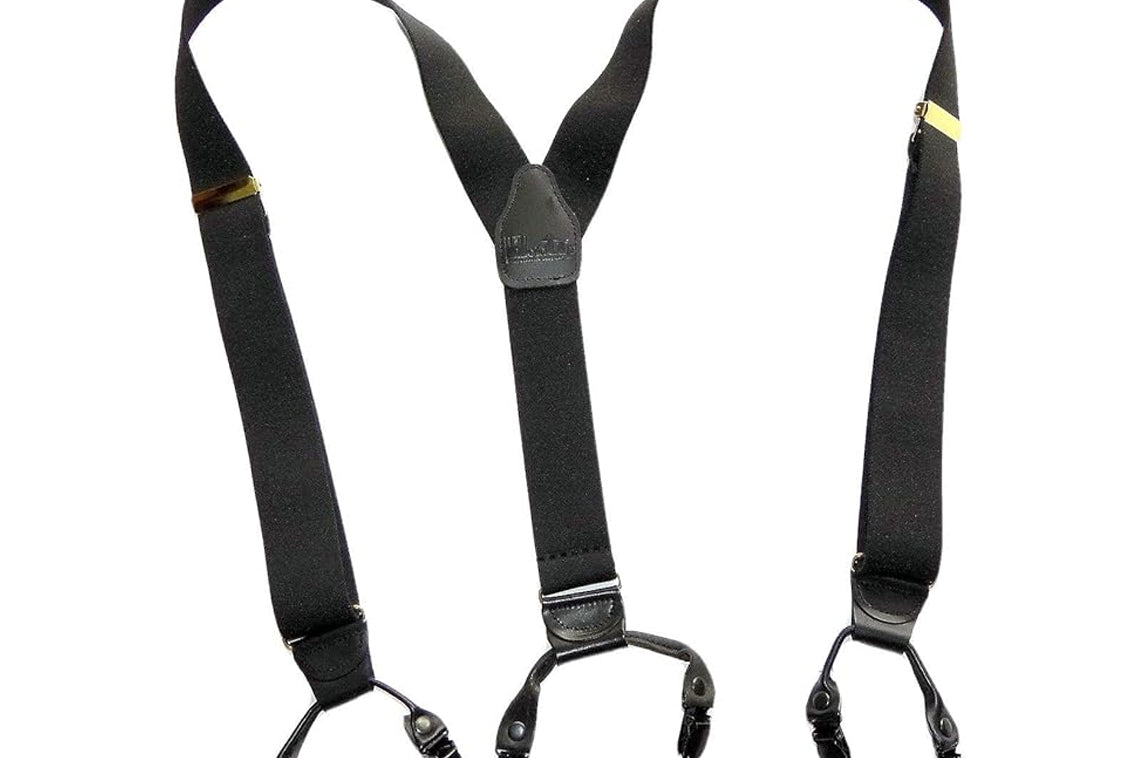
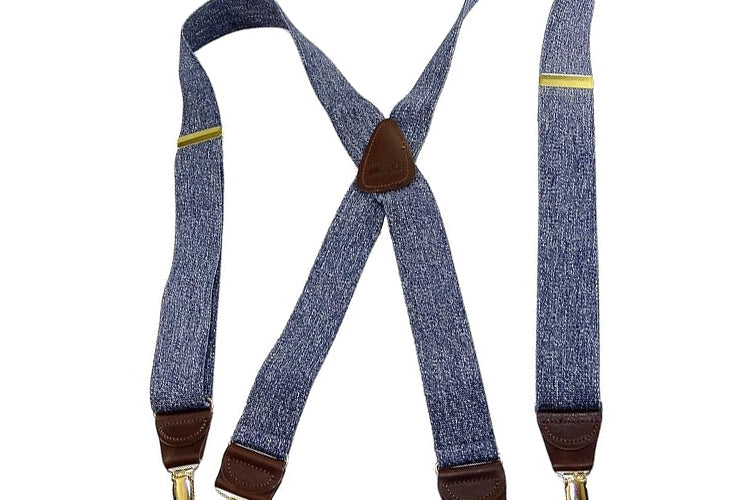
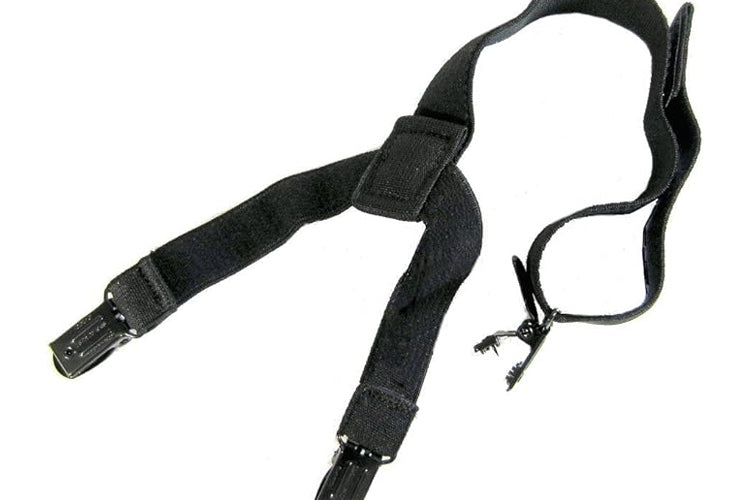

If you've ever pulled a pair of suspenders out of a drawer and wondered why they looked wrong with a particular outfit, the width is usually the culprit. Wide suspenders, in the 1.5 to 2 inch range, are built for casual outfits, workwear, and men who need more support across broader shoulders.
Narrow suspenders, from 3/4 inch to 1 inch, belong with formal wear, slimmer frames, and anything you'd call a dress outfit. The right pick comes down to three things working together: your body type, the occasion, and what you're already wearing.

Why Suspender Width Is More Than a Style Choice
Most men grab a pair of suspenders based on color, or whatever's on sale, and never think about width at all. That's the mistake. Strap width changes the proportion of the whole outfit the same way a lapel width changes a jacket. Put a wide strap on a slim-cut suit and it looks heavy, almost like a costume piece.
Put a narrow strap on rugged workwear and it disappears, both visually and functionally, since it can't carry the load the way a wider strap can. Width isn't decoration. It's structure, and it decides whether the rest of the outfit reads as intentional or accidental. Once you understand where wide and narrow suspenders each do their best work, picking a pair stops being a guessing game.
What Counts as Wide or Narrow
Before comparing the two, it helps to know the actual measurements you'll run into when shopping.
- Narrow suspenders: 3/4 inch to 1 inch wide. These are the standard for formal wear, tuxedos, and slim-cut business attire.
- Medium suspenders: Around 1.25 inches wide. A versatile middle ground for business casual and smart-casual dressing.
- Wide suspenders: 1.5 to 2 inches wide. Built for casual outfits, workwear, and men with broader or larger builds who need more support and a stronger visual statement.
Knowing where your preferred look falls on this scale makes choosing the right pair a lot simpler. Our suspender width and size chart breaks this down further by style and material, if you want exact measurements before you buy.
When Narrow Suspenders Work Best

Narrow suspenders belong to a specific category of dressing: refinement and restraint. They bring a clean line to an outfit rather than adding to it. If you're dressing for anything formal or business-facing, narrow is almost always the right call.
- Tuxedo and black-tie events: The correct width for tuxedo suspenders is 3/4 inch to 1 inch. Anything wider starts to read as workwear against the refined lines of a tuxedo jacket. If you're renting or buying for the first time, our tuxedo suspender sizing guide walks through exactly what to look for.
- Business attire: Slim dress trousers and tailored suits pair naturally with 1-inch suspenders. The strap doesn't compete with the cut of the jacket.
- Formal events: Weddings, galas, and corporate functions all benefit from the subtlety of a narrow strap.
- Slim body frames: Men with narrower shoulders or lean builds find that narrow suspenders sit better on a slim frame without adding visual bulk.
Material matters here too. Satin-finished or silk suspenders in a narrow width create a polished, cohesive finish that matches the sheen of a tuxedo jacket or dress shirt.
When Wide Suspenders Are the Right Call
Wide suspenders bring presence. They aren't shy, and they aren't meant to be. A 1.5 to 2 inch strap is built for outfits that can carry that weight, visually and literally.
These are the situations where wide suspenders make sense.
- Casual and workwear looks: Wide straps pair naturally with jeans, chinos, and heavier fabrics like canvas and denim. They anchor the outfit instead of looking out of place.
- Physical work and long wear: Wider straps distribute weight more evenly across the shoulder, which cuts down on fatigue over a long workday. That's precisely why our 2-inch heavy-duty work suspenders are built at that width, not narrower. If you're comparing straps for a full shift on your feet, here's why 2-inch straps hold up better for heavy-duty jobs than anything thinner.
- Broader and larger builds: A wider strap is proportionally balanced against a broader chest and shoulders. A narrow strap on a larger frame can look flimsy and also provides less support.
- Bold style statements: If you want your suspenders to be part of the look rather than a quiet background element, go wide. Wide straps in patterns or contrasting colors create a strong visual anchor.

How Body Type Should Influence Your Choice
Proportion matters in menswear more than most men give it credit for. The same pair of suspenders can look completely different on two different builds, and understanding why helps you make a smarter choice the next time you're shopping.
Slim and lean frames do well with narrow suspenders. Straps between 3/4 inch and 1.25 inches keep the silhouette clean without adding weight that doesn't need to be there. Go too wide on a slim frame and the suspenders start to look oversized, like they were borrowed from someone else's closet.
Average builds have the most flexibility. Medium-width suspenders around 1.25 inches work for nearly every occasion, and you can move a size up or down depending on how formal the outfit needs to be.
Broad and larger frames benefit from wider straps. A 1.5 to 2 inch suspender balances a broader shoulder line and gives you the physical support a narrower strap can't. It also keeps the strap from looking like a thin thread stretched across a wide back.
Matching Suspender Width to the Occasion
The event you're dressing for should guide your width decision just as much as your body type does. Here's a practical breakdown.
- Black-tie and formal events: Narrow, 3/4 to 1 inch, satin or silk finish, button-on attachment. If you're pairing suspenders with a cummerbund for a tuxedo, keep width minimal so the full ensemble reads as intentional rather than layered. See how pairing a cummerbund with suspenders actually works, and what to skip. For anyone unsure whether the accessory belongs at all, we've also covered wearing suspenders to a black-tie event in more detail.
- Business and office wear: Narrow to medium, 1 to 1.25 inches, solid or subtle pattern, matched to the trouser tone.
- Smart casual: Medium, 1.25 to 1.5 inches, woven or patterned, clip-on or button-on both work.
- Casual and weekend wear: Wide, 1.5 to 2 inches, elastic or canvas, clip-on for practicality.
- Workwear and trades: Wide, 2 inches, heavy-duty elastic, jumbo clips for a secure hold under physical strain.
The Role of Material Alongside Width

Width and material work together. You can't judge one without the other. A 2-inch strap in silk would look jarring on anyone. A 3/4-inch strap in heavy canvas would look underdressed at a formal event, no matter how well it's cut.
Here's how the two connect.
- Silk and satin finishes belong with narrow, formal suspenders. They reinforce the dressiness the width is already signaling.
- Woven fabric and elastic are the natural companions to medium and wide suspenders. They add texture without adding heaviness. If you're deciding between the two for a specific build, we've laid out how elastic and leather suspenders compare for stretch, break-in, and everyday wear.
- Leather suspenders at 1 inch offer a strong, distinctive look that sits between formal and stylish. Our 1-inch leather belt-strap suspenders create a clean, structured silhouette that works well in smart-casual settings.
Clip-On vs Button-On Across Different Widths
The attachment method also shifts how formal a suspender reads, and it tends to pair predictably with width.
Button-on suspenders attach inside the waistband through hidden buttons sewn into the trousers. This gives a slimmer, cleaner line at the waist and is the traditional method for formal wear. Narrow suspenders almost always use button-on attachment in formal contexts, since a clip at the waistband would undercut the whole point of a low-profile strap.
Clip-on suspenders are practical, easy to move between outfits, and don't require altered trousers. They're the standard for casual and workwear suspenders, most of which run wider anyway. If you're still deciding which attachment style fits your wardrobe, we broke down clip-on versus button-on suspenders side by side.
And once you've picked, understanding how to adjust and wear suspenders correctly makes a real difference in how they sit and hold throughout the day, no matter which attachment you choose.
Styling Wide Suspenders With a Suit
Wide suspenders and suits can coexist, but the pairing needs some care. A 1.5-inch suspender can work with a relaxed lounge suit in a casual fabric like linen or tweed. It reads as intentional and a little vintage. The suit shouldn't be sharp or slim-cut, or the contrast between the heavy strap and the fitted jacket will feel off, like two different outfits stitched together.
For anyone building a suit look around suspenders, the general principle is to match the weight of the suspender to the weight of the fabric. A heavy wool suit can carry a wider strap. A lightweight wool or linen blend calls for something narrower.
Matching Suspender Width to Shoes and Accessories
Suspender width affects how the rest of your accessories should be coordinated. Narrow suspenders sit quietly in an outfit and let the tie, pocket square, and shoes carry more visual attention. Wide suspenders anchor the look more heavily, so everything else should stay simpler.
When wearing leather suspenders, match the leather color to your shoe color. Black leather with black shoes, brown or tan leather with brown or tan shoes. That rule holds whether the suspenders are narrow or wide. For fabric suspenders, matching suspenders to your shoes comes down to tone rather than a strict leather-to-leather match.
Common Mistakes Men Make With Suspender Width

Even men who have worn suspenders for years fall into a few predictable traps. Knowing what to avoid saves you from an outfit that's technically correct but visually wrong.
- Wearing wide suspenders with slim-cut formal trousers. The bulk of the strap fights the precision of the trouser line.
- Pairing narrow suspenders with heavy denim or cargo pants. The strap looks fragile against the fabric weight and won't hold the same way.
- Ignoring how the width interacts with the shirt pattern. A wide, patterned suspender over a bold check shirt creates visual noise. One of the two needs to be solid.
- Wearing suspenders with a belt at the same time. Suspenders are designed to hold up trousers on their own. Wearing both reads as a misunderstanding of how the accessory actually functions.
- Not adjusting length after choosing width. A wide suspender that sits too loose slips right off the shoulder, and the wider the strap, the more noticeable the slip. Always adjust the length so the trousers sit naturally at the waist without pulling, and see our notes on keeping suspenders from digging into your shoulders if you're wearing them for a full day.
Frequently Asked Questions
What width suspenders should I wear for a formal event?
For formal events, narrow suspenders between 3/4 inch and 1 inch wide are the right choice. This width keeps the slim, refined silhouette formal menswear calls for, and pairs naturally with tailored trousers and a tuxedo or dress suit. Anything wider than 1.25 inches starts reading as casual.
Can wide suspenders be worn with dress trousers?
Wide suspenders, 1.5 to 2 inches, generally aren't recommended with slim or tailored dress trousers. The proportion is off, and the strap weight fights the clean lines of dress pants. If you want to wear suspenders with dress trousers, stay between 1 inch and 1.25 inches for the best visual balance.
Do narrow suspenders offer enough support for everyday wear?
Narrow suspenders are fine for everyday wear with standard-weight trousers. But if you're doing physical work, carrying tools, or wearing heavier work pants, narrow straps can dig into the shoulders and won't distribute weight as comfortably as a wider strap. For daily comfort under physical demand, 1.5 to 2 inch wide suspenders hold up better.
What is the right suspender width for a larger or broader build?
Men with broader shoulders and larger builds do best with suspenders in the 1.5 to 2 inch range. The wider strap is proportionally balanced against a broader frame and offers the physical support narrower straps can't. Narrow suspenders on a large build tend to look out of scale.
Should suspender width match the width of a tie?
There's no hard rule requiring an exact match, but proportion should stay consistent. If you're wearing a wide tie, a narrow suspender can feel visually unbalanced in the opposite direction. As a general guide, a narrow tie pairs with narrow suspenders, and a wider tie works with a medium-width strap. The key is that neither element should be extreme while the other isn't.