

Whether you're carrying a duty belt, a battle belt, or a MOLLE-compatible loadout, tactical suspenders take the weight off your hips and keep your gear from sagging through a long shift. This guide covers the three suspender styles (H, X, and Y), the materials and attachment points that matter, and how to fit a pair for duty officers and everyday carry.
What Are Tactical Suspenders?
Tactical suspenders are a support accessory that clips onto a belt or waistband and runs up over the shoulders, transferring the weight of plate carriers, chest rigs, duty belts, and packs off your hips and lower back. They're built from higher-strength webbing than fashion suspenders and are designed to stay put during movement, not just under a desk.

Types of Tactical Suspenders
Tactical suspenders come in three primary back configurations, each suited to a different load and activity level.
H-style Suspenders
- Features: Two straps run parallel over each shoulder, connected by a horizontal strap across the back for a stable, even fit.
- Benefits: Excellent stability and weight distribution, which reduces shoulder fatigue under heavy loads.
- Best use cases: Military operations, construction work, and emergency response roles that carry heavy gear all shift.
X-style Suspenders
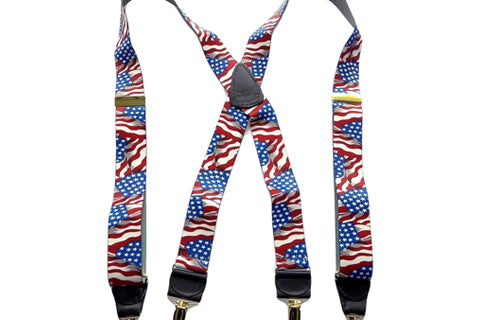
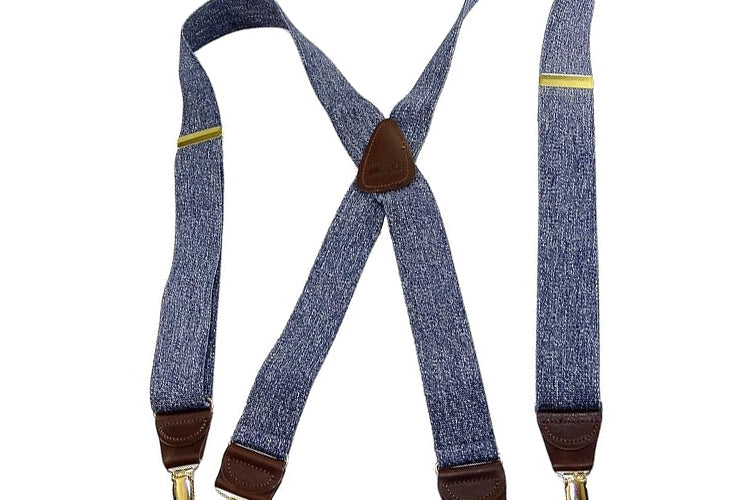
- Features: Straps cross in an "X" at the back, typically attaching at four points, two in front and two behind.
- Benefits: Greater range of motion than H-style, with the crossed back keeping straps from slipping off the shoulders.
- Best use cases: Hiking, hunting, and tactical training where mobility matters more than maximum load.
Y-style Suspenders
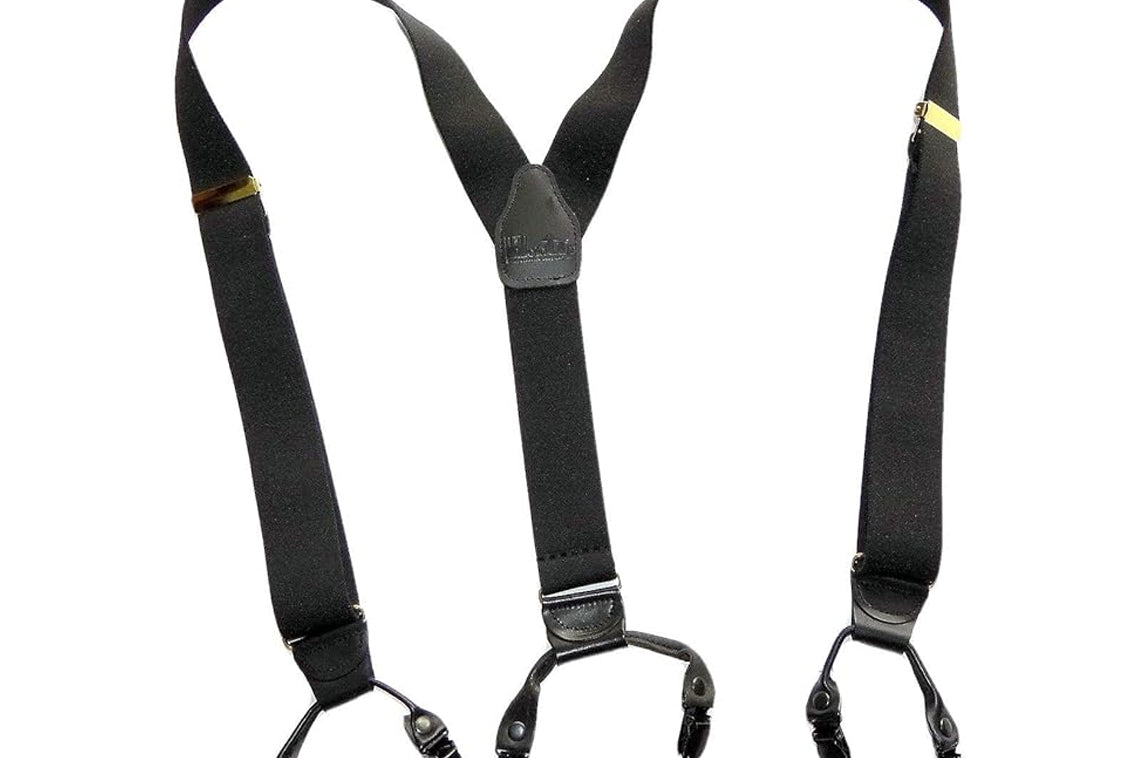
- Features: Straps merge into a single strap at mid-back before splitting into two at the front, a middle ground between H and X styles.
- Benefits: Good weight distribution with less bulk on the back, which plays well with backpacks or back-mounted gear.
- Best use cases: Patrolling or rough terrain, where you need moderate load support without back bulk.
| Style | Back design | Best for | Mobility |
|---|---|---|---|
| H-style | Parallel straps, horizontal back strap | Heavy, sustained loads | Lower |
| X-style | Crossed straps, four attachment points | Active, high-mobility use | Higher |
| Y-style | Single strap merging at mid-back | Moderate loads with a pack | Moderate |
Tactical Suspenders for Duty Belts, Battle Belts, and MOLLE Gear
 Most tactical suspenders attach directly to a duty belt or battle belt using the belt loops, hooks, or MOLLE-compatible straps built into the suspender's front and rear tabs. Moving weight from the belt to the shoulders is one of the most common fixes officers and shooters use for belt-related lower back strain, since a loaded belt alone concentrates weight entirely on the hips. If you're deciding between a duty belt and a full battle belt setup, see our comparison of suspenders with a duty belt versus a battle belt for how each pairs with suspenders.
Choosing Tactical Suspenders: Material & Durability
Material determines how well tactical suspenders hold up under repeated loading. Most well-built pairs use high-strength nylon webbing or a comparable material chosen for wear resistance. Before buying, check the manufacturer's stated weight rating rather than assuming any "tactical" label means it can handle a fully loaded rig.
Suspenders with shock cord or bungee sections add give when you bend, reach, or stretch. A stiff, non-elastic pair that doesn't flex with movement is one of the most common comfort complaints with cheaper tactical suspenders.
The Benefits of Tactical Suspenders
- Comfort and adjustability matter as much as load capacity for gear worn all shift.
- Suspenders add a level of support and security that a belt alone can't provide, especially once you add a firearm, magazines, and a radio to the belt.
- A customizable fit accommodates different body shapes without digging in at the waist.
- Weight gets distributed across the shoulders and back instead of concentrating at the hips, which matters for anyone wearing duty gear for long periods.
- A federal health hazard evaluation of police duty-belt wear found that more than half of officers reporting low back pain attributed it directly to their duty belt, which is exactly the strain suspenders are designed to offset by moving weight off the hips.

Understanding Attachment Modes: Belts vs. Loops vs. Hooks
Tactical suspenders attach to your gear in one of three ways: belts, loops, or hooks.
- Belts are the most common attachment. A mounting point on each side of the suspender secures over the belt with a buckle or snap closure.
- Loops attach directly to the belt or gear through loops sewn onto each strap, adding stability for high-movement activities.
- Hooks let you attach and detach without threading anything through your belt loops, using small metal or plastic hooks that lock onto the belt.
Different brands use different attachment hardware, so match the style to your belt setup. Hooks are generally faster to use, while loops give more stability under load.
Once you've picked an attachment style, let's cover how to wear and adjust tactical suspenders for optimal performance.
How to Wear Tactical Suspenders
Proper fit starts with fastening the suspenders at the middle of your back before adjusting the front straps.
- Start with loosened straps: Begin loose so you can adjust over clothing or gear.
- Put them on over your shoulders: Position the back style (H, X, or Y) correctly before attaching anything.
- Attach the front and back: Fasten the clips to your pants or belt at the front and back, keeping both sides balanced.
- Adjust for comfort and fit: Tighten until the suspenders hold securely without restricting movement or breathing.
- Final adjustments before use: Bend, walk, and stretch to confirm the suspenders stay in place without pinching.
Make sure the straps are even on each side for a balanced look. You should be able to move freely, without the straps feeling too tight or too loose.
Tips for Integrating Suspenders with Other Tactical Gear
- Layer correctly: Wear suspenders over your base layer and under any jacket or load-bearing equipment to avoid interference.
- Use the attachment points: Take advantage of modular attachment points to distribute gear weight evenly.
- Check compatibility: Confirm your suspenders work with the rest of your kit, especially around the waist and shoulders where other gear also sits.
Popular Features in Tactical Suspenders
A few features consistently separate well-built tactical suspenders from the rest:
- Padding for extra comfort: Padded shoulders reduce pressure and chafing during long-duration wear.
- Quick-release mechanisms: Quick-release buckles or snaps allow fast removal in an emergency or when gear needs to come off quickly.
- Attachment points and modular components: Multiple attachment points support radio holders, tool pouches, and hydration packs, customizable to your setup.
Tactical Suspenders versus Traditional Shoulder Straps: A Comparison
 Conventional shoulder straps have been around longer, but many now prefer tactical suspenders for practical gear-carrying.
- Tactical suspenders distribute weight evenly while allowing freedom of movement, which suits situations that call for both stability and speed, with adjustability for a precise fit.
- Traditional shoulder straps (more commonly backpack straps) are prevalent in hiking and camping for their versatility across different pack types.
- If you need lightweight and maximum mobility while keeping an organized loadout, tactical suspenders are the better fit.
- If you need to carry more equipment securely regardless of activity type, traditional shoulder straps offer more versatility.
- Whether you go tactical or traditional comes down to personal preference and how well each design matches your use case.
How to Choose the Best Tactical Suspenders for Your Loadout
The best tactical suspenders are the pair that match the weight, attachment system, and layers in your actual loadout. Start with the belt: a duty belt, battle belt, or MOLLE belt needs compatible loops, hooks, or mounting straps. Then consider how much equipment the suspenders must support and whether you need room for a plate carrier, chest rig, backpack, or jacket.
- For heavy or sustained loads: Choose durable H-style load-bearing suspenders with wide, adjustable shoulder straps and secure four-point attachment.
- For mobility: X-style suspenders provide a stable cross-back harness while allowing a broad range of motion.
- For use with a pack: A Y-style design reduces material across the back and can limit overlap with backpack straps.
- For a lower profile: Look for flat hardware, minimal padding, and straps that do not create pressure points beneath armor or outerwear.
- For modular gear: Confirm that attachment points work with your utility pouches, radio, hydration equipment, and other accessories without crowding the belt.
Fit matters as much as the label. A durable material is useful only if the straps remain comfortable, the belt stays level, and the adjustment hardware does not shift during movement. Test the complete setup rather than evaluating the suspenders by themselves.
How to Wear Battle Belt Suspenders Under a Plate Carrier
 Battle belt suspenders can be worn under a plate carrier when the straps and hardware sit clear of the carrier's shoulder pads, cummerbund, and lower edge. Put on and adjust the suspenders first, attach them evenly to the battle belt, and then add the plate carrier. The carrier should not trap a buckle or hook against your body.
- Keep the profile flat: Use thin straps and low-bulk adjustment hardware where the plate carrier overlaps the shoulders and torso.
- Check belt height: Adjust the suspenders so the battle belt supports the load without riding into the carrier.
- Separate pressure points: Move buckles away from armor edges and backpack straps to reduce rubbing.
- Test access and movement: Confirm that you can reach magazines, a holster, utility pockets, and quick-release components while bending, kneeling, and shouldering equipment.
A low-profile battle belt suspender setup works best when every layer has its own space. If the plate carrier shifts, the belt tilts, or the straps pinch, reposition the attachment points and retest before field use.
Low-Profile Tactical Suspenders and Leather Options
Low-profile tactical suspenders are intended to sit beneath a plate carrier, chest rig, jacket, or other load-bearing equipment with minimal bulk. Compared with heavily padded designs, they usually rely on flatter webbing, compact buckles, and fewer raised components. This can improve layering, but thinner straps may feel less comfortable when they carry a heavy belt for a long period.
Leather tactical suspenders appear in some work, outdoor, and heritage-style setups. Leather can provide a firm structure and a different look, but it is usually less suited than nylon webbing to wet environments, repeated flexing, and lightweight layering under armor. Choose the material according to the intended purpose rather than appearance alone, and check the care requirements, attachment strength, and adjustability before use.
Load-Bearing Suspenders for Police, Military, and Work Gear
Load-bearing suspenders function as a shoulder harness for equipment carried on a belt. For police and law-enforcement duty belts, the goal is to keep the belt level while distributing the weight of a holster, magazines, handcuffs, radio, and medical or utility pouches. Military and field users may pair suspenders with a combat belt or MOLLE belt to support ammunition, survival items, and other outdoor equipment.
Work suspenders use the same basic principle for tool belts and heavy work clothing, although their clips and attachment modes may differ from tactical models. In every setting, inspect the stitching, webbing, buckles, loops, and hooks regularly. Replace a component if it is frayed, cracked, bent, or no longer holds its adjustment securely.
Frequently Asked Questions
What's the best type of tactical suspenders for a duty belt?
H-style suspenders are the most common choice for a loaded duty belt because the horizontal back strap keeps weight stable across both shoulders during long shifts.
Do tactical suspenders work with a battle belt?
Yes. Most tactical suspenders attach to a battle belt the same way they attach to a duty belt, using belt loops, hooks, or MOLLE-compatible straps, and they help offset the added weight of plate carriers and mag pouches.
What's the difference between combat suspenders and standard tactical suspenders?
They're largely the same product. "Combat suspenders" is typically a military-oriented branding of the same H, X, or Y-style tactical suspenders, built for the same load-bearing purpose.
How do you wear duty belt suspenders correctly?
Fasten them at the middle of your back first, then attach the front and back clips to your belt evenly on both sides, and adjust until the belt sits securely without restricting movement or breathing.
Are H-style, X-style, or Y-style suspenders better for heavy gear?
H-style suspenders generally handle the heaviest, most sustained loads best. X-style favors mobility over max load, and Y-style is a middle ground that works well under a backpack.
Do tactical suspenders attach to MOLLE gear?
Many tactical suspenders include MOLLE-compatible straps or attachment points, letting them connect directly to a MOLLE belt or plate carrier rather than only to a standard belt.