

Wearing suspenders to a black tie optional event is appropriate when you pair them with a tuxedo or dark formal suit, choose button-on construction in black, navy, or charcoal between 1 and 1.5 inches wide, skip the belt entirely, keep the jacket on so the straps remain hidden throughout the evening, and coordinate every other accessory at the same level of formality.
Black tie optional is a dress code that asks for genuine sophistication without mandating a tuxedo, and that flexibility is exactly where suspenders fit most naturally. The dress code sits close enough to full black tie that the traditional accessories of formal menswear are not just acceptable but appropriate. Understanding what the dress code actually asks for, and building the outfit to match that standard precisely, is what makes suspenders work here rather than undermine the whole look.
What Black Tie Optional Actually Requires
Black tie optional is most commonly encountered at evening weddings, galas, formal dinners, and upscale charitable events. The invitation signals that a tuxedo is welcome but a very formal dark suit is an equally acceptable alternative. What the dress code does not permit is anything below that level: business suits, lounge suits, or dressed-up casual wear all fall short of what the occasion is asking for.
The target for any guest at a black tie optional event is to match the host's formality level without exceeding it in a theatrical way or undercutting it through ambiguity. A dark navy or charcoal suit with a white dress shirt, a dark silk tie, and polished black Oxfords sits comfortably within the dress code. A tuxedo with the correct accessories sits at the upper end of the acceptable range. Both can include suspenders when the rest of the outfit justifies the choice. The guide on how to wear tuxedo suspenders covers the specific decisions that apply at the formal end of this spectrum.
Why Suspenders Are Appropriate for This Dress Code
Suspenders belong at this level of formality for three specific reasons that go beyond personal preference. First, they are a traditional formal accessory with a longer history in evening dress than the belt, which only became dominant in menswear during the mid-twentieth century. Second, they preserve a clean, uninterrupted waistline by eliminating the buckle and belt that break the vertical line of a formal suit or tuxedo. Third, they align with the understated elegance that black tie optional explicitly calls for, providing structural support without drawing attention to themselves.
Classic menswear tradition treats suspenders as a standard tuxedo component, and many formal suit trousers are still cut with the button attachments and high waistline that suspenders require. The full context of matching tuxedo suspenders with a bow tie and cummerbund covers how suspenders function within the complete formal accessory system rather than as a standalone choice.
The following table summarises the formal impact of each key suspender feature at this dress code level:
| Suspender Feature | Formal Impact |
|---|---|
| Button-on construction | Signals authentic formal styling with no visible hardware |
| Black or navy coloring | Keeps the look restrained and consistent with the dress code |
| Worn without belt loops | Creates a clean, uninterrupted waistline |
| Silk or grosgrain fabric | Complements the sheen and structure of formal suit fabrics |
| 1 to 1.25 inch width | Proportionate to formal suit scale without reading as workwear |
Why Tuxedo Trousers Are Designed for Suspenders
Tuxedo trousers are built differently from standard dress trousers in ways that are specifically designed for suspender wear. Understanding this distinction reinforces why the combination is traditional rather than unconventional at this formality level.
Tuxedo trousers sit at the natural waist rather than the hip, which creates a stable, high attachment point for suspender clips or buttons. They are cut without belt loops, which keeps the waistband clean and minimal. The internal buttons are precisely positioned, typically two at the back and four at the front, so the trousers hang evenly from both shoulders and the fabric falls without distortion at the front crease.
This vertical support allows the pleats to lie flat and the trouser crease to stay sharp through an entire long evening. A belt, by contrast, applies circumferential compression at the waist that can distort the waistband fabric and pull the trouser out of its intended hang. Suspenders eliminate this problem entirely. Many quality formal trousers also include adjustable side tabs that allow for minor fit adjustment without compromising the clean beltless appearance. For the correct attachment method at this formality level, the comparison of button suspenders versus clip-on is worth reading before purchasing.
Choosing the Right Width, Color, and Hardware
The specifications of the suspenders themselves need to match the formality level of the occasion. Getting these three variables right is what separates a polished formal result from one that looks assembled rather than considered.
Width between 1 and 1.5 inches is the correct range for black tie optional. A 1.25-inch strap is the most reliable single choice because it is proportionate to formal suit fabrics, substantial enough to hold the trouser position securely through extended evening wear, and narrow enough to avoid the workwear associations that wider straps carry. Anything at 2 inches or above reads as casual regardless of the fabric and is not appropriate at this formality level.
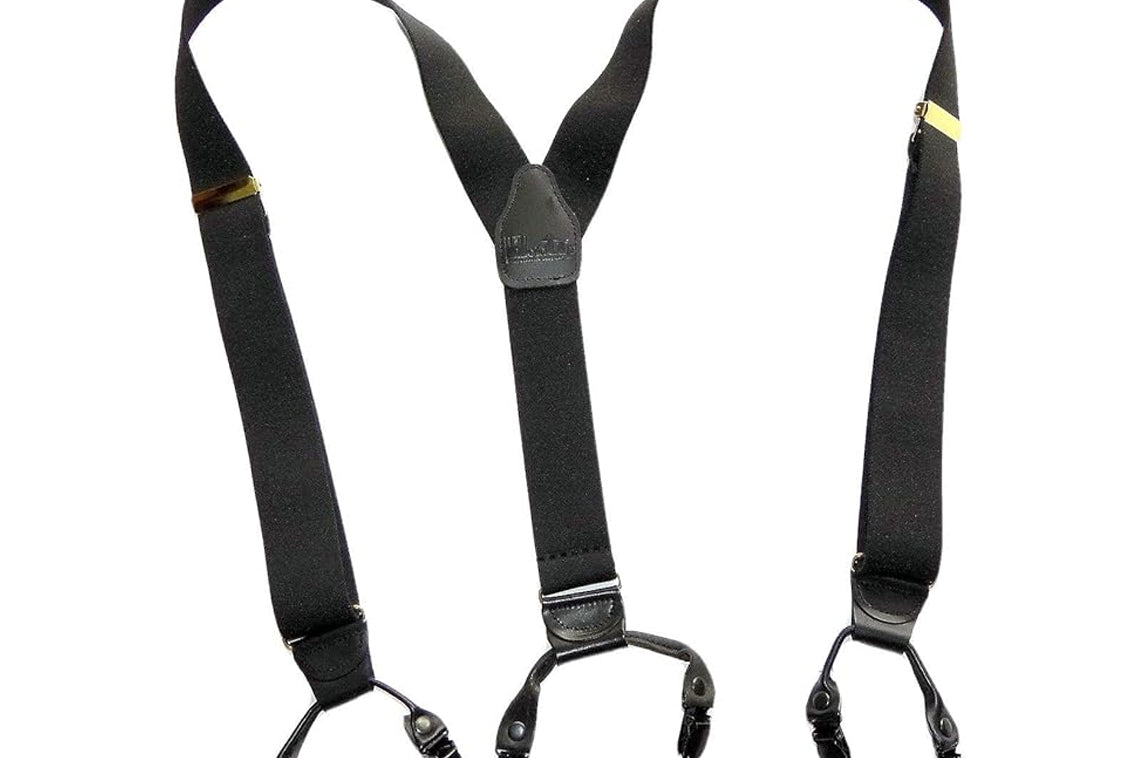
For color, black suspenders are the standard choice with a black tuxedo and work equally well with a dark navy or charcoal suit. White or cream suspenders are the correct alternative with ivory or white formal attire. Navy suspenders are a refined choice with a navy suit when exact tonal matching is the goal. Avoid brown entirely at this dress code level as it carries daytime and country associations that work against the evening formal setting. The formal series satin-finished suspenders represent the correct product category for black tie optional occasions.

Hardware must be button-on rather than clip-on for the most formal result. Visible clip hardware at the waistband introduces an element of casual utility that reads against the restrained elegance of the dress code. If button attachment is not possible, the plastic-lined suspender clips for silk and wool are the correct clip choice for formal fabrics, as they grip without damaging the fine weave of formal suit trousers.
Wearing Suspenders With a Dark Suit at Black Tie Optional
For guests who choose a dark suit rather than a tuxedo at a black tie optional event, the suit selection and everything around it needs to pull toward formality consistently. Navy and dark charcoal are the strongest suit choices because they read as genuinely formal rather than standard business dress. Black suits are generally avoided in favor of these options, which carry more visual refinement at evening events.
The suit should be well-fitted through the chest and shoulders, with a jacket length that covers the seat of the trousers. The suspenders sit beneath the jacket throughout the evening and function as hidden structural support rather than a visible accessory. This is one of the core reasons suspenders are particularly appropriate at this dress code level: they do their job invisibly while the suit carries the entire visual impression.
Pairing the dark suit with a white dress shirt featuring French cuffs, a solid silk tie in black or dark navy, and black leather Oxford shoes creates the clearest possible formal result. The corporate series satin-finished suspenders in classic formal tones sit at the right position on the formality scale for a dark suit at black tie optional.

Accessories That Complete the Formal Look
Once the suit or tuxedo and the suspenders are confirmed, the remaining accessories need to maintain the same level of formality throughout. Each visible accessory decision either supports or undermines the overall impression, and at this dress code level there is less room for error than in more casual contexts.
Key accessory decisions for a black tie optional outfit with suspenders:
- Shirt: White dress shirt with French cuffs is the strongest choice. Plain or minimally textured front, no bold patterns.
- Neckwear: With a tuxedo, a self-tie black bow tie is the traditional companion to suspenders. With a dark suit, a solid silk tie in black, dark navy, or deep burgundy. The full bow tie coordination logic is covered in the guide on matching tuxedo suspenders with a bow tie and cummerbund.
- Shoes: Black leather Oxfords in patent or highly polished plain leather. No suede, no brown, no casual styles.
- Cufflinks: Match the metal finish to the suspender hardware. Silver with silver, gold with gold.
- Pocket square: White or very lightly detailed. Keep it simple so it does not compete with the restrained palette.
- Socks: Dark, matching the trouser color closely.
Skip the belt entirely. Suspenders replace that function and combining them with a belt creates visual conflict and breaks basic formal styling logic. For a full overview of how suspenders coordinate with formal accessories as a complete system, the guide on the art of wearing suspenders is a practical reference.
Common Mistakes That Push the Look Into Casual Territory
Even correctly chosen suspenders can undermine a black tie optional outfit when the surrounding decisions pull the formality level down. These are the most consistent mistakes that occur at this dress code level.
Using casual materials is the most frequent error. Cotton, heavy elastic, canvas, and knit suspenders all carry workwear or casual associations that conflict with the refined setting. Silk, grosgrain, and smooth woven fabrics are the correct material choices. The comparison of canvas versus leather pad suspenders clarifies where each material sits on the formality spectrum.
Choosing loud colors or patterns is the second most common problem. Bright reds, patterned novelty designs, and bold stripes all draw the eye to the suspenders rather than allowing them to function as a quiet formal detail. Black, navy, and charcoal are the only colors that read correctly at this level.
Allowing the suspenders to become visible by removing the jacket unnecessarily, or pairing them with casual accessories like suede shoes or poorly fitted trousers, drops the formality of the whole look immediately. Keep the jacket on throughout formal portions of the event and ensure every other visible element matches the standard the dress code requires.
For anyone wearing suspenders at a formal event for the first time, understanding how to stop suspenders from digging into shoulders before the event ensures physical comfort does not affect posture or presence throughout a long formal evening.
Frequently Asked Questions
Can women wear suspenders to a black tie optional event
Yes. The same principles that apply to men apply to a women's black tie optional outfit with suspenders: the full look needs to match the formality level of the dress code before the suspenders become relevant. Tailored formal trousers in a dark fabric paired with thin, refined suspenders and luxe accompanying pieces produces an appropriate and considered result. Avoid wide straps, casual materials, or clip hardware in a visible position. The same tonal coordination logic applies: suspenders should complement the outfit rather than leading it.
Are clip-on suspenders ever acceptable at a black tie optional event
In limited circumstances, yes. If button attachment is not possible because the trousers do not have internal buttons and there is insufficient time to add them, a high-quality clip-on with a polished finish and refined hardware in a discreet design can work when kept under the jacket. The clip should be a smooth, low-profile design rather than an exposed jaw clip. The visible hardware test is the practical standard: if the clip would draw attention at the waistband when the jacket briefly opens, it is not the right choice for this formality level.
Should suspenders be visible or hidden under the jacket at a black tie optional event
Hidden, consistently. Suspenders at a black tie optional event are a structural element, not a decorative one. They keep the trouser in position, maintain the clean waistline, and allow the suit or tuxedo to hang correctly. All of that work happens invisibly beneath the jacket. If the jacket comes off during a late portion of a reception, the suspenders become visible but should still read as a clean, considered detail rather than the focal point of the outfit.
Can suspenders replace a cummerbund at a black tie optional event
Yes. With a tuxedo, suspenders alone are a traditional and legitimate choice that does not require a cummerbund. The cummerbund covers the waistband and trouser top, which suspenders render less necessary since they keep the trouser in the correct position without compression. Wearing both is acceptable for those who prefer the full traditional tuxedo ensemble. For a dark suit at black tie optional, the cummerbund is not relevant and suspenders function as the single waist-support accessory.
Are suspenders appropriate for an outdoor black tie optional wedding
Yes. The outdoor setting does not change the dress code requirements. A black tie optional invitation at an outdoor venue still calls for the same level of formal dress as one at an indoor venue. The practical consideration for outdoor wear is fabric weight and temperature: lighter silk or grosgrain suspenders in a warm outdoor setting are more comfortable than heavier materials. The guide on rustic wedding theme suspenders covers how to adapt suspender choices for outdoor and rustic wedding contexts where the formal requirements and the setting need to be balanced.