

Wearing suspenders to a job interview works when you choose Y-back button-attachment suspenders in a solid neutral color, pair them with high-waisted tailored trousers, keep them hidden under your jacket throughout the interview, skip the belt entirely, and let the suit carry the visual weight while the suspenders provide quiet structural support underneath.
Most men either avoid suspenders for interviews entirely because they seem too bold, or they wear them incorrectly and create exactly the kind of distraction they were trying to avoid. The truth is suspenders worn correctly at an interview can make you look sharper and more considered than the majority of candidates in the room. The difference between looking polished and looking costume-like comes down to a small number of decisions made before you leave the house.
Are Suspenders Appropriate for a Job Interview
The short answer is yes, but with a condition: the overall outfit must stay conservative and the suspenders must disappear into it rather than leading it. Suspenders in a formal or business-professional interview context are a legitimate and historically grounded choice. In a creative, casual, or startup environment they still work but require slightly more care to read as intentional rather than overdressed.
The principle that governs this decision is intentionality. Suspenders should look like a deliberate detail that supports a tailored appearance rather than a fashion statement the interviewer will spend time thinking about. If the suit is well-fitted, the shirt is clean and pressed, and the suspenders are the same neutral tone as the suit, the overall impression is one of precision and preparation. The guide on how to wear suspenders with a suit covers the full styling logic that makes this combination work in professional settings.
Before choosing suspenders for an interview, research the company's dress code. Always aim to dress slightly above the standard already in place at the workplace, keeping every visible choice clean, conventional, and considered.

Common Mistakes That Undermine the Look
Even when suspenders are the right call for an interview, a small number of consistent mistakes quietly undo an otherwise strong outfit. Knowing these in advance makes them easy to avoid.
- Clip-on suspenders in a formal setting: Exposed clip hardware at the waistband draws attention to the attachment method rather than the suit and reads as less considered in high-stakes professional contexts. Button attachment is always the stronger choice here.
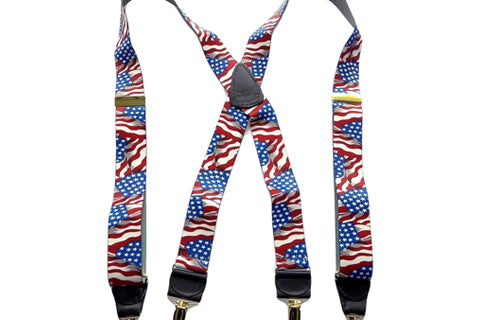
- Novelty prints or bright colors: Any pattern or color that draws the eye to the suspenders rather than the person wearing them is wrong for an interview. Stick to black, navy, charcoal, or dark burgundy.
- Leaving the jacket off: Exposed suspenders in a formal interview shift attention from the person to the accessory. Keep the jacket on throughout.
- Wearing a belt alongside suspenders: Both serve the same function and combining them signals poor judgment rather than extra effort.
- Uneven strap tension or visible twisting: Both are visible even under a jacket when the wearer moves and immediately signal a lack of preparation.
The guide on the art of wearing suspenders covers the full picture of how these details interact in a formal context and is worth reading before building any interview outfit around suspenders.
Choosing the Right Material for a Professional Setting
The fabric of the suspenders carries as much weight as the color in a formal interview context. Material communicates how much thought went into the outfit before it communicates anything about style.
The strongest fabric choices for an interview in order of formality are:
- Silk or satin: The most refined option for high-stakes formal settings. Their subtle sheen complements the fabric of a dress suit without competing with it. The formal series satin-finished suspenders sit at the correct end of this spectrum.
- Grosgrain: A structured ribbon fabric that sits flat, stays in position, and reads as clean and intentional throughout a long day.
- Jacquard woven fabric: Adds subtle depth and texture without appearing decorative or casual.
- Oxford cloth: Produces a tailored, neat appearance that supports a dressed-up finish without the formality of silk.
What to avoid entirely: heavy canvas, thick elastic webbing, utility-grade polyester, and any material associated with workwear or casual wear. These belong in a different context and signal the wrong things in a formal interview setting. The comparison of canvas versus leather pad suspenders is useful for understanding where each material sits on the formality spectrum before making a purchase.
Y-Back Versus X-Back for Interview Wear
The back configuration of the suspenders affects both the comfort and the visual finish of the outfit under a jacket, and it is worth making this decision deliberately rather than defaulting to whatever is most available.
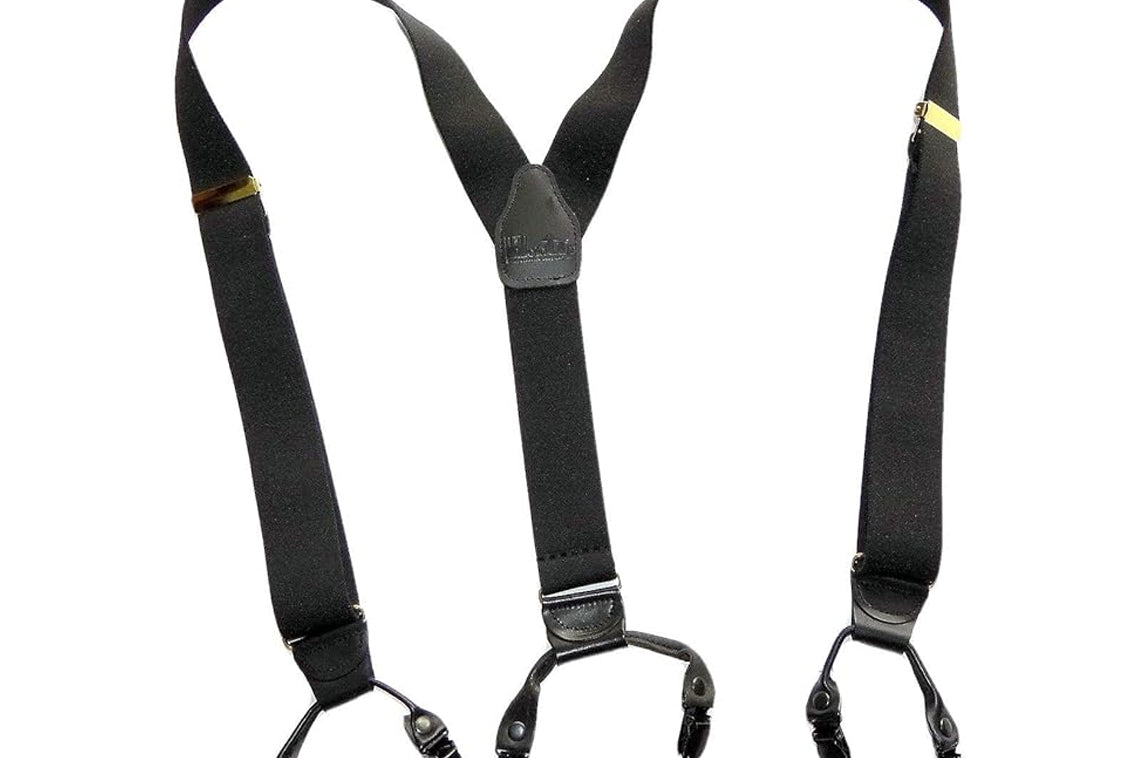
Y-back suspenders converge into a single strap at the center rear, which creates a clean, minimal back profile that sits flat and invisible under a suit jacket. The single convergence point reduces bulk and keeps the jacket lying smoothly across the back whether the wearer is sitting or standing. This is the correct configuration for formal and business-professional settings.
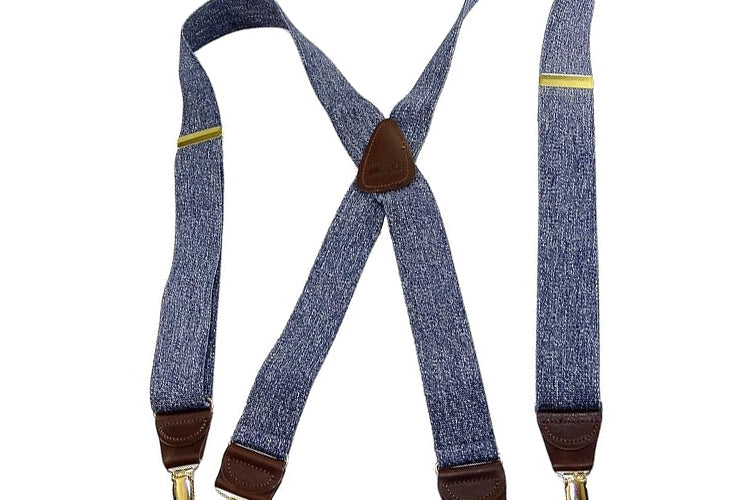
X-back suspenders cross between the shoulder blades and create four attachment points at the back. They distribute weight more evenly and provide better lateral stability during active movement, but they create more fabric at the back of the jacket and read as more utilitarian in professional environments. For a job interview where appearance is the priority and physical activity is minimal, Y-back is the cleaner and more appropriate choice.
Button Versus Clip Attachment for Interviews
This is the decision that most clearly separates a formal interview look from a casual one. Button attachment is the correct choice for an interview in almost every context.
Button-on suspenders fasten to small buttons sewn into the inside of the trouser waistband. There is no visible hardware at the waistband, no clip jaw to widen or shift during wear, and no mechanical component that draws the eye when the jacket briefly opens. The clean waistband that results is one of the visual signals that distinguishes properly tailored formalwear from assembled casualwear.
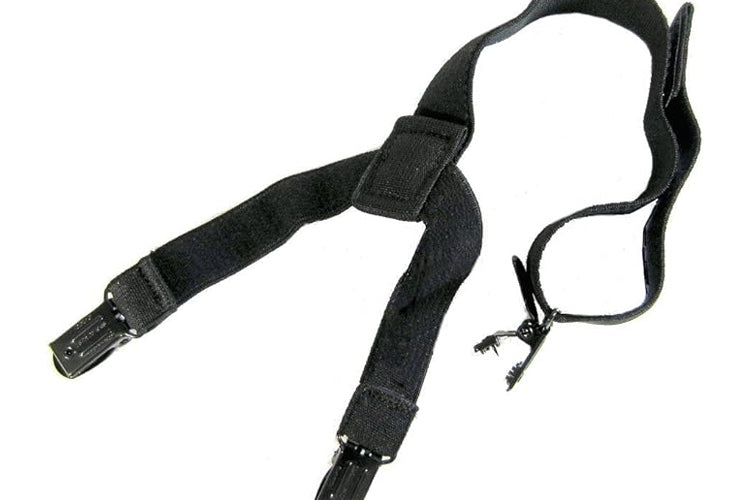
Clip-on suspenders are practical and work well for daily casual and smart-casual wear. In a formal interview context the exposed clip hardware, particularly if it is a basic jaw clip rather than a polished finish, introduces a note of informality that works against the rest of the outfit. The full comparison of button suspenders versus clip-on covers the specific contexts in which each type is appropriate and the tailoring process for adding buttons to existing trousers, which is simpler than most people expect.
Selecting the Right Color for Interview Suspenders
Color is the most visible decision in building a suspender interview outfit and it is the area where the most common mistakes are made. The governing principle is simple: the suspenders should complement the suit without drawing attention to themselves.
Tonal matching is the most reliable approach. Navy suspenders with a navy suit, charcoal suspenders with a charcoal suit, and black suspenders with a black suit all produce a clean, unified result where the suspenders are present but not prominent. This is the correct starting point for any interview context.
If the suspenders are not matched exactly to the suit, they should coordinate with the tie or pocket square rather than duplicating the suit color. Treating them as a secondary accent in the color story of the outfit rather than a primary element keeps them in the right visual role.
| Suit Color | Best Suspender Color | Shirt Color |
|---|---|---|
| Navy | Navy or dark burgundy | White or pale blue |
| Charcoal | Charcoal or black | White or light grey |
| Black | Black | White |
| Mid grey | Grey or navy | White or pale blue |
| Dark brown | Dark brown or burgundy | White or cream |
Avoid bright colors, bold patterns, novelty prints, and any combination that would cause an interviewer to comment on the suspenders rather than the candidate wearing them. The corporate series satin-finished suspenders in classic professional tones represent the correct product category for this context.

Choosing the Right Trousers
The trousers are the foundation the suspenders attach to, and getting this choice right removes a significant amount of fit and appearance difficulty from the rest of the process.
High-waisted trousers are the strongest pairing for interview suspenders. A higher waistline sits at the natural waist, gives the suspender straps a clean attachment point at the correct position, and prevents the trousers from being pulled upward or the shirt from being pulled out during the interview. Trousers without belt loops produce the cleanest result because there is no empty loop suggesting a forgotten belt. If belt loops are present, the absence of a belt should be deliberate and the loops should be neat and unobtrusive.
Wool or wool-blend fabric in a medium to heavy weight hangs cleanly and reads as professional. The structure of the fabric holds the trouser shape through a long day of sitting and standing in a way that lighter or more casual fabrics do not.
The guide on how to stop suspenders from digging into shoulders is worth reading before any extended formal wear occasion since shoulder comfort affects posture and presence throughout a long interview, both of which are visible.
Building the Complete Interview Outfit
Once the suspenders, trousers, and attachment method are confirmed, building the rest of the outfit around them follows a consistent set of principles. Start with the shirt and work outward.
A white dress shirt is the most reliable foundation for any interview combination involving suspenders. It works with every suit color, provides clean contrast against the suspenders, and requires no coordination effort. A pale blue shirt is the next most versatile option, particularly with navy or charcoal suits. Both shirt colors should be well-pressed with the collar sitting cleanly.
The suit should be fitted through the chest and shoulders without being tight across the back. The jacket length should cover the seat of the trousers. When the jacket is on and the shirt is tucked, the suspenders become invisible and the suit carries all the visual weight, which is exactly the correct result for an interview.
Here is the full coordination logic in a practical reference:
- Match suspenders tonally to the suit
- Coordinate the tie with the suspenders as a secondary accent rather than an exact match
- Keep the shirt in white or pale blue for maximum versatility
- Match the leather hardware on the suspender ends to the shoe color
- Silver hardware pairs with silver cufflinks and watch; gold hardware pairs with gold
Strap Width for Interview Wear
Width affects both the visual proportion of the outfit and the practical comfort of wearing suspenders through a long day of sitting and standing. For an interview context, a 1.25-inch strap width is the most appropriate standard choice.
This width is narrow enough to stay proportionate under a suit jacket without creating bulk at the shoulder, wide enough to hold the trouser position securely through extended sitting and standing, and visually traditional enough to align with the conservative aesthetic that interview settings require.
Narrower straps at around 0.75 to 1 inch create a very clean, minimal look that works well in creative or tech industry contexts where the dress code is smart-casual rather than formal. Wider straps above 1.5 inches carry associations with workwear and heavy-duty use that work against a formal interview setting. The guide on discreet suspenders as an alternative to belts covers how strap width and color combine to keep suspenders invisible in professional contexts.
Keeping Suspenders Hidden Under the Jacket
The jacket is what makes the whole interview outfit work. With the jacket on, the suspenders are doing their structural job invisibly while the suit carries the visual impression. With the jacket off, the suspenders become the focal point of the outfit, which is not the correct role for them in an interview setting.
Keep the jacket on throughout the interview. If the jacket must come off in a very warm environment, ensure the shirt is neatly tucked, the suspender straps are straight and free of any twisting, and the strap tension is even across both shoulders. The guide on low-profile clip-on suspenders for a professional look covers how to keep the look discreet in professional environments where the jacket is occasionally removed.
The goal throughout is that the suspenders support the outfit without anyone in the interview room spending time thinking about them. When that is achieved, the overall impression is one of precision, preparation, and considered personal presentation, which is exactly the message a strong interview outfit should send.
Frequently Asked Questions
Can suspenders be worn without a jacket to a job interview
Only in casual or creative workplaces where the dress code is genuinely relaxed. In those environments, visible suspenders with a collared shirt, well-fitted chinos or trousers, and clean shoes can work as a deliberate and considered choice. In any context where a suit jacket would be the norm, keeping the jacket on and the suspenders covered is the correct approach. Exposed suspenders in a conservative interview context shift the interviewer's attention from the candidate to the accessory, which is a distraction the outfit should not create.
How wide should suspenders be for a formal interview outfit
A width between 1 and 1.25 inches is the safest range for a formal interview. This is narrow enough to sit flat under a suit jacket without creating shoulder bulk, wide enough to hold the trouser position securely through extended sitting, and visually proportionate to the tailored scale of a formal suit. Narrower than 0.75 inches risks looking too delicate against a substantial suit fabric; wider than 1.5 inches reads as workwear rather than formalwear in a suit context.
Are colored suspenders ever appropriate for a job interview
Yes, in specific situations. Deep, muted accent colors like burgundy, dark navy against a charcoal suit, or dark forest green as a tonal accent can work when they are coordinated with the tie and kept away from bold saturation. The rule is that the color should function as a refined detail visible only on close inspection, not as an accent that registers from across the room. Any color that prompts a comment from the interviewer about the suspenders is too bold for the setting.
Can suspenders be worn with a vest for an interview
Yes. Wearing suspenders beneath a vest is one of the cleanest possible interview looks because the vest conceals the straps entirely while the button attachment remains functionally active underneath. The result is a polished three-piece aesthetic where the suspenders are fully invisible and doing their job perfectly. Ensure the vest fits close to the body without pulling and that the shirt is neatly tucked so the waistband remains clean beneath the vest hem.
Should suspender hardware match shoes at a job interview
Yes, always. The leather hardware on the suspender ends, whether in brown or black, should match the color family of your shoes and belt if one is present elsewhere in the outfit. Brown hardware with black shoes creates a mismatched note that signals inattention to detail, which is the opposite of the impression a well-executed interview outfit should create. Silver clasp hardware pairs with silver cufflinks and a silver watch case; gold pairs with gold. Consistency in metal tone across all accessories is one of the details that distinguishes a considered outfit from an assembled one.