

Cycling after dark is one of the most liberating experiences on two wheels , and one of the most dangerous. Studies from traffic safety organizations consistently show that cyclists are significantly harder for drivers to detect in low-light conditions, making visibility gear not just a preference, but a necessity. While most riders think about lights and vests, reflective suspenders for biking offer something most safety gear cannot: 360-degree upper-body visibility combined with the practical function of keeping your pants securely in place.
This guide covers everything you need to know , from how reflective suspenders work and what to look for, to when and why they outperform other visibility options.
Why Are Reflective Suspenders Effective for Cycling Safety?
Reflective suspenders work by incorporating retroreflective materials , typically silver-coated strips or woven reflective yarn , that bounce light directly back toward its source. When a car's headlights hit your suspenders, the light returns to the driver's eyes rather than scattering outward. This makes you appear dramatically brighter than someone wearing standard dark clothing.
What sets suspenders apart from other reflective accessories is placement. Because they run diagonally across your chest and back in an X or Y pattern, they create visible movement patterns as you pedal. Drivers process moving shapes faster than static reflective patches, meaning reflective suspenders register quicker in a driver's peripheral vision than a single reflector on the back of a seat post.
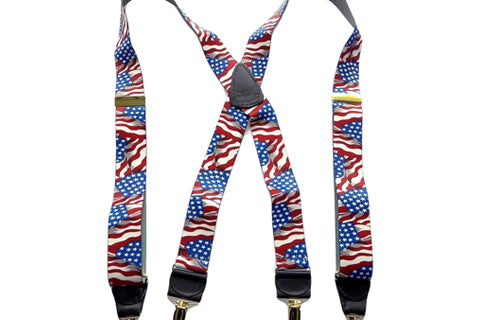
If you're already weighing your options across different types of suspenders, reflective cycling suspenders occupy a practical niche that combines workday functionality with after-dark safety performance.

What Should You Look for in Reflective Biking Suspenders?
For cycling, strap width directly affects two things: comfort under a backpack or jacket, and the surface area of reflective material visible to drivers. A 1.5-inch to 2-inch wide strap is the sweet spot , wide enough to distribute pressure evenly across your shoulders during longer rides, but not so bulky that it interferes with arm movement or layering.
HoldUp's Biker Series Suspenders use 2-inch wide straps built specifically for active wear, with strong no-slip clips that stay put through vibration, hills, and rough terrain , a common failure point with cheaper alternatives.
What Clip Type Works Best for Cyclists?
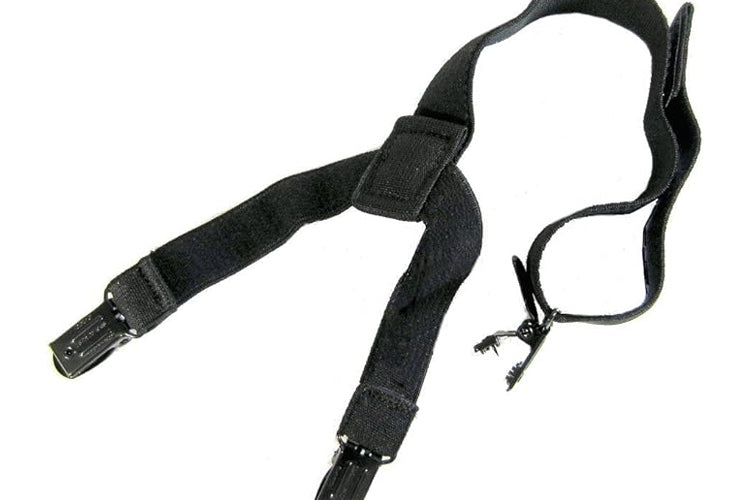
Standard trouser clips are fine for casual wear, but cycling puts repetitive stress on waistbands through pedaling motion. Look for heavy-duty gripper clamps or jumbo no-slip clips rather than lightweight alligator clips. The clip should grip through thick denim or cargo material without needing to be repositioned mid-ride. Poorly designed clips are the number one reason cyclists end up fidgeting with their suspenders rather than focusing on the road.
Does X-Back or Y-Back Design Matter for Biking?
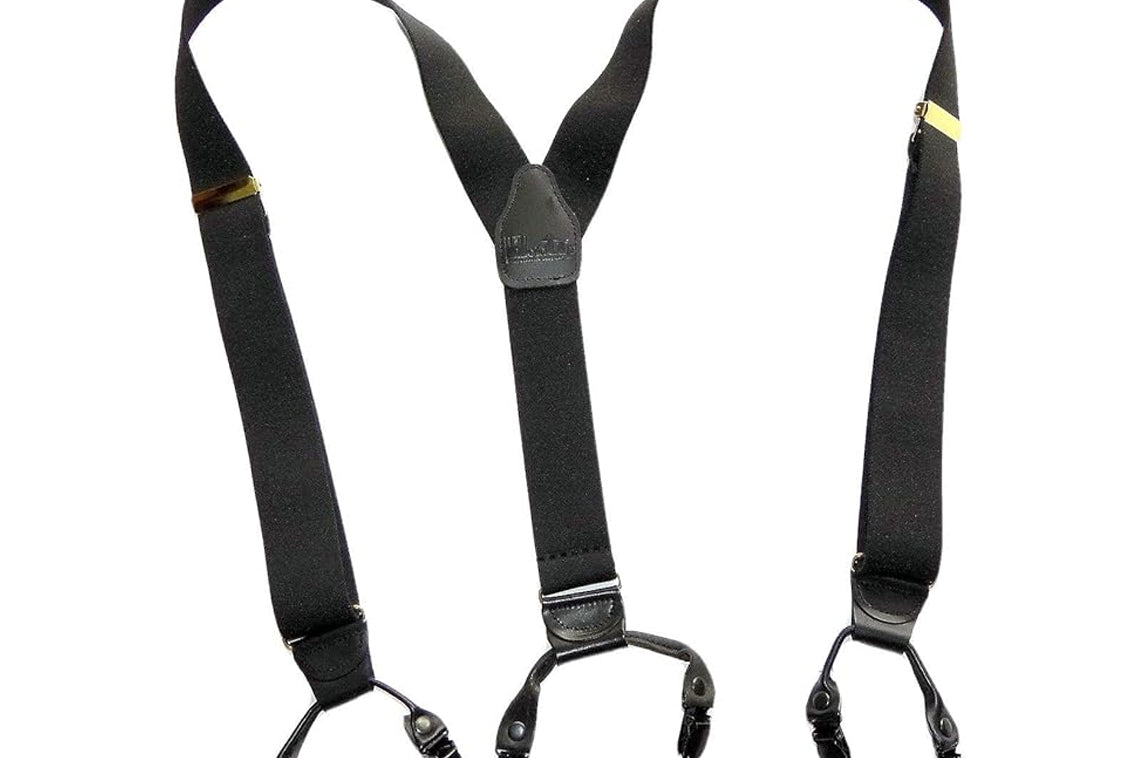
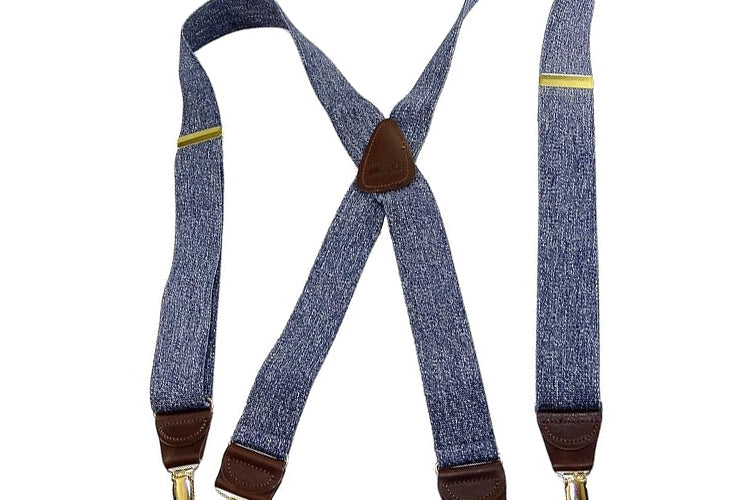
Both configurations work for cycling, but they perform differently in the saddle. X-back suspenders cross at the center of your back, distributing tension more evenly and staying stable when you lean forward in a cycling position. Y-back designs converge at a single point and can shift when you're bent over handlebars for extended periods. If you're doing long-distance riding or spending time in an aggressive riding position, X-back is generally the more secure choice.
What Materials Hold Up to Cycling Conditions?
The best cycling suspenders combine elastic and non-elastic elements strategically. Retroreflective front straps are typically non-stretch, which keeps the reflective material taut and angled correctly to maximize light return. Back panels use elastane or neoprene blends that stretch with your movements and recover their shape over time.
For material choice in general, elastic suspenders outperform leather options for active use , leather can crack and stiffen under exposure to sweat, rain, and temperature changes, while quality elastic maintains its grip and flexibility across seasons.
How Do Reflective Suspenders Compare to Other Cycling Visibility Gear?
Vests cover more surface area, which gives them a slight advantage in raw visibility during true blackout conditions. However, they trap heat, restrict airflow during intense effort, and can feel claustrophobic over layers. Reflective suspenders sit closer to the body, breathe more freely, and don't interfere with arm movement. Many serious cyclists combine both: a lightweight reflective vest for night commutes and suspenders as an always-on, low-effort safety layer for dusk and dawn rides.
Reflective Suspenders vs. LED Bands and Armbands
LED accessories generate active light rather than relying on headlights to activate them, making them visible even when there are no cars nearby. Their weakness is battery dependency , LEDs die at inconvenient times, especially in cold weather. Reflective suspenders require zero batteries and zero thought. They're passive protection that works every single time you step outside.
A smart approach is layering: reflective suspenders provide guaranteed passive visibility, while LED armbands or a rear bike light add active illumination as a supplement. Think of it the same way you'd approach waterproof outdoor gear , the passive layer is your foundation, active gear adds range.
Reflective Suspenders vs. Reflective Tape on the Bike
Reflective tape on a frame or wheels reflects light from a low position near the road surface. A driver scanning at eye level may miss it entirely. Reflective suspenders bring visibility up to torso and shoulder height , directly in a driver's natural sightline. Body-mounted reflectivity is consistently more effective for getting a driver's attention early enough to react.
Are Reflective Suspenders Only Useful for Night Riding?
No , and this is an underappreciated point. Overcast days, rain, fog, tunnel passages, and early morning commutes all reduce visibility well before full darkness sets in. High-visibility neon suspenders with reflective elements perform double duty: the bright color aids visibility in daylight and reduced-light conditions, while the reflective strips activate under headlights at night.
Cyclists who commute through changing conditions throughout the day benefit most from this dual-function design. This same principle applies to reflective suspenders used for hiking and other outdoor activities where you're sharing trails or roads with vehicles.

Key Features to Prioritize When Buying Reflective Biking Suspenders
Following are the key features to prioritize
-
Retroreflective material grade: Look for ANSI/ISEA 107 compliant reflective materials or products that reference certified retroreflective tape. Higher-grade reflective strips return more light at greater distances.
-
Adjustability range: Your suspenders need to fit properly in both your summer jersey and your winter jacket. A wide adjustment range , at least 36 to 54 inches , ensures they work regardless of layering.
-
Weather resistance: Cycling exposes your gear to sweat, rain, and humidity. Nylon webbing resists moisture better than polyester blends, and quality reflective coatings maintain their brightness even after repeated exposure to rain.
-
Clip security: Test whether the clips can hold onto your waistband through the full range of pedaling motion. Loose clips create a distraction and a safety risk. Heavy-duty gripper clamps , like those on HoldUp's work-grade suspenders , handle this far better than lightweight fashion clips.
-
Weight and packability: If you're commuting, you want suspenders you can fold into a jersey pocket or bag. Slim elastic designs pack down to almost nothing while still providing full visibility on the return ride.
How Do LED Suspenders Differ from Reflective-Only Models?
LED suspenders integrate battery-powered lights directly into the straps, typically in a strip or segmented bead format. They can be set to steady, slow flash, or rapid flash modes depending on conditions. The primary advantage is visibility independent of external light sources , on a completely unlit rural road with no approaching headlights, LED suspenders will still make you visible.
The tradeoffs are real, though. LED models are heavier, require charging or battery replacement, and the hardware adds thickness and rigidity to the strap. In cold weather, battery life drops significantly. For most urban and suburban cyclists, passive reflective suspenders paired with a good bike light system are more practical. For truly dark trail or rural road riding where active illumination matters, LED suspenders earn their place.
Reflective Suspenders as Part of a Complete Cycling Safety System
A front white light and rear red light mounted on your bike are the legal minimum in most regions and your highest-priority investment. Reflective suspenders add 360-degree upper body visibility that bike lights alone cannot provide, since lights only project in fixed directions. A properly fitted helmet , ideally with a rear LED , closes the gap at head level. High-visibility clothing or a reflective vest completes the picture for full-body coverage.
Suspenders contribute something uniquely valuable to this system: they sit at the center of your torso, creating a moving reflective signature that signals to drivers that they're approaching a human being, not just a stationary hazard. That motion recognition is a critical element of nighttime pedestrian and cyclist safety.
For those interested in how reflective suspenders extend beyond cycling, the same principles around visibility and durability apply to reflective gear for safety and fashion in everyday situations.
Frequently Asked Questions
Do reflective suspenders actually make a difference for cyclists at night?
Yes. Retroreflective materials can be visible to drivers from distances exceeding 1,000 feet under direct headlight illumination, compared to 200–400 feet for standard dark clothing. The cross-body placement on suspenders ensures the reflective surface is visible from both the front and rear , coverage that standard rear reflectors can't match.
Can I wear reflective suspenders over a jacket or under it?
You can wear them either way, but wearing them over your outer layer produces maximum visibility. Wearing them underneath a jacket conceals the reflective material, eliminating the safety benefit. For cold rides, consider a slim-fit reflective suspender design that layers cleanly over a cycling shell without adding bulk.
Are reflective suspenders suitable for mountain biking as well as road cycling?
Yes, provided the clip type matches the waistband of your riding pants or shorts. Heavy-duty gripper clamps work well for the wider waistbands on trail pants. For mountain biking specifically, X-back designs stay more stable through aggressive body movements and technical terrain than Y-back alternatives.
How do I clean reflective biking suspenders without damaging the reflective material?
Hand wash in cold water with mild detergent and air dry. Avoid machine washing with agitators, high-heat drying, and fabric softeners , these degrade reflective coatings over time. For best results, turn the suspenders over and wash the reflective side face-in.
What's the difference between hi-vis color and reflective material? Hi-vis (neon yellow,
orange, or green) is visible in daylight because it absorbs UV light and re-emits it as visible light , it appears to glow. Reflective material bounces light back at night when illuminated by a light source. The best cycling suspenders combine both: bright hi-vis color for daytime visibility and retroreflective strips for night performance.