

Choosing the correct police suspenders is pivotal to comfort and efficiency while on duty. Approximately 72.4% of police officers in the U.S. wear suspenders as part of their uniform, and 88.6% of officers report greater comfort when using suspenders compared to traditional belts alone. The right pair should carry the weight of your duty belt effortlessly, featuring adjustable straps, non-slip clips, and materials that hold up through demanding patrol shifts, foot pursuits, and the full range of physical activity that law enforcement duty demands. This guide covers everything a police officer or security professional needs to know: the best styles and attachment options, how to wear and adjust them correctly, material selection, complementary uniform clothing, and how to maintain your suspenders for maximum durability and safety.
When selecting police suspenders, prioritize comfort, durability, and functionality. Look for adjustable straps, heavy-duty clips or buttons, and wide shoulder support to evenly distribute the weight of your duty belt and gear.
Why Police Officers Wear Duty Belt Suspenders
The duty belt of a law enforcement officer carries substantial weight: holsters, handcuff cases, radio holders, baton rings, magazine pouches, and other equipment can collectively add significant load to the officer's hips and waist throughout a full patrol shift. Without suspenders, this weight presses continuously downward on the hips and lower back, contributing to fatigue, discomfort, and long-term musculoskeletal strain.
Police suspenders solve this by transferring a portion of the duty belt's load upward to the shoulders, distributing it more evenly across the upper body. Police suspenders reduce officer fatigue from belt weight by about 14.7%, and suspenders increase officer mobility by roughly 9.3% during active duty. These are not marginal improvements: over the course of a long patrol shift, reduced fatigue and improved mobility directly affect an officer's performance, reaction time, and safety. For a comprehensive look at how suspenders integrate with duty belt systems, our guide to duty belt use with suspenders covers the full setup in detail.
Best Suspenders for Police Officers: What to Look For
Not all suspenders meet the standard required for law enforcement duty. When evaluating options, several core features separate a reliable police suspender from a standard fashion accessory.
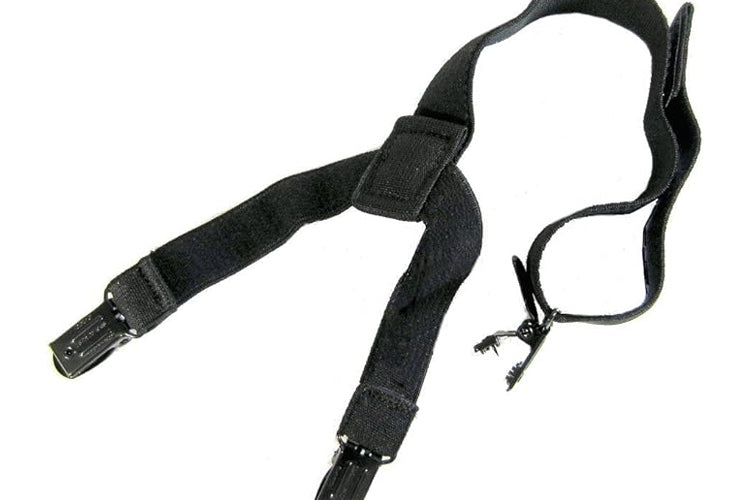
Non-slip clips are the most critical hardware feature. During a pursuit, a physical struggle, or any high-activity situation, the duty belt must stay in place. Clips that release under force or vibrate loose over the course of a shift create a safety risk and a practical inconvenience that officers cannot afford. Look for jumbo no-slip clips with a locking center pin design or gripper clasp technology that maintains its grip under sustained downward load without requiring constant readjustment. Adjustability is equally important: properly adjusted suspender straps ensure maximum comfort and functionality across the full range of physical activities an officer performs during a shift. Moisture-wicking materials are a meaningful consideration for officers working in different weather conditions or during physically demanding patrol work, as they help keep perspiration at bay and maintain comfort during extended wear. Around 31 police departments nationwide have adopted custom suspenders since 2022, confirming growing institutional recognition of their practical value.
Different Styles of Police Suspenders
Understanding the different styles of police suspenders helps officers find a pair that provides comfort while meeting the functional and uniform standards of their department. The two primary structural distinctions are back configuration and attachment method.
X-Back vs. Y-Back for Law Enforcement
X-back and Y-back are the two main back configurations, and each offers distinct advantages for law enforcement use. For a detailed breakdown of how these back design differences affect performance, the full guide covers every relevant scenario.
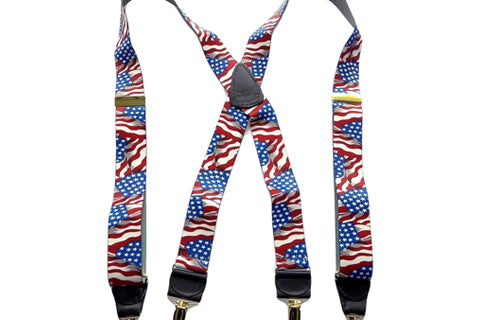
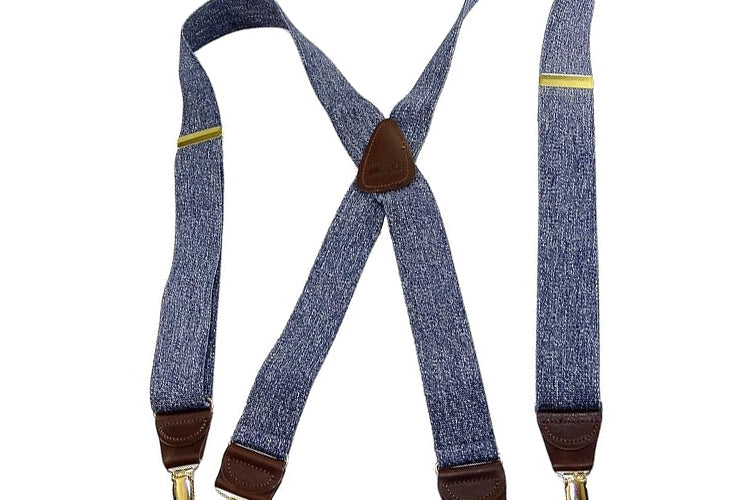
X-back suspenders are easily recognizable by the cross shape between the shoulder blades. This configuration provides superior balance in weight distribution and stays in place more effectively during physically demanding tasks, which is particularly advantageous for police officers who require extra support and stability during pursuits, takedowns, and active enforcement activities. The diagonal crossing of the straps creates a harness-like structure that resists shifting during movement in every direction.

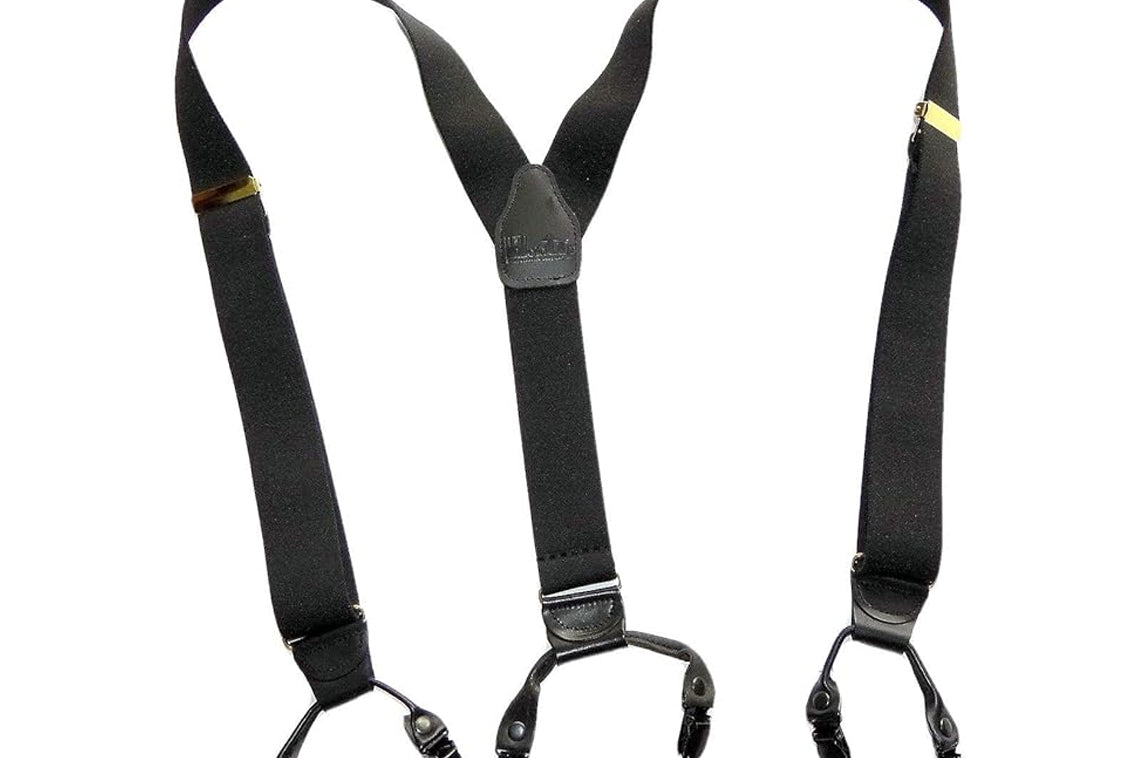
Y-back suspenders have a single attachment point at the back, offering a sleeker, more modern appearance and enhanced comfort during extended seated patrol. The simpler back profile sits more naturally under a uniform shirt or tactical vest without creating bulk between the shoulder blades. Y-back styles have emerged as a popular choice among law enforcement professionals who prioritize comfort and a streamlined uniform appearance alongside functional support.

Clip-On vs. Button-On for Police Duty Use
The attachment method is a critical decision that affects both how the suspenders function with your duty belt and what appearance standard they meet within your department's uniform regulations.
Clip-on suspenders provide greater versatility, allowing for quick and effortless attachment to duty belts and trouser waistbands. This facilitates convenience in fast-paced law enforcement environments where there may be a need to change or adjust suspender placement without relying on specific trouser styles that accommodate button attachments. For officers who need to fasten and unfasten their suspenders quickly, clip-on designs with smooth release mechanisms are the practical standard choice.

Button-on suspenders deliver a more formal, regulation appearance while ensuring a secure connection with trousers through dedicated buttons sewn into the waistband. For police officers who value a traditional and regulation-standard appearance in their uniform ensemble, button-on suspenders offer a polished, professional look that clip-on styles cannot fully replicate. Departments with strict uniform standards often prefer button-on attachments for their cleaner, hardware-free trouser appearance. The full tactical application of both styles is covered in our comprehensive tactical suspenders guide.
Guidelines on Wearing Police Suspenders
Proper positioning and wear technique are as important as the quality of the suspenders themselves. Incorrectly worn police suspenders reduce the functional benefit of the accessory and can create their own discomfort or safety concerns.
Begin by wearing the suspenders over your shoulders and adjusting them to lay flat against your chest and back without twisting or bunching. Even distribution across both shoulders is the goal: the suspenders should carry load symmetrically, preventing the duty belt from tilting or creating uneven hip pressure. Avoid overstretching the straps. They should fit comfortably without being too loose or too tight. Overstretching not only shortens the lifespan of the elastic but also reduces the functional tension that keeps the duty belt at the correct height throughout the shift. Ill-fitted suspenders result in an unbalanced belt, which leads to unnecessary hip and back strain that accumulates over a long patrol.
Adjusting Your Suspenders for Maximum Comfort
The ultimate goal of wearing police suspenders is to increase comfort and functional performance while on duty. Correct adjustment of both strap length and clip tension makes a measurable difference in physical wellbeing and professional effectiveness across a full shift.
Strap Length
Adjust the length of the straps so that the suspenders sit comfortably on your shoulders without digging in or pinching. If they are too loose, the suspenders will not provide adequate support for the duty belt. If they are too tight, they restrict movement and create shoulder fatigue. Stand in front of a mirror with your duty belt and all gear loaded and adjust the straps until they comfortably lift the back of your duty belt to the correct height on your hips. The test is simple: you should be able to slip two fingers beneath the strap at the shoulder without the strap lifting away from your body.
Clip Tension
Suspenders with clips need just the right grip tension: strong enough to securely hold onto the duty belt under active use, but not so aggressive that they cause discomfort at the attachment points. Clips that are too loose allow the duty belt to shift and require constant readjustment throughout the shift. Clips that are too tight can create wear on the belt fabric over time and dig into the waistline during extended seated wear. Test different settings with your full gear loaded and find the balance that provides security of hold without any sensation of restriction or pressure at the clip contact points.
Adjustment Checklist for Police Officers
| Adjustment Point | Correct Setting | Problem if Wrong |
|---|---|---|
| Strap length | Flat across shoulders, duty belt at natural hip height | Too tight: restricts movement. Too loose: belt sags |
| Clip tension | Secure grip without digging into waistband fabric | Too loose: belt shifts. Too tight: fabric wear and discomfort |
| Front attachment position | Centered on duty belt for even balance | Off-center: belt tilts and creates uneven hip load |
| Back attachment position | Centered at rear of duty belt | Off-center: weight pulls asymmetrically on spine |
Selecting the Right Material: Leather vs. Fabric
The material choice in police suspenders affects durability, comfort across different conditions, and how the suspenders hold up across the full regulation lifespan of the gear.
Leather suspenders offer a classic, professional appearance and exceptional durability. They are particularly suited to formal uniform contexts, court appearances, and ceremonial duties where a sleek, put-together look is required. Leather is more resistant to wear and tear than fabric over the long term, and full-grain or bonded leather police suspenders develop character with use rather than degrading. The practical trade-off is stiffness: leather is less flexible than fabric and can be uncomfortable in hot conditions or during extended physical activity.

Fabric suspenders are typically lightweight, moisture-wicking, and flexible. These properties make them the preferred choice for active patrol in warm or humid conditions, where breathability and freedom of movement are the priority. Modern fabric suspenders use polyester or nylon blends that retain their elasticity and structural integrity through repeated use and washing. For officers in standard patrol roles who spend most of their shift on foot or in vehicles, fabric suspenders with jumbo no-slip clips provide the optimal combination of comfort, durability, and practical performance.
Properly Attaching Suspenders to Your Duty Belt
Correct attachment of police suspenders to the duty belt is vital for both safety and functionality. Improper attachment creates asymmetric load distribution that accelerates fatigue, and in extreme cases, a poorly attached suspender can release under load at a critical moment.
Attach the suspenders to the duty belt at both the front and back for optimal weight distribution. The front attachment point should be centered on the duty belt to maintain lateral balance, and the back attachment should also be centered on the rear of the belt. These balanced attachment points prevent the belt from tilting in any direction during movement, providing consistent stability throughout active patrol. When securing the clips or buttons, follow the manufacturer's attachment guidelines to ensure the mechanism is fully engaged. Test the attachment by applying downward pressure before starting the shift, confirming that both front and back attachment points hold securely. For officers with duty belts that have integrated attachment points or Velcro loops specifically designed for suspender use, use those dedicated points rather than improvising on the standard belt loops or edge fabric.
Complementary Clothing with Police Suspenders
Maintaining a professional uniform appearance while ensuring functionality is a standard requirement for law enforcement officers. Selecting the right clothing to complement your police suspenders preserves both the aesthetic integrity of the uniform and the practical performance of the suspenders.
Choosing Tactical Pants or Duty Trousers
Tactical pants designed for law enforcement and security professionals are the natural pairing for police suspenders. Purpose-built tactical pants feature reinforced stitching for durability during physically demanding tasks, multiple pockets for essential gear and equipment, flexibility for swift movement during enforcement operations, and attachment points specifically designed for integrating with suspenders. Duty trousers for law enforcement are tailored to provide comfort and professionalism across extended shifts while preserving a regulation uniform appearance. The inclusion of interior suspender attachment buttons or loops allows for a clean, secure connection that keeps the suspenders properly positioned throughout the shift.
Color and Material Considerations
Black or navy tactical pants and duty trousers align best with the formal nature of most law enforcement uniform standards. Selecting durable, water-resistant materials ensures clothing can withstand the physical and environmental demands of active patrol. A well-fitted pair of tactical pants enhances the overall professionalism of the uniform and works in coordination with properly adjusted suspenders to create a complete, functional, and regulation-standard duty outfit. For a comprehensive selection of suspenders compatible with police and security duty belt systems, explore the full range at Holdup Suspenders.
Maintenance and Care for Police Suspenders
Proper maintenance ensures that your police suspenders perform reliably across the full intended service life and that the safety-critical clip and attachment mechanisms remain fully functional throughout active duty use. The same principles that apply to washing and maintaining work suspenders apply equally to police duty suspenders.
For fabric and elastic police suspenders, hand wash in cool water with mild detergent after heavy use or exposure to sweat, dirt, or moisture. Lay flat to air dry: never machine dry, as sustained heat degrades the polyester or nylon elastic fibers and causes permanent reduction in strap tension. After each wash, test all clips by opening and closing them several times to ensure the spring mechanism is functioning cleanly and the grip strength has not been affected by water exposure or debris. For leather police suspenders, wipe down after each shift with a dry cloth to remove surface oils and dirt. Apply leather conditioner periodically to prevent drying and cracking, particularly if the suspenders are exposed to temperature extremes or prolonged moisture during outdoor patrol. Inspect reinforced stitching at the clip attachment points and back junction at regular intervals. These are the highest-stress locations on a loaded duty belt suspender pair. Early fraying at these points signals the need for replacement before a complete failure occurs during active use.
Frequently Asked Questions
Below are the most common questions police officers and law enforcement personnel have about duty belt suspenders.
What is a police suspender?
A police suspender is a set of adjustable shoulder straps designed specifically to help support the weight of a law enforcement duty belt and its associated equipment, including holsters, handcuff cases, radio holders, and other accessories. By distributing a portion of the duty belt's load upward to the shoulders, police suspenders reduce the pressure on an officer's hips, waist, and lower back during extended patrol shifts. Approximately 72.4% of police officers in the U.S. wear suspenders as part of their uniform, and 88.6% report greater comfort compared to traditional belts alone.
Why do police officers wear suspenders?
Police officers wear suspenders to distribute the weight of their fully loaded duty belts more evenly across the body, reducing hip and lower back strain during long patrol shifts. Police suspenders reduce officer fatigue from belt weight by about 14.7% and increase mobility by roughly 9.3% during active duty. Beyond the ergonomic benefit, properly fitted suspenders keep the duty belt at the correct height and prevent it from shifting during physically demanding activities such as pursuits, searches, and enforcement operations.
What materials are police suspenders made from?
Police suspenders are made from two primary materials: leather and fabric. Leather provides exceptional durability and a professional, formal appearance suited to ceremonial duties and court appearances. Fabric suspenders, typically made from polyester or nylon blends with moisture-wicking properties, are preferred for active patrol in warm or humid conditions due to their flexibility and breathability. Both types use heavy-duty metal or composite clip hardware with no-slip mechanisms designed to hold the duty belt securely under active load conditions.
How do you properly wear police suspenders on duty?
Put on the duty belt first at the correct hip position, then put on the suspenders over your shoulders. Attach the clips or buttons to both the front and back of the duty belt centered at each attachment point for even balance. Adjust the strap length until the straps lay flat across your shoulders without twisting, the duty belt sits at the correct height, and the straps do not dig into your shoulders. Test the fit by bending, sitting, and reaching to confirm full freedom of movement without the belt shifting or the straps creating any pressure.
Are police suspenders adjustable for different body types?
Yes. Quality police suspenders feature fully adjustable strap lengths that accommodate a wide range of torso heights and body proportions. Most standard police duty suspenders adjust to fit officers from approximately 5'0" to 6'2" and are available in extended sizes for taller officers. Both straps can typically be adjusted independently, which allows for fine-tuning if one shoulder requires a slightly different length for balance or comfort.
What is the difference between X-back and Y-back police suspenders?
X-back suspenders cross between the shoulder blades, providing superior load distribution across both shoulders simultaneously and staying more securely in place during physically demanding enforcement activities. Y-back suspenders converge at a single central point at the back, offering a sleeker profile and enhanced comfort during extended seated patrol. X-back styles are generally preferred for active duty and situations requiring maximum physical stability, while Y-back styles are popular among officers who prioritize comfort during vehicle patrol and a cleaner uniform appearance.
Can police suspenders hold heavy equipment?
Yes. Heavy-duty police suspenders with wide straps and no-slip jumbo clips are specifically engineered to support the combined weight of a fully loaded duty belt and its accessories. The no-slip clip mechanism maintains its grip under sustained downward load, and the wide strap distribution prevents the weight from concentrating at a single shoulder point. For officers carrying particularly heavy duty belts, X-back suspenders provide the strongest and most stable load distribution configuration.
How do I clean and maintain police suspenders?
For fabric police suspenders, hand wash in cool water with mild detergent and lay flat to air dry. Never machine dry. Test all clips after washing to confirm the spring mechanism is still gripping cleanly. For leather police suspenders, wipe down after each shift with a dry cloth and apply leather conditioner periodically. Inspect reinforced stitching at clip attachment points and the back junction regularly, and replace the suspenders when visible fraying appears at any stress point before a failure occurs during active duty use.
Are police suspenders regulation standard for most departments?
Requirements vary by department and jurisdiction. Approximately 72.4% of police officers in the U.S. wear suspenders as part of their uniform, and around 31 police departments nationwide have adopted custom suspenders since 2022. Some departments specify a particular style, color, or attachment method as part of the official uniform standard. Officers should check their department's specific uniform regulations before purchasing and ensure the color, width, and clip type of the suspenders they select comply with the applicable dress code standard.
Where can I buy police suspenders?
Police suspenders are available from dedicated law enforcement gear suppliers, tactical clothing retailers, and specialist suspender brands. For a full range of duty belt suspenders including X-back and Y-back configurations, various clip options, and materials suited to law enforcement use, the complete collection is available at Holdup Suspenders. When purchasing, look specifically for suspenders rated for duty belt use with no-slip clip technology, wide strap options for heavy load support, and adjustability across a broad height range.