

A tuxedo represents the pinnacle of classic elegance in men's formal attire. While the jacket and trousers receive most of the attention, it is the small details that truly complete the ensemble and set one gentleman apart from another. Suspenders, also known as braces, are among the most distinguished of those details. They add a vintage, refined quality to a tuxedo look that a belt cannot replicate, and they ensure the tuxedo pants stay in exactly the right position throughout the evening.
Around 72.8% of formalwear experts recommend Y-back style suspenders for tuxedos for better support and visual line, and 87.9% of tuxedo wearers match their suspenders with their bow tie color for a cohesive, polished result. Whether you are attending a wedding, gala, charity dinner, or black-tie event, understanding how to choose, attach, adjust, and style tuxedo suspenders correctly gives you the confidence to wear them as the statement accessory they are designed to be.

Why Choose Suspenders for Your Tuxedo?
Suspenders are more than a functional accessory for a tuxedo: they are a deliberate style choice that elevates the entire look. A well-fitted belt interrupts the clean vertical silhouette that a tuxedo jacket and trousers create together, while suspenders enhance it. With no hardware visible at the waistband, the trouser line remains smooth and unbroken from the chest down, which is exactly the effect that formal suiting is designed to achieve.
Suspenders also eliminate the risk of a sagging waistband. Tuxedo trousers are typically cut with a higher rise and a fuller seat than standard suit pants, and they rely on suspension from above rather than compression from a belt to maintain their shape. By choosing suspenders for your tuxedo, you ensure the trousers sit exactly where the tailor intended them to throughout the full length of the event.
Nearly 54.3% of men wear suspenders specifically to keep their tuxedo pants at the natural waistline, which confirms that this is not merely a style preference but a practical one too. For a detailed breakdown of the key rules and etiquette of wearing suspenders with a tuxedo, the full dos and don'ts guide covers every scenario.
Types of Tuxedo Suspenders
Understanding the different types of tuxedo suspenders helps you choose the right pair for your specific occasion, tuxedo style, and personal preference.
Y-Back vs. X-Back Tuxedo Suspenders
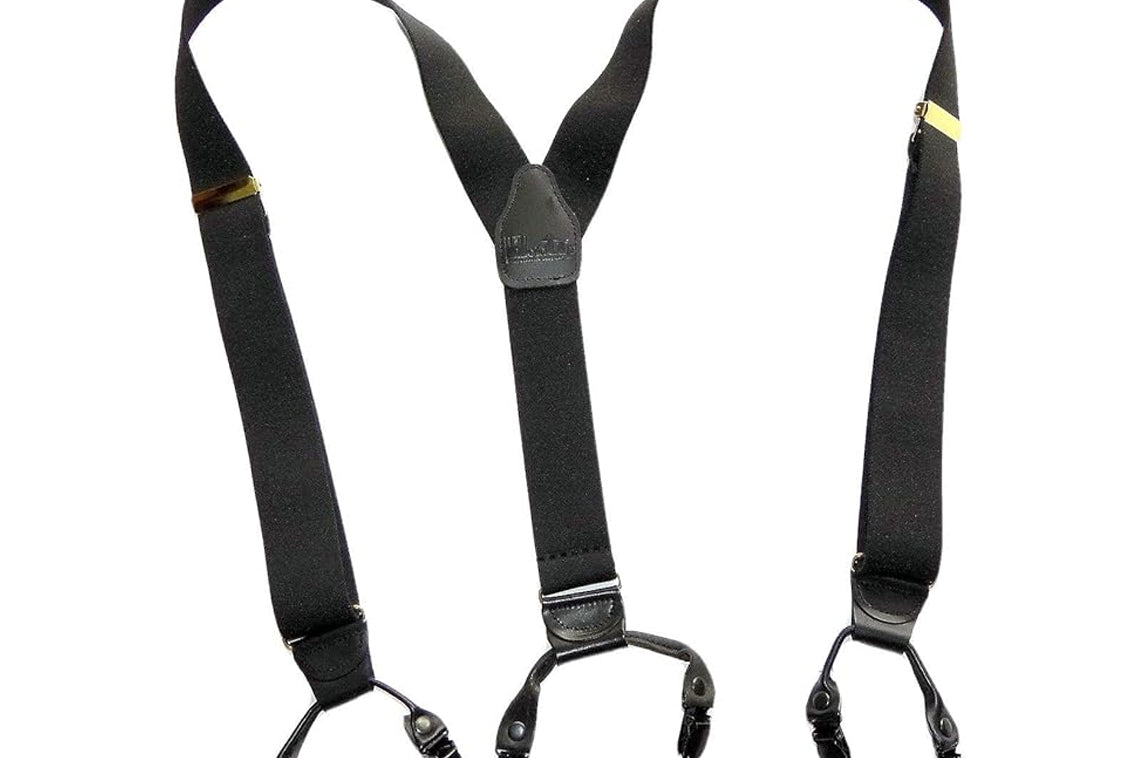
Y-back suspenders converge to a single central strap at the back, creating a cleaner, more streamlined silhouette under the jacket. They are the preferred style for formal occasions and are recommended by 72.8% of formalwear experts for tuxedo wear. X-back suspenders cross in the center of the back, distributing weight more evenly across both shoulders and providing additional support for heavier tuxedo trousers. Both configurations work for tuxedos, though Y-back is the more traditional and widely recommended choice for black-tie events. Our full range of satin-finish tuxedo suspenders in X-back and Y-back styles covers both configurations.
Button-On Tuxedo Suspenders
Button-on suspenders attach to small buttons sewn inside the waistband of tuxedo trousers, leaving no visible hardware on the outside of the pants. This creates the cleanest possible silhouette: smooth, elegant, and completely hardware-free at the waistband. Button-on braces are the correct choice for black tie events and any formal occasion where impeccable detail matters. They require tuxedo pants with interior suspender buttons already installed, or a tailor can add them in a single appointment. The trouser suspender buttons are typically positioned at two points at the front of the waistband and three across the back.
Clip-On Tuxedo Suspenders
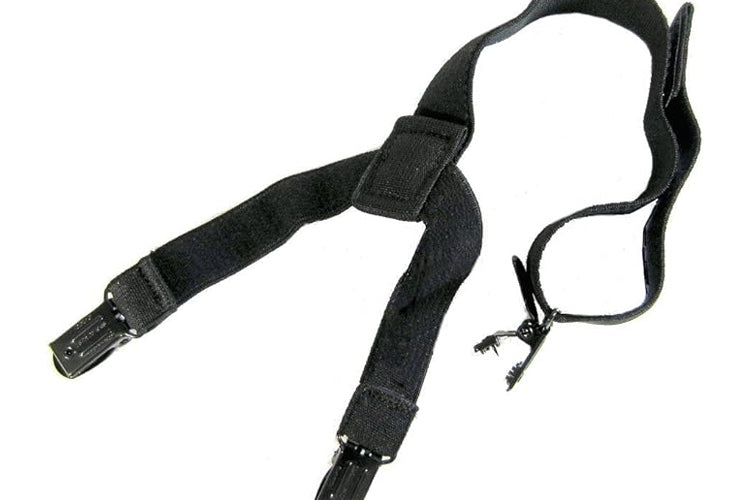
Clip-on suspenders attach directly to the waistband of tuxedo pants using metal clips, making them compatible with any pair of dress pants without modification. About 62.4% of men prefer clip-on suspenders for tuxedos over button-on styles, largely due to convenience. While clip-ons are less refined in the strictest sense of formalwear etiquette, high-quality satin clip-on suspenders in Y-back can still look impeccable when the jacket is kept closed throughout the event. For more detail on whether clip-on suspenders are appropriate for a formal tuxedo, the full guide covers the specific situations where each attachment method is the better choice.
Choosing the Right Tuxedo Suspenders

Material: Satin, Silk, and Grosgrain
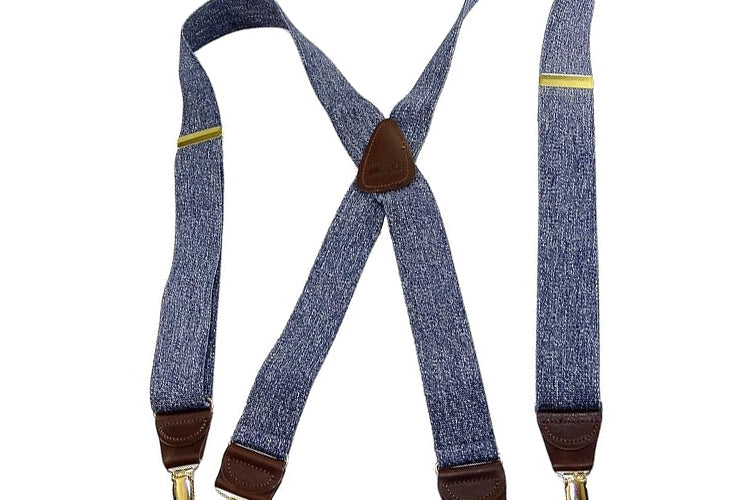
The material of your tuxedo suspenders should match the formality and fabric weight of the tuxedo itself. Satin-finish suspenders are the most popular choice for formal wear: they carry a subtle sheen that coordinates naturally with the satin lapels and trouser stripe of a classic tuxedo. Silk suspenders offer a slightly richer, more refined drape that pairs beautifully with fine wool or mohair tuxedo fabric. Grosgrain suspenders, with their ribbed texture, provide a slightly more matte finish that works well with worsted wool tuxedos where the satin sheen of the other options might feel excessive. Avoid elastic or fabric suspenders for formal tuxedo wear: they read as too casual for the context and undermine the overall effect of the black-tie attire.
Color Selection
Black suspenders are the most traditional and widely appropriate choice for a classic black tuxedo. Black satin suspenders with black satin bow tie and matching cummerbund create the most cohesive and formal result. For a white or ivory tuxedo, white or cream suspenders provide the correct tonal coordination. Navy suspenders offer a sophisticated alternative to black for navy tuxedos, while burgundy or deep red suspenders work well as a refined accent in less strictly formal contexts such as wedding receptions or gala dinners. As a general rule, the suspender color should either match the bow tie or pick up one secondary color in the overall outfit rather than introducing an unrelated palette.
Width
For tuxedos, suspender width of around one inch is the most refined and appropriate choice. Wider suspenders over 1.5 inches introduce a more workwear or vintage aesthetic that does not align with the clean, modern formality of a contemporary tuxedo. Narrower suspenders of 0.75 to one inch provide the sleek, understated look that allows the tuxedo jacket, bow tie, and other formal details to remain the primary visual elements. On average, tuxedo suspenders are adjusted to a length of 45.7 inches for an optimal fit across a standard adult male torso.
How to Attach Suspenders to Tuxedo Pants
Correct attachment is essential for the look and function of tuxedo suspenders. Both clip-on and button-on styles require specific placement to maintain the clean silhouette that formal wear demands.
Attaching Button-On Suspenders
Begin with the back of the suspenders. Hold the suspenders with the back strap or junction facing outward and loop the back button holes over the corresponding buttons inside the back waistband of the tuxedo pants. The standard back placement for tuxedo pants is three buttons evenly spaced across the back waistband. Once the back is secured, bring the two front straps up over your shoulders and fasten the front button loops over the two front waistband buttons, one on each side. The suspender buttons are positioned on the inside of the waistband, ensuring no hardware is visible from the outside of the tuxedo pants.
Attaching Clip-On Suspenders
Clip the back clips to the inside edge of the tuxedo trouser waistband at the center back or at two evenly spaced points on each side of the back seam, depending on the suspender configuration. For the front, position the clips at roughly the two and ten o'clock positions on the inside waistband edge, one on each side of the trouser fly. Never clip onto belt loops: the clips should grip the waistband fabric directly. For tuxedo trousers with both belt loops and interior waistband access, our guide on styling cummerbunds and suspenders together explains how to coordinate both elements for a complete black-tie look.
Adjusting Suspenders for Comfort and Fit
Proper adjustment is what separates a polished tuxedo suspender look from one that appears awkward or uncomfortable. The goal is precise, even tension that holds the tuxedo pants at the correct position on the torso without creating shoulder strain or visible pulling through the jacket fabric.
Setting the Correct Length
Use the adjuster slides on each strap to set the length. On average, tuxedo suspenders sit best at approximately 45.7 inches of total length, though this varies with torso height. The straps should rest flat across the shoulders without digging in or creating ridge marks through the tuxedo shirt. The tuxedo pants should sit at the natural waist, just above the hip bone, without being pulled uncomfortably high. Slide two fingers beneath the strap at the shoulder point: if you cannot fit them, the straps are too tight. If the strap lifts away from the shoulder easily, shorten them slightly.
Keeping the Adjuster Hidden
The metal adjuster slider should sit at mid-torso, between the chest and the waist, so it remains completely concealed above the buttoned jacket. If the slider is visible above the jacket lapel or creates a noticeable bump through the tuxedo shirt fabric, readjust its position downward along the strap before the event. In a correctly fitted tuxedo jacket, the suspenders, their hardware, and the adjuster slides should be entirely invisible when the jacket is buttoned.
Pairing Tuxedo Suspenders with Your Shirt
The tuxedo shirt forms the visible backdrop for the suspenders when the jacket is open, so its relationship with the braces matters both aesthetically and functionally.

Always tuck the tuxedo shirt fully before attaching the suspenders. A loose or partially untucked shirt bunches over the tuxedo pants waistband, disrupting the clean line that suspenders are meant to create. For formal tuxedo occasions, a white dress shirt with studs, a spread or wingtip collar, and French cuffs is the standard pairing. The shirt's structure should be firm enough to support the suspenders without bunching or pulling at the front of the torso. If your tuxedo shirt uses a pleated bib front, ensure the suspender straps sit smoothly over the pleats rather than creating lateral tension that compresses the bib.
Matching Suspenders with Bow Ties and Accessories
87.9% of tuxedo wearers match their suspenders with their bow tie color, and this coordination is the single most important accessory decision in the full tuxedo suspender look. The bow tie and suspenders occupy the same visual field when the jacket is open, and both are visible in photographs even when the jacket is on. A cohesive relationship between these two elements communicates that the outfit was assembled with care and intention.

Bow Tie and Suspender Coordination
For a classic black tuxedo, match black satin suspenders with a black satin bow tie. For a navy tuxedo, navy suspenders with a navy or midnight blue bow tie create a tonal elegance. For a more personality-driven look at a wedding or gala, burgundy suspenders matched with a burgundy bow tie add warmth and character while remaining well within formal dress conventions. The bow tie and suspenders need not be identical in fabric or finish: a satin bow tie with a grosgrain suspender in the same color creates a sophisticated contrast of texture rather than a flat matchy-matchy effect. For a full guide on coordinating tuxedo suspenders with your bow tie and cummerbund, the complete matching guide covers every color and fabric combination.
Pocket Square and Cufflinks
A white pocket square in a classic fold coordinates with any suspender color and maintains the formality of the black-tie look. Patterned pocket squares that pick up the color of the suspenders can create an intentional thread of color through the outfit, connecting the braces at the torso to the pocket at the chest visually. Cufflinks should complement the overall metal tones in the outfit: gold clips or hardware on the suspenders coordinate with gold cufflinks, while silver hardware pairs with silver or rhodium-plated cufflinks.

Footwear with Tuxedo Suspenders
Shoes for black-tie occasions with tuxedo suspenders should be patent leather Oxford shoes in black. The high-shine finish of patent leather coordinates with the subtle sheen of satin or silk suspenders and maintains the overall formality of the ensemble. For less strictly black-tie contexts such as wedding receptions or smart formal events, polished cap-toe Oxfords in black patent or high-gloss leather are the correct alternative. Avoid suede, casual leather, or any shoe with heavy texture or casual detailing when wearing full tuxedo attire with suspenders.
Tuxedo Suspenders for Weddings and Groomsmen
Weddings are one of the most common contexts for tuxedo suspenders, and coordinating them across a wedding party requires a slightly different approach than dressing for a solo formal event.

For a groom wearing suspenders, the most formal choice is button-on silk or satin braces in black or a color that coordinates with the wedding palette. For groomsmen, matching the suspender color across the party creates a cohesive visual effect in photographs and during the ceremony. Clip-on suspenders are a practical choice for a large groomsmen group, as they require no trouser modification and can be attached quickly and consistently across multiple people. For guidance specifically on styling groomsmen suspenders for a wedding, the complete wedding suspender guide covers coordinating color palettes, attachment methods, and photography considerations for the full wedding party.
Styling Tips for Tuxedo Suspenders

Keep It Classic for Black Tie
For traditional black-tie events, black suspenders with a black tuxedo and a black bow tie remain the most correct and enduring choice. This pairing creates a seamlessly cohesive formal look that never reads as overdone or experimental. White suspenders with a white tuxedo follow the same logic: a clean, tonal result that prioritizes elegance over personality. Classic styling for formal wear always favors restraint.
Add Subtle Color for Less Formal Events
For gala dinners, wedding receptions, and events that are formal but not strictly black tie, introducing a subtle color through your suspenders adds personal character without breaking dress code conventions. Navy, burgundy, or deep forest green suspenders paired with a classic black tuxedo jacket and matching bow tie create a sophisticated variation on the standard formula. The tuxedo jacket and trousers remain the frame; the suspenders and bow tie provide the personality.
Satin and Silk for Maximum Formality
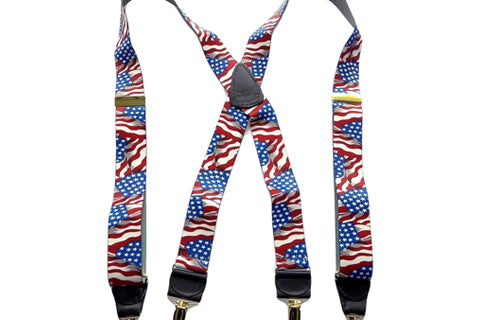
Satin and silk fabrics are the most appropriate for tuxedo suspenders at formal events. They carry a polished sheen that coordinates naturally with the satin lapels of a classic tuxedo jacket and add a luxurious, intentional quality to the overall ensemble. Avoid novelty prints, casual patterns, or overly decorative designs for strictly formal occasions: the power of tuxedo suspenders lies in their refined simplicity rather than their visual complexity.
The Vest or Waistcoat Option
When wearing a three-piece tuxedo with a vest or waistcoat, the suspenders are hidden entirely beneath the vest throughout the event. In this configuration, the primary benefit of suspenders is functional rather than visual: they keep the tuxedo pants perfectly positioned and prevent the shirt from becoming untucked under the vest during a long evening. If wearing a vest, choose button-on suspenders for the cleanest result, as there is no need for clip hardware to be accessible and no aesthetic benefit to clip-on attachment in this context.
Do's and Don'ts of Wearing Tuxedo Suspenders
Do's
- Always remove the belt when wearing suspenders: never combine both accessories.
- Tuck the shirt fully before attaching the suspenders and keep it tucked throughout the event.
- Coordinate your suspender color with your bow tie for a cohesive formal look.
- Adjust both straps to the same tension and check in a mirror from front and back before the event.
- Keep the jacket buttoned during formal parts of the event to maintain the most polished silhouette.
- Choose satin or silk suspenders for black-tie occasions to match the fabric formality of the tuxedo.
Don'ts
- Do not wear both a belt and suspenders simultaneously: it is redundant and disrupts the trouser line.
- Do not allow the adjuster slides to sit above the jacket lapel line: they should remain hidden when the jacket is on.
- Do not choose casual fabric or elastic suspenders for a formal tuxedo: the material mismatch undermines the overall look.
- Do not overload the color palette: suspenders, bow tie, and pocket square should coordinate rather than compete.
- Do not clip suspenders onto belt loops: attach them to the waistband fabric directly for secure, damage-free hold.
Common Mistakes to Avoid
Wearing Belt and Suspenders Together
The most common and most visible tuxedo suspender mistake is wearing both a belt and suspenders at the same time. This creates visual redundancy, disrupts the clean waistband silhouette, and signals a fundamental misunderstanding of how both accessories function. When you choose suspenders for a tuxedo, remove the belt entirely.
Incorrect Strap Tension
Over-tightened straps pull the tuxedo pants too high, create visible shoulder tension through the jacket, and cause discomfort during a long evening. Under-tightened straps allow the pants to sag and the clips or button loops to shift out of position. Set the tension so the pants sit at the natural waist with the straps lying flat and comfortable across the shoulders. A two-finger test at the shoulder strap confirms the correct tension level.
Mismatching Material and Occasion
Wearing casual elastic or woven fabric suspenders with a formal satin-lapel tuxedo creates a material contrast that the eye immediately registers as a mismatch. Always match the weight and finish of your suspenders to the formality of the tuxedo. Satin suspenders for a satin-lapel tuxedo, grosgrain for a matte-finish formal suit, silk for the most luxurious formal occasions.
Caring for Your Tuxedo Suspenders
Quality tuxedo suspenders are an investment, and proper care ensures they maintain their appearance and function across years of formal events.
Satin and silk suspenders should be stored flat or loosely rolled in a drawer away from direct sunlight, which can fade and degrade delicate formal fabrics over time. Do not machine wash satin or silk suspenders: spot clean with a damp cloth and allow to air dry flat. For metal hardware and clips, wipe with a dry soft cloth after each wear to remove fingerprints and surface oxidation. Inspect button loops at the ends of button-on suspenders periodically for wear or fraying, and replace the suspenders if the loops show signs of weakening before they fail at a formal event. Store tuxedo suspenders separately from heavier accessories that might crush or crease the delicate strap fabric.
Frequently Asked Questions
Can I wear suspenders with any tuxedo?
Yes, suspenders can be worn with any tuxedo style, but they are particularly well-suited to black-tie events, galas, weddings, and formal occasions where a polished, cohesive appearance is required. For the most refined result, choose satin or silk suspenders in a color that coordinates with your bow tie, and opt for button-on attachment with tuxedo trousers that have interior waistband buttons. Nearly 54.3% of men wear suspenders specifically to keep their tuxedo pants at the natural waistline, confirming that this is both a style choice and a practical one.
Should I wear a belt with my tuxedo if I'm wearing suspenders?
No. Suspenders and belts serve the same function, and wearing both simultaneously is considered a formal dress faux pas. Suspenders are specifically designed to replace the belt, and combining them creates redundant hardware that disrupts the clean waistband silhouette that tuxedo trousers are designed to create. When wearing tuxedo suspenders, remove the belt entirely and rely on the braces alone to keep the tuxedo pants in position.
Are clip-on suspenders acceptable for tuxedos?
Clip-on suspenders are functional and widely used for tuxedos: about 62.4% of men prefer clip-on over button-on styles for formal occasions due to convenience. For the most polished and traditionally correct result, button-on suspenders are preferred since they leave no visible hardware at the waistband and create a cleaner silhouette. However, high-quality clip-on suspenders in satin or silk fabric with refined hardware are entirely appropriate when the jacket is kept closed throughout the event, keeping the clips hidden. For casual-formal occasions like wedding receptions, clip-ons are a perfectly acceptable and practical choice.
How do I ensure my tuxedo suspenders fit properly?
Adjust the straps so your tuxedo pants sit at your natural waist with the straps resting flat and even across both shoulders. On average, tuxedo suspenders are set to approximately 45.7 inches in length for an optimal fit. The straps should not dig into your shoulders or create visible ridge marks through your tuxedo jacket. A practical test: slide two fingers beneath the strap at the shoulder. If they fit comfortably, the tension is correct. If the strap is too tight to accommodate two fingers, loosen the adjusters slightly. Check the fit by sitting, standing, and moving before the event, as the correct adjustment at rest may need minor tweaking under the full range of motion.
What color suspenders should I wear with a black tuxedo?
Black satin suspenders are the most traditional and correct choice for a classic black tuxedo. They coordinate naturally with the black satin bow tie and cummerbund, and the black-on-black pairing creates the most seamlessly formal result. If you want to introduce a personal color note, deep burgundy, navy, or forest green suspenders matched with a corresponding bow tie are sophisticated alternatives that work within black-tie dress conventions. Always match your suspender color with your bow tie for a cohesive look: 87.9% of tuxedo wearers follow this coordination rule.
Should tuxedo suspenders be visible?
In the strictest black-tie context, tuxedo suspenders should be worn under the jacket and remain hidden when the jacket is buttoned. The adjuster slides should sit at mid-torso, completely concealed below the jacket lapel line. When the jacket is open or removed, the suspenders naturally become visible, at which point their quality, color coordination, and fit all become part of the overall visual impression. In this way, tuxedo suspenders function as a refined hidden detail for formal events and a visible style element in more relaxed contexts within the same occasion.
What material suspenders are best for a tuxedo?
Satin and silk are the most appropriate materials for tuxedo suspenders. Satin-finish suspenders coordinate naturally with the satin lapels and trouser stripe of a classic tuxedo jacket, while silk offers a slightly richer drape for the most luxurious formal occasions. Grosgrain, with its matte ribbed texture, works well with worsted wool tuxedos as a refined alternative to satin. Avoid elastic, cotton, or casual woven fabric suspenders for formal tuxedo wear: the material mismatch undermines the formality of the overall ensemble.
How do I match tuxedo suspenders with a bow tie?
The most reliable approach is to match the color of your suspenders to the color of your bow tie. For a black tuxedo, black satin suspenders with a black satin bow tie create the most cohesive formal result. For a more personality-driven look, choose a complementary color that appears in both the suspenders and the bow tie, such as burgundy, navy, or deep green. The fabric finishes of the two accessories do not need to be identical: a satin bow tie with grosgrain suspenders in the same color creates an intentional texture contrast that reads as sophisticated rather than mismatched.
Can tuxedo suspenders be worn at a wedding?
Yes, weddings are one of the most common and appropriate occasions for tuxedo suspenders. For the groom, button-on satin or silk suspenders in a coordinated color create the most formal and refined result. For groomsmen, matching suspender color across the wedding party creates a cohesive visual effect in photographs and throughout the ceremony. Clip-on suspenders are a practical option for large groomsmen groups, as they require no trouser modification and can be attached quickly and consistently. The suspender color should coordinate with the bow tie and complement the overall wedding color palette.
What common mistakes should I avoid when wearing tuxedo suspenders?
The most common mistakes are wearing a belt and suspenders simultaneously, which creates visual redundancy; using casual fabric suspenders with a formal tuxedo, which creates a material mismatch; setting the straps at incorrect tension so they are either too tight or too loose; allowing the adjuster hardware to show above the jacket lapel; and failing to tuck the shirt fully before attaching the suspenders. Avoiding these five errors ensures your tuxedo suspenders function and look exactly as intended throughout the event.