

Suspenders are made by weaving or cutting a base fabric (elastic, leather, or woven cloth), shaping it into straps, attaching adjustable sliders, and finishing the ends with metal or plastic clips or leather button tabs. The entire process moves from raw material selection through stitching, hardware fitting, and quality control before a finished pair reaches the consumer.
Suspenders look deceptively simple hanging on a rack, but the process behind building a reliable pair involves more precision than most people expect. From the choice of raw fiber to the final tension test on the clips, each step in the manufacturing process directly affects how the suspender will perform, feel, and age. Whether you are curious about the product you are wearing or researching what separates a well-made pair from a cheap one, understanding the production process gives you real insight into why quality varies so widely across the market.
What Raw Materials Go Into Suspender Production
The manufacturing process starts long before a single stitch is sewn. Material selection determines everything that follows, including the final weight, stretch, durability, and overall look of the suspender.
The most common base materials used in production include:
-
Elastic webbing made from interwoven polyester and rubber (latex) threads, which gives the strap its stretch and recovery
-
Woven polyester or nylon, which provides a non-stretch structure used in more rigid or workwear-grade suspenders
-
Leather, which is cut from full-grain or top-grain hides and tanned before being shaped into flat straps
-
Cotton or wool blends, used in heritage or formal designs where a softer, more traditional texture is preferred
Understanding the difference between elastic and leather as suspender materials matters a great deal at this stage, because each material demands a completely different manufacturing path. Elastic requires weaving machinery and tension calibration; leather requires cutting dies, edge finishing, and different attachment hardware.
How Elastic Webbing Is Woven and Prepared

For elastic suspenders, which make up the majority of the market, production begins on industrial weaving or braiding machines. These machines interlace polyester filaments with rubber threads under controlled tension, producing a continuous roll of webbing at a consistent width. The most common widths for suspenders are 1 inch, 1.25 inches, and 1.5 inches, with wider widths typically reserved for workwear applications like construction-grade suspenders that need better load distribution.
After weaving, the webbing roll is inspected for tension uniformity and surface defects. Rolls that pass inspection move to the cutting stage. Cutting machines slice the continuous webbing into strap lengths based on the target size range of the finished product. Premium manufacturers cut at slightly longer lengths and build in more adjustment range, which is one of the more subtle markers of a quality product.
How Leather Straps Are Cut and Finished
Leather suspenders follow a different path. After raw hides are tanned and dried to a uniform thickness, die-cutting machines or skilled craftsmen use steel-rule dies to punch out strap blanks at a precise width. The edges are then beveled using edge-slicking tools and burnished smooth, which prevents fraying and gives the strap a refined appearance.
Leather blanks may also go through a dyeing stage at this point, where they are immersed in aniline dyes or hand-painted with pigmented finishes. This step locks in the color while allowing the natural texture of the hide to remain visible. The long heritage of leather as a suspender material is largely due to this combination of durability and visual richness, both of which are determined during these early production stages.
Stitching, Folding, and Strap Assembly
Once the base straps are prepared, the assembly phase begins. For elastic designs, the raw ends of each strap are folded back on themselves and stitched to create a clean edge that will anchor the hardware. This fold is typically reinforced with bar-tacking, a dense cluster of stitches that concentrates thread across a small area to handle repeated tension without tearing.
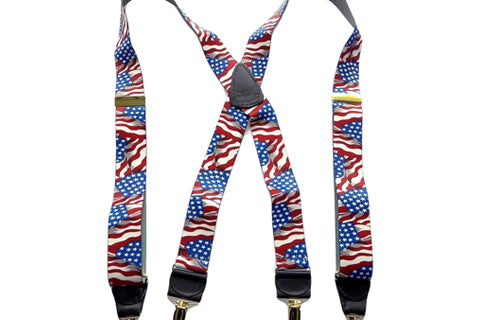
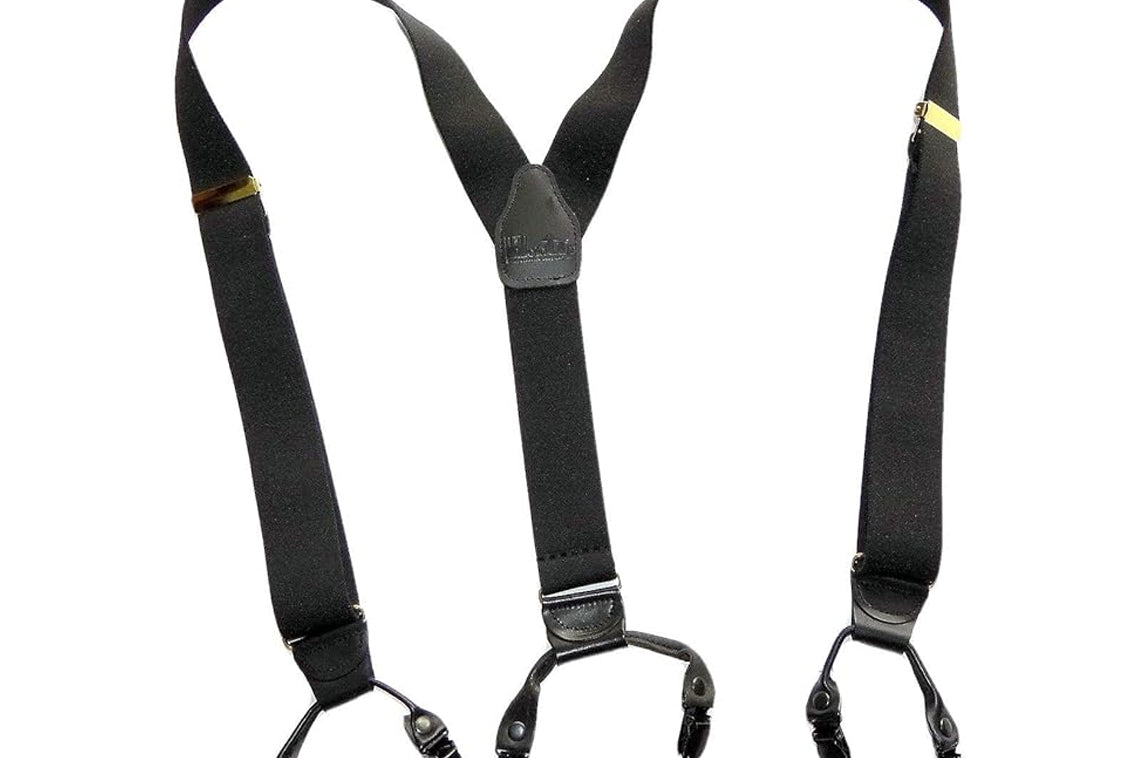
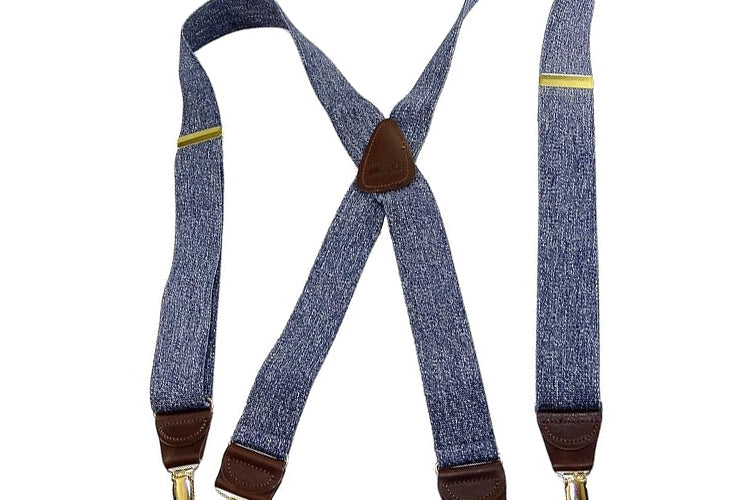
The back piece, which is the section running across the wearer's back in either an X shape or Y shape, is joined to the two front straps during this stage. This junction point is one of the most mechanically stressed areas of any suspender, and proper stitching here is critical. Mass-produced suspenders often use a single sewn seam; better-constructed pairs use a layered and bar-tacked joint that distributes load across a broader area.
For those curious about how the back configuration affects daily wear, the X-back design distributes weight more evenly across both shoulders, which is a direct outcome of how those back straps are cut and joined at this assembly stage.
Installing Adjusters and Sliders

Adjustability is one of the defining functional features of suspenders, and it is built in during the hardware installation stage. Metal or plastic sliders are threaded onto each front strap before the hardware ends are attached. These sliders work by allowing the strap to be pulled through a friction frame, holding position under passive tension but releasing when the wearer pulls the free end.
The quality of the slider material matters significantly here. Zinc alloy sliders are heavier but resist corrosion better than lightweight aluminum options. Brass sliders offer a premium feel and are commonly found on formal or heritage-style suspenders. Low-cost sliders made from thin stamped steel can deform under repeated adjustment, which is why they loosen over time on cheaper pairs.
How Suspender Clips Are Made and Attached
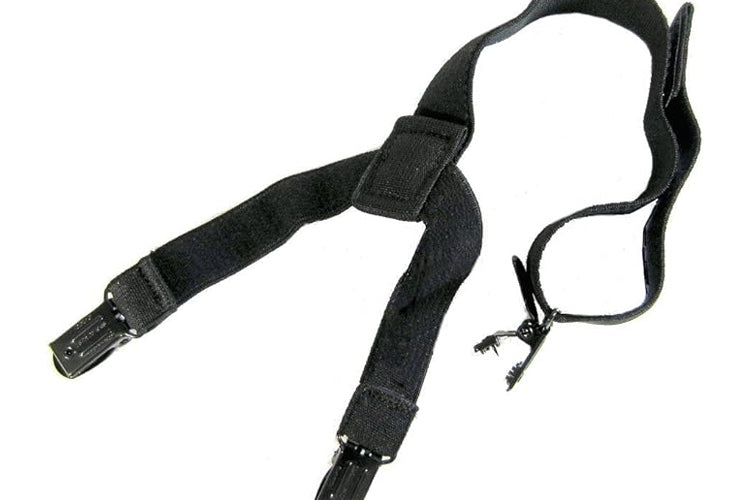
The clip is arguably the most mechanically complex part of a suspender. The mechanics behind how a suspender clip works involve a hinged jaw system with a front plate, a back plate, and a lever that opens the jaw when pressed. Most clips are stamped from steel sheet stock, then assembled with a riveted hinge pin. The interior faces of the jaw are often ridged or textured to grip fabric without requiring extreme clamping force.
After stamping and assembly, clips go through a surface finishing stage. Common finishes include:
-
Nickel plating, which provides a silver tone and moderate corrosion resistance
-
Chrome plating, which gives a brighter, harder surface
-
Brass or antique brass finish, used on traditional and vintage-style designs
-
Matte black powder coating, increasingly popular in workwear and casual styles
Finished clips are then attached to the strap ends. In elastic suspenders, the strap is folded through a metal loop on the clip and stitched back. In leather designs, a rivet or Chicago screw may be used instead, passing through the leather blank and the clip mount to create a solid mechanical connection.
Button Tab Attachment for Formal Suspenders
Some suspenders, particularly those designed for formal wear, are finished with leather button tabs rather than clips. These tabs are small looped pieces of leather or ribbon that slip over buttons sewn into the inside of the trouser waistband. The difference between suspenders with clips versus button attachments is not just cosmetic; button-attachment designs distribute holding force more evenly across the waistband and are considered the more traditional and formally correct option.
Manufacturing button tabs involves cutting small rectangular leather pieces, punching a slot or loop into one end, and stitching or riveting them to the strap end. The loop must be sized precisely to fit standard trouser buttons without excessive play, which otherwise causes the strap to shift during wear.
Quality Control and Final Testing
Before suspenders are packaged, finished pairs go through a quality control stage. Automated tension testing rigs pull each strap to a specified load to verify that the stitching holds without tearing and the hardware does not deform. Clip samples are tested for grip strength by measuring the force required to pull a fabric sample through the closed jaw. Sliders are cycled through multiple adjustments to confirm they hold position reliably.
Color consistency is checked under standardized lighting to ensure dye lots match across a production batch. Edge stitching is inspected visually for skipped stitches or puckering. Any pair that fails these checks is either reworked or removed from the production run.
This level of quality control is what separates suspenders built for long-term use from those built to a price point. Understanding what goes into a well-made pair also helps when comparing options across different price ranges, styles, and intended uses, whether that means workwear suspenders for physically demanding jobs or finely tailored versions meant to be worn under a suit jacket.
How Manufacturing Has Evolved Over Time
The core construction principles of suspenders have remained largely consistent since Albert Thurston introduced structured braces in 1822, but the machinery and materials behind production have changed substantially. Early suspenders were hand-sewn from box cloth and leather, with hardware formed by individual blacksmiths. The industrial era introduced power looms for elastic webbing and stamping presses for hardware, making production faster and more consistent while also lowering costs for consumers.
The contrast between vintage and modern suspender production is visible in both the materials and the finishing details. Vintage pairs relied heavily on natural fibers and hand-finishing; modern production uses synthetic elastics with precise stretch-recovery ratios and machine-applied hardware. Both approaches produce functional suspenders, but the handcrafted character of older manufacturing methods is something many buyers still actively seek out.
Frequently Asked Questions
What materials are most commonly used to make suspenders?
Suspenders are most commonly made from elastic webbing constructed from polyester and rubber threads, which provides stretch and shape retention. Leather remains the material of choice for formal and premium designs, cut from tanned hides and edge-finished by hand or machine. Other options include woven nylon, cotton ribbon, and wool blends, each suited to different use cases ranging from workwear to black-tie occasions.
How are suspender clips attached to the strap?
Suspender clips are attached by folding the strap end through a metal loop or channel on the clip body, then stitching the folded section back onto the strap. This fold is reinforced with bar-tacking, a concentrated pattern of stitches designed to handle repeated tension. On leather suspenders, rivets or Chicago screws may replace stitching to create a direct mechanical bond between the hardware and the strap material.
What is the difference between clip-on and button-on suspenders in terms of construction?
Clip-on suspenders are finished with a hinged jaw mechanism that grips the waistband of a trouser without any modification to the garment. Button-on suspenders are finished with small loops of leather or fabric that pass over buttons sewn inside the trouser waistband. Button-on construction is considered more traditional and distributes holding force more evenly, while clip-on construction offers convenience and works with any trouser regardless of whether it has internal buttons.
Why do some suspenders stretch out faster than others?
The speed at which suspenders lose their stretch depends directly on the quality of the elastic core in the webbing. Cheaper elastic uses a lower percentage of rubber thread or relies on synthetic alternatives like spandex that degrade faster under UV exposure and repeated tension cycles. Higher-quality elastic webbing uses a higher rubber content and a tighter weave structure that resists deformation over time. The stitching quality at the adjustment points also plays a role, since poor stitching allows the strap to slip through hardware and permanently extend.
Are suspenders made differently for workwear versus formal wear?
Yes, the construction differs substantially between workwear and formal suspenders. Workwear designs, including those built for logging, farming, or construction, use wider straps (often 1.5 inches or more), heavier elastic with a higher load rating, reinforced bar-tacked joints, and heavy-duty clips with stronger jaw tension. Formal suspenders use narrower straps in finer materials such as silk, satin, or thin leather, with polished hardware and button tabs rather than clips. The manufacturing tolerances, hardware grades, and finishing standards are calibrated differently for each category.