

Yes, suspenders are appropriate and traditional with a tuxedo. They keep tuxedo trousers at the correct height without a belt, which tux pants typically do not have loops for. Use narrow 1-inch satin-finish suspenders in black or white, attach via buttons whenever possible, keep them hidden under the jacket, and never wear a belt at the same time.
Pairing suspenders with a tuxedo is one of the most classically correct moves in men's formalwear. Known in British English as braces, suspenders have anchored tuxedo trousers since the 19th century and remain the preferred method today for good reason: tuxedo pants are traditionally cut without belt loops, making a belt both impractical and incorrect. Getting the pairing right comes down to material, width, color, and a handful of rules that separate a polished look from one that falls flat.
Why Do Suspenders Work Better Than a Belt With a Tuxedo?
Tuxedo trousers are designed to sit at a higher rise than standard dress pants, and most are made without belt loops. This is intentional. The cleaner the waistband line, the sharper the silhouette from jacket to shoe. A belt breaks that line and adds visual clutter at the point where the shirt and trousers meet. Suspenders solve both problems by holding the trousers at exactly the right height while keeping the waistband smooth and flat under the jacket.
There is also a practical fit advantage. Suspenders distribute the weight of the trousers evenly across both shoulders, which prevents the pants from shifting during movement. For anyone wearing a tuxedo through a long event, this matters significantly. Tuxedo suspenders differ from regular suspenders primarily in width and material, which are the two details that most affect how formal the final look reads.

What Are the Do's of Wearing Suspenders With a Tuxedo?
Following the right guidelines ensures that suspenders enhance the tuxedo look rather than distract from it. These are the key practices that make the difference.
Choose the right width and material
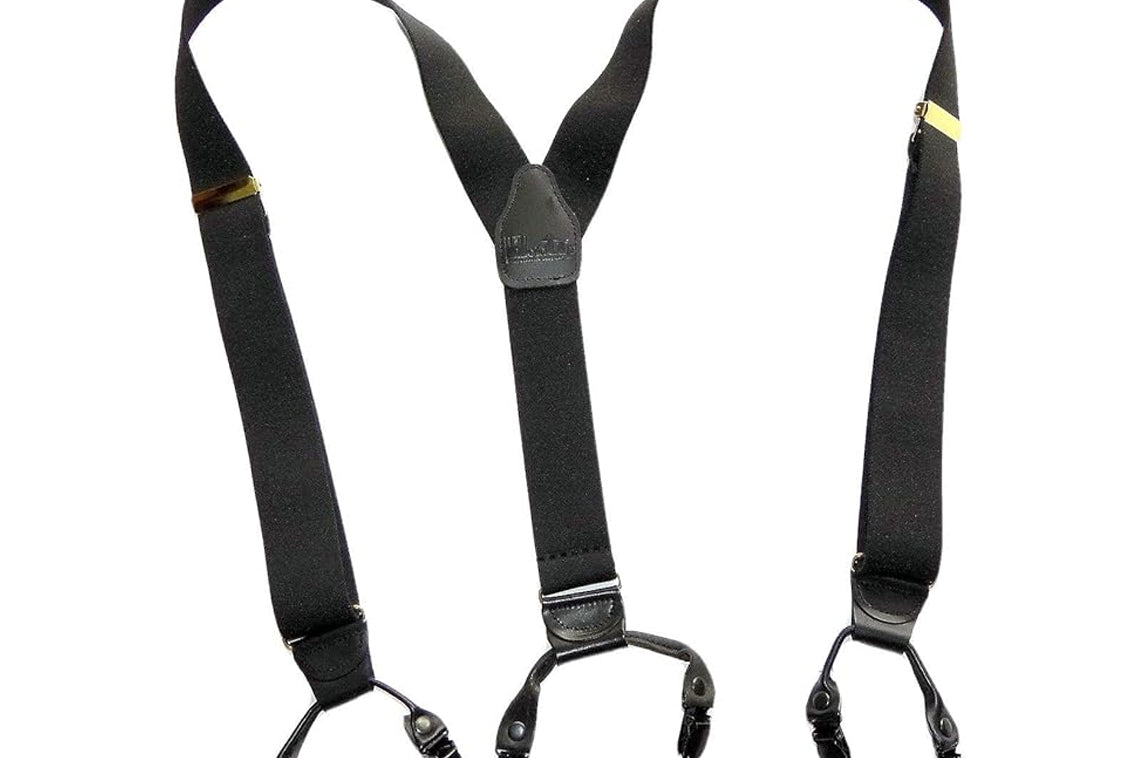
The width and fabric of suspenders are the most important factors for a formal look. For tuxedo wear, narrow suspenders between 3/4 inch and 1 inch wide are the correct choice. Wider suspenders in the 1.5 to 2 inch range are suited to workwear and casual outfits, and they read as too heavy against the refined lines of a tuxedo. For material, satin-finished or silk suspenders are the standard. They match the satin lapels and trouser stripe on a classic tuxedo and give a cohesive, intentional finish. Formal suspender styling centers on this principle of matching the sheen level of your accessories to the sheen level of the jacket.
Use button attachment rather than clips when possible
The cleanest way to attach tuxedo suspenders is via buttons sewn inside the waistband of the trousers. Most quality tuxedo trousers include these buttons, or a tailor can add them quickly. Button attachment gives a slimmer profile at the waistband and is considered the more traditional and refined option. If your trousers do not have suspender buttons, high-quality metal clip-on suspenders are entirely acceptable. The key is to use clips with a polished metal finish that coordinates with your cufflinks and any other hardware in the outfit.
Match suspender color to your tuxedo
Black suspenders with a black tuxedo is the safest and most classic combination. For a black tuxedo with white shirt, both black and white suspenders work depending on whether you want the suspenders to be a visible or invisible element. White suspenders create a deliberate contrast when the jacket is open, while black blends in. Navy tuxedos pair best with navy or silver-tone suspenders. For lighter tuxedo colors, the approach is to match closely rather than contrast strongly. Matching tuxedo suspenders with a bow tie and cummerbund requires treating all three as one coordinated accessory group rather than three separate decisions.
Keep suspenders hidden under the jacket
In formal settings, tuxedo suspenders stay under the jacket. They are structural accessories, not decorative ones. The only moment suspenders should be fully visible is during a casual portion of the event when the jacket is intentionally removed. When the jacket is on, only the narrow Y or X straps crossing the back of the shirt should be concealed. Ensure the front clips or buttons do not cause bunching at the shirt placket, which makes the suspenders obvious through the jacket front.
Pair with a bow tie and consider a cummerbund or waistcoat
A bow tie is the correct neckwear choice when wearing suspenders with a tuxedo. A long tie introduces an additional vertical element that competes visually with the suspender straps. When the jacket is removed, the combination of suspenders and a bow tie reads as a cohesive vintage-formal look. A cummerbund or waistcoat can be added to cover the trouser waistband and the shirt section between jacket hem and trousers. If using a cummerbund, wear it over the suspender straps at the front, with the pleats facing upward. For a more detailed breakdown of the three-way choice, the vest vs cummerbund with suspenders guide covers the pros and cons of each combination.
Coordinate metal hardware across all accessories
The metal finish on your suspender clips or hardware should match the metal finish used elsewhere in the outfit. Gold-tone clips pair with gold cufflinks and gold studs. Silver-tone clips pair with silver cufflinks and silver studs. This detail is minor in isolation but adds up significantly to whether the final look feels considered or assembled from mismatched parts.

What Are the Don'ts of Wearing Suspenders With a Tuxedo?
Avoiding these mistakes is as important as following the positive guidelines. Each one either breaks the formality of the look or introduces a practical problem.
Never wear a belt and suspenders together
Wearing a belt alongside suspenders is the single most common formalwear mistake. Suspenders and a belt both exist to hold the trousers up, so using both simultaneously signals that neither is working properly. At a formal event it also breaks the clean waistband line that the entire outfit depends on. If your tuxedo trousers have belt loops, use only the suspenders and leave the loops empty, or have a tailor remove them for a cleaner result.
Avoid wide, elastic, or patterned suspenders
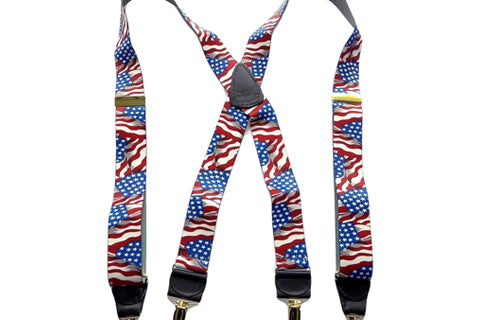
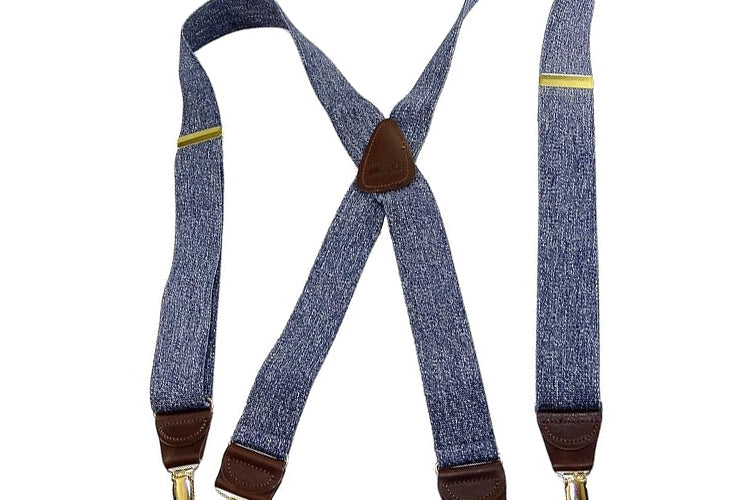
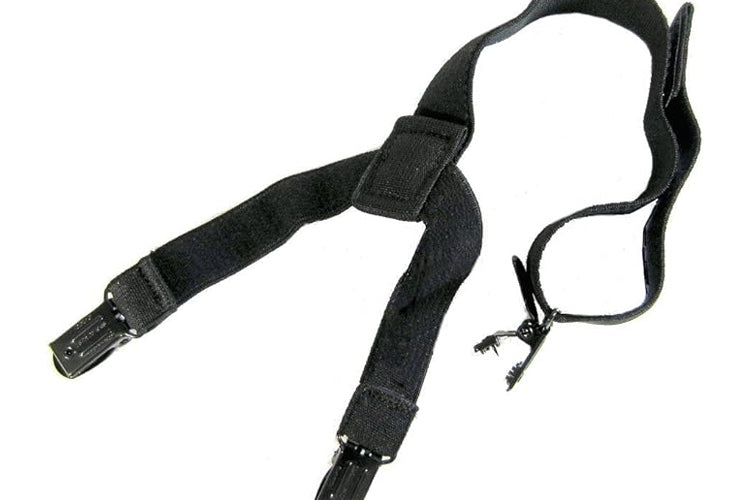
Wide elastic suspenders belong in workwear and casual outfits. Wearing them with a tuxedo creates an immediate visual mismatch in weight and formality. Similarly, patterned, novelty, or brightly colored suspenders undermine the restraint that formal dress requires. The only exception is personal statement dressing at less strict formal events, where a carefully chosen color accent can work. For standard black-tie events, stick to solid colors in satin or silk.
Do not let suspenders show unintentionally
Suspenders that bulge through a thin dress shirt, bunch at the waistband buttons, or appear at the jacket hem when you bend forward disrupt the silhouette. Check the fit before the event by moving through a range of motions. The suspenders should keep the trousers at the correct height without pulling so tightly that they deform the shirt front. Sizing tuxedo suspenders correctly is the most important preventive step, since straps that are too long cannot be adjusted to a proper tension regardless of how far you slide the length adjusters.
Do not over-accessorize
Suspenders are already a statement piece at a formal event. Adding multiple additional accessories, such as a pocket square, a cummerbund, a waistcoat, a lapel pin, and tie bars all at once, creates visual competition. Choose one or two supporting accessories and let the tuxedo and suspenders carry the look. Wearing both a cummerbund and a waistcoat together is almost always too much; choose one. The same applies to jewelry and other hardware.
Do not rush the setup
Suspenders that are twisted, unevenly adjusted, or attached to the wrong waistband positions will be noticeable throughout the event. Attach the front clips or buttons first, then drape the straps over the shoulders and attach the back. Adjust the length sliders so both straps are equal and the trousers sit at the natural waist without being pulled upward. Do this well before you leave for the event so there is time to correct any fit issues.
What Color Suspenders Should You Wear With Different Tuxedo Colors?
Color coordination for tuxedo suspenders follows a straightforward principle: match first, contrast only when deliberate.

For a classic black tuxedo, black satin suspenders are the standard. White suspenders create a clean contrast that reads clearly when the jacket is open, which is appropriate for less strict formal events or weddings where the groom wants a distinct look. For a navy tuxedo, navy or deep blue suspenders maintain formality; silver-tone hardware on the clips reinforces the cooler palette. Charcoal gray tuxedos work with both gray and black suspenders. White tuxedos, most appropriate for summer or destination events, pair with white or champagne satin suspenders rather than black, which creates too strong a contrast. For anyone navigating these choices in depth, the guidance on how to wear tuxedo suspenders covers color, width, and attachment method together in one reference.
Should You Wear Suspenders With a Tuxedo and Cummerbund Together?
Yes, you can wear suspenders and a cummerbund at the same time, and the combination is traditionally correct. The cummerbund wraps around the waist over the top of the suspender front straps, covering the trouser waistband and the gap between jacket and trousers. Wear the cummerbund with the pleats pointing upward, which is the traditional orientation. The result is a completely covered waistband and trouser top, with the suspenders doing their structural work invisibly underneath.
The more common modern combination is suspenders with a waistcoat rather than a cummerbund, particularly at weddings and evening events. The waistcoat covers the entire torso between jacket and trousers and keeps the suspender straps fully hidden when the jacket is on. Wearing cummerbunds and suspenders together requires one specific adjustment: the cummerbund should be fitted after the suspenders are attached and adjusted, not before, so that it lies flat without pushing the straps out of alignment.
Frequently Asked Questions About Tuxedo Suspenders
Do tuxedo pants have belt loops?
Traditional tuxedo trousers do not have belt loops. They are designed to be worn with suspenders, which is why most formal tuxedo pants include interior waistband buttons for suspender attachment. Some modern tuxedo styles include belt loops as a concession to contemporary dressing preferences, but wearing a belt with a tuxedo remains a departure from the classic formal standard.
Are suspenders required for a tuxedo?
Suspenders are not technically required for a tuxedo, but they are the traditional and most appropriate choice. Without a belt and without suspenders, tuxedo trousers rely entirely on a properly fitted waistband to stay in place, which works only if the fit is exact. Most men find that suspenders give a more reliable and comfortable result, especially during a long event involving dancing or extended sitting.
What is the difference between suspenders and braces?
Suspenders and braces are the same accessory described using different regional terminology. Suspenders is the American English term; braces is the British English term. Both refer to the shoulder-worn straps that hold up trousers. In British English, the word "suspenders" refers to what Americans call a garter belt, which is an entirely different garment. If you are shopping in a UK retailer for tuxedo braces, you are looking for the same product as tuxedo suspenders in an American context. The full distinction is covered in the article on suspenders vs braces.
Can you wear a bow tie with suspenders and no jacket?
Yes, and this is a classic look for warm weather events or informal formalwear settings. Suspenders with a dress shirt, bow tie, and no jacket reads as intentionally relaxed-formal and works well at garden weddings, summer events, and barbershop-style occasions. The look requires a properly tucked dress shirt and well-fitted trousers. A vest or waistcoat can be added for a more finished silhouette if the jacket is coming off for an extended period. The pairing of bow tie and suspenders styling has its own set of coordination principles worth reviewing before the event.
What width suspenders should I wear with a tuxedo?
The correct width for tuxedo suspenders is 3/4 inch to 1 inch. This narrow profile maintains the formal silhouette and matches the slim lines of a tuxedo jacket. Anything wider than 1.25 inches begins to shift the look toward casual or workwear territory, which is a noticeable mismatch against a formal tuxedo. If you have a larger frame, 1 inch is the right maximum rather than moving to a wider strap for proportional reasons.
Worn correctly, suspenders do not just hold your tuxedo trousers up. They reinforce the formality of the entire ensemble, connect to a long history of men's dress, and give a distinctly intentional quality to the outfit. The key is choosing the right pair from the start, which means correct width, correct material, and the right attachment method for your specific trousers.