

Chaps solve one problem and create another. They protect your legs from road rash and engine heat, but they also add real weight and bulk around your hips with nothing underneath to hold your jeans in place. A belt alone often isn't enough once you've got chaps buckled over the top of it, especially on a bike where you're constantly shifting your weight between the seat, the pegs, and the tank.
This is where wide suspenders earn their keep. Instead of fighting gravity at your waist, they carry your jeans from your shoulders, which matters more than it sounds once you understand what chaps actually do to your riding position and to the load your waistband has to carry all day.
Why Chaps Change the Math on Waist Support
Most riders don't think about waist support until it fails. A belt that's worked fine for years suddenly isn't enough the day you add chaps into the mix, and it's worth understanding why before you try to fix it with a tighter notch.
The Physics of Added Weight at the Waist
Leather chaps aren't just a layer of protection, they add genuine weight, and that weight sits right at the point where a belt is already working hardest. A pair of full-grain leather chaps can add several pounds hanging from buckles at your hips, on top of whatever your jeans already weigh. A belt has exactly one job: friction against your waist holding that entire load in place. Add a long ride, engine vibration, and constant leg movement while shifting or bracing through corners, and a standard belt starts to lose that grip well before you'd expect it to.
It helps to think of a belt as a single point of failure. Everything below it, jeans, chaps, whatever's in your pockets, is relying on one band of leather or webbing cinched at one spot. Suspenders spread that same load across two straps and a much larger surface area at the shoulders, which is a fundamentally different, more forgiving way to carry weight.
Why Riders Notice This Before They Notice Anything Else
Riders often notice their jeans creeping down under the chaps hours before they'd notice it riding bare-legged, simply because there's more material pulling at the waistband. It's a common enough complaint that it shows up in rider forums and gear reviews consistently: chaps make a marginal belt setup fail faster, not because the belt got worse, but because the job got harder.
Suspenders sidestep this entirely. By anchoring your jeans from the shoulders instead of the waist, they remove the tug-of-war between chap weight and belt friction. Your waistband stays where it started, whether you're two hours or ten hours into a ride, because the mechanism holding it up never depended on friction in the first place.
What "Wide" Actually Buys You

Not all suspenders are built for this job, and the width of the strap matters more than most riders expect going in.
Narrow vs. Wide: Where the Difference Shows Up
Narrow, dressy suspenders are designed for suits and formal wear, where the load is a few ounces of trouser fabric and the wearer is sitting at a desk, not gripping handlebars for six hours. Motorcycle chaps put a genuinely heavier, more dynamic load on the same shoulder straps, so strap width matters in a way it simply doesn't for everyday wear.
Wide suspenders, typically 1.5 to 2 inches, spread that load across more of your shoulder and upper back rather than concentrating it into a thin line. A narrow strap under a heavy load behaves the way a thin backpack strap does on a loaded pack: it digs in, it creates a pressure point, and after a few hours that pressure point becomes the thing you're thinking about instead of the ride.
How Width Interacts With Chap Weight Specifically
Over a long tour, the width difference shows up as less digging, less fatigue, and less need to constantly readjust at gas stops. It's the same weight-distribution logic covered in our comparison of heavy-duty suspenders for cruiser riders, just applied specifically to the added bulk that chaps bring into the equation. The extra weight of chaps is exactly the scenario wide straps were built for, since the whole point of going wider is handling more load without more discomfort.
Why No-Slip Clips Matter More With Chaps On
The strap is only half the equation. The clip holding it to your waistband has to survive a working environment that chaps make noticeably harder.

What Standard Clips Get Wrong
Chaps typically buckle around the outside of your jeans, which means your suspender clips are working under an extra layer of leather and buckles that can catch, tug, or shift as you move. A standard clip that's perfectly fine for office wear can walk itself loose under that kind of repeated motion, since it was never designed to handle a garment layered on top of it pulling and shifting all day.
This is a mechanical failure point riders sometimes blame on the suspenders generally, when the real issue is a clip that was never rated for the job. Lightweight dress-suspender clips are built to grip a thin waistband once and stay put in a stationary environment. Riding with chaps is neither thin nor stationary.
What to Look For in Clip Hardware
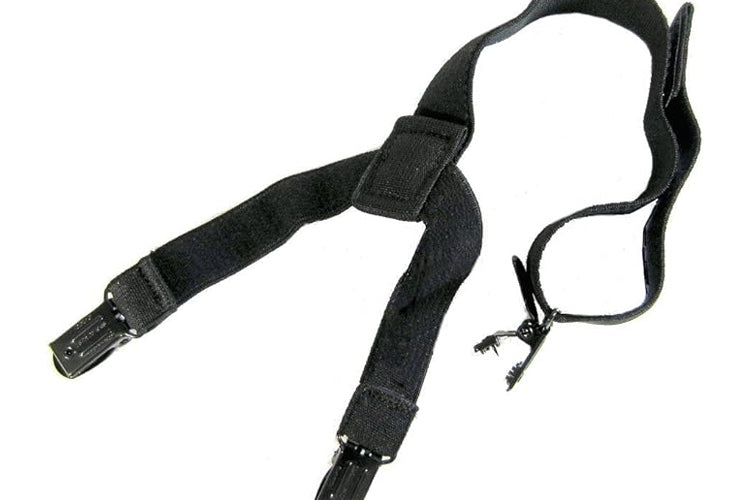
Patented no-slip clips are built to grip the waistband and hold that grip through vibration and movement, which is exactly the environment chaps create. When you're shopping specifically for biker apparel, this is the one spec worth checking before anything else: look for jumbo or heavy-duty no-slip clips rather than standard dress-suspender hardware, since the difference shows up as reliability rather than comfort. A clip that grips firmly on day one and still grips firmly three hundred miles later is doing exactly what it's supposed to, and that's worth confirming before you buy rather than discovering on the road.
X-Back or Y-Back Under Chaps
Either back style works mechanically under chaps since the leather covers your legs, not your shoulders or upper back, but the two styles behave differently enough to be worth understanding before you choose.
X-Back: Maximum Stability Through Movement
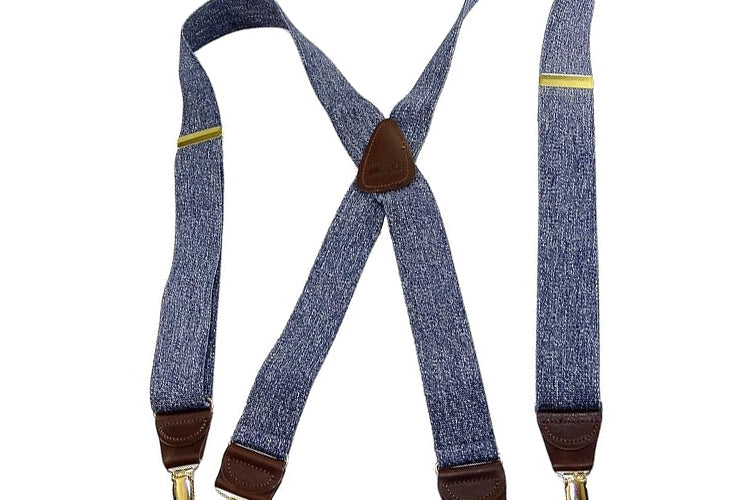
X-back suspenders tend to stay put better during the kind of twisting, leaning movement that riding involves, since the crossed design resists shifting off one shoulder the way a straight Y-back can under lateral movement. If you're doing a lot of aggressive leaning through corners, or you simply want one less thing to think about over a long tour, X-back is the more forgiving choice.
Y-Back: The Classic Biker Look
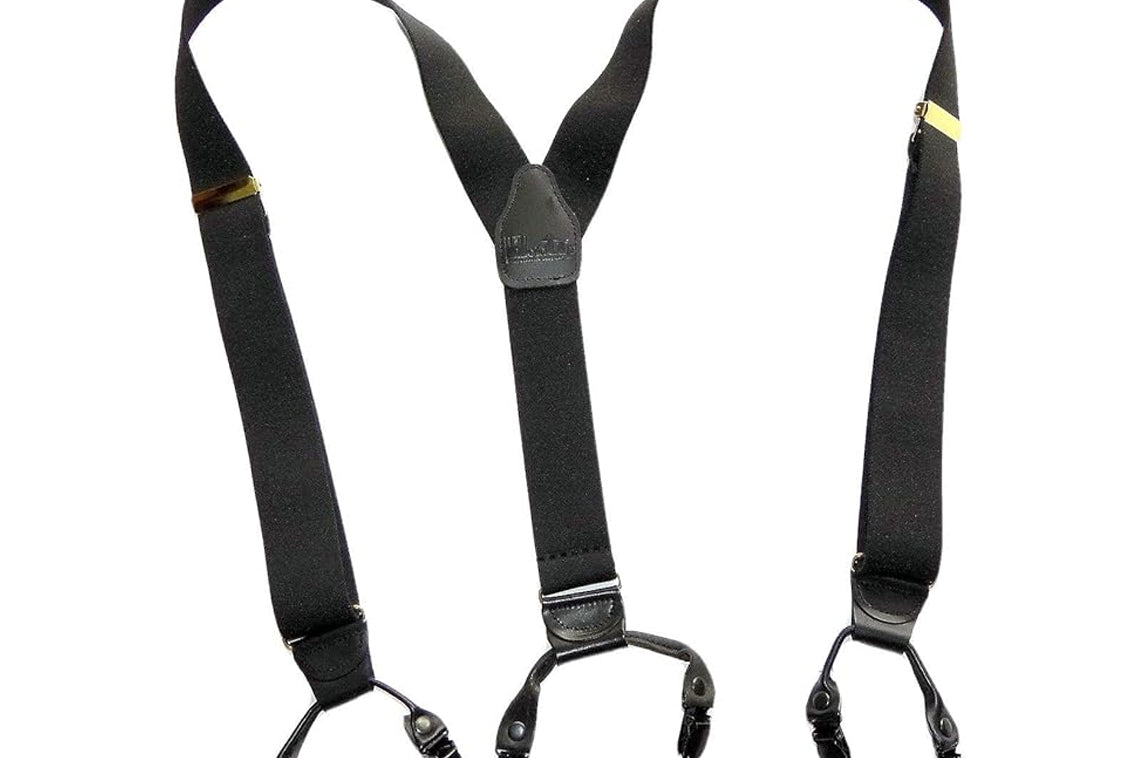
Y-back styles feel closer to a traditional look if you're pairing chaps with a vest for a classic biker outfit, since the single rear strap sits more visibly and reads as more old-school than a crossed X pattern. Either way, the wide-strap, no-slip-clip combination matters more than the back style for keeping jeans in place, so treat this as a style choice layered on top of the functional decisions above, not a substitute for them.
Material Considerations for Long Rides
Strap material affects how suspenders feel over the course of a long ride more than most riders expect, and chaps change that calculation slightly compared to riding bare-legged.
Elastic and elastic-blend straps flex with your body as you shift position on the bike, which matters more with chaps adding stiffness and bulk around your hips already. A fully rigid webbing strap fights against that movement rather than accommodating it, which tends to translate into more shoulder fatigue by the end of a long day. Leather straps offer a classic look that pairs naturally with leather chaps, and they hold up well to weather, but they generally flex less than elastic blends, so they're a better fit for shorter rides or a more classic aesthetic than for all-day touring comfort. Nylon and nylon-blend straps resist moisture well, which is worth considering if you ride in variable weather, though they can run slightly less forgiving against the skin than a padded elastic strap over very long distances.
Suspenders and Jacket Pockets or Layering

One detail riders sometimes overlook until it's too late: how suspenders interact with the rest of a full riding outfit, not just chaps and jeans in isolation.
Testing Your Full Setup Before a Long Ride
If your jacket has a waist-level pocket or a zip-together connection to your pants, check that your suspender straps don't interfere with the closure before you're twenty miles from home. A quick test in the driveway, sitting on the bike in your full gear, saves you from discovering a conflict at a gas station or, worse, at highway speed when you reach for something in a jacket pocket.
Common Conflict Points to Check
The most common issue is a jacket-to-pant zipper sitting close to where a suspender clip attaches at the front of the waistband, which can create a pinch point or make the zipper harder to close fully. A second common issue is a suspender strap running directly under a jacket's chest pocket, which can make that pocket harder to access one-handed while riding. Neither issue is common enough to avoid suspenders altogether, but both are worth ten minutes of checking before a long trip rather than discovering mid-ride.
Common Mistakes Riders Make When Pairing Suspenders With Chaps
A few avoidable mistakes account for most of the complaints riders have about suspenders under chaps, and most of them come down to setup rather than the gear itself.
Buying narrow suspenders because that's what was already in the closet. Dress suspenders left over from a wedding or a suit are built for a completely different job. They'll work for an afternoon and then start digging in, which gets blamed on suspenders generally rather than on choosing the wrong width for the load.

Over-tightening to compensate for chap weight. It's a natural instinct to crank suspenders tighter when you're carrying more weight, but overly tight suspenders restrict the same shoulder movement you need for comfortable riding, and they don't actually improve hold the way a properly wide, no-slip clip does. Tension should be snug, not maximal.
Skipping the seated fit check. Suspenders that feel fine standing in a driveway can pull differently once you're leaned forward on the bike with your knees bent. Always adjust and test while seated in riding position, not standing upright.
Mixing suspender types across a chap-and-jean setup. A narrow strap with a heavy-duty clip, or a wide strap with a lightweight clip, undermines the point of matching the whole system to the job. Both the strap and the clip need to be rated for the same heavy-duty use.
Fit Still Comes First
No accessory replaces properly fitted gear. The Motorcycle Safety Foundation's guidance on protective gear notes that gear should fit comfortably without binding, and that loose or dangling items can be a hazard around moving parts of the bike. RoSPA's rider preparation guidance makes a similar point about choosing gear based on fit and riding conditions rather than looks alone. Suspenders and chaps should sit close to the body, not flap or hang loose, so check your full setup while seated on the bike before heading out on a long ride.
What to Look For Before You Buy
-
Strap width: 1.5 to 2 inches for chap-and-jean combinations
-
Clip type: patented no-slip or gripper clasps rated for heavy-duty use, not standard dress clips
-
Back style: X-back for maximum stability, Y-back for a classic biker look
-
Material: elastic blends flex with your riding position better than stiff webbing or leather for all-day wear
-
Fit check: always adjust seated in riding position, in full gear, before a long trip
If you're also weighing suspenders against a belt for touring specifically, our motorcycle suspenders vs. belts guide covers that comparison in more depth. And if denim fit is your main concern rather than chaps, see our guide on securing heavy riding jeans without a belt.
Built for the Ride
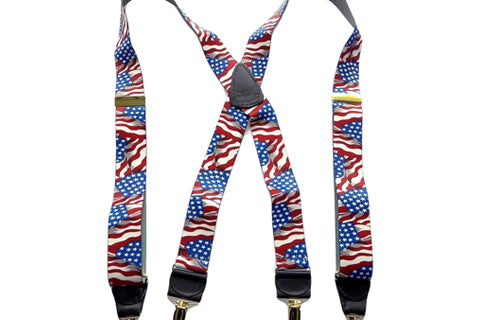
HoldUp's Biker Series Skull & Crossbones X-back suspenders and Flame Pattern heavy-duty biker suspenders are built at 2 inches wide with USA-patented jumbo gripper clasps, sized specifically for the extra load chaps and long rides put on a waistband. Both come in X-back for riders who want maximum hold, in styling that fits a classic motorcycle look rather than an office one.

FAQs
Do suspenders work underneath leather chaps?
Yes. Suspenders sit on your shoulders and clip to your jeans at the waistband, entirely separate from where chaps buckle around your legs, so there's no interference between the two.
What width suspenders is best for riding with chaps?
1.5 to 2 inches wide. The extra surface area spreads the combined weight of jeans and chap buckles more evenly across your shoulders than narrower dress suspenders can.
Will suspender clips damage my chaps or jeans?
No. Suspender clips attach to the waistband of your jeans, not to the chaps themselves, so there's no contact between the clip hardware and your leather gear.
Can I wear suspenders with a jacket that zips to my pants?
Usually yes, but check the connection point before a long ride. Some jacket-to-pant zip systems sit close to where a suspender clip attaches, so it's worth a quick fit check while seated on the bike.
Do I need X-back or Y-back for motorcycle riding?
X-back tends to stay centered better through the leaning and shifting involved in riding. Y-back gives a more traditional look if that matters more to your outfit than maximum grip.
Should suspenders be tight to hold up chaps and jeans?
No. Tension should be snug enough to hold the weight without slack, but not maximally tight. Over-tightening restricts the shoulder movement you need while riding and doesn't improve hold the way a wider strap and better clip already do.
Can I use the same suspenders for chaps and regular jeans without chaps?
Yes, wide, no-slip suspenders work just as well without chaps. You may find you can loosen the adjustment slightly on rides where you're not wearing the extra weight of leather chaps.