

Riding denim is heavier than regular jeans by design. Reinforced seams, aramid lining, and thicker fabric all add protection, but they also add weight that a belt has to fight against every time you shift in the seat. A lot of riders find their belt digging in after an hour, then loosening up and letting the waistband slide the next hour, with no comfortable middle ground.
Suspenders solve the underlying problem instead of managing it. By carrying the jeans from your shoulders, they remove the waist entirely from the equation, which matters more with heavy riding denim than with any other kind of pants.
Why Heavy Denim Fights a Belt Harder Than Regular Jeans
Not all denim is created equal, and riding denim in particular asks more of whatever is holding it up than a standard pair of jeans ever would.
How Much Heavier Is Riding Denim, Really?
Reinforced riding jeans typically weigh noticeably more than standard denim, often due to a layer of aramid fiber lining sewn into the hips, seat, and knees for abrasion resistance. That lining adds real, measurable weight, concentrated low on the body, right at your hips and thighs, exactly where a belt is trying to hold everything up from a single point around your waist. Add the constant flexing of your knees and hips while riding, shifting in the seat, working the pegs, leaning into corners, and a belt has to fight both gravity and movement at the same time, continuously, for the length of the ride.
The Belt's Single Point of Failure
A belt is a single band of leather or webbing doing one job at one location on your body. Every ounce of weight below the waist, jeans, lining, whatever's in your pockets, is relying entirely on friction at that one point. This is a mechanical problem, not a fit problem. Even a properly sized belt on the correct notch will loosen over a long ride as the leather or webbing stretches slightly under sustained load and your body shifts position on the bike. Once that friction starts to give, there's no backup, and the slide begins.
The Shoulder-Carry Advantage for Denim Specifically

Suspenders don't just add a second point of support, they change where the load goes entirely, which matters more with stiff, heavy denim than with lighter fabrics.
Why Stiff Fabric Behaves Differently Than Stretch Fabric
Denim doesn't stretch the way athletic or blended fabrics do, which is part of why it holds up so well against road rash in a slide. The tradeoff is that a stiff waistband doesn't flex with your body the way a stretch fabric would, so it relies entirely on friction or a fastening point to stay up. There's no give in the fabric itself to compensate for a loosening belt, which means once the belt starts to slip, the jeans slip with it, all at once rather than gradually.
Suspenders clip directly to that stiff waistband and carry the weight up and over your shoulders instead of relying on friction at the hips. This is the same shift in weight distribution outlined in our guide to touring comfort with suspenders, applied specifically to the weight profile of heavier riding denim rather than lightweight pants.
What Changes Over the Course of a Long Ride
A belt's grip degrades gradually and unpredictably over hours, tightened notch by notch as it loosens. Suspenders don't degrade the same way, since they aren't relying on friction that wears down under load. A properly fitted pair of suspenders holds the same at mile 300 as it did at mile 30, which is the single biggest practical difference riders notice on multi-day trips specifically.
Clip-On vs. Button-On for Riding Denim
Once you've decided to make the switch, the next decision is how the suspenders actually attach to your jeans, and the right answer depends on how many pairs of riding denim you own.
Clip-On: Flexibility Across Multiple Pairs
Clip-on suspenders work with any pair of jeans that has a standard waistband, no alterations needed, which makes them the practical choice if you're switching between multiple pairs of riding jeans depending on weather or trip length. The clip needs to grip firmly enough to hold through vibration and movement, so look for patented no-slip or gripper-style clasps rather than basic clips built for lightweight dress trousers. A clip rated for heavy-duty use will hold a stiff denim waistband just as confidently three hours in as it did at the start.
Button-On: Maximum Security for a Dedicated Pair
Button-on suspenders require buttons sewn into the inside of the waistband, which gives a slightly cleaner, more secure connection with zero risk of a clip working loose over a long ride. If you have a go-to pair of riding jeans you wear on most long trips, it's worth considering having buttons added for that extra peace of mind, particularly for multi-day touring where you won't want to be checking a clip connection every time you stop for gas.
Fit Check Before a Long Ride
Getting the length and tension right matters more than most riders expect, and it's easy to get wrong if you skip the right kind of test.
Why Standing Fit Doesn't Match Riding Fit
The Motorcycle Safety Foundation's riding tips booklet recommends checking that gear fits properly and doesn't restrict movement before setting out, and the same logic applies to whatever is holding your jeans up. Sit on the bike in full gear before you head out, not just standing in the driveway. Riding posture pulls your jeans differently than standing does, especially through the hips and lower back, so a fit that feels secure standing up can still shift once you're leaned forward with your knees bent and your weight distributed between the seat and the pegs. Adjust the strap length so there's a small amount of give when you're seated, rather than pulling tight, since suspenders that are too snug will restrict the same movement they're meant to accommodate.
Adjusting for Multi-Day Trips
On a multi-day tour, it's worth rechecking strap tension each morning rather than assuming the adjustment from day one still holds. Straps can settle slightly after the first full day of wear, and your own comfort preferences may shift once you know how a full day of riding actually feels in them. A five-second check before pulling out of the hotel parking lot is a small habit that pays off over a long trip.
What Width and Material to Look For

The hardware specs matter as much as the fit adjustment, and heavy denim specifically calls for the higher end of what's available.
Strap Width for Heavy Denim
2 inches is the standard recommendation for heavy denim, since narrower straps concentrate the load into a smaller area of your shoulder. A 1-inch dress-suspender strap carrying the weight of aramid-lined riding jeans will dig in noticeably faster than a 2-inch strap carrying the same load, simply because the pressure per square inch is roughly double.
Material: Elastic Blend vs Leather vs Webbing
Elastic or elastic-blend straps flex with your riding position better than stiff webbing, which matters over a long ride where your torso is constantly shifting slightly with the bike. Leather straps offer durability and a classic look that pairs well with denim, but they flex less, making them a better fit for shorter rides than for all-day touring. Plain nylon webbing is durable and weather-resistant but offers the least give of the three, so it's worth pairing with a design that has some built-in stretch elsewhere in the strap if webbing is your preferred material.
Common Mistakes Riders Make Securing Heavy Denim
A handful of avoidable setup mistakes account for most complaints about suspenders not holding up heavy denim the way riders expected.
Choosing narrow suspenders to save on bulk. Riders sometimes assume a thinner strap will be less noticeable under a jacket, but a narrow strap under heavy denim's weight digs in faster, which is the opposite of comfortable, regardless of how it looks under a jacket.
Using standard clips instead of heavy-duty ones. The clip matters as much as the strap. A wide strap with a lightweight clip is only as strong as its weakest component, and that clip will be the first thing to slip on aramid-lined denim.
Skipping the seated fit check. As covered above, this is the single most common reason riders report suspenders "not working" when the real issue was an adjustment done standing rather than seated in riding position.
Wearing suspenders over a jacket instead of under it. Suspenders are designed to sit against a shirt, under a jacket, not on top of outerwear. Wearing them outside a jacket changes the angle of pull on the waistband and can create bunching or an uneven feel.
Suspenders and Armor or Padded Riding Jeans
Many riding jeans include hip and knee armor pockets, which adds another layer of consideration beyond weight alone. Armor panels can shift slightly during a ride if the jeans aren't held snugly in place, and a sagging waistband makes that shift more likely, since the whole garment has more freedom to move. Suspenders that keep the waistband seated properly also help keep armor pockets positioned where they're supposed to be, over your hip joints rather than drifting as the jeans slide. This is a secondary benefit worth knowing about if your riding jeans are armored, even though it isn't the primary reason most riders make the switch.
Built for the Weight
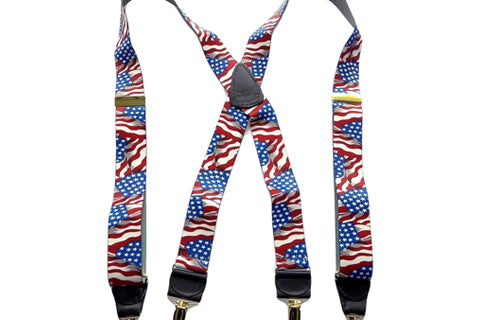
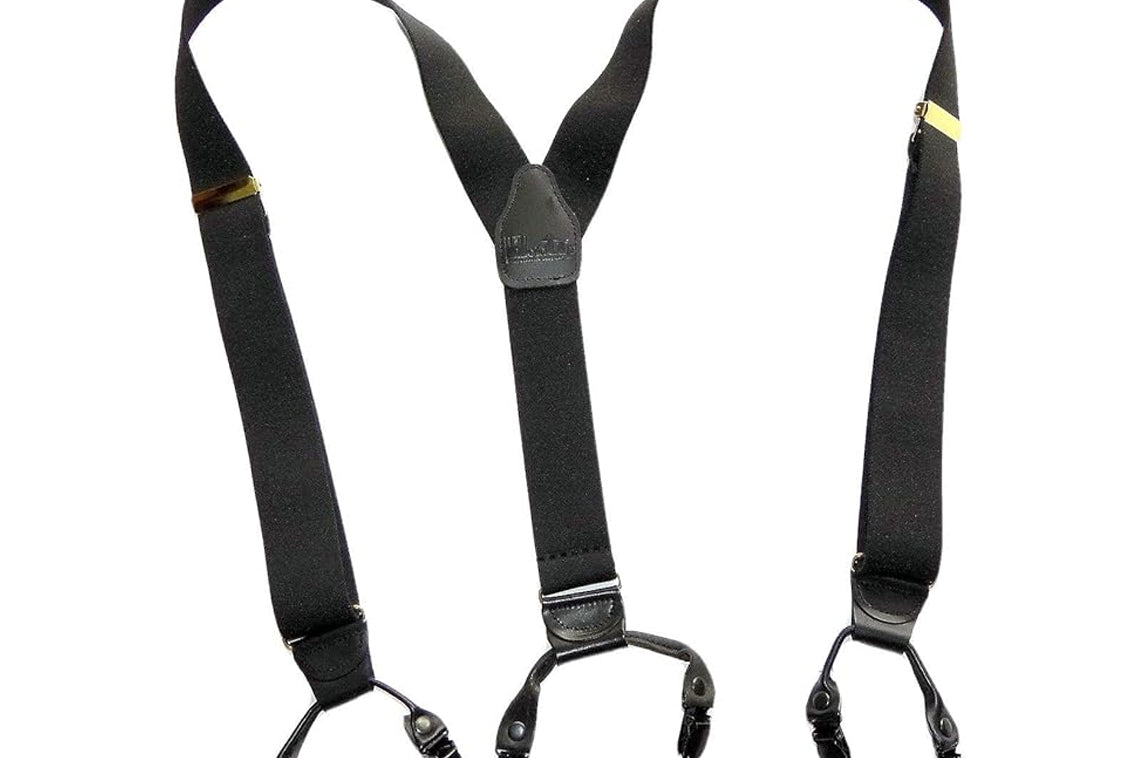
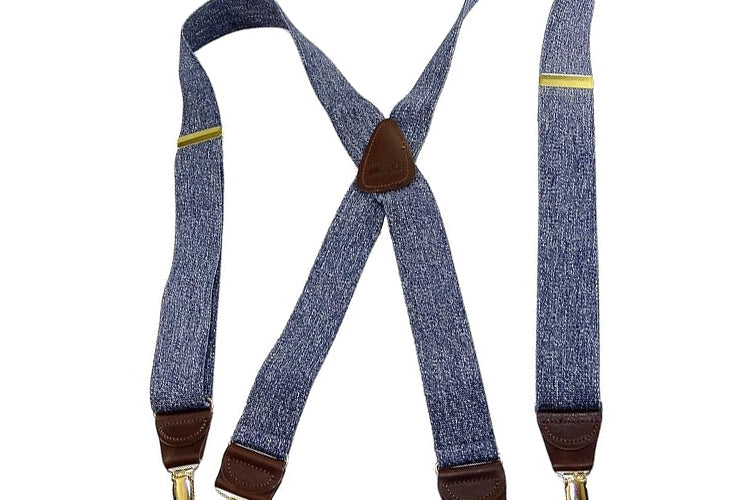
HoldUp's Heavy Duty Denim Work Suspenders and Heavy Duty Dark Denim suspenders are built at 2 inches wide with USA-patented jumbo gripper clasps designed to hold heavier fabric securely through repeated movement.

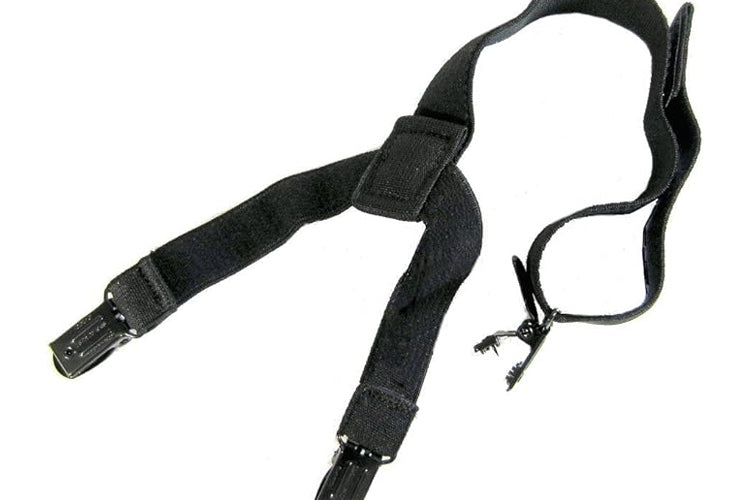
For a trucker-style hip-clip option that sits lower and stays hidden under a jacket, the Dark Denim Trucker-style hip-clip suspenders are worth a look. If sagging under the weight of gear generally, rather than denim specifically, is your main concern, our guide on preventing waist constriction while riding covers the broader comfort picture. For casual denim styling outside of riding gear, see our guide to brown suspenders and denim.
FAQs
Can suspenders really replace a belt on heavy riding denim?
Yes. Suspenders carry the weight of the jeans from your shoulders instead of your waist, which sidesteps the friction-and-stretch problem that causes a belt to loosen over a long ride.
Do suspenders work with jeans that don't have belt loops, or have them removed for riding gear?
Yes, as long as the waistband is intact for a clip or button attachment point, suspenders don't need belt loops at all. This makes them useful for riding jeans where loops have been removed to reduce bulk under a jacket.
What width suspenders holds up heavy denim best?
2 inches wide is the standard recommendation for heavier fabrics, since it spreads the load across more of your shoulder than a narrower 1-inch strap would.
Will suspenders interfere with a riding jacket?
Properly fitted suspenders sit flat against your torso under most jackets. It's worth doing a seated fit check in full gear before a long trip to confirm there's no rubbing or bunching at the shoulders.
Clip-on or button-on for a dedicated pair of riding jeans?
Clip-on is more flexible if you rotate between multiple pairs of jeans. Button-on gives a more secure, permanent connection if you have one primary pair you wear on most rides.
Do suspenders help keep armor pockets in place on armored riding jeans?
They can help indirectly. A waistband that stays properly seated rather than sagging gives armor panels less opportunity to drift out of position over your hips and knees during a ride.
Should I readjust suspenders each day on a multi-day trip?
It's a good habit. Straps can settle slightly after a full day of wear, so a quick check each morning before setting out helps maintain the fit you had on day one.