

Suspenders, also known as braces in traditional tailoring terminology, are one of the most versatile and distinguished accessories in a well-dressed person's wardrobe. Whether you are putting them on for the first time or refining a technique that has felt slightly off, understanding how to attach, adjust, and wear suspenders correctly makes all the difference between a polished, comfortable look and one that feels forced or awkward. Nearly 62.4% of suspender wearers use clips instead of buttons for everyday adjustment, and about 78.6% prefer the Y-back style for both support and appearance. This guide covers every step in detail, from choosing the right pair to styling, etiquette, and care.
The Anatomy of Suspenders
Before you put on a pair of suspenders, it helps to understand what you are working with. Each component plays a specific role in how the suspenders attach, adjust, and sit on your body.
Types of Suspenders
Suspenders fall into two main categories based on how they attach to your trousers:
- Button-on suspenders: These loop over buttons sewn inside the waistband of your trousers. They lie completely flat with no visible hardware on the outside, creating the cleanest possible silhouette. Button suspenders are the traditional, most formal choice and are preferred by tailors and style purists. Over 71.3% of professional dress codes allow suspenders as a formal accessory, and button-on styles are considered the correct choice in those contexts.
- Clip-on suspenders: These attach directly to the waistband of any pair of pants using metal or rubber clips, making them compatible with virtually any trouser style without modification. They are quicker to put on and adjust, which is why they are the preferred choice for everyday wear.
X-Back vs. Y-Back Suspenders
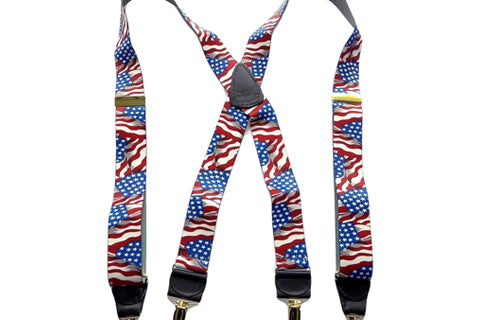
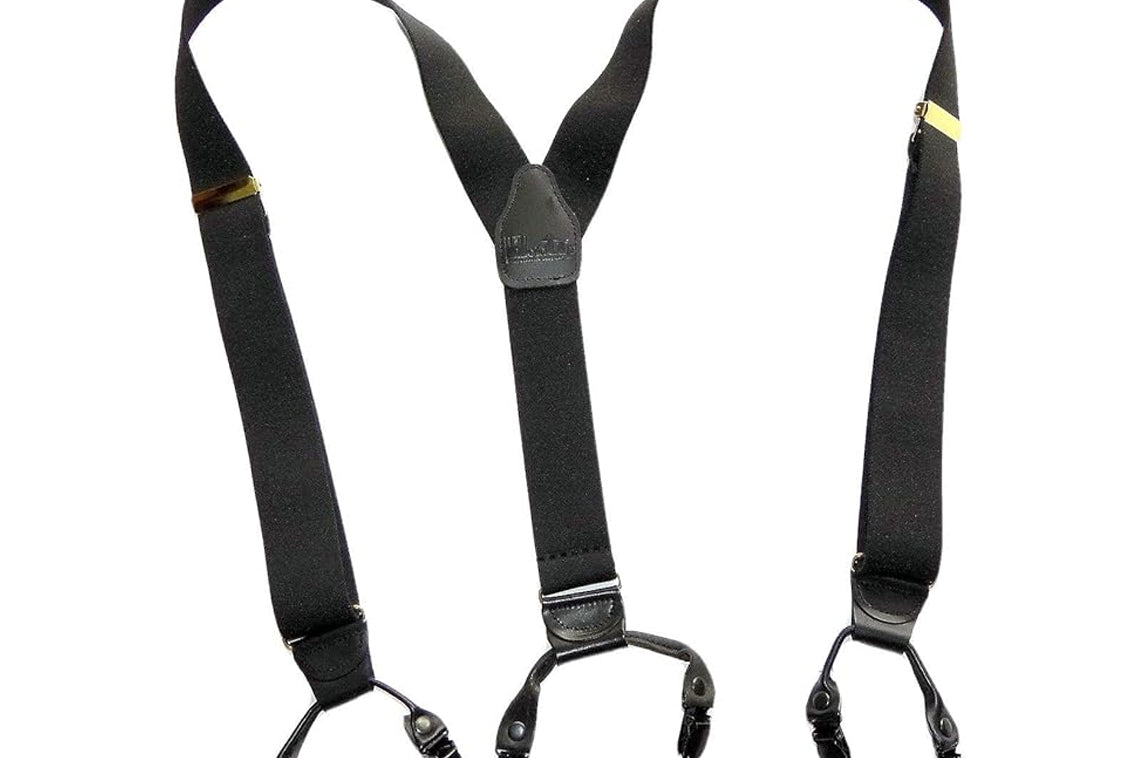
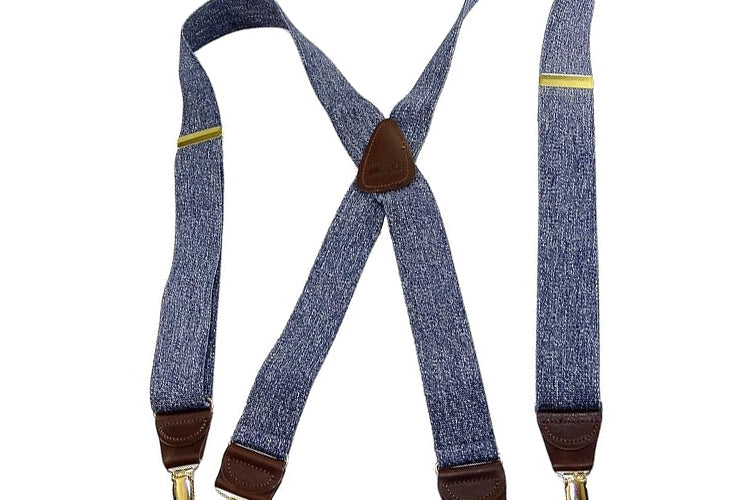
Beyond the attachment method, suspenders also differ in their back configuration. Y-back suspenders converge to a single central strap at the back, creating a sleeker profile that sits neatly under a fitted jacket. X-back suspenders cross in the center of the back, distributing weight more evenly across both shoulders and providing stronger support for longer wear. About 78.6% of men prefer the Y-back style, though X-back remains a popular choice for broader builds and more active wear.
Components of Suspenders
- Straps: The fabric, leather, or elastic pieces that run from the waistband over the shoulders and back down to the waistband.
- Adjusters: Metal or plastic slides on each strap that allow you to lengthen or shorten the suspenders for a precise fit.
- Attachment points: Either clips or button loops at each end of the straps that fasten to the front and back of your trouser waistband.
- Back junction: The point where the straps meet or cross at the back, determining whether the suspenders form a Y or X shape.
Why Choose Suspenders?

Choosing suspenders over a belt is both a style decision and a functional one worth weighing carefully. Suspenders eliminate waist pressure entirely, distributing the weight of your trousers evenly across your shoulders instead of compressing them around your waist with a tight band. This makes them significantly more comfortable during long days at a desk, extended formal events, and any situation where you are alternating between sitting and standing.
From a style perspective, suspenders create a longer, cleaner vertical line through the torso that a belt interrupts. They add a layer of intention and sophistication to suits, dress trousers, and even well-chosen casual outfits. They are ideal for weddings, formal events, business settings, and any occasion where you want your clothing to communicate that you have thought carefully about how you dress.
Choosing the Right Suspenders
Sizing and Measurement
Getting the right size is the first step to a comfortable, well-fitting pair of suspenders. To measure correctly, run a soft tape measure from the back waistband of your trousers, up over one shoulder, and down to the front waistband. This gives you the total strap length you need. Most suspenders come in standard and tall sizes, with adjustable slides covering a range of lengths within each size category. Around 85.7% of suspender wearers adjust their straps to rest just above the waistline for optimal comfort and appearance.
Material Considerations
The material you choose affects both comfort and the formality level of your look. Leather suspenders add a refined, mature quality to any outfit and pair naturally with formal suits, dress trousers, and tailored western wear. Fabric suspenders, available in a wide range of colors and patterns including navy, burgundy, brown, and bold stripes, offer more versatility across casual, business, and formal contexts. Elastic suspenders provide comfort and stretch for active wear and longer days. For formal occasions, silk or grosgrain materials are the most appropriate choice.
Width Selection
Strap width shapes the overall look of your outfit. Narrower straps of around one inch deliver a sleek, refined appearance suited to formal suits and business attire. Wider straps of 1.5 to 2 inches provide a more classic, substantial look and better support for heavier trousers. The width of your suspender straps should be proportional to your build: narrower for slimmer frames, wider for broader shoulders and larger builds. As a general rule, match the strap width loosely to the width of your jacket lapels for visual balance.
Preparation Before Putting On Suspenders
Choosing the Right Outfit
Suspenders work best with trousers that have a mid to high rise. A higher waistband sits at the natural waist where suspenders hold your pants, creating a clean and intentional look. Low-rise trousers tend to bunch awkwardly when pulled upward by suspenders. For casual outfits, dark-wash denim with a comfortable rise works well alongside fabric or elastic suspenders. For formal occasions, tailored dress trousers or suit trousers are the correct pairing.
Always tuck in your shirt before putting on suspenders. An untucked shirt hides the clean waistband line, causes fabric to bunch over the trousers, and shifts the straps out of position during wear. A well-pressed, neatly tucked shirt is the non-negotiable foundation of a good suspenders look.
Prepping the Suspenders
Before attaching your suspenders, set the strap length roughly where you expect it to sit. This is easier to do when the suspenders are off your body. Adjust both slides to approximately the same position to ensure symmetry before you begin fastening. Check that the clips or button loops are in good condition and opening and closing cleanly. For clip-on styles, confirm the spring tension in each clip is strong enough to hold the waistband fabric securely without slipping.
Step-by-Step Guide to Putting On Button-On Suspenders
Button-on suspenders require trousers with small buttons sewn inside the waistband: typically two at the front on either side and three evenly spaced across the back. If your trousers do not have these buttons, a tailor can add them in a single appointment.
Step 1: Fasten the Back Buttons
Start with the back of the suspenders. Hold the suspenders in front of you with the back junction facing outward. Bring the back straps around behind you and loop the button holes over the buttons at the back of the trouser waistband. Position the straps so they sit evenly on both sides, with the Y or X junction centered at mid-back. The back buttons on your trousers should be evenly spaced so that the straps pull the waistband flat without bunching.
Step 2: Bring the Straps Over Your Shoulders
Once the back is secured, bring the two front straps up and over your shoulders, one on each side. The straps should rest flat against your shirt without twisting. If the straps feel like they want to rotate or slide inward, the back junction may be sitting too high or too low on your back. The correct position for the back junction is between your shoulder blades at roughly mid-back.
Step 3: Fasten the Front Buttons
Loop the front button holes over the corresponding buttons at the front of your trouser waistband. Most trousers with suspender buttons have two at the front: one on the left side and one on the right, positioned inside the waistband at roughly the two and ten o'clock positions when looking straight down. Secure both sides before making any length adjustments.
Step 4: Adjust the Length
With all four button holes fastened, use the adjusters on each strap to fine-tune the length. The straps should rest flat and even across your shoulders without digging in or creating ridge marks in your shirt. Your trousers should sit at the natural waist without being pulled uncomfortably high. The practical test: slide two fingers beneath the strap at the shoulder point. If you cannot fit them, the straps are too tight. If the strap lifts away from your shoulder easily, they need to be shortened.
Step-by-Step Guide to Putting On Clip-On Suspenders
Clip-on suspenders are faster to put on and work with virtually any pair of trousers, making them the everyday choice for most wearers. For a comprehensive guide on placement options with different trouser styles, our breakdown of correct suspender clip positioning covers all the key placement decisions.
Step 1: Clip the Back
Begin by attaching the back clips to the inside edge of the trouser waistband at the back. On X-back suspenders, there will be two separate back clips that attach at the left and right sides of the back waistband. On Y-back suspenders, a single back clip attaches at the center back. Position the clips so they grip the waistband fabric cleanly without pinching or folding it. The clips should bite onto the waistband itself, not onto a belt loop.
Step 2: Bring the Straps Forward
With the back clips secured, pull the front straps up and over your shoulders. Allow them to fall naturally on either side of your chest. Check that the straps are not twisted anywhere along their length, as this creates an uneven tension and affects how the suspenders look and feel.
Step 3: Clip the Front
Attach the front clips to the inside edge of the trouser waistband at the front, one on each side. The standard front clip placement is at roughly the two and ten o'clock positions when viewed from above, inside the waistband edge. This placement keeps the clips hidden when your jacket is closed and distributes the front tension evenly on both sides of the trouser fly. For trousers with belt loops, our guide on wearing suspenders with belt loops walks through the best attachment approach for each scenario.
Step 4: Align and Adjust the Length
Once all clips are fastened, adjust the strap length using the slides on each strap. Work on both straps simultaneously, moving each slide by the same amount to maintain symmetry. Adjust until your trousers sit at your natural waist, the straps lie flat across your shoulders, and you can comfortably fit two fingers beneath the strap at the highest point. Stand, sit, and move briefly to test the fit before finalizing. It takes an average of 1 minute and 42 seconds for first-time wearers to put on suspenders correctly, so take your time on this step rather than rushing through it.
Adjusting Suspenders for Comfort and Fit
Getting the Tension Right
Incorrect tension is the most common source of discomfort with suspenders. Over-tightened straps pull the trousers too high, create shoulder ridge marks through your shirt, and cause back discomfort during prolonged wear. Under-tightened straps allow the trousers to sag and cause the clips or button loops to shift out of position during the day. The right tension holds the trousers at the natural waist with the straps resting flat and comfortable across the shoulders.
Achieving Symmetry
Unequal strap lengths create an off-balance, lopsided appearance that undermines the clean look suspenders are meant to create. After adjusting, stand in front of a mirror and check that both straps are at the same height on each shoulder, that the front clips or buttons are at the same position on both sides, and that the back junction sits centered on your back. If one side looks higher than the other, re-adjust the slide on the shorter strap rather than loosening the longer one.
Adjusting for Different Trouser Styles
High-waisted trousers require slightly shorter suspenders because the waistband already sits higher on the body. Standard-rise trousers will use the mid-range setting on most adjustable suspenders. If you switch between trouser styles regularly, check the length adjustment each time rather than assuming the previous setting will carry over.
Styling Your Suspenders

Matching Colors and Patterns
Coordinate your suspenders with the rest of your outfit by treating them as part of the same color family as your tie or one other accessory. A pair of navy suspenders with a burgundy tie and grey trousers creates a complementary palette. Brown leather suspenders with dark denim and a white shirt is the go-to casual western combination. Black suspenders with a white shirt and charcoal trousers is the simplest, most reliable formal choice. When your outfit features a bold pattern on the shirt or jacket, choose solid suspenders to avoid visual clashing.
Layering Under a Jacket
Suspenders are traditionally worn under a jacket, with only the front strap sections visible when the jacket is open. In a fully formal setting, keeping the jacket closed throughout the event is the correct approach. In business casual and smart-casual environments, wearing suspenders with the jacket off is acceptable provided the shirt underneath is well-pressed and neatly tucked. The exposed suspenders then become an intentional style element rather than an afterthought.
Pairing Suspenders with Different Outfits
Suspenders with Suits
Suspenders and suits are the most natural pairing in men's formalwear. The clean vertical line the suspenders create enhances the suit silhouette in a way a belt cannot. For business formal and professional settings, choose button-on suspenders in a solid color that complements the suit: navy or grey suspenders with a charcoal suit, black suspenders with a dark navy suit, or burgundy suspenders with a mid-grey suit. Pairing suspenders with a tuxedo follows its own specific rules, particularly around fabric and color, which are worth reviewing before a black tie event.
Suspenders with Jeans
Suspenders can bring a distinctive, fashion-forward touch to a casual jeans outfit, blending the relaxed character of denim with a hint of structure and intention. Opt for dark-wash or indigo denim with a mid to high rise, and pair with fabric or elastic suspenders in a complementary tone. Keep the rest of the outfit simple: a fitted t-shirt or casual button-down, clean shoes, and minimal accessories. This look works best when the jeans are in good condition and the shirt is tucked cleanly.
Suspenders for Weddings and Formal Events
For weddings, gala dinners, and other formal occasions, suspenders elevate the formality of your outfit above what a belt can achieve. Grooms in particular have embraced suspenders as part of their wedding day attire, either as part of a full suit look or as a statement piece in a more relaxed groomsmen ensemble. Choose button-on silk or grosgrain suspenders in a color that coordinates with your tie and pocket square for the most polished result.
Proper Suspenders Etiquette
Never Wear Suspenders with a Belt
The single most important rule of suspender etiquette: never wear both a belt and suspenders at the same time. Each serves the same functional purpose, and combining them reads as a fundamental misunderstanding of how both work. When wearing suspenders, remove the belt entirely.
When to Wear Suspenders
Suspenders suit a wide range of occasions, from formal black tie events and business meetings to casual weekend outfits and outdoor gatherings. The key is matching the formality of your suspenders to the occasion and the rest of your clothing. Leather or silk suspenders belong in formal and business formal settings. Elastic or fabric suspenders are appropriate for everyday business casual and casual wear. Avoid wearing overly casual suspenders in very formal settings and vice versa.
Subtlety in Formal Settings
In formal and business environments, the most effective approach to suspenders is understated coordination. Choose solid colors or subtle patterns in classic tones such as black, navy, grey, or burgundy. Avoid novelty prints, bright colors, or very wide straps in environments where conservative dress is expected. Let the fit and quality of the suspenders speak for themselves rather than using them as a conversation piece in an inappropriate setting.
Tips for Men Wearing Suspenders
Define Your Style Clearly
Suspenders work across a wide range of personal styles, from classic and formal to quirky and fashion-forward. The most important thing is to be deliberate. Choose suspenders that genuinely reflect your intended look rather than defaulting to whatever is available. Classic colors such as black, navy, and grey work for formal and business settings. Bolder patterns, textures, and colors work for casual and creative environments where self-expression is welcome.
Coordinate with Shirts and Suits
When layering suspenders beneath a shirt or suit, consider whether you want a coordinated or contrasting look. Coordinated means choosing suspenders in the same color family as your shirt or suit for a seamless, tonal appearance. Contrasting means choosing a complementary color that stands apart from your outfit, using the suspenders as a deliberate accent piece. Both approaches work, but the contrasting look requires more confidence in color handling to execute well.
Pay Attention to Patterns
If your shirt, suit, or trousers feature bold patterns, opt for solid suspenders to maintain visual balance. If your outfit is entirely solid in color, a patterned pair of suspenders can add personality without clashing. The rule of thumb is to limit strong pattern combinations to one element at a time. Mixing a heavily patterned shirt with striped suspenders creates visual noise that makes the overall look feel unintentional rather than considered.
Making the Right Choice: Selecting the Best Suspenders for You

The best pair of suspenders for you is the one that fits correctly, suits the occasions you will wear them to, and coordinates naturally with the clothing already in your wardrobe. Before purchasing, consider: What is your most common wearing occasion? Do you need clip-on flexibility or is button-on formality appropriate? What width suits your build? What colors appear most in your existing wardrobe? Answering these questions before buying prevents impulse purchases that end up unworn because they do not integrate well with your existing clothing.
For men new to suspenders, starting with a versatile solid-color pair in black or navy with clip-on attachment is the lowest-risk entry point. It will work with the widest range of trousers and occasions while you develop a feel for the style. Brown leather suspenders are the next step up for those who want to add a warmer, more character-driven option to their collection.
Common Mistakes While Wearing Suspenders
Overstretching the Straps
Extending the straps beyond their natural range to accommodate an incorrect size or trouser style puts ongoing stress on the elastic and stitching of the suspenders, degrading their shape and tension over time. If you regularly find yourself maxing out the adjuster slides, the suspenders are too short for your torso and you should size up rather than forcing the extension.
Mismatching Material and Occasion
Wearing casual fabric or denim suspenders with a formal suit, or heavy leather suspenders with light summer chinos, creates a disconnect that reads as an oversight rather than a style choice. Always match the weight and material of your suspenders to the formality and fabric weight of your trousers and jacket.
Uneven Adjustment
Setting one strap longer than the other causes the trousers to sit at an angle, pulling one side of the waistband higher than the other. This is not always immediately obvious when looking straight ahead, but becomes visible in photographs and from behind. Take an extra minute to check both straps in a full-length mirror from the front and back before leaving the house.
Forgetting to Tuck the Shirt
An untucked shirt with suspenders is one of the most common first-time mistakes. The shirt must be fully tucked before attaching the suspenders, and it should stay tucked throughout the day. If your shirt tends to come untucked with movement, consider a longer shirttail style or use shirt stays to keep it in place.
Caring for Your Suspenders
Leather Suspenders
Wipe leather suspenders down with a dry cloth after each wear to remove surface dust and oils. Apply a small amount of quality leather conditioner every few months to keep the material supple. Store leather suspenders flat or loosely coiled, never tightly folded, to prevent permanent creasing. Keep them away from direct sunlight and moisture, both of which degrade leather over time.
Fabric and Elastic Suspenders
Most fabric suspenders can be hand-washed in cool water with mild detergent. Lay flat to air dry rather than machine drying, which weakens elastic fibers and causes shrinkage. Check clips and hardware after washing: metal components can develop surface rust if not dried properly. Test clip tension periodically to confirm they are still gripping the waistband firmly.
Maintaining Elasticity
Elastic suspenders naturally lose some of their tension over time with repeated stretching. To slow this process, avoid leaving suspenders in a fully extended position when not in use: release the clips or buttons and allow the elastic to return to its resting length between wearings. Store them in a drawer or organizer where they will not be compressed under heavy clothing.
Alternatives to Traditional Suspenders
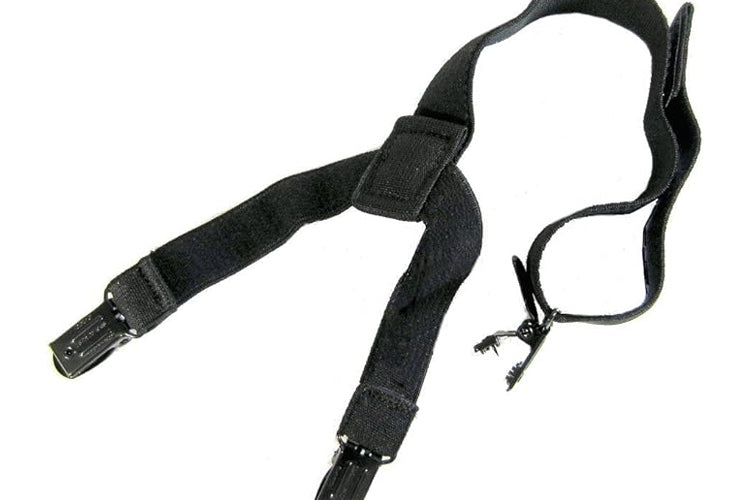
If traditional Y-back or X-back suspenders do not suit your needs or style, several alternative configurations are worth considering. Side clip suspenders attach at the sides of the waistband rather than the front and back, providing a different distribution of support that some wearers find more comfortable. Convertible suspenders feature interchangeable ends that switch between clip-on and button-on attachment, offering the flexibility of both styles in a single pair. For formal occasions where you need the clean look of button-on suspenders but your current trousers only have belt loops, a tailor can add interior suspender buttons in one visit, making any pair of quality trousers compatible with the most formal suspension style.
Frequently Asked Questions
How do I attach suspenders to my pants?
For clip-on suspenders, attach the back clips first to the inside edge of the trouser waistband at the back, then bring the straps over your shoulders and clip the front ends to the inside edge of the front waistband, one on each side at roughly the two and ten o'clock positions. For button-on suspenders, start by looping the back button holes over the buttons inside the back waistband, bring the straps over your shoulders, then fasten the front loops over the corresponding front waistband buttons. In both cases, adjust the strap length after all attachment points are secured.
Should suspenders be tight or loose?
Suspenders should be snug but not tight. The correct tension holds your trousers at your natural waist with the straps resting flat and comfortable across your shoulders. A practical test: you should be able to slide two fingers comfortably beneath the strap at the shoulder. If the straps dig into your shoulders or create visible ridge marks in your shirt, they are too tight. If your trousers sag or the clips shift throughout the day, the straps are too loose. Around 85.7% of suspender wearers adjust their straps to rest just above the waistline for the most comfortable and secure fit.
Where do suspenders clip on to pants?
Suspender clips attach to the inside edge of the trouser waistband, not to the belt loops. The standard placement is two clips at the back (or one center back clip for Y-back styles) and two clips at the front, positioned at roughly the two and ten o'clock positions when viewed from above. Clipping to the inside edge of the waistband rather than over the belt loop ensures the clips grip the fabric securely without shifting, and keeps the hardware hidden when the jacket is on.
How do clip-on suspenders differ from button-on?
Clip-on suspenders attach to the waistband of any pair of trousers using metal or rubber clips, making them quick to put on and compatible with virtually any pants without modification. Button-on suspenders loop over small buttons sewn inside the trouser waistband, leaving no visible hardware on the outside. Button-on styles are considered more formal and create a cleaner silhouette, but require either trousers with pre-installed suspender buttons or a tailor to add them. Nearly 62.4% of suspender wearers use clips for everyday convenience, while button-on styles are preferred for formal and professional occasions.
How do I adjust the length of suspenders?
Use the adjustable metal or plastic slides on each strap to lengthen or shorten the suspenders. Slide the adjuster up the strap to shorten it, or down to lengthen it. Adjust both straps by the same amount to maintain symmetry. The goal is for your trousers to sit at the natural waist with the straps lying flat and even across your shoulders. Always adjust with the suspenders on and all attachment points fastened, as the correct length depends on how the straps interact with your specific trouser rise and body proportions.
Can I wear suspenders without a belt?
Yes, and you should. Wearing a belt and suspenders at the same time is considered a style mistake, as both serve the same functional purpose and combining them signals a lack of understanding of how each works. When you put on suspenders, remove the belt entirely. The suspenders alone will hold your trousers in place more comfortably than a belt, without any waist pressure or restriction.
Are clip-on suspenders less formal than button-on ones?
Button-on suspenders are traditionally considered more formal because they lie completely flat with no visible hardware on the waistband, creating the cleanest possible silhouette under a suit jacket. Well-chosen, high-quality clip-on suspenders can also be appropriate for formal occasions, particularly when the jacket is kept closed throughout the event and the clips remain hidden. For the most formal settings such as black tie events, important business presentations, or weddings, button-on styles are the correct choice.
Can I wear suspenders to a business meeting?
Yes. Suspenders are a sophisticated and appropriate accessory for business settings. Over 71.3% of professional dress codes allow suspenders as a formal alternative to belts. For business meetings, choose suspenders in classic solid colors such as black, navy, or grey that coordinate with your suit and tie. Button-on styles or high-quality clip-on options in leather or a refined fabric are both appropriate. Keep the overall outfit conservative and let the suspenders add a quiet note of distinction rather than acting as a statement piece.
How should suspenders fit across the shoulders?
Suspender straps should rest flat and even across the top of your shoulders without digging into the shoulder muscle or slipping off to the side. The back junction of Y-back suspenders should sit between your shoulder blades at mid-back. If the straps slide off the shoulders, they are either too long or the back junction is positioned too low. If they dig into the top of the shoulder and feel restrictive, they are too short or too tight. Proper placement means the straps follow the natural slope of your shoulders without creating tension in any direction.
How do I clean and maintain my suspenders?
Leather suspenders should be wiped down with a dry cloth after each wear and conditioned with a quality leather conditioner every few months to prevent drying and cracking. Store them flat or loosely coiled, away from direct sunlight. Fabric and elastic suspenders can generally be hand-washed in cool water with a mild detergent and laid flat to air dry. Avoid machine drying, which weakens elastic fibers. Check all hardware and clips regularly for rust or reduced tension, and test that clips are still gripping securely before each wear.